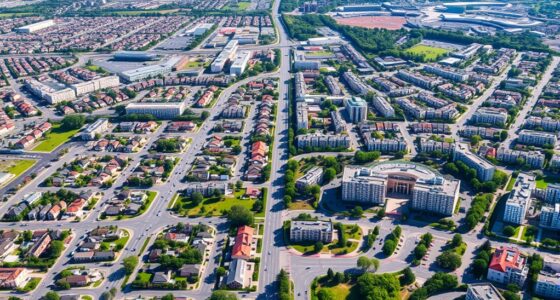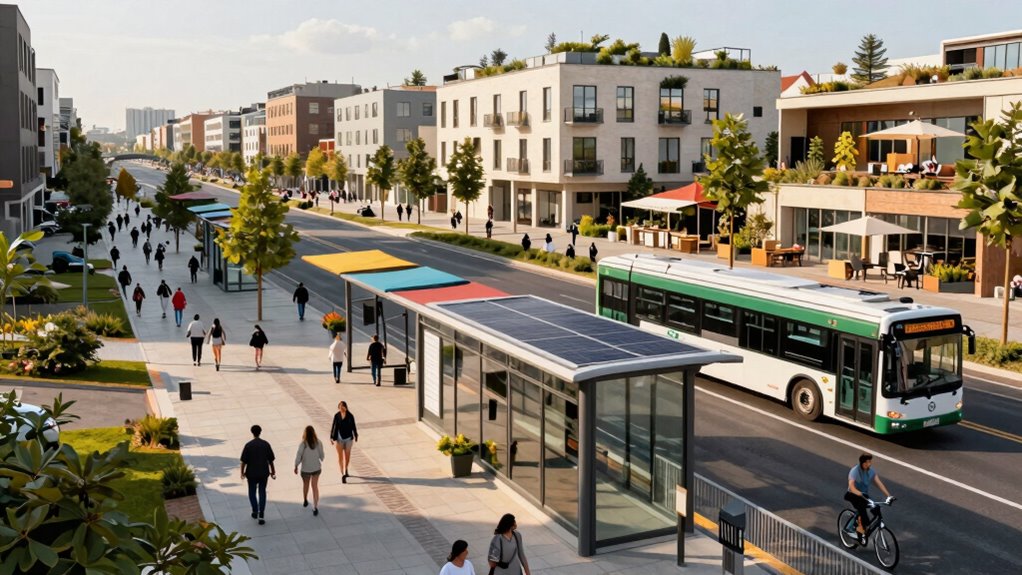

Transit-oriented areas support lower-impact living by placing you close to shops, parks, and workplaces, reducing your need to drive. With walkable streets and green infrastructure like parks and green roofs, you enjoy easier outdoor activities and cleaner air. These neighborhoods lower energy costs and promote eco-friendly choices, helping you live more sustainably. If you explore further, you’ll discover ways these communities make sustainable living more practical and enjoyable.

Get garden gear delivered free — and shop member deals
- Fast, free delivery on millions of items
- Access to Prime Big Deal Days deals on October 6–7
- Prime Video, Amazon Music and more included
Key Takeaways
- Transit-oriented areas encourage walking and cycling, reducing reliance on personal vehicles and lowering carbon emissions.
- They integrate green infrastructure like parks and green roofs, enhancing environmental benefits and urban resilience.
- Dense, mixed-use development minimizes urban sprawl, conserving land and reducing energy consumption.
- Access to public transit supports eco-friendly transportation choices, decreasing overall carbon footprint.
- These areas promote community engagement and outdoor activities, fostering healthier, more sustainable lifestyles.
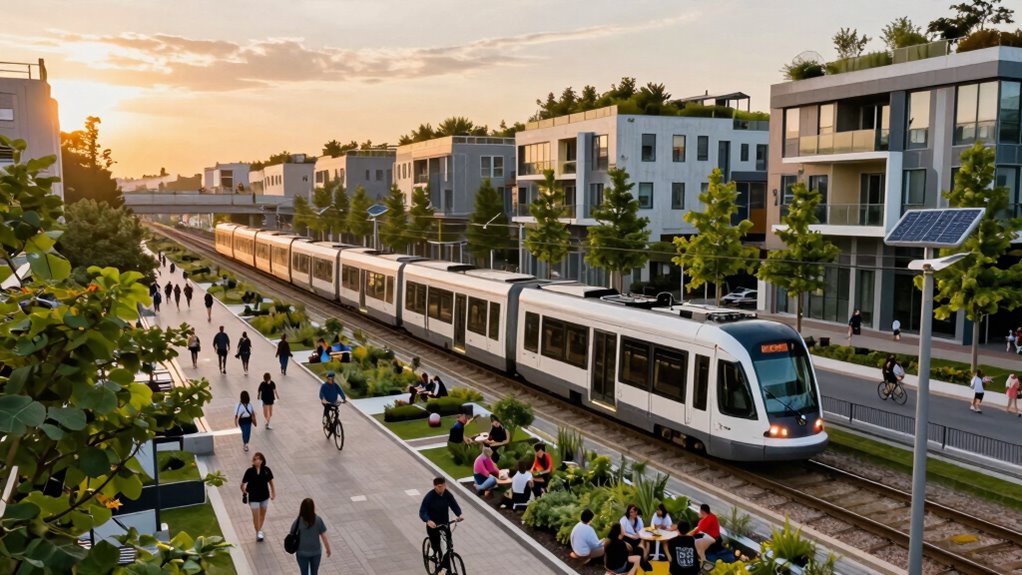
Urban density in these areas isn’t just about having more buildings packed together; it’s also about creating vibrant, walkable environments. High-density living means you’re within easy reach of shops, workplaces, parks, and amenities. This proximity reduces the need for driving, saving you money on fuel and maintenance while lowering your overall carbon footprint. Plus, by living in a denser neighborhood, you help support local businesses and keep community resources more sustainable and accessible.
Many transit-oriented developments incorporate green infrastructure, which plays a key role in supporting lower-impact living. Green infrastructure includes features like permeable pavements, green roofs, urban parks, and tree-lined streets that manage stormwater, improve air quality, and provide natural cooling. These elements help reduce the urban heat island effect and promote biodiversity within the city. When you live amidst such infrastructure, you benefit from cleaner air, more shade, and a healthier environment overall. Green spaces also encourage outdoor activities, which reduces your dependence on energy-consuming indoor entertainment and transportation. Incorporating green infrastructure into urban planning is essential for fostering sustainable communities. Additionally, the integration of sustainable design principles ensures that new developments prioritize energy efficiency and resource conservation.
By choosing a residence that emphasizes green infrastructure, you’re actively supporting eco-friendly urban planning. These features can also lower your energy costs by providing insulation and shade, making your home more efficient. *Moreover*, many transit-oriented communities prioritize sustainable design principles, such as energy-efficient buildings and renewable energy sources, aligning your lifestyle with environmentally conscious values. Additionally, fostering biodiversity within urban areas can create more resilient and adaptable ecosystems, contributing to long-term sustainability. Recognizing the importance of these features can help you make more environmentally conscious housing choices.
In essence, living in transit-oriented areas allows you to embrace a lower-impact lifestyle without sacrificing convenience. The combination of urban density and green infrastructure means you’re part of a community designed to minimize environmental harm while maximizing quality of life. You’ll find that reducing your carbon footprint becomes effortless when your daily routines are integrated into a thoughtfully planned, sustainable urban environment. This way, you support the broader goal of creating healthier, more resilient cities for everyone.
As an affiliate, we earn on qualifying purchases.
Frequently Asked Questions
How Do Transit-Oriented Areas Affect Local Wildlife Habitats?
Transit-oriented areas can positively affect local wildlife habitats by promoting habitat preservation and creating wildlife corridors. When development follows sustainable planning, it minimizes habitat fragmentation, allowing animals to move safely between areas. You help support biodiversity by choosing transit options and supporting designs that prioritize natural spaces. This reduces the impact on local ecosystems, ensuring wildlife can thrive alongside urban development, ultimately fostering a balanced coexistence between human activity and nature.
What Are the Economic Benefits of Living in Transit-Oriented Communities?
Living in transit-oriented communities is like hitting two birds with one stone—you save money and boost local economies. You benefit from reduced transportation costs through sustainable transportation options, while local businesses thrive due to increased foot traffic. This economic revitalization creates jobs and raises property values. By choosing this lifestyle, you contribute to a more vibrant, sustainable neighborhood, turning your everyday commute into an investment in your community’s economic health.
How Accessible Are Transit Options for People With Disabilities?
You’ll find that transit options in these areas are quite accessible thanks to accessible infrastructure and inclusive design. Stations often feature ramps, tactile paving, and audio-visual aids, making travel easier for people with disabilities. Transit agencies prioritize universal accessibility, ensuring everyone can navigate public transportation comfortably. This commitment creates an inclusive environment, enabling you to enjoy the benefits of lower-impact living without facing unnecessary barriers or limitations.
Do These Areas Increase Property Prices Significantly?
Transit-oriented areas often see property prices rise considerably, impacting property affordability. You might notice real estate trends showing increased demand, which drives up prices in these convenient neighborhoods. While living near transit offers benefits like reduced commute times and lower carbon footprints, it can also make purchasing property more expensive. If you’re considering moving here, be prepared for higher costs, but also enjoy the convenience and sustainability these areas provide.
How Do Transit-Oriented Developments Impact Urban Heat Islands?
You might find it ironic that transit-oriented developments actually help reduce urban heat islands. By promoting green infrastructure like trees, parks, and reflective surfaces, these areas improve energy efficiency and cool down city spaces. Transit hubs also decrease car dependency, cutting emissions and heat. So, instead of worsening heat, these developments actively combat urban heat islands, making cities more livable and environmentally friendly.
Conclusion
By embracing transit-oriented areas, you step into a future where city life balances convenience with sustainability. Imagine strolling through a neighborhood reminiscent of a 1920s streetcar suburb, where cars take a backseat to walkability and public transit. You’ll find that living with less reliance on private vehicles helps reduce your carbon footprint and fosters a sense of community. So, hop aboard this eco-friendly train—your low-impact lifestyle awaits, just like a vintage streetcar gliding through the modern city.
Fall yard work Picks
leaf blowers
As an affiliate, we earn on qualifying purchases.