
Shared micromobility lets you use devices like e-scooters and e-bikes to get around cities easily and sustainably. It fills the gaps between public transit and driving, helping you reach destinations quickly while reducing traffic and pollution. Payment is simple through apps, with flexible options like pay-per-ride or passes. Thanks to tech innovations, these systems are safe, reliable, and user-friendly. Keep exploring to discover how shared micromobility is transforming urban travel for everyone.
Key Takeaways
- Shared micromobility offers eco-friendly options like e-scooters and bikes, filling gaps between public transit and personal cars.
- Fare policies typically use pay-as-you-go apps, with passes and dynamic pricing to encourage frequent use and manage demand.
- Technological innovations such as GPS, sensors, and geofencing optimize vehicle management, safety, and user experience.
- These systems improve urban mobility by reducing congestion, promoting sustainability, and providing access to hard-to-reach destinations.
- Enhanced visual interfaces and safety features increase reliability, user confidence, and adoption of shared micromobility services.
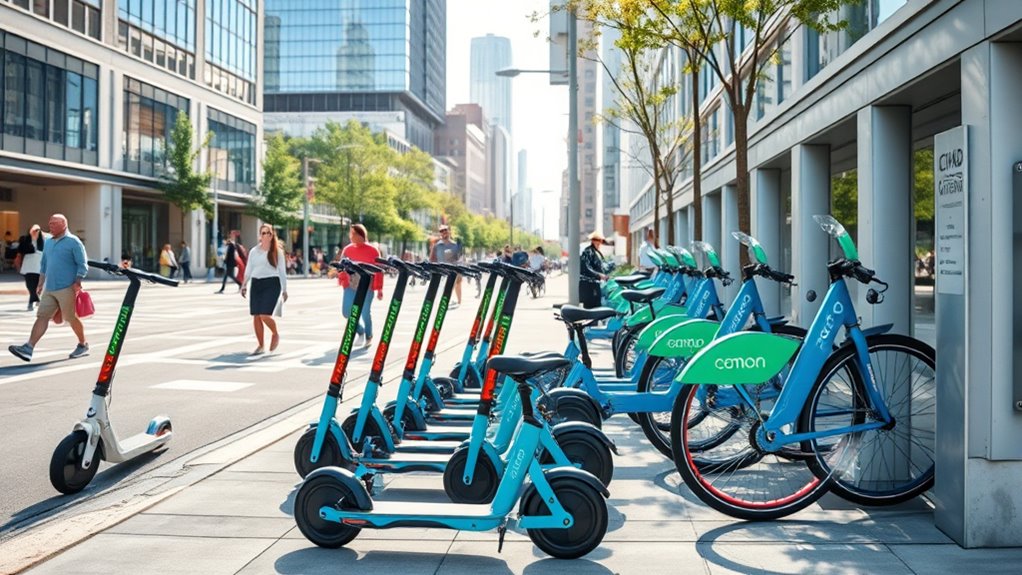
Shared Micromobility is transforming urban travel by offering convenient, sustainable options like e-scooters and electric bikes. These modes of transport fill the gaps between public transit and personal vehicles, giving you a quick way to navigate crowded streets or reach destinations not easily accessible by car. What makes this shift possible are the innovative fare policies and technological innovations that drive the industry forward.
Fare policies play a pivotal role in making shared micromobility accessible and appealing. Most providers use pay-as-you-go systems, where you unlock a scooter or bike through a smartphone app and pay a small fee based on the time or distance traveled. Some companies offer daily or monthly passes, encouraging frequent use while reducing costs for regular commuters. Dynamic pricing also comes into play, adjusting rates based on demand, time of day, or location to balance supply and demand. This flexibility helps guarantee that users can find a vehicle when needed without overburdening the system or creating clutter. Clear, user-friendly fare policies not only make the service transparent but also foster trust, encouraging more people to choose shared micromobility over private cars.
Technological innovations are equally essential in shaping the future of shared micromobility. GPS tracking and real-time data enable operators to monitor vehicle locations, optimize redistribution, and prevent theft or vandalism. App interfaces allow seamless reservations, payments, and ride tracking, making the experience smooth and intuitive. Advances in battery technology extend the range and lifespan of e-scooters and bikes, reducing downtime and maintenance costs. Additionally, smart sensors can detect issues like low battery or mechanical problems, alerting maintenance teams instantly. This tech-driven approach not only improves reliability but also enhances safety for users. Color accuracy and high contrast ratios are crucial for visual clarity and user confidence, especially in varying outdoor lighting conditions. Cities and companies are also experimenting with geofencing, which restricts where vehicles can be parked or used, helping manage clutter and guarantee vehicles stay within designated zones. All these innovations work together to create a more efficient, user-friendly system that encourages more people to opt for shared mobility solutions.
Top picks for "shar micromobility"
Open Amazon search results for this keyword.
As an affiliate, we earn on qualifying purchases.
Frequently Asked Questions
How Do I Rent a Shared Micromobility Device?
To rent a shared micromobility device, start by downloading the app of the provider you’re interested in. Complete the app registration by entering your details and payment information. Once registered, locate a nearby scooter or bike through the app’s map. Follow the rental process prompts, usually involving scanning a QR code on the device. Confirm your ride, and you’re ready to go! When you’re done, end the ride in the app and lock the device.
What Safety Gear Is Recommended for Riding?
Picture yourself as a knight ready to conquer the streets. Wearing a helmet guarantees your safety, acting as your trusted shield. Protective gear like knee and elbow pads serve as your armor, guarding you against unexpected falls. Always prioritize helmet safety, and don reflective clothing if riding at night. With the right safety gear, you’ll ride confidently, transforming every trip into a secure adventure.
Are There Age Restrictions for Users?
Yes, there are age restrictions for users. Typically, you need to be at least 16 or 18 years old, depending on local regulations, to be eligible for shared micromobility devices. These age restrictions help guarantee device eligibility and safety for all riders. Always check your city’s specific rules, as some providers may require a valid driver’s license or proof of age before you can rent a scooter or bike.
How Is the Cost of Sharing Services Calculated?
Imagine riding through a busy city street, feeling the wind as you glide along. The cost of sharing services is calculated using a pricing model that factors in base fares, time, and distance traveled. Fare calculation varies by provider, often including access fees plus a per-minute or per-mile rate. This transparent system helps you see exactly how much your ride costs, making sharing micromobility both affordable and easy to understand.
What Are the Rules for Parking Shared Devices?
You need to follow parking regulations for shared devices, which usually specify designated areas for device storage. Always park devices upright and avoid blocking sidewalks, crosswalks, or entrances. Check local rules for specific device storage requirements, as improper parking can result in fines or removal. By adhering to these rules, you help keep shared micromobility safe and accessible for everyone.
Conclusion
Now, imagine zipping through busy streets on a sleek e-scooter or gliding effortlessly on a shared bike, feeling the wind on your face and the city’s rhythm beneath you. Shared micromobility offers a flexible, eco-friendly way to explore your surroundings. As you hop from one destination to another, you become part of a vibrant, connected community moving with purpose. Embrace the future of urban travel—dynamic, sustainable, and right at your fingertips.