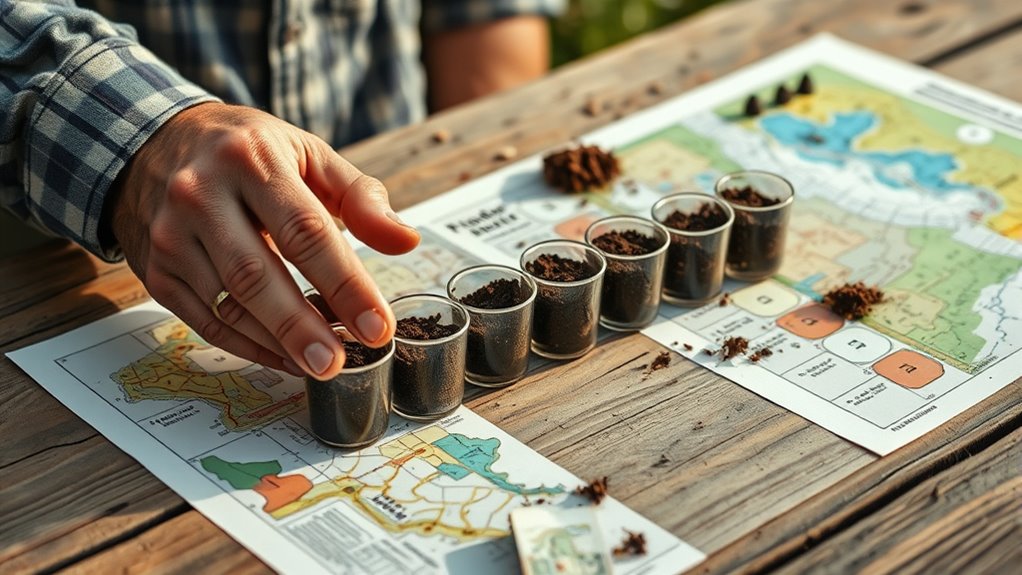

To measure crop rotation effectively, keep detailed records of what you plant and when, using visual tools like color-coded charts or digital maps to track sequences. Regularly test your soil’s health, monitor nutrient levels, and watch for pests or diseases. Track crop yields over time to identify patterns that help optimize your rotation. If you want to learn more about refining your approach and improving your results, there’s plenty more to explore.
Key Takeaways
- Keep detailed records of crop types, planting dates, and sequences to track rotation patterns accurately.
- Use visual tools like color-coded charts and plot maps to easily monitor crop diversity and succession.
- Regularly test soil health and nutrient levels to assess impacts of crop rotation on soil fertility.
- Track crop yields and performance data to evaluate the effectiveness of rotation strategies.
- Monitor pest and disease outbreaks to adjust crop choices and maintain sustainable crop rotation practices.
Understanding the Principles of Crop Rotation

Understanding the principles of crop rotation is essential for maintaining healthy soil and maximizing crop yields. By rotating different crops, you help preserve soil fertility and prevent nutrient depletion. Crop diversification reduces the risk of pests and diseases, which often target specific plants. When you alternate crops, you break pest and disease cycles, making your fields less vulnerable to infestations. Additionally, rotating crops with different root structures improves soil structure, promoting better water retention and aeration. For example, planting legumes after grains naturally replenishes nitrogen in the soil, reducing the need for synthetic fertilizers. This strategic approach enhances long-term productivity and sustainability. Incorporating soil health practices into your rotation plan further supports ecological balance and resilience. By understanding these principles, you can create a balanced, resilient farming system that benefits both your crops and your soil.
Keeping Detailed Records of Your Crops

Keeping detailed records of your crops helps you understand your field’s history and plan future rotations. Make sure to note the types of crops you plant each season and record planting dates accurately. This way, you can track patterns and improve your overall crop management.
Record Crop Types
Why is it essential to record the crop types you plant each season? Keeping detailed records helps you track your crop rotation progress and improve soil health. By noting the cover crop selection and crop diversity, you ensure varied planting schemes that prevent soil depletion and pests. Accurate records also allow you to identify which crops perform best in your soil and climate. Visualize your records as a colorful mosaic:
- Rows of vibrant cover crops like clover and vetch
- A variety of vegetables and grains interwoven season to season
- Sticky notes with planting successes and challenges
- A calendar highlighting crop diversity across years
- Monitoring signs of spoilage in stored produce ensures you maintain fresh and healthy crops.
This meticulous documentation makes it easier to plan future rotations, optimize soil fertility, and maximize yields by understanding what works best for your farm.
Track Planting Dates
Accurately recording planting dates for each crop is essential for managing your farm effectively. When you keep detailed records, you can analyze how planting times influence crop yields and soil health. Tracking planting dates helps you maximize cover crop benefits by timing their planting to improve soil nutrients and suppress weeds. It also enhances crop residue management, ensuring residues decompose properly and enrich the soil for subsequent crops. Knowing precisely when you plant each crop allows you to identify patterns and adjust schedules for better rotation. Regularly updating these records keeps your farm operations organized and informed. This practice supports sustainable practices, reduces pest issues, and improves overall productivity, making your crop rotation more efficient and profitable. Additionally, understanding the causes and contributing factors of soil health issues can help you make better decisions about crop timing and variety selection.
Using Visual Tools to Track Crop Sequences

Using visual tools makes tracking your crop sequences easier and more intuitive. Color-coded crop charts, sequential plot maps, and digital tracking tools help you see patterns at a glance. These methods support better planning and help guarantee diverse and sustainable crop rotations. Additionally, incorporating privacy and cookie usage considerations can help you manage your data responsibly while using digital tools effectively.
Color-Coded Crop Charts
Color-coded crop charts offer a straightforward way to visualize crop sequences and manage rotation schedules effectively. By using color coding, you create clear visual indicators that differentiate crop types, making planning easier at a glance. Imagine a chart with vibrant sections:
- Bright green for legumes, signaling nitrogen-fixers
- Deep red for root crops, highlighting soil disturbance
- Yellow for grains, indicating cereal crops
- Blue for cover crops, demonstrating soil protection
These visual cues help you quickly identify crop patterns, prevent planting the same species consecutively, and promote better soil health. The simplicity of color coding streamlines decision-making and enhances your understanding of crop rotation progress. Additionally, incorporating diverse crop experiences from different regions can further optimize your rotation plan. This method transforms complex schedules into intuitive visual tools, empowering you to make informed, timely adjustments.
Sequential Plot Maps
Building on color-coded charts, sequential plot maps provide a dynamic way to visualize crop sequences over time. These maps show how crops are rotated in specific plots, helping you track changes and patterns. By mapping crop diversity across seasons, you can identify which crops benefit from particular soil amendments and where diversity is lacking. Visualizing sequences makes it easier to plan rotations that improve soil health and reduce pest buildup. You’ll see the progression of crop types, allowing you to adjust practices for better soil fertility. Sequential plot maps also highlight gaps or repeat patterns, giving you a clearer picture of your rotation strategy’s effectiveness. Incorporating crop diversity into your planning ensures a more resilient and productive system. Overall, these maps help you make informed decisions to optimize crop performance and promote sustainable land use.
Digital Tracking Tools
Digital tracking tools offer an efficient way to monitor crop sequences and streamline farm management. These visual tools help you easily track crop diversity and optimize crop sequencing across your fields. With a user-friendly interface, you can see your crop rotations at a glance, identify patterns, and plan future plantings more effectively. Imagine a digital map displaying color-coded fields, showing past crops and upcoming plantings. You can quickly identify areas where crop diversity is lacking or where crop sequencing needs adjustment. These tools enable you to make data-driven decisions that improve soil health, reduce pests, and boost yields. By integrating digital tracking, you stay organized and guarantee your crop rotation practices are aligned with your farm’s sustainability goals. Additionally, understanding the cost‑of‑ownership of these tools can help you select the most cost-effective options for your operation.
Analyzing Soil Health and Nutrient Levels
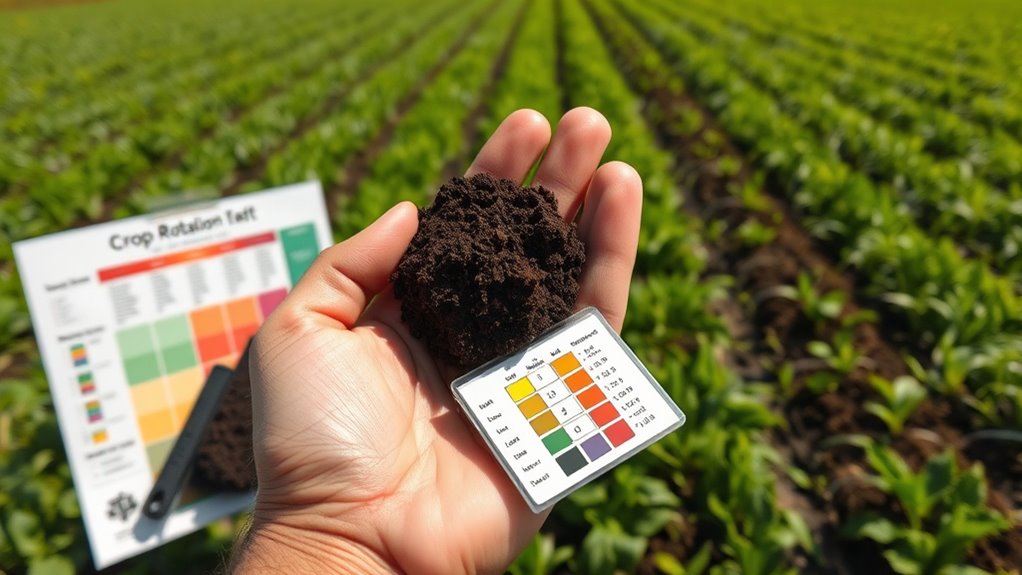
Understanding soil health and nutrient levels is essential for effective crop rotation planning. You should regularly test your soil pH to determine its acidity or alkalinity, as this affects nutrient availability and crop growth. Maintaining ideal pH levels helps crops access essential nutrients and reduces the need for additional amendments. Incorporate cover cropping into your rotation strategy; cover crops improve soil structure, prevent erosion, and enhance nutrient cycling. They also help replenish nitrogen and other crucial elements naturally. By analyzing soil tests, you can identify nutrient deficiencies or excesses, guiding you to select the right crops and amendments. Regular monitoring of soil conditions and community support features can help you adapt your practices for optimal soil health. This proactive approach ensures your soil remains healthy and productive, supporting sustainable crop rotation practices and maximizing yields over time.
Monitoring Pest and Disease Patterns

Regularly monitoring pest and disease patterns is essential for maintaining healthy crops and ensuring a successful rotation. By keeping a close eye on your fields, you can spot early signs of pest resurgence and identify disease hotspots before they spread. Look for visible damage on leaves, discolored or rotting plants, and unusual insect activity. Use scouting tools like magnifying glasses or traps to detect pests hiding in dense foliage. Keep detailed records of outbreaks to track recurring issues and adjust your rotation plan accordingly. Regular monitoring helps you prevent infestations, reduce chemical use, and improve crop resilience. Staying vigilant ensures you catch problems early, minimizing crop loss and protecting your investment. Staying proactive is key to sustainable, healthy crop management.
Evaluating Crop Yields and Productivity Trends

Evaluating crop yields and productivity trends is essential for appraising the success of your crop rotation strategy. By tracking these metrics, you can identify patterns that support yield optimization and enhance crop diversity. Use consistent methods like record-keeping and digital tools to analyze changes over time. The table below helps visualize key data points:
| Year | Crop | Yield (tons/acre) | Notes |
|---|---|---|---|
| 2023 | Corn | 150 | Improved after rotation |
| 2024 | Soybeans | 140 | Higher crop diversity |
| 2025 | Wheat | 160 | Yield increased overall |
| 2026 | Cover Crops | Data pending | Focus on soil health |
| 2027 | Mixed Crops | Data pending | Diversification success |
Regular analysis lets you fine-tune crop choices, boosting productivity through strategic crop diversity and yield optimization. Incorporating consistent record-keeping practices can help you better understand and leverage these productivity trends over time.
Frequently Asked Questions
What Are the Best Tools for Measuring Crop Rotation Efficiency?
You should use tools like crop rotation logs, GIS mapping software, and soil testing kits to measure efficiency effectively. These tools help you track soil health and pest management over time, revealing how well your rotation practices improve soil nutrients and reduce pests. Regular testing and data analysis enable you to refine your strategies, ensuring sustainable crop yields and healthier soil, ultimately boosting your overall farm productivity.
How Often Should Crop Rotation Data Be Reviewed?
You should review your crop rotation data at least annually, or sooner if pests start throwing a tantrum or soil health takes a nosedive. Regular checks help you catch problems early, ensuring your soil remains resilient and pest management stays effective. Think of it as a health check-up for your fields—because neglecting this could turn your farm into a pest paradise or soil desert faster than you can say “crop failure.”
Can Crop Rotation Impact Water Usage on My Farm?
Yes, crop rotation can substantially impact water usage on your farm. By practicing proper crop rotation, you promote soil conservation, which improves water retention and reduces runoff. Additionally, rotating crops helps manage pests naturally, decreasing the need for water-intensive chemical controls. This sustainable approach leads to more efficient water use, preserves soil health, and enhances overall farm productivity. You’ll notice better water management and healthier crops over time.
How Do Weather Patterns Influence Crop Rotation Planning?
Imagine your fields as a dynamic canvas, shifting with climate variability. Weather patterns directly influence your crop rotation planning by affecting soil moisture and pest management strategies. During droughts, you might choose drought-tolerant crops, while heavy rains call for crops that resist waterlogging. Recognizing these patterns helps you adapt, reducing pest issues and optimizing yields, ensuring your rotation plan remains resilient amidst changing weather conditions.
Are There Specific Crop Rotation Methods for Organic Farming?
In organic farming, you should use crop rotation methods that emphasize soil biodiversity and companion planting. Rotate legumes with nitrogen-fixing plants to enrich soil naturally, and include cover crops to protect and nourish the soil. Incorporate diverse plant families to prevent pests and disease buildup. Companion planting enhances pest control and plant health, making your rotation more sustainable. These methods help maintain soil vigor and boost crop yields naturally.
Conclusion
By tracking your crop rotation carefully, you can boost soil health and increase yields. Did you know farms practicing diverse crop rotations see up to 20% higher productivity? Staying attentive to soil nutrients, pest patterns, and crop sequences helps you make smarter decisions. Keep detailed records and use visual tools to see patterns emerge. With consistent monitoring, you’ll improve your farm’s sustainability and profitability—making every planting season your best yet.

As a valuable member of the Two Green Leaves team, Julia’s expertise in sustainable living and their ability to convey complex concepts in a relatable manner make them an invaluable asset. Their passion for the environment and their dedication to empowering individuals to embrace green practices make them a driving force behind our platform’s mission.