
TL;DR

Get garden gear delivered free with Prime
- Fast, free delivery on millions of items
- Prime Video, Amazon Music and more included
- Member-only deals all year
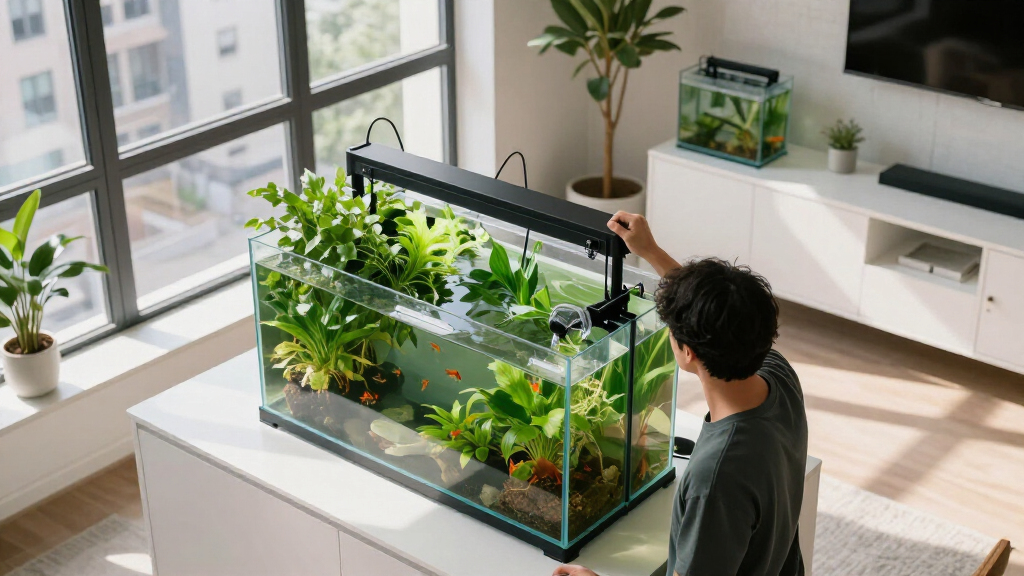
An innovative aquaponics system installed in NYC apartments is gaining attention for its sustainability and space efficiency. It integrates fish tanks with plant beds, offering residents a way to grow food indoors. The development highlights urban sustainability efforts and new lifestyle trends.
A new aquaponics system in a NYC apartment has successfully integrated fish tanks with plant beds, providing a sustainable indoor food source. The installation, carried out by a local resident, highlights a rising trend in urban agriculture and sustainable living in New York City.
The aquaponics setup was installed in a Manhattan apartment in January 2024, utilizing a compact system that combines freshwater fish with hydroponic plant beds. The resident, who wishes to remain anonymous, reports that the system has been functioning smoothly for over two months, producing herbs, leafy greens, and fish for personal consumption.
Experts in urban agriculture confirm that aquaponics is gaining popularity among city dwellers seeking sustainable food options. According to Dr. Lisa Chen, an urban farming specialist at NYU, ‘Aquaponics offers an efficient way to produce fresh food within limited indoor spaces, especially suited for apartment living.’ The system reportedly requires minimal space, uses less water than traditional gardening, and does not rely on pesticides or herbicides.
Local environmental groups have expressed interest in promoting such systems as part of broader urban sustainability initiatives. The resident who installed the system emphasizes its ease of maintenance and the educational value it provides for families and community members interested in sustainable practices.
Potential Impact of Indoor Aquaponics on Urban Sustainability
The rising adoption of aquaponics in NYC apartments could significantly contribute to urban food resilience and reduce reliance on external supply chains. It demonstrates a practical way for city residents to produce fresh, organic food year-round, even in small spaces. This development aligns with broader efforts to promote sustainable living and reduce the environmental footprint of urban households.
Moreover, if more residents adopt such systems, it could foster community engagement around food production, environmental education, and local food security. Experts believe this trend could inspire similar initiatives in other dense cities worldwide, potentially transforming urban lifestyles toward greater sustainability.
indoor aquaponics kit for apartments
As an affiliate, we earn on qualifying purchases.
As an affiliate, we earn on qualifying purchases.
Growing Interest in Urban Aquaponics in NYC
Urban aquaponics has been explored in various forms across the globe, but its recent emergence in NYC apartments marks a notable shift toward mainstream adoption. Prior to this, most systems were installed in community gardens or dedicated urban farms. The recent installations in private residences reflect a broader trend of integrating sustainable practices into daily urban life.
Since 2022, several startups and local organizations have begun offering compact aquaponics kits tailored for apartment use. The COVID-19 pandemic also accelerated interest in self-sufficient food production, prompting more city residents to explore indoor gardening options. While some experts remain cautious about scalability, early adopters report high satisfaction with the systems’ simplicity and productivity.
It is not yet clear how widespread this trend will become or what regulatory or technical challenges might arise as more residents experiment with aquaponics at home.
“Aquaponics offers an efficient, space-saving way for city residents to grow fresh food indoors, making it ideal for apartment living.”
— Dr. Lisa Chen, NYU Urban Agriculture Expert
Unresolved Questions About Widespread Adoption
It remains unclear how many NYC residents will adopt aquaponics systems on a larger scale, or what regulatory hurdles might emerge. The long-term sustainability and maintenance costs are also still being evaluated. Experts note that while early results are promising, broader adoption depends on education, affordability, and technical support.
Additionally, there is limited data on the environmental impact of widespread indoor aquaponics in dense urban environments, making it difficult to project its overall contribution to city sustainability goals at this stage.
Next Steps for Urban Aquaponics Expansion in NYC
Local organizations plan to host workshops and provide resources to help more residents set up aquaponics systems. City officials are also exploring policies to support sustainable urban agriculture, including potential incentives or guidelines for home-based systems. Researchers aim to study the long-term impacts and scalability of indoor aquaponics in city settings.
As interest grows, more case studies and user reports are expected to emerge over the coming months, providing clearer insights into the practicality and benefits of this approach for urban sustainability.
Key Questions
How much space does an aquaponics system require in an apartment?
Most compact systems designed for apartments can fit on a countertop or small corner, typically requiring less than 4 square feet of space.
Is aquaponics safe for indoor use in apartments?
Yes, when properly maintained, aquaponics systems are safe. They use freshwater fish and non-toxic materials, but residents should follow safety guidelines and avoid overfeeding or neglecting filtration.
What are the main costs associated with setting up an aquaponics system?
Initial costs include the purchase of tanks, pumps, grow beds, and fish. Ongoing expenses involve fish food, water, and occasional system maintenance, which can vary based on system size.
Can aquaponics systems be used to grow a variety of plants?
Yes, they are suitable for herbs, leafy greens, and some vegetables. However, root vegetables and larger crops may require larger or specialized setups.
Source: hn
Fall yard work Picks
leaf blowers
As an affiliate, we earn on qualifying purchases.