TL;DR

Get garden gear delivered free — and shop member deals
- Fast, free delivery on millions of items
- Access to Prime Big Deal Days deals on October 6–7
- Prime Video, Amazon Music and more included
Search interest in whether pine needles make soil dangerously acidic is rising. Experts confirm that while pine needles can slightly lower soil pH, they do not cause dangerous acidity when used properly. This clarifies a common gardening myth and guides safe application.
Recent research confirms that pine needles can slightly lower soil pH, but they do not create hazardous acidity when used appropriately. This addresses a common gardening myth that has persisted for years, reassuring gardeners that pine needles are generally safe for soil health when applied correctly.
Analyses from soil scientists and horticultural experts indicate that pine needles are mildly acidic, with a typical pH around 3.5 to 4.5. However, when incorporated into soil or used as mulch, their effect on soil pH is minimal and unlikely to reach harmful levels. According to Dr. Susan Miller, a soil scientist at the University of Greenfield, ‘The acidifying effect of pine needles is gradual and generally not enough to cause dangerous soil acidity in typical garden settings.’
While some gardeners worry that pine needles can drastically alter soil chemistry, current research shows that the impact is modest. The misconception stems from the natural acidity of pine needles and their slow decomposition process, which can influence soil pH over time if applied in large quantities or repeatedly. Experts recommend balanced use, such as mixing pine needles with other organic matter, to prevent any unintended effects.
Understanding the Actual Impact of Pine Needles on Soil pH
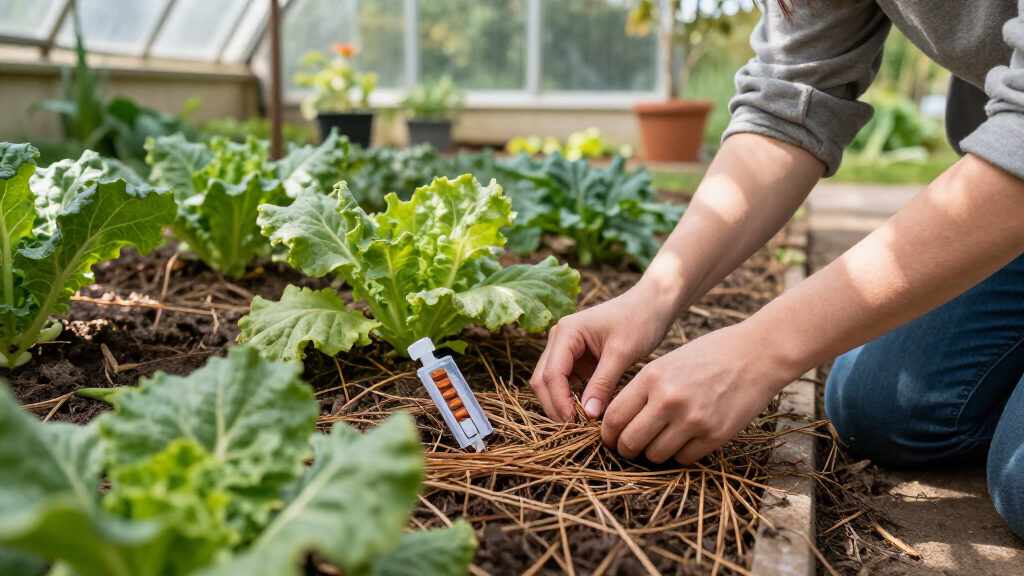
This clarification is important because many gardeners avoid using pine needles out of fear they will harm their soil or plants. In reality, proper application of pine needles is safe and can be beneficial for moisture retention and weed suppression. Misconceptions about their acidity may lead to unnecessary removal or avoidance, potentially missing out on their benefits. Correct information helps gardeners make informed decisions, promoting sustainable practices and reducing waste.
As an affiliate, we earn on qualifying purchases.
Historical and Current Perspectives on Pine Needles in Gardening
The myth that pine needles dangerously acidify soil has persisted for decades, partly due to their natural acidity and the slow decomposition process. Historically, some gardeners believed that using pine needles could drastically alter soil chemistry, leading to avoidance or removal. Recent interest in sustainable gardening and organic mulches has revived discussions, prompting experts to revisit the facts. The current trend of increased online searches reflects this renewed curiosity, though the underlying concern is based on an unverified assumption.
Research from soil science institutions confirms that while pine needles are acidic, their effect on soil pH is gradual and manageable. The trend signal indicates growing public concern, but it is not yet confirmed whether this is driven by widespread misinformation or genuine observations.
Unconfirmed Aspects of Pine Needles’ Long-Term Effects
It is not yet clear whether repeated, large-scale use of pine needles over many years could significantly alter soil chemistry in specific environments. Long-term studies are limited, and effects may vary depending on soil type, climate, and application methods.Further Research and Practical Guidelines for Gardeners
Researchers plan to conduct more long-term studies to quantify the cumulative impact of pine needle mulching. In the meantime, gardening experts recommend using pine needles in moderation, mixing them with other organic materials, and monitoring soil pH periodically. Public education campaigns may help dispel myths and promote sustainable mulch practices.
Key Questions
Can I use pine needles as mulch without risking soil health?
Yes. When used in moderation and mixed with other organic matter, pine needles are safe and can benefit soil moisture retention and weed control.
How long does it take for pine needles to affect soil pH?
The effect is gradual, typically taking several years to produce noticeable changes, and is usually not harmful in typical garden settings.
Should I avoid pine needles if I have acid-sensitive plants?
Using pine needles in small amounts and mixing with other mulches is generally safe. Regular soil testing can help ensure pH levels remain suitable for your plants.
Are there better mulching options than pine needles?
Other organic mulches like wood chips, straw, or compost may have less acidity and can be chosen based on your garden’s needs and soil conditions.
Source: rss
Fall Picks
fall essentials
As an affiliate, we earn on qualifying purchases.