
Garden soil testing kits range from simple pH and nutrient checks to digital meters and lab analysis with tailored recommendations. My best overall pick is the MySoil Soil Test Kit with Lab Analysis and Custom Recommendations, which suits gardeners who want results interpreted for them. For repeat testing, the NewTest 4-Parameter Kit offers multiple tests in one package, while the Rapitest Digital Soil Test Kit is a practical choice for people who prefer a meter-based readout. The main tradeoff is between quick, repeatable home checks and more detailed lab results that take extra time and sample handling. Read on for the full comparison and guidance on matching a kit to your garden.

Get garden gear delivered free with Prime
- Fast, free delivery on millions of items
- Prime Video, Amazon Music and more included
- Member-only deals all year
Complete the kit


Key Takeaways
- MySoil’s lab-analysis format stands apart from color-chart kits by pairing soil results with custom recommendations, making it the clearest fit for gardeners who want help interpreting findings.
- NewTest’s 40-test count suits gardeners who expect to check several beds or retest through the season; test quantity matters more when repeated sampling is part of the plan.
- Digital and LCD kits trade visual color matching for an on-device readout, but a display alone does not make results equivalent to lab analysis.
- Rapitest and Luster Leaf options span garden-focused kits and larger test counts, so buyers should compare the specific kit’s test scope rather than choosing by brand name alone.
- MySoil’s two- and four-pack versions are better suited to testing multiple locations or sharing kits, while a single kit avoids buying more sampling capacity than one garden needs.
| NewTest Soil Test Kit, 4 Parameters, 40 Tests | 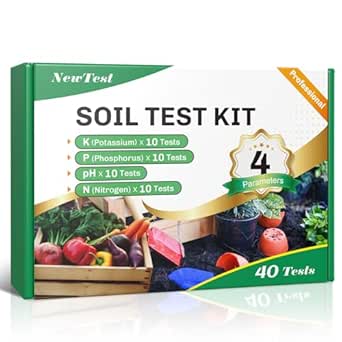 | Best Balanced Reusable Kit | Brand: NewTest | Parameters: pH, nitrogen, phosphorus, and potassium | Total tests: 40 | VIEW LATEST PRICE | See Our Full Breakdown |
| Rapitest Soil Test Kit for Gardens and Lawns |  | Best for Plant-Specific Guidance | Brand: Luster Leaf | Model: 1602 | Tests included: 20 total | VIEW LATEST PRICE | See Our Full Breakdown |
| Soil Test Kit Strips for pH, Nitrogen, Phosphorus, and Potassium, 200 Tests |  | Best for High-Volume Checks | Brand: AESCULIX | Model: T01 | Total tests: Up to 200 | VIEW LATEST PRICE | See Our Full Breakdown |
| Rapitest Digital Soil Test Kit for pH, Nitrogen, Phosphorus, and Potash |  | Best Digital Color Reader | Brand: Luster Leaf | Model: 1605 | Tests included: 25 total | VIEW LATEST PRICE | See Our Full Breakdown |
| MySoil Soil Test Kit with Lab Analysis and Custom Recommendations |  | Best for Lab-Based Recommendations | Brand: MySoil | Manufacturer: Predictive Nutrient Solutions, Inc. | Number of packs: 1 | VIEW LATEST PRICE | See Our Full Breakdown |
| MySoil Soil Test Kit, 4-Pack |  | Best for Lab-Based Nutrient Detail | Brand: MySoil | Unit count: 4 | Analysis: pH and 13 plant-available nutrient levels | VIEW LATEST PRICE | See Our Full Breakdown |
| Rapitest Soil Test Kit for Gardens, Vegetables, Flowers, and Lawns |  | Best for Frequent At-Home Checks | Brand: Luster Leaf | Model: 1601 | Tests included: 40 total: 10 each for pH, nitrogen, phosphorus, and potash | VIEW LATEST PRICE | See Our Full Breakdown |
| LaMotte NPK Soil Test Kit |  | Best for High-Volume NPK Testing | Brand: LaMotte | Model: 5880-6 | Tests: 50 | VIEW LATEST PRICE | See Our Full Breakdown |
| Luster Leaf 1663 Professional Soil Test Kit, 80 Tests |  | Best All-in-One Reusable Supply | Model: 1663 | Test count: 80 total | Tests per measure: 20 each for pH, nitrogen, phosphorus, and potash | VIEW LATEST PRICE | See Our Full Breakdown |
| Luster Leaf Rapitest Soil Test Kit |  | Best for Buyers Who Want a Basic Capsule Kit | Brand: Luster Leaf | Manufacturer: Rapitest | Model number: 1601 | VIEW LATEST PRICE | See Our Full Breakdown |
| Soil Test Kit, 140 Tests for pH, Nitrogen, Phosphorus, Potassium, and Ammonia |  | Best for Frequent Multi-Parameter Testing | Test type: Liquid | Parameters tested: pH, ammonia, nitrogen, phosphorus, and potassium | Total tests: About 140 | VIEW LATEST PRICE | See Our Full Breakdown |
| 7-in-1 Soil Test Kit with LCD Display |  | Best for Quick On-Site Checks | Measurements: Soil moisture, pH, fertility, sunlight intensity, soil temperature, air temperature, and air humidity | Display: LCD | Probe material: Metal | VIEW LATEST PRICE | See Our Full Breakdown |
| LaMotte Turf and Garden Soil Test Kit, Model 5679-01 |  | Best for Guided Garden Analysis | Model: 5679-01 | Parameters tested: Nitrogen, phosphorus, potassium, and soil pH | NPK tests: 15 each for nitrogen, phosphorus, and potassium | VIEW LATEST PRICE | See Our Full Breakdown |
| MySoil Soil Test Kit, 2-Pack |  | Best for Lab-Based Recommendations | Brand: MySoil | Pack quantity: 2 | Analysis: 13 plant-available nutrient levels, including nitrogen and pH | VIEW LATEST PRICE | See Our Full Breakdown |
| garden soil testing kit | Brand | Model |
|---|---|---|
| NewTest Soil Test Kit | NewTest | — |
| Rapitest Soil Test Kit for Gar | Luster Leaf | 1602 |
| Soil Test Kit Strips for pH | AESCULIX | T01 |
| Rapitest Digital Soil Test Kit | Luster Leaf | 1605 |
| MySoil Soil Test Kit with Lab | MySoil | — |
| MySoil Soil Test Kit | MySoil | — |
| Rapitest Soil Test Kit for Gar | Luster Leaf | 1601 |
| LaMotte NPK Soil Test Kit | LaMotte | 5880-6 |
| Luster Leaf 1663 Professional | — | 1663 |
| Luster Leaf Rapitest Soil Test | Luster Leaf | — |
| Soil Test Kit | — | — |
| 7-in-1 Soil Test Kit with LCD | — | — |
| LaMotte Turf and Garden Soil T | — | 5679-01 |
| MySoil Soil Test Kit | MySoil | — |
More Details on Our Top Picks
NewTest Soil Test Kit, 4 Parameters, 40 Tests
NewTest’s even test allocation is its main advantage: you get 10 tests each for pH, nitrogen, phosphorus, and potassium, making it easier to check several beds or repeat measurements as you adjust the soil. The color card and included detailed instructions keep the process accessible, while the stated uses span lawns, compost, houseplants, and other growing media. Compared with the Rapitest Soil Test Kit for Gardens and Lawns, which supplies only five tests per factor, NewTest gives you more chances to retest without favoring one measurement. The tradeoff is that results rely on visual color matching, so interpretation may be less exact than lab analysis. The product information also says laboratory testing is needed for accurate soil data, making this better for garden guidance than definitive diagnosis.
Pros:- Provides 10 tests for each of four parameters, with an even allocation.
- Includes both a quick guide and detailed instructions.
- Colorimetric card gives a direct way to compare results.
- Listed for use with lawns, gardens, compost, houseplants, and other media.
Cons:- Color-chart readings depend on visual comparison rather than laboratory measurement.
- The product information says laboratory testing is needed for accurate soil data.
Best for: Home gardeners who want repeated checks of all four core soil measures across multiple beds, containers, or growing seasons.
Not ideal for: Gardeners who need laboratory-grade nutrient data or who would rather avoid interpreting colors against a chart.
- Brand:NewTest
- Parameters:pH, nitrogen, phosphorus, and potassium
- Total tests:40
- Tests per parameter:10
- Result method:Colorimetric comparison
- Included components:Soil test kit, quick guide, and detailed instructions
- Recommended uses:Lawns, gardens, compost, trees, vines, houseplants, soilless media, and hydroponics
Our verdict“Choose NewTest if you want a balanced supply of repeat tests for four basic soil measures, and choose lab analysis if precision is the priority.”
Rapitest Soil Test Kit for Gardens and Lawns
The Rapitest 1602 stands out for gardeners who need help turning a test result into a plant-specific decision: its guidance covers more than 400 plants. The capsule system checks pH, nitrogen, phosphorus, and potash, and the color comparators provide a straightforward way to read each test. Its 20-test supply is smaller than NewTest’s 40 tests, with just five tests per factor, so it suits a few targeted checks better than frequent monitoring across a large garden. Compared with the Rapitest Digital Soil Test Kit, this model uses visual comparators rather than an optical reader; that keeps the approach simple but leaves color interpretation to the user. Choose it for its plant-reference material, not for a large reserve of repeat tests.
Pros:- Measures pH, nitrogen, phosphorus, and potash.
- Includes guidance for more than 400 plants.
- Capsule system and color comparators provide a defined testing method.
- Supplies tests for checking more than one garden location.
Cons:- Only five tests are included for each soil factor.
- Color-comparator results require visual interpretation.
Best for: Gardeners growing a mix of named vegetables, flowers, and lawn plants who want plant-preference guidance alongside basic soil readings.
Not ideal for: People managing many beds or tracking soil changes repeatedly, since the kit provides only five tests for each parameter.
- Brand:Luster Leaf
- Model:1602
- Tests included:20 total
- Tests per factor:5 each
- Factors tested:pH, nitrogen, phosphorus, and potash
- Test method:Capsule system with color comparators
- Plant guidance:Recommendations for more than 400 plants
- Country of design and assembly:USA
Our verdict“Pick the Rapitest 1602 if plant-specific reference guidance matters more to you than a high number of repeat tests.”
Soil Test Kit Strips for pH, Nitrogen, Phosphorus, and Potassium, 200 Tests
Up to 200 tests make this strip-based kit the volume pick in this group, especially for gardeners who want to sample many plots or keep checking through a growing season. It tests pH, nitrogen, phosphorus, and potassium, and includes tubes, a rack, pipettes, a scoop, a brush, a case, and guides to organize sample preparation. Unlike the NewTest Soil Test Kit, which includes 40 tests split evenly across its four parameters, this kit is built around a much larger stated test capacity. That capacity comes with a different compromise: it is strip-only and includes no liquid reagents, powder, or tablets. Readings come from chart comparisons and are explicitly for gardening reference, not professional lab work. It fits routine screening, not a formal soil diagnosis.
Pros:- Offers up to 200 tests for four core soil parameters.
- Includes a case, rack, sample tubes, scoop, pipettes, and brush.
- Quick-start guide and instruction manual support sample preparation.
- Uses individual packs of 50 strips for storage and handling.
Cons:- No liquid reagents, powder, or tablets are included.
- Color-strip readings are intended for gardening reference, not professional laboratory testing.
Best for: Gardeners, allotment holders, or small-scale growers who plan to check many samples and value included sample-handling accessories.
Not ideal for: Buyers seeking laboratory-level results or a reagent-based testing system rather than strip-and-chart readings.
- Brand:AESCULIX
- Model:T01
- Total tests:Up to 200
- Strip count:150 strips in three packs of 50
- Factors tested:pH, nitrogen, phosphorus, and potassium
- Included accessories:Storage case, test-tube rack, sample and comparator tubes, scoop, Pasteur pipettes, brush, manual, and quick-start guide
- Reagents:No liquid reagents, powder, or tablets included
- Result scope:Gardening reference only; not for professional laboratory testing
Our verdict“Choose this kit for frequent garden screening with plenty of sampling accessories, but use a lab service when the result needs professional precision.”
Rapitest Digital Soil Test Kit for pH, Nitrogen, Phosphorus, and Potash
This Rapitest model is the choice for gardeners who want a device to read test colors rather than relying entirely on their own color matching. Its LED color sensor and optical chamber handle the reading step, while the booklet adds pH preferences for more than 450 plants and guidance on soil and fertilizer adjustments. It provides 25 tests, but the allocation is uneven: 10 for pH and five each for nitrogen, phosphorus, and potash. Compared with the Rapitest Soil Test Kit for Gardens and Lawns, it adds an electronic reader and broader plant pH references, but it still requires separate instructions for different test types. The digital component does not turn it into a lab service; it remains a color-based home kit. It makes more sense for users who value repeatable reading mechanics than for those seeking the simplest setup.
Pros:- LED sensor reads test colors in an optical chamber.
- Includes 25 tests across pH, nitrogen, phosphorus, and potash.
- Provides pH preferences for more than 450 plants.
- Booklet offers guidance for soil and fertilizer adjustments.
Cons:- Test supply is uneven, with only five tests each for nitrogen, phosphorus, and potash.
- Separate instructions are needed for different soil test types.
Best for: Home gardeners who want an optical color reader and plant pH references for choosing amendments across a varied garden.
Not ideal for: Buyers who want one uniform testing procedure, equal test counts for every nutrient, or professional laboratory analysis.
- Brand:Luster Leaf
- Model:1605
- Tests included:25 total
- Test allocation:10 pH tests and 5 each for nitrogen, phosphorus, and potash
- Test method:LED color sensing with optical calibration
- Factors tested:pH, nitrogen, phosphorus, and potash
- Plant pH preference list:More than 450 plants
- Item weight:0.21 kg
Our verdict“Pick the Rapitest digital kit if an optical reader and broad plant pH guidance are worth more to you than equal nutrient test counts.”
MySoil Soil Test Kit with Lab Analysis and Custom Recommendations
MySoil differs from the other picks because you mail a sample for professional analysis of 13 plant-available nutrient levels, including nitrogen and pH, rather than interpreting a home color chart. The report is paired with tailored organic and non-organic recommendations that explain what to apply, how much, and when. That makes it a stronger fit for a gardener facing a persistent nutrient question than the NewTest Soil Test Kit, which offers repeated home checks across four measures but does not provide lab analysis. The tradeoff is speed and repeatability: this is a single-use kit, and results take six to eight days. It also requires mailing the prepared sample, so it is less suited to quick checks before an immediate planting or amendment decision.
Pros:- Lab analysis covers 13 plant-available nutrient levels, including nitrogen and pH.
- Provides tailored organic and non-organic amendment recommendations.
- Recommendations address what to apply, how much, and when.
- Includes instructions and a prepaid mailing envelope.
Cons:- The kit is single-use.
- Results take six to eight days rather than arriving during a home test.
Best for: Gardeners who need a more detailed nutrient report and practical amendment advice for a lawn, vegetable garden, compost, or other listed growing setup.
Not ideal for: People who want several low-effort checks, immediate readings, or a reusable kit for tracking changes over time.
- Brand:MySoil
- Manufacturer:Predictive Nutrient Solutions, Inc.
- Number of packs:1
- Tested nutrient levels:13, including nitrogen and pH
- Results turnaround:6–8 days
- Compatible growing scenarios:Lawns, gardens, compost, trees, vines, ornamental landscapes, houseplants, soilless media, and hydroponics
- Recommendations:Organic and non-organic amendments
- Kit contents:Soil sample kit, instructions, prepaid mailing envelope, and customer support
- Item weight:4.6 ounces
Our verdict“Choose MySoil when a detailed lab report and tailored amendment plan matter more than getting a quick, repeatable home reading.”
MySoil Soil Test Kit, 4-Pack
Best for detailed lab results, this four-pack measures soil pH and 13 plant-available nutrient levels, going well beyond the basic pH, nitrogen, phosphorus, and potash coverage of the Rapitest Soil Test Kit for Gardens, Vegetables, Flowers, and Lawns. The lab also supplies tailored application guidance, including organic and non-organic options, so the results can help shape a treatment plan rather than just identify a reading. Four sample kits make it practical to compare separate beds or growing areas, and prepaid mailing envelopes are included. The tradeoff is time and convenience: samples must be mailed, with results taking 6–8 days, unlike an at-home color-comparator kit. I’d choose this for depth and guidance, but skip it when same-day answers matter.
Pros:- Measures pH and 13 plant-available nutrient levels through lab analysis.
- Includes tailored organic and non-organic application recommendations.
- Four single-use kits support testing multiple areas.
- Prepaid mailing envelopes are included.
Cons:- Requires collecting and mailing samples rather than testing on the spot.
- Results take 6–8 days.
- Each test is single-use, limiting repeat checks without another kit.
Best for: Gardeners comparing several beds or growing areas who want lab analysis across many nutrients plus tailored application recommendations.
Not ideal for: Growers who need immediate readings, prefer testing at home, or only need a quick basic pH check.
- Brand:MySoil
- Unit count:4
- Analysis:pH and 13 plant-available nutrient levels
- Results time:6–8 days
- Included:4 single-use soil sample kits, instructions, 4 prepaid mailing envelopes, customer support
- Suitable for:Lawns, gardens, compost, trees, vines, houseplants, soil-less media, hydroponics
Our verdict“Choose this four-pack if you value broad lab analysis and tailored advice more than immediate, at-home results.”
Rapitest Soil Test Kit for Gardens, Vegetables, Flowers, and Lawns
Best for repeat home testing, this Rapitest kit includes supplies for 40 tests across pH, nitrogen, phosphorus, and potash. That makes it a more flexible choice for gardeners checking several beds or retesting after amendments than the MySoil Soil Test Kit, 4-Pack, which covers more nutrient levels but sends samples to a lab. Rapitest uses capsules and color comparators, while its pH guide covers preferences for more than 400 plants; together, those features help connect a reading to a garden crop. The main compromise is interpretation: results depend on matching colors by eye, and the kit offers a snapshot rather than continuous monitoring. I’d favor it for routine, hands-on checks, not for lab-level nutrient detail or buyers who want instrument-read results.
Pros:- Includes 40 tests, with 10 each for pH, nitrogen, phosphorus, and potash.
- Capsule system and color comparators support at-home testing.
- Includes pH preference guidance for more than 400 plants.
- Compact 5-by-5.91-inch format weighs 4 ounces and requires no batteries.
Cons:- Color results must be interpreted by eye.
- Tests only pH and three nutrients, fewer measures than the MySoil four-pack.
- Provides individual test readings rather than continuous monitoring.
Best for: Vegetable and flower gardeners who want to test multiple soil areas at home and consult plant-specific pH guidance.
Not ideal for: Buyers seeking lab analysis, broad nutrient profiling, or readings that do not depend on visual color matching.
- Brand:Luster Leaf
- Model:1601
- Tests included:40 total: 10 each for pH, nitrogen, phosphorus, and potash
- Testing method:Capsule system with patented color comparators
- Plant guidance:Soil pH preference list and recommendations for over 400 plants
- Dimensions:5 in W × 5.91 in H
- Weight:4 oz
- Batteries required:No
Our verdict“Pick this for repeated, hands-on checks of four common soil measures, provided you are comfortable reading color comparators.”
LaMotte NPK Soil Test Kit
Best for repeated NPK checks, the LaMotte provides 50 tests for nitrogen, phosphorus, and potassium using nonhazardous TesTab reagents. Its test count outpaces the Luster Leaf 1663 Professional Soil Test Kit overall, though that Luster Leaf model also tests pH and divides its tests among four measures. LaMotte’s testing apparatus, diagrammed instructions, and laminated color chart make the kit suited to structured, hands-on sampling, including settings that value alignment with GLOBE Program standards. The deciding limitation is its narrow scope: soil pH is not included, so a gardener investigating acidity or alkalinity will need another test. I’d choose it for frequent nutrient checks, not as a single-kit assessment of general soil condition.
Pros:- Includes 50 tests for nitrogen, phosphorus, and potassium.
- Uses nonhazardous TesTab reagents.
- Includes testing apparatus, diagrammed instructions, and a laminated color chart.
- Designed to meet GLOBE Program standards.
Cons:- Does not test soil pH.
- Uses hands-on reagent and color-chart interpretation rather than lab analysis.
- Covers only three nutrient measures, unlike the Luster Leaf 1663, which also tests pH.
Best for: Gardeners, educators, or community growing projects that need many hands-on nitrogen, phosphorus, and potassium tests.
Not ideal for: Buyers who need pH results or want one kit to cover both acidity and major nutrients.
- Brand:LaMotte
- Model:5880-6
- Tests:50
- Nutrients tested:Nitrogen, phosphorus, and potassium
- Test method:Nonhazardous TesTab reagents
- Included:Testing apparatus, diagrammed instructions, laminated color chart
- Standards:Designed to meet GLOBE Program standards
- Soil pH test:Not included
Our verdict“Choose LaMotte for a large supply of NPK tests, but pair it with a separate pH test if soil acidity matters.”
Luster Leaf 1663 Professional Soil Test Kit, 80 Tests
Best for a substantial supply of four-measure tests, this liquid-based kit offers 20 tests each for pH, nitrogen, phosphorus, and potash, for 80 total. Compared with the LaMotte NPK Soil Test Kit, it gives up some total NPK test volume but adds pH testing and a plant preference guide, making it more useful when gardeners need to check both nutrient levels and acidity. Its sturdy plastic case and soil-adjustment guidance support organized, repeat use. The tradeoff is that the liquid method involves more steps than a quick glance at a color strip, and each measure is capped at 20 tests. I’d pick it for a home garden with several soil questions to track, while high-volume nutrient-only testing points more naturally to LaMotte.
Pros:- Tests pH, nitrogen, phosphorus, and potash.
- Provides 20 tests for each measure, 80 total.
- Includes a sturdy plastic case and detailed instructions.
- Offers plant pH preferences and soil-adjustment guidance.
Cons:- Only 20 tests are available for each individual measure.
- Liquid-based testing takes hands-on preparation and interpretation.
- Provides less total NPK test capacity than the 50-test LaMotte kit.
Best for: Home gardeners who want repeated pH and major nutrient checks, plus guidance for adjusting soil conditions.
Not ideal for: Buyers who need more than 20 tests of any one measure or prefer a simpler, less hands-on test format.
- Model:1663
- Test count:80 total
- Tests per measure:20 each for pH, nitrogen, phosphorus, and potash
- Test method:Liquid-based
- Case:Sturdy plastic
- Dimensions:1.25 in W × 9 in H
- Batteries:Not required
- Included guidance:Detailed instructions, soil adjustment guidance, and plant pH preference list
Our verdict“Choose the Luster Leaf 1663 for balanced repeat testing across pH and three major nutrients, rather than maximum NPK test volume.”
Luster Leaf Rapitest Soil Test Kit
Best for buyers drawn to a simple capsule-and-comparator approach, this Rapitest description confirms a water extraction process and color comparators for interpreting results. It resembles the testing method used by the Rapitest Soil Test Kit for Gardens, Vegetables, Flowers, and Lawns, but provides much less product detail: the available information does not specify which soil properties it measures or how many tests are included. That makes it harder to judge whether it can handle a garden’s pH and nutrient questions, or how often it can be used. The color-comparator format may suit gardeners comfortable with visual readings, but the better-documented Rapitest model is the safer choice when known test coverage and a stated 40-test supply matter. I’d select this only when its packaging confirms the measures and quantity you need.
Pros:- Uses a water extraction process for soil testing.
- Capsule system supports the test process.
- Color comparators are provided to interpret results.
Cons:- Available product details do not identify which soil properties it tests.
- The number of included tests is not specified.
- Offers less documented guidance than the Rapitest 1601, which lists its test measures and plant pH guidance.
Best for: Gardeners considering a basic capsule-based kit who can verify the included test measures and quantity before buying.
Not ideal for: Buyers who need confirmed pH or nutrient coverage, a known number of tests, or clear plant-specific guidance.
- Brand:Luster Leaf
- Manufacturer:Rapitest
- Model number:1601
- Part number:1601
- Material:Plastic
- Recommended use:Soil testing
- Testing method:Water extraction and capsule system with color comparators
- Test measures and quantity:Not specified in the provided product details
Our verdict“Buy only if the product details available to you confirm the specific tests and quantity your garden needs.”
Soil Test Kit, 140 Tests for pH, Nitrogen, Phosphorus, Potassium, and Ammonia
About 140 liquid tests make this kit a practical fit for gardeners who want to check several areas repeatedly rather than send a small number of samples to a lab. It measures pH, ammonia, nitrogen, phosphorus, and potassium, giving you more fertility information than a basic pH-focused tester. Compared with the LaMotte Turf and Garden Soil Test Kit, it offers a higher stated test count, while LaMotte supplies laminated charts and written interpretation guidance. This kit’s main advantage is repeat monitoring; its tradeoff is that results depend on following the liquid procedures correctly, and the per-parameter counts are approximate. Choose it when ongoing checks matter more than lab analysis or extensive printed guidance.
Pros:- Measures five parameters, including ammonia and the three main nutrients
- About 140 tests support repeated checks across growing areas
- Can help guide fertilizer decisions
- Listed for use across gardens, lawns, plants, compost, and hydroponics
Cons:- Correct use of the liquid procedures affects result reliability
- Per-parameter test counts are approximate rather than exact
- Does not include the same stated laminated charts and interpretation guides as the LaMotte kit
Best for: Gardeners managing several beds, lawns, or growing areas who want to repeat liquid tests across the season.
Not ideal for: Beginners who want detailed printed result interpretation, or buyers who prefer a lab to analyze samples.
- Test type:Liquid
- Parameters tested:pH, ammonia, nitrogen, phosphorus, and potassium
- Total tests:About 140
- Tests per parameter:About 40 each; about 20 for nitrogen
- Listed applications:Gardens, lawns, plants, compost, and hydroponics
- Intended use:Soil fertility assessment and fertilizer guidance
Our verdict“Pick this kit for frequent, multi-parameter monitoring; choose LaMotte instead if printed interpretation support matters more than test quantity.”
7-in-1 Soil Test Kit with LCD Display
This is the lineup’s convenience pick for gardeners who want a quick snapshot of growing conditions rather than nutrient-specific test results. Its LCD display reports moisture, pH, fertility, sunlight, soil temperature, air temperature, and humidity in one unit, a broader day-to-day dashboard than the reagent-based Soil Test Kit with 140 Tests. That breadth comes with a different kind of limitation: it does not provide the detailed nutrient readings or fertilizer guidance offered by kits that test nitrogen, phosphorus, and potassium individually. The metal probe is intended for soil use and needs cleaning and dry storage; the unit is not suitable for water, rocky ground, or loose sandy soil. It makes sense for routine checks in workable garden beds, not precise nutrient diagnosis.
Pros:- Combines seven soil and air measurements in one device
- LCD presents readings directly without color-chart matching
- Metal probe is described as corrosion-resistant and sensitive
- Designed for gardens, lawns, greenhouses, and potted plants
Cons:- Does not provide individual nitrogen, phosphorus, and potassium results
- Not suitable for water, rocky or excessively hard ground, or loose sandy soil
- Probe requires cleaning and dry storage and should not be left in soil
Best for: Home gardeners with workable garden beds or potted plants who want quick displayed readings for moisture and general growing conditions.
Not ideal for: Gardeners needing individual NPK results, lab-grade nutrient analysis, or readings from water, rocky soil, or loose sand.
- Measurements:Soil moisture, pH, fertility, sunlight intensity, soil temperature, air temperature, and air humidity
- Display:LCD
- Probe material:Metal
- Use:Soil only; not suitable for water or other liquids
- Package dimensions:11.77 x 2.95 x 1.85 inches
- Item weight:0.352 ounces
- Manufacturer:Auduto
Our verdict“Choose this for convenient on-site condition checks, but use a chemical or lab kit when you need specific nutrient data.”
LaMotte Turf and Garden Soil Test Kit, Model 5679-01
The LaMotte kit is the strongest choice here for gardeners who want printed help turning test results into next steps. It checks nitrogen, phosphorus, potassium, and pH, then backs the procedures with diagrammed instructions, laminated color charts, and guides for lime and fertilizer recommendations. That guidance sets it apart from the higher-capacity Soil Test Kit with 140 Tests, which is better suited to repeated monitoring but lists approximate test counts and does not specify comparable interpretation materials. LaMotte’s tradeoff is a modest supply: just 15 tests each for N, P, and K, plus 30 pH tests. It suits a gardener or educator who values a structured testing process over a large number of repeat checks, but not someone sampling many beds all season.
Pros:- Tests nitrogen, phosphorus, potassium, and soil pH
- Includes guides for interpreting results and making lime and fertilizer recommendations
- Diagrammed procedures and laminated color charts support result matching
- Suitable for garden analysis and soil-science education
Cons:- Limited to 15 tests each for nitrogen, phosphorus, and potassium
- Provides fewer repeat tests than the 140-test liquid kit
- Requires matching results to color charts rather than displaying digital readings
Best for: Gardeners or soil-science educators who want instructions, color charts, and recommendations alongside basic NPK and pH testing.
Not ideal for: People testing many beds repeatedly who need a high test count, or buyers seeking lab analysis of a broad nutrient profile.
- Model:5679-01
- Parameters tested:Nitrogen, phosphorus, potassium, and soil pH
- NPK tests:15 each for nitrogen, phosphorus, and potassium
- pH tests:30
- Included materials:Garden Guide manual, Soil Handbook, test procedures, diagrammed instructions, and laminated color charts
- Dimensions:9.5 x 6.5 x 6.5 inches
- Weight:2.9 pounds
Our verdict“Choose LaMotte when guided interpretation is your priority, and pick the 140-test kit instead if you expect to test frequently.”
MySoil Soil Test Kit, 2-Pack
For buyers who would rather mail samples than interpret color changes or probe readings, this two-pack offers lab analysis of 13 plant-available nutrient levels, including nitrogen and pH. Results typically arrive in 6–8 days, with tailored organic and non-organic recommendations that address what to apply, how much, and when. That makes it a better fit for amendment planning than the quick-read 7-in-1 Soil Test Kit with LCD Display, which reports general conditions but not an equivalent nutrient profile. The tradeoff is limited sampling: both kits are single-use, so this pack covers two samples, and it cannot provide immediate feedback. Choose it for deliberate planning across two growing areas; frequent monitoring is better served by a reusable or higher-count kit.
Pros:- Lab analysis covers 13 plant-available nutrient levels, including nitrogen and pH
- Provides tailored recommendations for what to apply, how much, and when
- Includes both organic and non-organic amendment guidance
- Two sample kits and prepaid mailing envelopes are included
Cons:- The pack provides only two single-use soil tests
- Samples must be mailed rather than read on-site
- Typical results take 6–8 days
Best for: Gardeners who want lab-based nutrient results and tailored amendment guidance for two distinct areas, such as a lawn and vegetable bed.
Not ideal for: Buyers who need same-day readings, want to test many locations, or prefer a reusable tester.
- Brand:MySoil
- Pack quantity:2
- Analysis:13 plant-available nutrient levels, including nitrogen and pH
- Results turnaround:Typically 6–8 days
- Included:Two single-use sample kits, instructions, two prepaid mailing envelopes, and customer support
- Recommendation types:Organic and non-organic amendment guidance
- Listed applications:Lawns, gardens, flowers, compost, trees, vines, ornamental landscapes, houseplants, soil-less media, and hydroponics
Our verdict“Choose this two-pack when lab results and specific amendment advice matter more than immediate readings or repeat testing.”

How We Picked
I ranked these garden soil testing kits by how well their method, test scope, and instructions serve real garden decisions. I gave weight to whether a kit measures pH and key nutrients, how many tests it supports, and whether the process relies on color matching, a digital readout, or lab analysis. I also considered the practical burden: sample preparation, number of steps, result interpretation, and whether the package makes repeat or multi-location testing sensible.
The order reflects the difference between useful results and convenient testing, not a claim that every kit produces interchangeable readings. Lab analysis earns a stronger position for buyers seeking interpretation, while repeat-test kits rise for gardeners checking several beds or monitoring changes. Digital and high-count kits remain useful, but their rank depends on the value of their format for the buyer; a larger test count or screen is not a substitute for matching the test method to the question at hand.
| garden soil testing kit | Brand |
|---|---|
| NewTest Soil Test Kit | NewTest |
| Rapitest Soil Test Kit for Gar | Luster Leaf |
| Soil Test Kit Strips for pH | AESCULIX |
| Rapitest Digital Soil Test Kit | Luster Leaf |
| MySoil Soil Test Kit with Lab | MySoil |
| MySoil Soil Test Kit | MySoil |
| Rapitest Soil Test Kit for Gar | Luster Leaf |
| LaMotte NPK Soil Test Kit | LaMotte |
| Luster Leaf 1663 Professional | — |
| Luster Leaf Rapitest Soil Test | Luster Leaf |
| Soil Test Kit | — |
| 7-in-1 Soil Test Kit with LCD | — |
| LaMotte Turf and Garden Soil T | — |
| MySoil Soil Test Kit | MySoil |
Factors to Consider When Choosing Garden Soil Testing Kits
Before choosing a kit, decide what you need the result to change: a pH correction, fertilizer choice, or a broader plan for a lawn or vegetable bed. These factors help prevent paying for tests you will not use—or relying on a quick reading when you need more context.
Start With the Garden Decision, Not the Test Count
Write down the question you need answered before comparing packages. If plants are struggling, a pH reading may be a useful first check, but it will not explain every cause of poor growth. If you are choosing fertilizer, nutrient readings may be more relevant than a pH-only tool. A kit that measures several parameters can support more decisions, though it may involve more steps and interpretation. Avoid treating a long list of measurable items as proof that a kit is the right fit for your problem. Choose the smallest scope that answers your actual gardening question, then add broader testing if the first result leaves uncertainty.
Choose Between Home Readings and Lab Interpretation
Home kits are attractive when you want a quick check or expect to test repeatedly, while lab services are useful when you want results interpreted alongside recommendations. Those approaches serve different needs and should not be treated as interchangeable. Home color charts can be harder to read when a sample falls between shades, and a digital display may simplify the readout without supplying expert context. Lab testing usually asks for careful sample collection and requires waiting for results, so it is less suited to an immediate check. If a result will guide a large amendment or recurring fertilizer plan, prioritize interpretation and clear instructions. For routine comparisons across beds, a repeatable home method may be more practical.
Plan Sampling Before Buying a Multi-Test Kit
A garden rarely has one uniform soil condition: a raised bed, lawn, and established border may need separate samples. Mixing soil from different areas can blur useful differences and lead to a treatment that suits none of them well. Before choosing a large test pack, decide how many distinct areas you will sample and whether you plan to retest after making changes. A high test count is most useful when you have a sampling plan, not simply because the number looks generous. Follow the kit’s directions about sample depth and preparation, and use clean tools to avoid carrying material from one area into another. Consistent sampling makes comparisons over time more meaningful.
Treat Test Counts as Capacity, Not a Quality Score
Packages with dozens or hundreds of tests can be a better match for community gardens, multiple beds, or repeat monitoring. For one small plot, unused tests may sit on the shelf, and a large count does not by itself establish better accuracy. Check what a stated test count means for the kit: it may refer to total tests across parameters rather than a full set of readings for every sample. Multi-packs can help when several people or locations need testing, but they can also duplicate supplies unnecessarily. Compare the number of samples you expect to run with the number of complete test cycles included. Buy for planned use, leaving room for a retest if the results call for one.
Match the Readout to Your Comfort With Interpretation
Color-based tests ask you to compare a sample against a chart, so lighting and close shades can affect how easy the reading feels. Digital meters and LCD kits put the result on a screen, which may feel simpler for routine checks, but the screen does not automatically explain what to do next. Lab reports can provide more context, yet they still require reading and applying recommendations to the plants and growing conditions involved. If you are new to soil testing, favor clear instructions and an explanation of what each result means over a feature list alone. When comparing readings across seasons, stick with the same method where possible. Switching methods can make apparent changes reflect the test format rather than the soil.
Check the Limits of a Soil Test Before Acting
A soil kit reports selected properties from the sample you provide; it cannot diagnose every plant problem or account for watering, drainage, light, or pests. Do not apply fertilizer or amendments solely because a reading looks low without checking the kit’s guidance and the needs of your plants. Excess additions can create new problems, especially when repeated without retesting. Soil samples taken soon after adding fertilizer or lime may reflect a recent treatment rather than the bed’s longer-term condition. If results are surprising or the stakes are high, repeat the sample carefully or seek a lab-based interpretation. Think of testing as evidence for a decision, not a complete growing plan.
Frequently Asked Questions
Should I choose a home test kit or a lab-analysis kit for my garden?
Choose a home kit when you want frequent checks, a quick indication, or readings across several beds. A lab-analysis option is a stronger fit when you want help interpreting results and turning them into a plan. The MySoil lab kit in this roundup is the clearest match for that second need, while multi-test kits such as NewTest suit repeat checks. Consider how soon you need the answer and whether you are comfortable reading charts or reports. If the test will inform substantial soil amendments, favor the method that gives you enough context to act carefully.
Can I use one soil test result for my whole yard and garden?
One sample is most useful when it represents a relatively consistent area with similar use and soil conditions. A lawn, vegetable bed, and ornamental border may differ enough that combining their soil hides local needs. Sample each distinct area separately when you expect to make different treatment decisions there. This can make a multi-test package or a MySoil multi-pack more useful than a single test, depending on the method and number of locations. Keep a simple record of where each sample came from so later readings can be compared fairly.
Does a digital soil tester give more reliable results than a color-chart kit?
A digital display can make a reading easier to read, but display format alone does not prove greater accuracy. Reliability depends on the kit’s method, proper sample preparation, and following the instructions consistently. Color-chart kits can be harder to interpret when shades are close, while digital models may reduce that particular hurdle. Neither format necessarily provides the interpretation that comes with lab analysis. Choose digital if you value a screen-based readout, but use a lab service when context and recommendations matter more than speed.
How many tests should I buy for a small garden?
Estimate the number of separate areas you want to test, then allow for a retest if you plan to make a change and check the result later. A single small bed may not need a high-capacity package, while several beds or seasonal monitoring can make a larger test count worthwhile. Check whether the stated count means individual parameter tests or complete sample evaluations, since those are not always the same. The NewTest 40-test kit and larger-count options make more sense when you have repeated testing planned. A MySoil two- or four-pack can fit multiple locations, but avoid buying extra kits without a sampling plan.
Should I retest after adding fertilizer, lime, or compost?
Retesting can help you see whether a soil change had the result you wanted, but timing and consistency matter. Follow the test maker’s guidance on when to sample after an amendment; testing too soon may capture a temporary effect rather than a settled condition. Take the later sample from the same area and at a similar depth, using the same test method when possible. Do not add more fertilizer just because a single reading seems unexpected—check the instructions and consider repeating the test first. For long-term tracking, record the sample date, location, and any amendments applied.
Conclusion
For most gardeners who want results paired with guidance, I’d choose the MySoil Soil Test Kit with Lab Analysis and Custom Recommendations as the best overall. The NewTest 4-Parameter Kit is my value-oriented pick for gardeners who will use its repeat-test capacity, while the MySoil two- or four-pack makes more sense when separate areas or multiple users need testing. Beginners who want a guided interpretation should start with MySoil; those who prefer a direct home readout may favor the Rapitest Digital Soil Test Kit. For specific needs, select a kit whose listed tests match the question—such as pH and nutrients for garden planning or a turf-focused LaMotte model for lawn soil—rather than choosing by test count alone. The right kit is the one whose method and result format fit the decisions you actually plan to make.
Black Friday Picks

Sony WH-1000XM4C Wireless Noise-Cancelling Headphones, Black
As an affiliate, we earn on qualifying purchases.