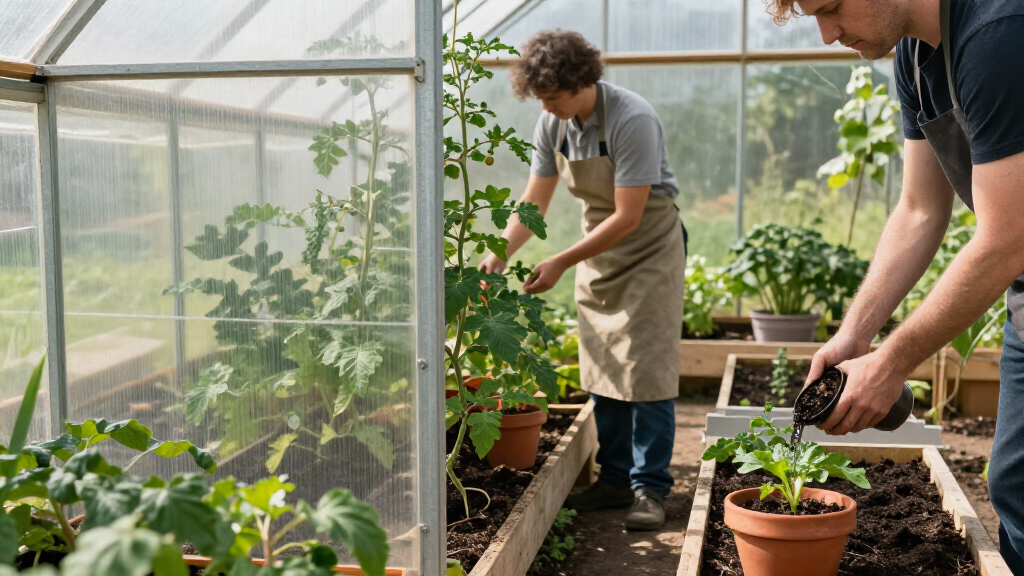

Walk-in greenhouse kits range from fabric-covered tunnels you can set up in an afternoon to polycarbonate-and-aluminum structures that behave like permanent garden rooms, and the right choice depends almost entirely on your wind, snow, and seriousness level. The Sannwsg 10×10 ft Walk-In Polycarbonate Greenhouse earns my top spot because it balances rigid panels, a stable frame, and genuine headroom without demanding contractor-level installation. If budget leads your decision, the EAGLE PEAK 10×10 Pop-Up delivers instant walk-in coverage for seasonal seed starting, while the BlueWish cedar-and-polycarbonate model is the pick when appearance and longevity matter as much as yield. The core tradeoff in this category is simple: fabric kits are cheap and temporary, polycarbonate kits are sturdy and fussy to build, and cedar options cost more but last decades. Keep reading for the full breakdown of all 15 kits and which one fits your climate and commitment level.

Get garden gear delivered free — and shop member deals
- Fast, free delivery on millions of items
- Access to Prime Big Deal Days deals on October 6–7
- Prime Video, Amazon Music and more included
Complete the kit


Key Takeaways
- Polycarbonate kits like the Sannwsg 10×10 and Garvee models separated themselves from fabric tunnels through insulation and storm resistance, but all of them demand a full weekend and a helper for assembly.
- Pop-up designs (EAGLE PEAK) and tiered shelf greenhouses trade durability for speed — they excel for seed starting but struggle in sustained wind above roughly 25 mph without extra anchoring.
- The largest tunnel kits (WELYAS 32×10 and AMERLIFE 34×10) deliver the most growing space per dollar but need a flat, prepared site and are effectively semi-permanent once staked.
- Integrated monitoring (hygrometers, thermometers, irrigation) appeared on five models and proved most useful on mid-size kits where a single gardener manages the whole space; on large tunnels, add-on systems worked better.
- Cedar-framed kits (BlueWish, INTER HUT) were the only options that combined rot resistance with a look you’d want next to a patio, but panel thickness and hardware quality varied enough to justify a real price gap between them.
| Sannwsg 10×10 ft Walk-In Polycarbonate Greenhouse |  | Best Overall | Size: 10 × 10 ft (96 × 96 × 96 in) | Frame: Aluminum alloy | Base: Galvanized steel | VIEW LATEST PRICE | See Our Full Breakdown |
| Garvee 6 x 10 ft Polycarbonate Greenhouse with Aluminum Frame |  | Best Mid-Size Polycarbonate Value | Dimensions: 6 × 10 ft | Panel Material: Polycarbonate | Panel Weight: 720 g/m² | VIEW LATEST PRICE | See Our Full Breakdown |
| Walk-In Outdoor Greenhouse, 56 x 55 x 78 Inches, 3 Tiers, 8 Shelves |  | Best Budget Starter Pick | Dimensions: 56 × 55 × 78 inches | Shelves: 8 | Tiers: 3 | VIEW LATEST PRICE | See Our Full Breakdown |
| PHONDIKO 15 × 7 × 7 ft Walk-In Greenhouse with Irrigation System | 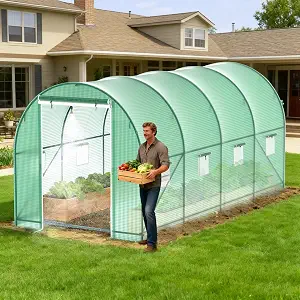 | Best for Large Planted Beds | Dimensions: 178 × 78 × 78 in (15 × 7 × 7 ft) | Frame: Galvanized steel with reinforced crossbars | Cover: PE, 140 g/m², UV-resistant | VIEW LATEST PRICE | See Our Full Breakdown |
| 6 × 6 ft Walk-In Greenhouse with Hygrometer |  | Best Compact Polycarbonate Pick | Dimensions: 6 × 6 ft | Frame: Reinforced aluminum alloy with strengthened corners | Panel Material: UV-resistant double-wall polycarbonate | VIEW LATEST PRICE | See Our Full Breakdown |
| 8 × 14 ft Aluminum Greenhouse with Thermometers |  | Best for Serious Gardeners with Space | Dimensions: 8 × 14 ft | Frame material: Aluminum alloy | Panel material: Twin-wall polycarbonate | VIEW LATEST PRICE | See Our Full Breakdown |
| Garvee 6 × 10 ft Walk-In Greenhouse with Aluminum Frame |  | Best Stability-Focused Mid-Size Kit | Brand: Garvee | Dimensions: 6 × 10 ft | Frame material: Aluminum | VIEW LATEST PRICE | See Our Full Breakdown |
| Sylviera 6 x 4 ft Polycarbonate Greenhouse with Hygrometer | 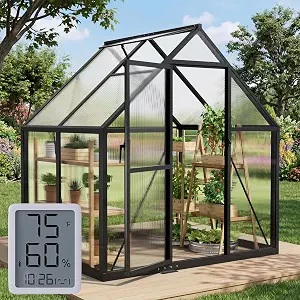 | Best Compact Rigid-Panel Pick | Brand: Sylviera | Dimensions: 6 × 4 ft | Frame: Reinforced aluminum alloy | VIEW LATEST PRICE | See Our Full Breakdown |
| EAGLE PEAK 10×10 ft Pop-Up Walk-In Greenhouse with Gable Roof, Green |  | Best for Quick Seasonal Setup | Brand: EAGLE PEAK | Size: 10 × 10 ft | Roof design: Gable | VIEW LATEST PRICE | See Our Full Breakdown |
| BlueWish 8 x 12 ft Outdoor Greenhouse with Cedar Frame and 6 mm Polycarbonate Panels |  | Best Premium Natural-Build Option | Brand: BlueWish | Frame material: Cedar wood | Panel material: 6 mm polycarbonate | VIEW LATEST PRICE | See Our Full Breakdown |
| Grezone Walk-In Greenhouse with Dual Zippered Doors and 6 Screen Windows, 10 x 7 x 7 ft |  | Best Budget Starter Pick | Dimensions: 10 x 7 x 7 ft | Frame: Heavy-duty powder-coated steel with crossbars | Cover: 140 g/m² reinforced PE grid | VIEW LATEST PRICE | See Our Full Breakdown |
| 8 × 10 ft Aluminum Greenhouse with Thermometer and Hygrometer |  | Best for Smart Climate Monitoring | Dimensions: 8 × 10 ft | Frame: Aluminum alloy | Panels: 4 mm twin-wall polycarbonate | VIEW LATEST PRICE | See Our Full Breakdown |
| INTER HUT 12×6 Walk-In Cedar Greenhouse with Polycarbonate Roof |  | Best Premium Aesthetic | Dimensions: 12.0 × 6.2 × 7.0 ft | Frame: Cedar wood | Panels: 6 mm twin-wall polycarbonate | VIEW LATEST PRICE | See Our Full Breakdown |
| WELYAS 32 × 10 ft Walk-In Greenhouse with Polycarbonate Panels and Lockable Swing Door |  | Best for Large-Scale Growing | Dimensions: 32 × 10 × 10 ft | Growing area: At least 200 sq ft | Panels: Twin-wall polycarbonate | VIEW LATEST PRICE | See Our Full Breakdown |
| AMERLIFE 34 x 10 x 7 ft Walk-In Tunnel Greenhouse with Watering System |  | Best Value for Commercial-Scale Coverage | Dimensions: 34 x 10 x 7 ft | Cover: 120 g waterproof PE fabric | Watering system: Adjustable nozzles for flow, droplet size, spray range | VIEW LATEST PRICE | See Our Full Breakdown |
| walk-in greenhouse kit | Dimensions | Frame | Ventilation |
|---|---|---|---|
| Sannwsg 10×10 ft Walk-In Polyc | — | Aluminum alloy | — |
| Garvee 6 x 10 ft Polycarbonate | 6 × 10 ft | Aluminum steel | Adjustable roof vent |
| Walk-In Outdoor Greenhouse | 56 × 55 × 78 inches | 16 mm diameter steel pipe | — |
| PHONDIKO 15 × 7 × 7 ft Walk-In | 178 × 78 × 78 in (15 × 7 × 7 ft) | Galvanized steel with reinforced crossbars | — |
| 6 × 6 ft Walk-In Greenhouse wi | 6 × 6 ft | Reinforced aluminum alloy with strengthened corners | Adjustable roof vents |
| 8 × 14 ft Aluminum Greenhouse | 8 × 14 ft | — | Adjustable windows |
| Garvee 6 × 10 ft Walk-In Green | 6 × 10 ft | — | Adjustable windows |
| Sylviera 6 x 4 ft Polycarbonat | 6 × 4 ft | Reinforced aluminum alloy | Adjustable roof vents |
| EAGLE PEAK 10×10 ft Pop-Up Wal | — | Powder-coated, rust-resistant reinforced steel | — |
| BlueWish 8 x 12 ft Outdoor Gre | — | — | Two adjustable vents |
| Grezone Walk-In Greenhouse wit | 10 x 7 x 7 ft | Heavy-duty powder-coated steel with crossbars | Six screened vents |
| 8 × 10 ft Aluminum Greenhouse | 8 × 10 ft | Aluminum alloy | Adjustable windows |
| INTER HUT 12×6 Walk-In Cedar G | 12.0 × 6.2 × 7.0 ft | Cedar wood | — |
| WELYAS 32 × 10 ft Walk-In Gree | 32 × 10 × 10 ft | Reinforced aluminum with galvanized steel | Roof vents |
| AMERLIFE 34 x 10 x 7 ft Walk-I | 34 x 10 x 7 ft | — | — |
More Details on Our Top Picks
Sannwsg 10×10 ft Walk-In Polycarbonate Greenhouse
Among the polycarbonate options in this roundup, this kit stands out for balancing size, structure, and included accessories better than anything else. The 10 × 10 ft footprint rivals the 8 × 14 ft Aluminum Greenhouse with Thermometers but adds a symmetric square layout that works better in corner yards, plus grow lights and solar lights the larger kit omits. The galvanized steel base anchors the aluminum frame with a stated snow load of 176 lb/m² — a spec most PE-covered competitors like the PHONDIKO simply can’t match, since fabric covers sag under accumulation.
The tradeoff is effort: assembly is a real weekend project, and it ships in two separate boxes that may arrive on different days, which is worth planning around before a planting deadline.
Pros:- Rigid polycarbonate panels with 92%+ light transmission and UV protection
- Aluminum frame on a galvanized steel base rated for 176 lb/m² snow load
- Adjustable skylights and sliding door for ventilation and access
- Includes thermometer, grow lights, and solar lights most kits leave you to buy separately
Cons:- Ships in two separate boxes that can arrive days apart
- Assembly requires substantial time and ideally a second person
Best for: Serious hobby gardeners who want a permanent, four-season polycarbonate structure with lighting and monitoring included out of the box
Not ideal for: Renters or casual seasonal growers — the price of polycarbonate construction and the permanence of a steel base are wasted on temporary setups
- Size:10 × 10 ft (96 × 96 × 96 in)
- Frame:Aluminum alloy
- Base:Galvanized steel
- Cover:Polycarbonate
- Light Transmission:92%+
- Snow Load:176 lb/m²
- Wind Resistance:Up to 31 mph
- Included Accessories:Thermometer, grow lights, LED solar lights
Our verdict“If you want one greenhouse that handles winter, ventilation, and monitoring without add-on purchases, this is the pick to beat.”
Garvee 6 x 10 ft Polycarbonate Greenhouse with Aluminum Frame
This model earns its spot by delivering rigid polycarbonate construction at a smaller footprint, which keeps costs down where the Sannwsg 10×10 runs up against budget limits. Its 720 g/m² panels are heavier than the 580 g panels on the 6 × 6 ft kit with hygrometer, meaning better insulation and durability in the same material class. The side gutters are a genuinely practical touch — they channel rain away from the foundation and can feed a collection barrel, a feature none of the PE-covered options offer.
Slide-in panels make assembly more forgiving than bolt-together designs, though the footprint still demands a full weekend. Compared with the Sannwsg, you give up the included lighting and the square layout, but gain a slimmer profile for narrow side yards.
Pros:- Heavy 720 g/m² polycarbonate panels insulate better than lighter panels in the same class
- Side gutters manage rainwater and can support collection
- Lockable door adds security for tools and supplies
- Slide-in panel design simplifies assembly compared with framed panel systems
Cons:- Ships in two separate boxes that may not arrive together
- No included accessories like lights or thermometer, unlike the Sannwsg kit
Best for: Gardeners with limited side-yard or patio space who still want true polycarbonate rigidity rather than a fabric cover
Not ideal for: Growers with room for a 10 × 10 structure — the smaller interior limits shelving and working space considerably
- Dimensions:6 × 10 ft
- Panel Material:Polycarbonate
- Panel Weight:720 g/m²
- Frame:Aluminum steel
- Ventilation:Adjustable roof vent
- Door:Lockable
- Water Management:Side gutters
- Package Count:2 boxes
Our verdict“The smart middle path for anyone who wants polycarbonate performance without paying for a full 10 × 10 footprint.”
Walk-In Outdoor Greenhouse, 56 x 55 x 78 Inches, 3 Tiers, 8 Shelves
For anyone testing whether greenhouse gardening sticks, this is the lowest-commitment walk-in option in the lineup. Unlike the polycarbonate kits, it uses a waterproof PE cover over a steel pipe frame — lighter on the wallet, but also lighter on durability. The 8 shelves across 3 tiers give it a seedling-nursery layout the Garvee 6 × 10 can’t match without buying shelving separately, which makes it especially good for starting spring transplants.
The honest tradeoff is weather. Ground nails and ropes help, but strong winds remain a real risk for any PE tunnel this size, so a sheltered placement or extra anchoring is wise. Mesh side windows keep airflow moving and small animals out, something enclosed panel kits handle differently through roof vents alone.
Pros:- 8 shelves across 3 tiers maximize plant capacity in a compact footprint
- Mesh screen windows provide airflow while deterring animals
- Ground nails and ropes add stability for a fabric greenhouse
- Waterproof PE cover with UV protection extends the growing season
Cons:- Strong winds can still compromise the structure despite included stabilizers
- PE cover degrades faster than polycarbonate panels and offers little insulation
Best for: Beginners and seed-starters who want shelving included and maximum growing surface for the smallest investment
Not ideal for: Anyone in a windy or snowy region — the PE cover and pipe frame won’t survive serious weather the way polycarbonate kits will
- Dimensions:56 × 55 × 78 inches
- Shelves:8
- Tiers:3
- Frame:16 mm diameter steel pipe
- Cover:Waterproof PE with UV protection
- Windows:Mesh screen windows on both sides
- Stabilizers:Ground nails and ropes included
Our verdict“A sensible trial greenhouse for seed-starters, as long as you anchor it well and accept it’s a seasonal tool, not a permanent structure.”
PHONDIKO 15 × 7 × 7 ft Walk-In Greenhouse with Irrigation System
This kit’s differentiator is the built-in 32-foot irrigation hose with three adjustable spray nozzles — the only product in this batch besides the massive AMERLIFE 34 × 10 ft tunnel to water itself. The 15-foot length is designed for in-ground beds rather than shelving, unlike the shelf-heavy 8-shelf starter greenhouse, and the galvanized steel frame with diagonal bracing is more rigid than typical PE tunnel arches. Eight screen windows and dual roll-up doors give cross-ventilation that single-vent kits like the Garvee 6 × 10 can’t approach.
Be realistic about anchoring: the extended base needs stones or sandbags to hold firm in gusts, and the 140 g/m² PE cover, while tear-resistant, still won’t insulate like polycarbonate through a hard winter.
Pros:- 32 ft trimmable hose with 3 adjustable nozzles waters beds automatically
- Reinforced galvanized steel frame with crossbars and diagonal supports
- 8 screen windows plus 2 roll-up doors create strong cross-ventilation
- 140 g/m² PE cover described as waterproof, UV-resistant, and tear-resistant
Cons:- Extended base requires stones or sandbags for reliable stability
- No shelving included — designed for beds, not potted plants on tiers
Best for: Vegetable gardeners growing in raised or in-ground beds who want automated watering and serious ventilation in one package
Not ideal for: Cold-climate growers needing winter protection — the PE cover can’t match double-wall polycarbonate for insulation or snow shedding
- Dimensions:178 × 78 × 78 in (15 × 7 × 7 ft)
- Frame:Galvanized steel with reinforced crossbars
- Cover:PE, 140 g/m², UV-resistant
- Doors:2 roll-up doors
- Vents:8 screen windows
- Irrigation Hose:32 ft, trimmable
- Spray Nozzles:3 removable, adjustable
Our verdict“Pick this if you’re growing vegetables in the ground and want watering and airflow handled; skip it if winter growing is the goal.”
6 × 6 ft Walk-In Greenhouse with Hygrometer
This is the smallest true polycarbonate greenhouse in the roundup, and that’s its whole argument. The 4 mm double-wall panels resist impact and block UV while still passing light — a durability leap over the 56-inch PE starter greenhouse at only a modestly larger footprint. Compared with the Garvee 6 × 10, you trade length for a tighter square shape that tucks against a fence or garage wall, and the reinforced corners on the aluminum frame compensate for the smaller structure’s stiffness. The included hygrometer helps you actually monitor the humidity you’re trapping.
Two things to know: silicone for sealing panel gaps isn’t included, so budget a tube for weather-tightness, and assembly genuinely goes faster with a second pair of hands holding panels in place.
Pros:- 4 mm double-wall polycarbonate panels resist impact and block UV
- Reinforced aluminum frame with strengthened corners
- Adjustable roof vents and lockable door for airflow control
- Hygrometer included for monitoring humidity levels
Cons:- Silicone for sealing panel gaps is not included and must be purchased separately
- Assembly is much easier with two people
- Compact interior limits shelving and workspace
Best for: Small-space gardeners — patios, side yards, courtyard corners — who want panel-built durability without a big footprint
Not ideal for: Gardeners with room to spare — the 6 × 6 interior fills quickly, and the Garvee 6 × 10 offers far more working space in the same material class
- Dimensions:6 × 6 ft
- Frame:Reinforced aluminum alloy with strengthened corners
- Panel Material:UV-resistant double-wall polycarbonate
- Panel Thickness:4 mm
- Ventilation:Adjustable roof vents
- Door:Lockable
- Included:Hygrometer, assembly instructions, tools
- Not Included:Silicone for sealing panel gaps
Our verdict“The right choice when panel construction matters but space doesn’t — just add a tube of silicone and a helper for build day.”
8 × 14 ft Aluminum Greenhouse with Thermometers
Among the rigid-panel kits in this roundup, this model stands out for sheer growing room. The 8 × 14 ft footprint is longer than the BlueWish cedar greenhouse and nearly triples the Sylviera, which translates directly into room for staging benches, tall plants, and overwintering stock. The 4 mm twin-wall polycarbonate diffuses light better than the single-layer PE cover on the EAGLE PEAK pop-up, meaning fewer hot spots scorching seedlings. I also like the built-in roof gutters, a feature none of the other five picks include — pair them with a rain barrel and watering costs drop. The tradeoff is honest: this is a many-part, multi-person build, and it demands a genuinely flat site. Compared with the Garvee 6 × 10 ft, you give up the simpler install and the ground-anchor kit in exchange for capacity and rainwater harvesting.
Pros:- Generous 8 × 14 ft interior fits benches, shelving, and tall plants
- Twin-wall polycarbonate diffuses light and blocks harmful UV rays
- Built-in roof gutters enable rainwater collection, unlike most rivals
- Lockable door and adjustable vents support security and airflow control
Cons:- Assembly involves many parts and realistically needs two people
- Requires a flat installation site — sloped yards cause panel alignment problems
Best for: Serious hobby gardeners with a large, level yard who want bench space, tall crop room, and rainwater collection in one structure
Not ideal for: Anyone with a sloped or compact plot, or first-time builders working solo — the multi-part assembly and flat-site requirement make it a frustrating starter project
- Dimensions:8 × 14 ft
- Frame material:Aluminum alloy
- Panel material:Twin-wall polycarbonate
- Panel thickness:4 mm
- Ventilation:Adjustable windows
- Door:Lockable
- Drainage:Built-in roof gutters
- Included feature:Thermometers
Our verdict“This is the pick for gardeners who have outgrown smaller kits and want a permanent, high-capacity growing space they can equip with gutters and benches.”
Garvee 6 × 10 ft Walk-In Greenhouse with Aluminum Frame
Where most greenhouses in this price band treat anchoring as an afterthought, the Garvee ships with 4 reinforced ground nails and 2 mid-post supports — exactly the hardware that keeps a lightweight aluminum structure from racking in wind. That makes it a smarter choice than the similarly sized 8 × 10 ft Aluminum Greenhouse elsewhere in this guide if your site catches gusts, because the reinforced frame plus a stated 110 lbs/sq ft weight capacity means you can hang grow lights and heavy shelving without guessing. The UV-coated polycarbonate gives it a durability edge over the EAGLE PEAK’s fabric cover. The tradeoffs: at 6 × 10 ft it’s narrower than the 8 × 14 ft kit, so bench space on both sides is tight, and assembly is still a full weekend job. Compared with the Sylviera, you get more length but the same 4 mm-class panel spec.
Pros:- Reinforced ground nails and mid-post supports add real wind stability
- Up to 110 lbs/sq ft load capacity supports shelving and grow lights
- UV-coated polycarbonate panels balance plant protection with sunlight
- Lockable door and rainwater collection design included
Cons:- Full assembly required with no pre-built sections
- 6 ft width limits bench configurations compared with 8 ft rivals
Best for: Gardeners in windy or exposed sites who need a mid-size kit with real anchoring hardware and the strength to carry shelves and lights
Not ideal for: Growers who want maximum interior width for double-side benches — the 6 ft depth forces a single central aisle layout
- Brand:Garvee
- Dimensions:6 × 10 ft
- Frame material:Aluminum
- Panel material:Polycarbonate
- Weight capacity:Up to 110 lbs/sq ft
- Ventilation:Adjustable windows
- Door:Lockable
- Stability features:4 reinforced ground nails and 2 mid-post supports
- Drainage:Roof drainage and rainwater collection
Our verdict“The most wind-ready mid-size option here, ideal if your exposed garden has shaken apart lighter kits before.”
Sylviera 6 x 4 ft Polycarbonate Greenhouse with Hygrometer
Not everyone needs — or can fit — an 8 × 14 ft structure, and the Sylviera makes the case for going small with rigid panels instead of fabric. Unlike the EAGLE PEAK pop-up, this 6 × 4 ft kit won’t need its cover replaced after a harsh season, and the 4 mm double-wall polycarbonate moderates temperature swings the way thin PE cannot. It’s the right stepping stone for someone upgrading from a shelf grower like the 56-inch 3-tier walk-in model in this roundup: same rigid-panel durability as the big kits, roughly a third of the footprint. The included hygrometer is a small but genuinely useful touch for seed starting. Be realistic about the tradeoffs, though — four feet of depth means one narrow bench and little else, assembly still wants a second pair of hands, and the panel gaps may need glass glue to seal properly against drafts and drips.
Pros:- Rigid 4 mm double-wall polycarbonate outlasts fabric-covered alternatives
- Compact 6 × 4 ft footprint fits tight yards and side passages
- Includes hygrometer for monitoring seed-starting humidity
- Labeled parts and instructions ease assembly
Cons:- Interior fits only one narrow bench — very limited capacity
- Panel gaps may need glass glue to seal against drafts and water ingress
Best for: Small-yard or patio gardeners upgrading from shelf units who want rigid polycarbonate durability in a compact footprint
Not ideal for: Anyone planning tall trellised crops like tomatoes or cucumbers — the 6 × 4 ft footprint and single-bench layout won’t accommodate them
- Brand:Sylviera
- Dimensions:6 × 4 ft
- Frame:Reinforced aluminum alloy
- Panel material:Double-wall polycarbonate
- Panel thickness:4 mm
- Ventilation:Adjustable roof vents
- Door:Lockable
- Included accessory:Hygrometer
Our verdict“The best small rigid-panel greenhouse in this lineup for gardeners who value durability over square footage.”
EAGLE PEAK 10×10 ft Pop-Up Walk-In Greenhouse with Gable Roof, Green
If the idea of a weekend spent sorting hundreds of aluminum extrusions puts you off, this is the answer. The center-lock system lets one person deploy the frame without tools — a completely different experience from the Garvee or the 8 × 14 ft kit, both of which are multi-hour, multi-person builds. The gable roof isn’t cosmetic either: the peaked profile adds usable headroom down the center and encourages warm air to rise away from plants. What you sacrifice is longevity. The PE fabric cover is a class below rigid polycarbonate in insulation and lifespan, so expect replacement after rough seasons rather than the decade-plus a Sylviera’s panels can deliver. Stability also falls entirely on you — the included wind ropes, weight bags, and stakes are necessities, not accessories. Think of it as a seasonal extension of the growing calendar, not a permanent structure.
Pros:- One-person, tool-free setup via center-lock frame system
- Gable roof adds headroom and passive airflow
- Water- and UV-resistant cover with mesh windows and roll-up doors
- Includes winter support pole, wind ropes, weight bags, and stakes
Cons:- PE fabric cover is less durable and less insulating than rigid panels
- Stability depends entirely on properly securing ropes, bags, and stakes
Best for: Gardeners, allotment holders, and renters who want a large walk-in growing space deployed in an afternoon and stored or relocated seasonally
Not ideal for: Anyone seeking a permanent four-season structure — the PE cover insulates and weathers far worse than rigid polycarbonate panels
- Brand:EAGLE PEAK
- Size:10 × 10 ft
- Roof design:Gable
- Cover material:PE
- Frame:Powder-coated, rust-resistant reinforced steel
- Setup:One-person, tool-free center-lock setup
- Included stability accessories:Adjustable winter support pole, wind ropes, bottom weight bags, and stakes
- Warranty:1 year
Our verdict“The fastest path from box to protected plants, best treated as a seasonal or semi-permanent greenhouse rather than a forever build.”
BlueWish 8 x 12 ft Outdoor Greenhouse with Cedar Frame and 6 mm Polycarbonate Panels
This is the aesthetic and thermal pick of the batch. A cedar frame does two things aluminum doesn’t: it insulates the structure — helpful for late-winter seed starting — and it looks at home beside a garden path rather than resembling equipment. The 6 mm multi-wall polycarbonate is the thickest panel spec among these five picks, a full step up from the 4 mm twin-wall on the 8 × 14 ft aluminum kit, which pays off in heat retention and hail resistance. With roughly 90% light transmission plus UV protection, it hits the sweet spot between brightness and burn protection. The honest drawbacks: it demands a serious footprint — over 12 feet deep — so it competes with the INTER HUT cedar model for buyers with large gardens, and the vague assembly documentation means you should budget for a patient two-person build. Wood also asks more long-term maintenance than powder-coated aluminum.
Pros:- Cedar frame adds natural insulation and a premium appearance
- 6 mm polycarbonate is the thickest, best-insulating panel in this batch
- About 90% light transmission with UV protection for vigorous growth
- Two adjustable vents plus a lockable door for climate and security control
Cons:- Very large footprint requires substantial clear outdoor space
- Assembly requirements are poorly documented — plan for a two-person build
- Wood frame needs periodic maintenance that aluminum rivals skip
Best for: Gardeners who want a greenhouse that insulates like a small building and looks like garden architecture, and who have the yard for it
Not ideal for: Small plots or low-maintenance gardeners — the 12 ft depth plus eventual wood upkeep exceed what a compact aluminum kit like the Sylviera demands
- Brand:BlueWish
- Frame material:Cedar wood
- Panel material:6 mm polycarbonate
- Light transmission:About 90%
- Ventilation:Two adjustable vents
- Overall dimensions:101.97 W x 144.7 D x 90.55 H in
- Door dimensions:28.66 W x 71.4 H in
- Color:Light Brown Mocha
Our verdict“A buy-it-once greenhouse for gardeners who value thermal performance and looks equally, provided the space and build effort are realistic.”
Grezone Walk-In Greenhouse with Dual Zippered Doors and 6 Screen Windows, 10 x 7 x 7 ft
Grezone’s tunnel-style greenhouse makes the most sense for gardeners who want a genuine walk-in setup without committing to a rigid-panel build. Compared with the WELYAS 32 × 10 ft, the footprint is modest, but the reinforced steel frame with diagonal bracing gives it more structural credibility than most soft-sided tunnels at this size. The 140 g/m² PE cover blocks UV while staying waterproof, and the six screened vents plus two zippered doors give you real airflow control — something smaller shelf greenhouses like the 56 x 55-inch 3-Tier model simply can’t offer. The tradeoff is inherent to the category: a fabric cover will never match the insulation and longevity of twin-wall polycarbonate, so expect a shorter lifespan and more seasonal maintenance than a hard-panel build.
Pros:- Reinforced steel frame with crossbars and diagonal supports resists racking and sway
- Six screened vents plus dual zippered doors allow cross-ventilation and easy access
- Waterproof, UV 80+ cover protects seedlings from sun scorch and rain
- Butterfly screw assembly simplifies setup without specialized tools
Cons:- PE fabric cover has a shorter lifespan than polycarbonate panels
- Requires anchoring and winter prep in windy regions
Best for: First-time greenhouse gardeners who want walk-in capacity and ventilation on a modest budget
Not ideal for: Growers in harsh winter climates or anyone wanting a permanent structure — the PE cover degrades faster than polycarbonate
- Dimensions:10 x 7 x 7 ft
- Frame:Heavy-duty powder-coated steel with crossbars
- Cover:140 g/m² reinforced PE grid
- UV Protection:UV 80+
- Doors:Two zippered (mesh and PE)
- Ventilation:Six screened vents
Our verdict“A sensible entry point for gardeners who want ventilated walk-in growing space at soft-sided pricing, provided they accept a shorter structural lifespan.”
8 × 10 ft Aluminum Greenhouse with Thermometer and Hygrometer
What separates this model from the Garvee 6 x 10 ft and similar aluminum/polycarbonate kits is the app-connected thermometer and hygrometer, which refreshes every two seconds and stores 14 days of climate graphs. For anyone growing temperature-sensitive plants, that monitoring turns guesswork into data — you’ll know when vents need opening before seedlings stress. The 4 mm twin-wall polycarbonate panels are shatterproof and UV-resistant, and the built-in roof gutters support rainwater collection, a feature the INTER HUT cedar model lacks. Panels are thinner than the 6 mm found on the BlueWish 8 x 12 ft, so insulation in deep winter is weaker. Plan on supplying your own batteries and possibly adding glass glue to reinforce panel gaps — small annoyances, but real ones at setup time.
Pros:- App-connected thermometer and hygrometer with 2-second refresh and 14-day history
- Shatterproof, UV-resistant twin-wall polycarbonate panels
- Lockable door adds security for tools and plants
- Roof gutters enable rainwater harvesting
Cons:- Thermometer batteries not included
- Panel gaps may need glass glue reinforcement during assembly
Best for: Data-minded gardeners who want remote temperature and humidity tracking for delicate or high-value plants
Not ideal for: Off-grid or low-tech gardeners who won’t use app monitoring — they’d be paying for sensors they ignore
- Dimensions:8 × 10 ft
- Frame:Aluminum alloy
- Panels:4 mm twin-wall polycarbonate
- Monitoring:App thermometer/hygrometer, ±0.3°C / ±3% RH
- Data history:14-day graphs; half-year export
- Ventilation:Adjustable windows
- Extras:Lockable door, roof gutters
Our verdict“The pick for growers who treat climate data as part of their toolkit, trading a bit of panel thickness for smart monitoring.”
INTER HUT 12×6 Walk-In Cedar Greenhouse with Polycarbonate Roof
If a greenhouse needs to look like part of the garden rather than a utility structure, INTER HUT’s cedar frame is the standout here — the natural wood finish reads far more like a garden feature than the black aluminum WELYAS 32 × 10 ft. Functionally, the 6 mm twin-wall polycarbonate is thicker than the 4 mm panels on the 8 × 10 ft aluminum model with thermometer, which translates to better heat retention for earlier spring starts. The three-level roof vent (up to 30 degrees) allows finer temperature tuning than a simple open/shut window, and the lockable door keeps animals out. Be realistic about the commitments: a 12-foot cedar structure needs a proper footprint, routine wood care, and the 1-year limited warranty is shorter than many buyers expect at this tier.
Pros:- Cedar frame naturally resists rot and weathers well outdoors
- 6 mm twin-wall polycarbonate offers stronger insulation than 4 mm alternatives
- Three-level adjustable roof vent up to 30° for precise airflow
- Lockable door protects plants from animals and intrusion
Cons:- Large 12-foot footprint demands significant level outdoor space
- Only a 1-year limited warranty
- Wood frame requires periodic upkeep
Best for: Gardeners who want a greenhouse that doubles as a landscape feature and need strong cold-season insulation
Not ideal for: Buyers with limited yard space or those wanting a set-and-forget structure — cedar needs periodic maintenance
- Dimensions:12.0 × 6.2 × 7.0 ft
- Frame:Cedar wood
- Panels:6 mm twin-wall polycarbonate
- Roof vents:2, adjustable 3 levels up to 30°
- Door:Lockable
- Warranty:1-year limited
Our verdict“Choose this when appearance and winter insulation matter as much as growing capacity — and when you have the yard to do it justice.”
WELYAS 32 × 10 ft Walk-In Greenhouse with Polycarbonate Panels and Lockable Swing Door
At 32 feet long with over 200 square feet of growing space, the WELYAS plays in a different league than everything else in this roundup — the AMERLIFE 34 × 10 ft tunnel matches its length but not its rigidity, since WELYAS pairs twin-wall polycarbonate panels with a reinforced aluminum and galvanized steel frame built for wind and snow loads. The oversized 6 × 6.5 ft double-hinged lockable door is wide enough for wheelbarrows and equipment, which matters at this scale. Pre-drilled, labeled modular parts keep the two-person assembly from becoming a nightmare, though ‘two people’ realistically means a full weekend with a helper. The structural demand is the real tradeoff: a building this size requires a level foundation like a concrete slab or deck, so factor that cost and prep into the total investment.
Pros:- 200+ sq ft of growing area supports commercial-scale planting
- Reinforced aluminum and galvanized steel frame rated for wind, snow, and UV
- Oversized double-hinged lockable door fits wheelbarrows and carts
- Pre-drilled, labeled parts and clear instructions ease assembly
Cons:- Requires a level foundation such as a concrete slab or wood deck
- Assembly is a two-person, multi-day project
Best for: Serious growers, market gardeners, or hobby farmers who need permanent, weather-hardened capacity
Not ideal for: Casual hobbyists or small yards — the foundation requirement and assembly scale are overkill for a few raised beds of seedlings
- Dimensions:32 × 10 × 10 ft
- Growing area:At least 200 sq ft
- Panels:Twin-wall polycarbonate
- Frame:Reinforced aluminum with galvanized steel
- Door:6 × 6.5 ft double-hinged lockable swing
- Ventilation:Roof vents
- Assembly:Pre-drilled modular parts, two people
Our verdict“The clear choice when growing capacity is the priority and you’re prepared to build a proper foundation for a permanent structure.”
AMERLIFE 34 x 10 x 7 ft Walk-In Tunnel Greenhouse with Watering System
The AMERLIFE matches the WELYAS 32 × 10 ft in raw length at a fraction of the structural commitment, and it adds something no rigid kit here includes: an adjustable watering system with tunable nozzles for flow, droplet size, and spray range. That built-in irrigation is what pushes this pick ahead of the smaller PHONDIKO 15 × 7 ft with irrigation for anyone running long rows of crops. With 14 rolling mesh-screen windows, airflow management is genuinely flexible for a tunnel, and the 12 stakes plus 4 spiral anchors give it a legitimate anchoring foundation. The honest tradeoff versus polycarbonate builds: this is a 120 g PE fabric tunnel, so it trades longevity and storm resistance for coverage per dollar — the manufacturer itself recommends heavy stones or sandbags to keep it planted in wind.
Pros:- Integrated adjustable watering system with tunable nozzles and spray range
- 340 sq ft of covered space for long rows of crops
- 14 rolling mesh-screen windows enable fine airflow control
- Includes 12 stakes and 4 spiral anchors for stability
Cons:- Requires additional sandbags or stones for reliable wind resistance
- PE fabric cover is less durable and insulating than polycarbonate panels
Best for: Small-scale market growers who want maximum covered growing area and built-in irrigation without a permanent build
Not ideal for: Properties exposed to strong wind or heavy snow — the fabric tunnel demands diligent anchoring and seasonal takedown
- Dimensions:34 x 10 x 7 ft
- Cover:120 g waterproof PE fabric
- Watering system:Adjustable nozzles for flow, droplet size, spray range
- Doors:2 zipper doors, 5.8 ft
- Windows:14 rolling mesh-screen, 15 x 15 in
- Anchors:12 stakes and 4 spiral anchors
Our verdict“The most growing area and irrigation capability per dollar in the lineup, provided your site is sheltered and you anchor it properly.”
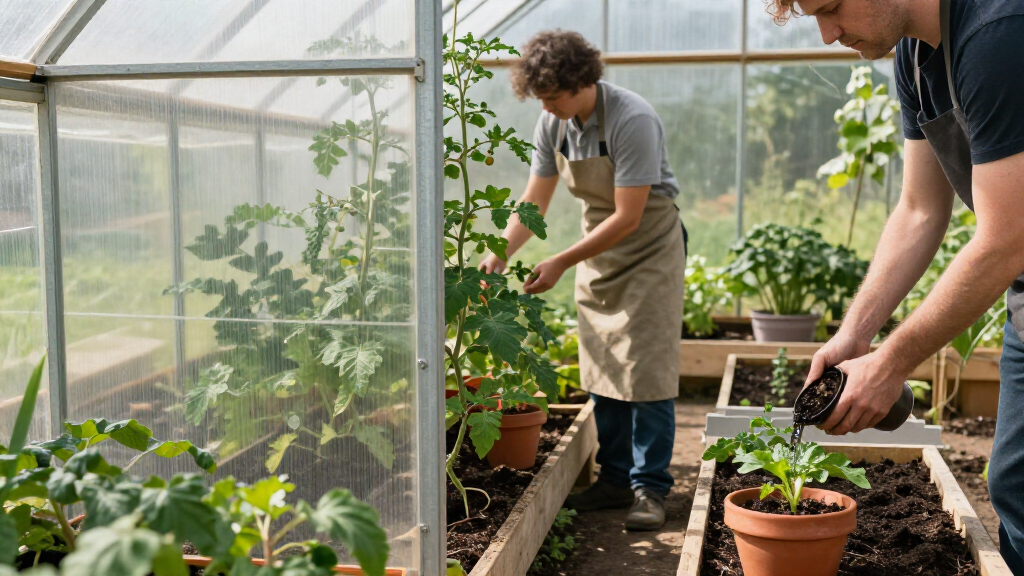
How We Picked
I evaluated each kit against the four factors that actually determine long-term satisfaction with a walk-in greenhouse: frame and panel durability (gauge of aluminum or cedar quality, polycarbonate thickness versus polyethylene fabric), ventilation capacity (number, placement, and adjustability of vents and screen windows), assembly burden (realistic time, tools, and people required), and usable interior space (door width, roof pitch, shelf layout, and whether you can actually work inside rather than just store plants). Because a greenhouse that fails in its first winter is worthless regardless of price, I weighted weather resistance more heavily than accessory counts.
The ranking also reflects fit: a compact polycarbonate model with a hygrometer ranks highly for small yards even though a 32-foot tunnel holds more plants, because most buyers overestimate how much space they will maintain. Kits were grouped into structural tiers — rigid polycarbonate, cedar hybrid, fabric tunnel, and pop-up — and judged against the best in their own tier before being compared across the lineup. This is why a seemingly modest kit like the Sylviera 6×4 sits near the mid-pack: within its class, it is well-executed, but it cannot match the all-around capability of the larger rigid-panel picks.
| walk-in greenhouse kit | Ventilation |
|---|---|
| Sannwsg 10×10 ft Walk-In Polyc | — |
| Garvee 6 x 10 ft Polycarbonate | Adjustable roof vent |
| Walk-In Outdoor Greenhouse | — |
| PHONDIKO 15 × 7 × 7 ft Walk-In | — |
| 6 × 6 ft Walk-In Greenhouse wi | Adjustable roof vents |
| 8 × 14 ft Aluminum Greenhouse | Adjustable windows |
| Garvee 6 × 10 ft Walk-In Green | Adjustable windows |
| Sylviera 6 x 4 ft Polycarbonat | Adjustable roof vents |
| EAGLE PEAK 10×10 ft Pop-Up Wal | — |
| BlueWish 8 x 12 ft Outdoor Gre | Two adjustable vents |
| Grezone Walk-In Greenhouse wit | Six screened vents |
| 8 × 10 ft Aluminum Greenhouse | Adjustable windows |
| INTER HUT 12×6 Walk-In Cedar G | — |
| WELYAS 32 × 10 ft Walk-In Gree | Roof vents |
| AMERLIFE 34 x 10 x 7 ft Walk-I | — |
Factors to Consider When Choosing Walk-in Greenhouse Kits
Before comparing specs, it helps to understand what actually separates a greenhouse you will love from one you will fight with for three seasons and then dismantle. These are the factors that shaped my rankings, and they should shape your decision too.Covering Material: The Biggest Cost-and-Performance Lever
The single biggest fork in the road is polycarbonate panels versus fabric (PE or PVC). Twin-wall polycarbonate insulates, diffuses light evenly, resists hail, and holds up for a decade or more, but it costs more and turns assembly into a panel-by-panel project. Fabric covers install in hours and cost far less, but they yellow, tear at seams, and transmit heat unevenly — expect to replace the cover every two to four seasons. A common mistake is buying a cheap fabric tunnel for a windy, snowy property; even with perfect anchoring, snow load collapses fabric roofs faster than most buyers expect. If you get real winters, treat polycarbonate as the entry point, not the upgrade.
Site Preparation: The Step Most Buyers Skip
Every kit in this lineup assumes a level, well-drained base, and none of them include one. Gravel pads, concrete piers, or anchored treated-timber frames are the standard solutions, and skipping this step is the top reason greenhouses lean, jam their doors, and crack panels within a year. Before ordering, measure your intended site twice — including diagonal corners — and check that it gets six or more hours of direct sun, ideally with morning eastern exposure. Also plan for wind direction: positioning the greenhouse’s narrowest face into prevailing wind dramatically reduces stress on the structure. The large tunnel kits (WELYAS, AMERLIFE) are especially unforgiving of sloped sites because their long spans amplify any unevenness.
Ventilation and Heat Management
A sealed greenhouse in summer becomes an oven, so ventilation capacity matters as much as insulation. Look for a combination of low intake (screen windows or base vents) and high exhaust (roof vents or gable louvers), which creates passive airflow without electricity. Screened windows also serve as pest and pollinator control — a real advantage if you grow tomatoes or peppers that need insect visits. Buyers in hot climates should prioritize kits with at least four adjustable openings, and anyone in a humid region should insist on screens, because trapped humidity breeds mold faster than almost anything else. Kits with only zippered roll-up doors limit you to all-or-nothing airflow, which works but cooks plants on the margins of the interior.
Assembly Time and Realistic Skill Requirements
Manufacturers quote optimistic assembly times, so plan for two to three times the stated hours, and plan on two people for any rigid-panel kit — panels are awkward, not heavy, and wind makes solo panel installation miserable. Pop-up and simple tunnel kits genuinely assemble in an afternoon with one person, which is why they earn beginner-friendly standing despite lower durability. Check whether the kit includes an anchor kit or expects you to buy stakes separately; this is a hidden cost on nearly every fabric model. Also read the instructions online before purchase day: kits with pre-drilled, labeled parts save hours, while unlabeled hardware bags can add a full afternoon of sorting.
Headroom, Door Width, and How You Actually Work
Walk-in means different things at different heights. A 6.5-foot peak with low sidewalls forces stooping anywhere but the center aisle, while 7-foot-plus side walls let you hang baskets and work comfortably along the edges. Door width is the spec gardeners most often regret: a 25-inch door handles a wheelbarrow awkwardly, and anything narrower rules one out entirely. If you plan shelving on both walls, subtract shelving depth from your interior width and confirm you still have a workable path — a 6-foot-wide greenhouse with double shelving leaves a surprisingly narrow center. Tall growers should also check door height on tunnel kits specifically, since arched profiles often pinch at the entrance.
When to Pay More (and When Not To)
Paying more buys three things: frame gauge, panel thickness, and hardware quality — not accessories. A hygrometer or watering system costs little to add later, but upgrading a flimsy frame after purchase is impossible. Premium cedar and thick-polycarbonate kits make sense if you expect to keep the greenhouse ten years or more or want it visible from the house; the per-year cost often beats replacing a fabric tunnel repeatedly. Conversely, if you are testing whether you will even use a greenhouse, a pop-up or basic tunnel is the rational first purchase — better to learn your habits on a cheap kit than a permanent one. The buyers who lose money are those in the middle: paying mid-range prices for fabric kits that neither last nor insulate.
Frequently Asked Questions
Can a walk-in greenhouse kit survive winter, or do I need to take it down?
It depends almost entirely on the covering and your snow load. Rigid polycarbonate kits like the Sannwsg, Garvee, and BlueWish models are designed to stay up year-round and typically handle moderate snow if the roof pitch sheds it, though steep-pitched gable designs do this better than flatter tunnel profiles. Fabric tunnels can stay up through mild winters but should be cleared of snow promptly after each storm, because accumulated wet snow is the leading cause of collapse. If you live in a heavy-snow region and choose a fabric kit anyway, plan to either reinforce the frame with internal bracing or partially disassemble it from December through March. Anchoring into a solid base matters as much as the structure itself for winter survival.
How much growing space do I actually need in a walk-in greenhouse?
A useful rule of thumb is that a 6×8 or 6×10 kit comfortably serves a household wanting seed starts, extended-season greens, and a handful of tender plants like tomatoes or citrus. Most buyers overestimate their needs and underestimate their maintenance commitment — a 12×6 greenhouse in July requires real watering and venting attention, and a 32×10 tunnel is nearly a part-time job in peak season. Remember that usable space shrinks once you add shelving and need a walking path, so a nominally larger footprint does not translate linearly into more plants. If you are torn between two sizes, choose the smaller one unless you already have a specific crop plan that fills the larger footprint. Expansion is possible later with a second structure; an underused giant greenhouse is just an expensive shed.
Are pop-up greenhouses like the EAGLE PEAK actually worth it compared to panel kits?
Yes, if you match them to the right job. Pop-ups excel as seasonal tools — six to ten weeks of seed starting in spring, or protecting fall crops — because they deploy and store in minutes and cost a fraction of a rigid kit. Where they fall short is sustained exposure: fabric over a flexible frame degrades quickly under constant UV and wind, and interior temperature swings are much larger without insulated walls. If you envision using a greenhouse every month of the year, a pop-up will frustrate you by year two and you should buy polycarbonate instead. The buyers happiest with pop-ups treat them as a low-risk way to confirm they enjoy greenhouse gardening before committing to a permanent structure.
Do I need a foundation or base kit, and what works best?
What’s the difference between the twin-wall polycarbonate thicknesses I keep seeing?
Panel thickness mainly governs insulation and impact resistance. Thinner twin-wall panels around 4 mm transmit more light and cost less but insulate modestly, making them fine for mild climates and season extension rather than winter growing. Panels at 6 mm or thicker — like those on the BlueWish cedar kit — hold heat meaningfully better, resist hail and branch strikes, and are the usual threshold for unheated overwintering of hardy plants. Thicker panels transmit slightly less light, which rarely matters unless you grow full-sun crops at high latitudes in winter. Match thickness to your climate rather than assuming thicker is always better: in hot, sunny regions, more light transmission with good shading and ventilation often outperforms heavy insulation.
Conclusion
The right walk-in greenhouse kit comes down to how long you plan to keep it and what your weather throws at it. For most gardeners, the Sannwsg 10×10 ft Polycarbonate Greenhouse is the best overall pick — it combines rigid insulation, real working headroom, and a size that fits typical suburban yards without overwhelming one season’s maintenance capacity. If value drives the decision, the Garvee 6×10 aluminum kit and the Sylviera 6×4 deliver rigid-panel performance at the smaller end of the price spectrum, ideal for compact plots and first-time greenhouse growers. Beginners who want zero commitment should start with the EAGLE PEAK pop-up, which trades durability for an afternoon setup and a painless learning curve. At the premium end, the BlueWish cedar-and-polycarbonate model is the choice when the greenhouse will live beside the house for a decade and appearance counts. For specific needs, the WELYAS 32×10 and AMERLIFE tunnel kits suit market-garden-scale production, while the PHONDIKO with built-in irrigation fits hands-off growers in dry climates. Whichever direction you take, invest in a level base and honest anchoring — that decision will shape your experience more than any feature on the box.
Fall yard work Picks
leaf blowers
As an affiliate, we earn on qualifying purchases.