
For shoppers searching for the best computers, tablets & components, this lineup is really a choice between Windows flexibility, iPad polish, and budget Android convenience. My best overall pick is the Apple iPad 11-Inch With A16 Chip because it offers the strongest mix of speed, display quality, app support, and long-term usefulness. The Fusion5 Helios 12 Windows 11 Tablet stands out for buyers who need a larger screen, included stylus, and desktop-style software, while the Samsung Galaxy Tab A11+ makes more sense for affordable streaming, browsing, and light daily use. The main tradeoff is simple: iPads feel smoother and last longer, Windows tablets handle desktop workflows better, and lower-cost Android models stretch the budget but give up polish. Keep reading for the full breakdown of which option fits each buyer type.
Key Takeaways
- The Apple iPad 11-Inch With A16 Chip earns the top spot because its speed, app library, display, and resale value make it the safest long-term buy in this group.
- Windows tablets dominate for work compatibility, with the Fusion5 Helios 12 and QAZIPO 2-in-1 better suited to Office files, desktop apps, keyboards, and external accessories than the Android picks.
- The Samsung Galaxy Tab A11+ is the cleanest value choice because it avoids the storage and age compromises of the renewed iPad 7th Generation while staying easier to recommend than lesser-known budget tablets.
- Rugged and specialty Windows models, especially the Fusion5 WIN PRO Rugged, make sense only when durability matters more than sleek design, low weight, or premium tablet feel.
- Older renewed devices save money but carry limits; the Surface Go 2 and iPad 7th Generation can still be useful, yet battery history, software runway, and storage ceilings matter more than headline price.
| Fusion5 Helios 12 Windows 11 Tablet | 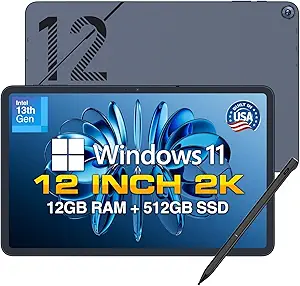 | Best Overall Windows Tablet | Display: 12-inch IPS touchscreen | Resolution: 2000 x 1200 | Processor: Intel 13th Gen CPU | VIEW LATEST PRICE | See Our Full Breakdown |
| Samsung Galaxy Tab A11+ 6GB RAM, 128GB Storage |  | Best Android Value Pick | Screen Size: 11 inches | Refresh Rate: Up to 90Hz | Memory: 6GB RAM | VIEW LATEST PRICE | See Our Full Breakdown |
| QAZIPO 2-in-1 Laptop Tablet with Magnetic Keyboard |  | Best Budget Laptop-Style 2-in-1 | Display: 12-inch 2K FHD IPS touchscreen | Color Coverage: 100% sRGB | Processor: Intel Pentium Gold 6500Y, up to 3.4GHz | VIEW LATEST PRICE | See Our Full Breakdown |
| Microsoft Surface Go 2 10.5-inch Touch-Screen Laptop Renewed |  | Best Compact Windows Tablet | Display: 10.5-inch PixelSense touchscreen | Resolution: 1920 x 1280, 216 ppi | Processor: Intel Core m3 up to 3.4Hz | VIEW LATEST PRICE | See Our Full Breakdown |
| Apple iPad 11-inch with A16 Chip |  | Best iPad for Everyday Performance | Display: 11-inch Liquid Retina with True Tone | Processor: Apple A16 chip | Storage: 128GB; available up to 512GB | VIEW LATEST PRICE | See Our Full Breakdown |
| Fusion5 WIN PRO Rugged Windows 11 Tablet – 12GB RAM, 512GB SSD, Intel 13th Gen |  | Best Rugged Windows Tablet | Operating System: Windows 11 Pro | Processor: Intel 13th Gen Alder Lake N100 | RAM: 12GB | VIEW LATEST PRICE | See Our Full Breakdown |
| URAO X109 10.1-inch Android 16 Tablet with Octa-core Processor, 30GB RAM, 128GB ROM |  | Best Budget Android Tablet | Operating System: Android 16 | Processor: 2GHz octa-core Allwinner | RAM: 30GB listed, 6GB plus 24GB virtual | VIEW LATEST PRICE | See Our Full Breakdown |
| Apple iPad 7th Generation, 10.2-Inch, Wi-Fi, 32GB, Space Gray (Renewed) |  | Best Renewed iPad Value | Brand: Apple | Model: iPad 7th Generation | Processor: A10 Fusion chip | VIEW LATEST PRICE | See Our Full Breakdown |
| 10.1-inch Windows 11 Tablet with 6GB RAM, 128GB Storage, Intel Processor |  | Best Windows Battery Pick | Operating System: Windows 11 Home | Processor: Intel processor | RAM: 6GB | VIEW LATEST PRICE | See Our Full Breakdown |
More Details on Our Top Picks
Fusion5 Helios 12 Windows 11 Tablet
Fusion5 Helios 12 earns the top Windows spot because it balances a 12-inch 2K IPS display, 12GB DDR5 RAM, and unusually broad port support better than the other Windows options here. Compared with the QAZIPO 2-in-1 Laptop Tablet, it feels more performance-focused: the Intel 13th Gen CPU and active fan make more sense for heavier multitasking, external displays, and desktop-style work. The tradeoff is mobility. Its 4-hour average battery life is weaker than the Microsoft Surface Go 2, and the missing keyboard means buyers need another accessory before it can fully replace a small laptop. I’d rank it highest for power and flexibility, but not for unplugged travel.
Pros:- Sharp 12-inch 2K IPS display with 400-nit brightness
- 12GB DDR5 RAM and 512GB SSD give it stronger multitasking headroom than many budget tablets
- Active cooling helps sustain performance during heavier Windows workloads
- Dual USB-C, HDMI, USB 3.0, and headphone support make it more flexible at a desk
Cons:- No physical keyboard is included
- Battery life averages only about 4 hours under load
- Expandable storage options are limited
Best for: Windows users who want tablet portability with laptop-like storage, RAM, and ports for work, study, and external displays.
Not ideal for: Frequent travelers who need long battery life or anyone who wants a keyboard included from day one.
- Display:12-inch IPS touchscreen
- Resolution:2000 x 1200
- Processor:Intel 13th Gen CPU
- Memory:12GB DDR5 RAM
- Storage:512GB SSD
- Battery Life:About 4 hours average
- Ports:2 x USB-C, USB 3.0, HDMI, 3.5mm jack
- Weight:690 grams / 1.52 lbs
- Operating System:Windows 11 Home
Bottom line: This is the Windows tablet I’d pick first for performance and connectivity, as long as short battery life is not a dealbreaker.
Samsung Galaxy Tab A11+ 6GB RAM, 128GB Storage
The Samsung Galaxy Tab A11+ ranks as the value choice because it focuses on the parts casual tablet buyers feel every day: a smooth 90Hz 11-inch screen, Dolby Atmos quad speakers, expandable storage, and lighter app-first software. Compared with the Apple iPad 11-inch with A16 Chip, it is likely the more practical pick for streaming, browsing, school portals, and shared family use if iPadOS apps are not required. It also avoids the Windows upkeep that comes with the Fusion5 Helios 12. The limits are clear, though: it is not built for desktop software, the charger situation adds friction, and Samsung does not list a precise battery capacity here. I’d choose it for media and everyday Android use, not for laptop replacement work.
Pros:- 11-inch display with up to 90Hz refresh for smoother scrolling
- Expandable 128GB storage is friendlier for downloaded media than fixed-storage tablets
- Quad speakers with Dolby Atmos suit movies, classes, and video content
- Google Gemini and Circle to Search add modern Android assistance features
Cons:- 25W fast charger is sold separately
- Battery capacity is not specified
- Less suitable for laptop-style productivity than the Windows models
Best for: Families, students, and casual users who want a larger Android tablet for streaming, notes, browsing, and expandable storage.
Not ideal for: Buyers who need Windows desktop apps, pro creative software, or a fully specified battery rating before purchase.
- Screen Size:11 inches
- Refresh Rate:Up to 90Hz
- Memory:6GB RAM
- Storage:128GB expandable
- Speakers:Quad speakers with Dolby Atmos
- Front Camera:5MP
- Charging:Fast charging support; 25W wall charger sold separately
- Warranty:2 years
Bottom line: This is the tablet I’d buy for affordable Android entertainment and daily use rather than desktop-grade work.
QAZIPO 2-in-1 Laptop Tablet with Magnetic Keyboard
The QAZIPO 2-in-1 Laptop Tablet makes the list because it solves a practical problem the Fusion5 Helios 12 does not: it includes a magnetic keyboard and a 1-year Office 365 subscription, so it is closer to a ready-to-work setup out of the box. Its 12-inch 2K IPS touchscreen and 512GB SSD also make it more capable than the smaller Microsoft Surface Go 2 for document-heavy school or remote work. I would still place it below the Fusion5 for raw Windows performance, since the Intel Pentium Gold 6500Y is a mid-range chip and can feel limiting with demanding apps. It is a smart value play, but buyers should see it as a portable productivity machine, not a workstation.
Pros:- Magnetic keyboard is included for laptop-style use
- 12-inch 2K IPS touchscreen with 100% sRGB coverage suits reading and light creative work
- 12GB RAM and 512GB SSD are strong for the price category
- 1-year Office 365 subscription adds real value for students and home workers
Cons:- Intel Pentium Gold 6500Y can struggle with heavier workloads
- Port selection is narrower than many full-size laptops
- Less performance-oriented than the Fusion5 Helios 12
Best for: Students and remote workers who want a Windows tablet that arrives with a keyboard and Office for writing, classes, and video calls.
Not ideal for: Users who run heavy creative software, large spreadsheets, or many demanding Windows apps at once.
- Display:12-inch 2K FHD IPS touchscreen
- Color Coverage:100% sRGB
- Processor:Intel Pentium Gold 6500Y, up to 3.4GHz
- Memory:12GB RAM
- Storage:512GB SSD
- Operating System:Windows 11 Home
- Ports:USB-C, Micro HDMI, headphone jack
- Weight:1.4 lbs / 0.63 kg
- Included Software:Office 365 1-year subscription
Bottom line: This is the practical pick for buyers who want a low-cost Windows 2-in-1 bundle for everyday productivity.
Microsoft Surface Go 2 10.5-inch Touch-Screen Laptop Renewed
The Microsoft Surface Go 2 is ranked for portability rather than muscle. At 1.15 pounds with up to 9 hours of battery life, it is easier to carry than the Fusion5 Helios 12 and more travel-friendly than the keyboard-focused QAZIPO 2-in-1 Laptop Tablet. Windows 11 Pro also gives it a more business-ready software base than the Android-powered Samsung Galaxy Tab A11+. The compromise is capacity: 8GB RAM and a 128GB SSD are modest, and the Type Cover is sold separately, so the real cost can climb. Since it is renewed, I’d recommend it to buyers comfortable with refurbished gear who care more about a compact Windows setup than maximum speed or storage.
Pros:- Very light 1.15-pound design is easy to carry daily
- Up to 9 hours of battery life beats the Fusion5 Helios 12 on unplugged use
- PixelSense display is sharp for reading and note-taking
- Windows 11 Pro suits business and managed-device environments
Cons:- Type Cover and key accessories are sold separately
- 128GB SSD fills faster than the 512GB Windows options
- Renewed status may not suit buyers who prefer new devices
Best for: Commuters, field workers, and light business users who need a very small Windows device with better battery life than larger Windows tablets.
Not ideal for: Buyers who want brand-new hardware, large onboard storage, or a keyboard included in the box.
- Display:10.5-inch PixelSense touchscreen
- Resolution:1920 x 1280, 216 ppi
- Processor:Intel Core m3 up to 3.4Hz
- Memory:8GB RAM
- Storage:128GB SSD
- Operating System:Windows 11 Professional
- Battery Life:Up to 9 hours
- Weight:Starting at 1.15 lbs
- Ports:USB-C, 3.5mm headphone jack, Surface Connect, MicroSDXC reader
Bottom line: This is the compact Windows choice I’d pick for mobility, provided storage and renewed hardware are acceptable tradeoffs.
Apple iPad 11-inch with A16 Chip
The Apple iPad 11-inch with A16 Chip belongs here because it offers the strongest app ecosystem and the most polished tablet experience in this group. Compared with the Samsung Galaxy Tab A11+, it is the better fit for buyers who care about iPadOS apps, smoother creative tools, and longer software appeal. Against the Fusion5 Helios 12, it trades desktop Windows flexibility for a lighter, simpler tablet with 12MP front and rear cameras and all-day battery life. The drawbacks are mostly about cost and expandability: 128GB base storage can feel tight, Apple Pencil and Magic Keyboard add expense, and there is no SD-style expansion. I’d pick it for creative notes, media, and family use, not for people who need full Windows software.
Pros:- A16 chip gives it strong everyday performance for apps, multitasking, and creative tools
- Liquid Retina display with True Tone is easy to read across changing lighting
- 12MP front and rear cameras support sharper calls, scans, and 4K video
- At 1.05 pounds, it is lighter than the larger Windows tablets
Cons:- 128GB base storage has no SD card expansion
- Apple Pencil and Magic Keyboard are sold separately
- Less suitable for desktop Windows applications than the Fusion5 or Surface models
Best for: Apple users, students, and creative note-takers who want a fast everyday tablet with strong apps and better cameras.
Not ideal for: Windows software users or buyers who need cheap expandable storage and included keyboard or stylus accessories.
- Display:11-inch Liquid Retina with True Tone
- Processor:Apple A16 chip
- Storage:128GB; available up to 512GB
- Battery Life:All-day battery life
- Cameras:12MP front and 12MP back with 4K video recording
- Connectivity:Wi-Fi 6
- Security:Touch ID
- Dimensions:9.79 x 7.07 x 0.28 inches
- Weight:1.05 pounds
Bottom line: This is the best choice here for buyers who want the iPad app ecosystem and strong everyday speed more than laptop-style flexibility.
Fusion5 WIN PRO Rugged Windows 11 Tablet – 12GB RAM, 512GB SSD, Intel 13th Gen
I rank the Fusion5 WIN PRO as the field-ready pick because it pairs Windows 11 Pro, a 512GB SSD, and a tougher shell with a warranty that covers accidental damage. Compared with the slimmer URAO X109 or the renewed Apple iPad 7th Generation, this is less about sofa browsing and more about warehouse, service, or outdoor work where drops and dust are real risks. It also has more storage than the 10.1-inch Windows 11 Tablet, which makes local files and desktop apps easier to manage. The tradeoff is portability: this model is likely heavier than standard tablets, and its higher price only makes sense if durability and Windows software matter more than a light bag.
Pros:- Rugged shockproof and dustproof build suits work sites
- 512GB SSD gives more local room than most budget tablets here
- Windows 11 Pro supports desktop software and business workflows
- Two-year warranty includes accidental damage coverage
Cons:- Likely heavier than standard consumer tablets
- Higher price makes less sense for casual home use
- 10.1-inch screen is smaller than larger productivity tablets in the roundup
Best for: Field technicians, warehouse teams, and mobile workers who need a rugged Windows tablet with local storage and damage coverage.
Not ideal for: Casual media users who mainly want a lightweight tablet for streaming, reading, and travel.
- Operating System:Windows 11 Pro
- Processor:Intel 13th Gen Alder Lake N100
- RAM:12GB
- Storage:512GB SSD, expandable with MicroSD
- Display:10.1-inch Full HD IPS, 500 nits
- Battery:6000mAh with 30W Type-C fast charger
- Connectivity:Dual-band Wi-Fi, Bluetooth 5.0
- Durability:Shockproof and dustproof
- Warranty:2 years including accidental damage
Bottom line: This is the Windows tablet I would point to when durability, warranty coverage, and storage matter more than slim design.
URAO X109 10.1-inch Android 16 Tablet with Octa-core Processor, 30GB RAM, 128GB ROM
The URAO X109 earns its place as the low-cost Android choice for buyers who want modern wireless specs, expandable storage, and a simple tablet setup without paying iPad money. Next to the Apple iPad 7th Generation, it offers more listed storage flexibility and newer Wi-Fi 6, while the iPad has the stronger app reputation and a cleaner long-term software story. I also rate it as more casual-friendly than the Fusion5 WIN PRO, since Android is easier for streaming, browsing, and kid-friendly apps. The catch is the 30GB RAM claim, which appears to include virtual memory rather than true physical RAM, so buyers should not expect laptop-class multitasking. The lack of GPS also limits travel and mapping uses.
Pros:- Android 16 setup suits everyday apps and entertainment
- 128GB storage expands up to 1TB with a TF card
- Wi-Fi 6 and Bluetooth 5.4 are strong for the price class
- Low blue light IPS display is better suited to longer reading sessions
Cons:- 30GB RAM figure likely includes virtual memory, which can overstate real performance
- No built-in GPS limits navigation use
- 1280×800 resolution is basic beside sharper 2K tablets in the wider roundup
Best for: Budget shoppers who want an Android tablet for streaming, web browsing, school apps, and expandable storage.
Not ideal for: Drivers, hikers, or delivery workers who need built-in GPS for location-heavy apps.
- Operating System:Android 16
- Processor:2GHz octa-core Allwinner
- RAM:30GB listed, 6GB plus 24GB virtual
- Storage:128GB ROM, expandable to 1TB via TF card
- Display:10.1-inch HD IPS
- Resolution:1280×800
- Battery Life:Up to 8 hours mixed use, 1.5-hour fast charge
- Cameras:5MP front, 8MP rear
- Wireless:Wi-Fi 6, Bluetooth 5.4
Bottom line: This is the tablet I would choose for affordable Android basics, as long as the RAM claim is read with caution.
Apple iPad 7th Generation, 10.2-Inch, Wi-Fi, 32GB, Space Gray (Renewed)
The Apple iPad 7th Generation is the sensible pick for buyers who want the iPadOS app library at a lower price than the newer Apple iPad 11-inch with A16. Compared with the URAO X109, it has less storage on paper, but the A10 Fusion chip, Touch ID, and Apple app ecosystem make it feel like the safer choice for schoolwork, video calls, and family sharing. Against the Windows tablets here, it is less flexible for desktop software but easier for casual use. The main compromise is the 32GB storage ceiling, which can fill quickly with games, downloads, and photos. Since it is renewed, the 90-day warranty is also shorter than the Fusion5 WIN PRO coverage.
Pros:- Lower-cost way into the iPadOS app ecosystem
- Touch ID adds simple biometric security
- 10-hour battery life suits school days and travel
- A10 Fusion chip is enough for everyday apps and streaming
Cons:- 32GB storage is tight by current tablet standards
- Wi-Fi only, with no cellular option listed
- Renewed condition includes a shorter 90-day warranty
Best for: Families, students, and Apple users who want an affordable iPad for apps, browsing, video, and light schoolwork.
Not ideal for: Buyers who store lots of offline video, large games, or files directly on the tablet.
- Brand:Apple
- Model:iPad 7th Generation
- Processor:A10 Fusion chip
- Storage:32GB
- Display:10.2-inch
- Connectivity:Wi-Fi
- Battery Life:Up to 10 hours
- Cameras:8MP rear, 1.2MP FaceTime HD front
- Warranty:90-day limited warranty
Bottom line: This is the value iPad I would choose for app quality and ease of use, but not for heavy local storage.
10.1-inch Windows 11 Tablet with 6GB RAM, 128GB Storage, Intel Processor
I place this 10.1-inch Windows 11 Tablet as the practical battery-focused Windows option. Its 6000mAh battery is rated for up to 12 hours, which gives it a clear everyday advantage over many low-cost tablets if long unplugged sessions matter. Compared with the Fusion5 WIN PRO, it gives up rugged protection, Windows 11 Pro, and the larger 512GB SSD, but it should appeal to buyers who want Windows basics without paying for industrial features. It also has broader port variety than the Apple iPad 7th Generation, including USB 3.0 and Micro HDMI. The weaker points are the plastic shell, modest 6GB RAM, and limited display detail, so it is better for light productivity than demanding desktop workloads.
Pros:- Up to 12 hours of battery life supports long unplugged work sessions
- Windows 11 Home runs familiar desktop and web productivity tools
- USB 3.0 and Micro HDMI add useful peripheral and display options
- Expandable storage gives more flexibility than fixed-capacity tablets
Cons:- Plastic shell may feel less durable than premium or rugged models
- 6GB RAM is modest for heavier Windows multitasking
- Display resolution and camera quality are not clearly specified
Best for: Students and mobile workers who need an affordable Windows tablet for documents, web apps, presentations, and long battery life.
Not ideal for: Power users who run heavy Windows software or want a premium metal build and high-resolution screen.
- Operating System:Windows 11 Home
- Processor:Intel processor
- RAM:6GB
- Storage:128GB, expandable to 408GB with microSD
- Display:10.1-inch
- Battery:6000mAh, up to 12 hours
- Ports:USB 3.0, Micro HDMI
- Wireless:Wi-Fi, Bluetooth 5.0
Bottom line: This is the Windows tablet I would pick for battery life and ports on a tighter budget, not for rugged duty or heavy apps.

How We Picked
I ranked these products by how well they answer the real buying problem behind best computers, tablets & components: which device gives the right balance of performance, software flexibility, screen quality, storage, and long-term value. I gave higher placement to models that can serve more people without awkward compromises, especially devices with stronger app ecosystems, better multitasking support, reliable accessory options, and specs that still make sense in 2026.
The order also reflects tradeoffs inside this mixed category. A polished iPad can rank above a Windows tablet when it is better for most buyers, but a Windows 2-in-1 can outrank cheaper Android tablets when desktop software, ports, keyboard use, or file handling matter. Renewed models were judged more cautiously because lower prices can hide battery wear, shorter update windows, and smaller storage. Budget picks stayed in the list when they fill a clear role, but they rank lower when performance claims, brand support, or build consistency are harder to trust.
Factors to Consider When Choosing Best Computers, Tablets & Components
Choosing between these tablets and compact computers is less about chasing the biggest spec sheet and more about matching the device to the work it will actually do. I would start with the operating system, then narrow by screen size, storage, keyboard needs, durability, and expected lifespan.
Choose the Operating System Before the Specs
The biggest split in this roundup is iPadOS vs Windows vs Android, and that choice affects daily use more than RAM or storage alone. An iPad is usually the smoother pick for reading, streaming, note-taking, creative apps, and family use because the app ecosystem is strong and the interface stays simple. A Windows tablet is better when the buyer needs desktop Office, legacy apps, printer tools, file folders, or work systems that expect a PC. Android tablets can be excellent for entertainment and light productivity, but they vary more by brand, update policy, and app scaling. The common mistake is buying a cheaper tablet with impressive numbers, then discovering the needed app runs better on a different platform. I would pick the operating system first, then compare specs inside that lane.
Do Not Overpay for RAM Claims Alone
RAM matters, but it does not mean the same thing across every device here. A tablet with 12GB RAM on Windows can help with browser tabs, Office documents, and multitasking, while an iPad with less listed memory may still feel faster because the chip and software are tightly matched. Some budget Android tablets advertise very high memory numbers that may include virtual RAM, which uses storage as temporary memory and does not feel the same as physical RAM. For buyers comparing the URAO X109 with the Samsung Galaxy Tab A11+, brand support and real-world software smoothness matter more than a dramatic memory claim. Storage speed, processor quality, and update support all shape how fast a device feels after six months. I would treat RAM as one part of the picture, not the whole ranking.
Match Screen Size to the Job
A larger 12-inch display gives the Fusion5 Helios 12 and QAZIPO 2-in-1 more room for documents, spreadsheets, split-screen work, and stylus notes. That extra space helps when the device is replacing a small laptop, but it also makes the tablet less comfortable for couch reading or one-handed use. The 10.1-inch and 10.5-inch models are easier to carry and cheaper, yet they can feel cramped once a keyboard or Windows desktop interface is involved. The 11-inch iPad lands in the middle, which is part of why it works for so many people. Screen quality also matters: resolution, brightness, and touch response affect fatigue during long sessions. I would go larger for productivity and smaller for travel, kids, reading, or streaming.
Keyboard and Stylus Support Change the Value
A tablet becomes a more serious computer replacement only when the keyboard, trackpad, and stylus setup is practical. The QAZIPO 2-in-1 and Fusion5 Helios 12 gain value because they are positioned for laptop-style use, while the iPads may need separate accessories that raise the final cost. That said, an included keyboard is not automatically better if the hinge, layout, or touchpad feels limiting. Stylus support is most useful for notes, PDF markup, sketching, and field work, but it matters less for streaming or basic browsing. Buyers often compare base prices and forget to price the full kit they need. I would compare the total cost of tablet, case, keyboard, pen, charger, and any adapters before calling one option cheaper.
Be Careful With Renewed Devices
Renewed devices can be smart buys, but they need a different kind of judgment. The Microsoft Surface Go 2 Renewed and Apple iPad 7th Generation Renewed appeal because they come from stronger product families at lower prices. The risk is that battery life, cosmetic condition, warranty coverage, and software support may vary by seller. The iPad 7th Generation also has only 32GB storage, which can become restrictive once apps, photos, and updates pile up. A renewed Surface can still be useful for light Windows work, but older chips feel slower under heavier multitasking. I would choose renewed only when the return policy is clear and the price gap is large enough to justify the age.
Pay More Only When the Extra Strength Solves a Real Problem
The premium choice is not always the right choice in this category. Paying more for the Apple iPad 11-Inch A16 makes sense when longevity, smooth apps, display quality, and resale value matter. Paying more for the Fusion5 WIN PRO Rugged makes sense for warehouses, job sites, vehicles, or rough travel where a slim consumer tablet may not last. For a student, casual browser, or streaming-first buyer, the Samsung Galaxy Tab A11+ may be a cleaner use of money. The trap is buying durability, power, or storage that never gets used. I would spend extra only when the upgrade removes a real friction point in daily use.
Frequently Asked Questions
Should I Buy An iPad Or A Windows Tablet From This List?
I would choose the Apple iPad 11-Inch With A16 Chip for most people who want speed, polished apps, long support, and easy everyday use. A Windows tablet makes more sense if the buyer needs desktop programs, traditional file management, USB accessories, or work systems built around Windows. The Fusion5 Helios 12 and QAZIPO 2-in-1 are stronger for laptop-style tasks, while the iPad is better for touch-first apps, creative tools, and general family use. The decision comes down to software first, not just price. If a specific Windows app is required, pick Windows; if not, the iPad is usually the safer long-term device.
Which Pick Is Best For Students Or Everyday Schoolwork?
For most students, the Apple iPad 11-Inch A16 is the strongest choice because it balances speed, battery life, note-taking apps, and reliable support. If the student needs full desktop Office, Windows-only testing software, or a more laptop-like setup, the QAZIPO 2-in-1 or Fusion5 Helios 12 may fit better. The Samsung Galaxy Tab A11+ works for reading, video, email, and web research, but it is less convincing as a full productivity machine. Storage also matters for students who download PDFs, lectures, and offline media. I would avoid the 32GB renewed iPad unless the budget is tight and cloud storage is already part of the plan.
Is A Renewed Surface Go 2 Or Renewed iPad 7th Generation Still Worth Buying In 2026?
Both can be worth buying at the right price, but they should be viewed as budget compromises, not direct rivals to the newer top picks. The Surface Go 2 Renewed is appealing for light Windows work, especially if keyboard use and desktop software matter. The iPad 7th Generation Renewed is simpler and still useful for browsing, streaming, and basic apps, but its 32GB storage is a real limit. Battery condition and warranty coverage are the deciding details with renewed products. I would only choose either one if the seller has a clear return window and the savings are meaningful compared with a newer model.
Which Tablet Is Best If I Need A Laptop Replacement?
The QAZIPO 2-in-1 and Fusion5 Helios 12 are the most natural laptop-replacement candidates because they run Windows and are built around keyboard-friendly productivity. The QAZIPO has the clearer 2-in-1 identity with its magnetic keyboard, while the Fusion5 Helios 12 stands out for its larger 2K display, RAM, storage, and included stylus. The iPad can replace a laptop for many people, but accessory costs and app differences need to be priced in. A smaller 10.1-inch Windows tablet is less ideal for long typing sessions because the screen and workspace feel tighter. I would pick a 12-inch Windows model if the goal is documents, spreadsheets, browser tabs, and desktop-style work.
When Does The Rugged Fusion5 WIN PRO Make More Sense Than A Sleeker Tablet?
The Fusion5 WIN PRO Rugged makes sense when durability is part of the job, not just a nice extra. It is better suited to field work, workshops, inventory tasks, delivery routes, or shared business use where drops, bumps, and rough handling are more likely. Compared with the Apple iPad or Samsung Galaxy Tab A11+, it gives up some consumer polish and portability in exchange for a tougher build and Windows compatibility. That tradeoff is worthwhile only if the environment would punish a thinner tablet. For home, school, or travel use, I would usually choose a lighter and more refined model instead.
Conclusion
My best overall recommendation is the Apple iPad 11-Inch With A16 Chip because it gives the broadest group of buyers the best mix of speed, app quality, display polish, and long-term value. The Samsung Galaxy Tab A11+ is my best value pick for streaming, browsing, and casual productivity without paying iPad prices. For buyers who need a more computer-like setup, the Fusion5 Helios 12 is the stronger Windows productivity choice, while the QAZIPO 2-in-1 fits people who want a keyboard-first tablet package. The Fusion5 WIN PRO Rugged is the best specific-needs pick for rougher work settings, and the renewed Surface Go 2 or iPad 7th Generation only make sense when price matters more than lifespan. If I were choosing for most people, I would start with the iPad, move to Samsung for budget simplicity, and choose Windows only when desktop software is part of the buying reason.