

When you reduce emissions from sources like furniture, cleaning products, and mold, your bedroom’s air becomes cleaner and healthier. Ventilating regularly and using air purifiers help remove existing pollutants. Keeping humidity in check prevents mold growth, and cleaning often reduces dust and pet dander. These steps decrease allergens that can cause allergies or asthma, making your space safer and more comfortable. If you want to learn more about creating a healthier bedroom, there’s plenty to explore.

Get garden gear delivered free with Prime
- Fast, free delivery on millions of items
- Prime Video, Amazon Music and more included
- Member-only deals all year
Key Takeaways
- Lower emission sources reduce airborne pollutants like VOCs, dust, and mold spores, improving overall air quality.
- Reduced chemical and biological contaminants decrease respiratory irritants, easing allergies and asthma symptoms.
- Less clutter and cleaner surfaces minimize dust accumulation, promoting healthier breathing environments.
- Improved ventilation and humidity control prevent mold growth and dampness-related respiratory issues.
- Enhanced air quality supports better sleep, improved mood, and overall well-being in the bedroom.
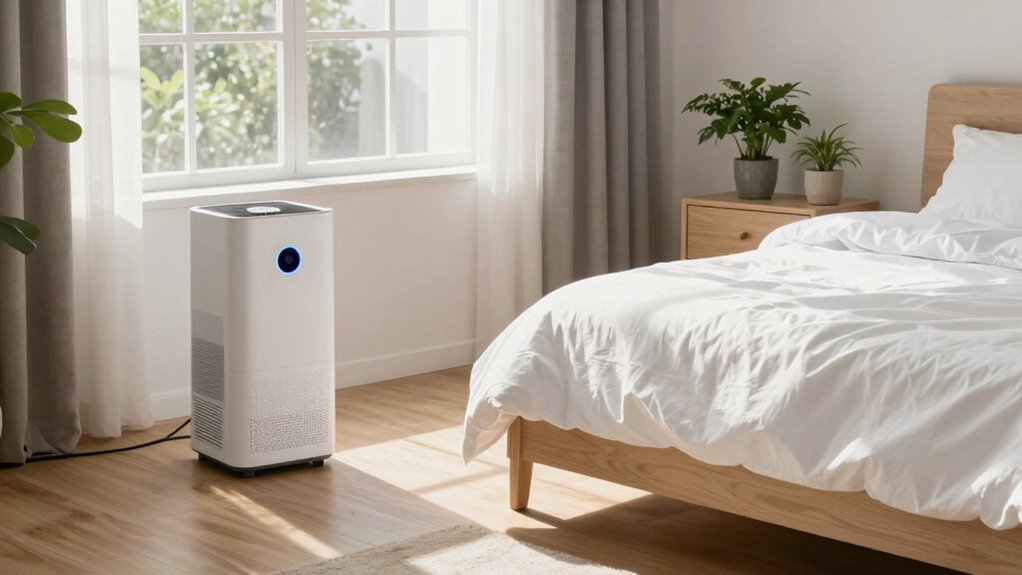
Your bedroom should be a safe haven, but hidden emission sources can negatively impact your health without you realizing it. Indoor pollutants—like dust, pet dander, volatile organic compounds (VOCs), and mold—accumulate silently, affecting your breathing, sleep quality, and overall well-being. The key to creating a healthier environment lies in reducing these emission sources and implementing effective ventilation strategies.
First, you need to identify common sources of indoor pollutants. New furniture, cleaning products, air fresheners, and even certain paints release VOCs that linger in the air. Dust and pet dander are constantly stirred up through daily activities and can worsen allergies or asthma. Mold thrives in damp areas, releasing spores that worsen respiratory issues. Once you recognize these sources, you can take steps to minimize them. For example, opt for low-VOC paints, choose natural cleaning products, and keep your bedroom dry and well-ventilated to prevent mold growth. Regularly washing bedding, vacuuming with a HEPA filter, and reducing clutter can also considerably cut down dust buildup. Additionally, understanding indoor air quality and its impact can help motivate ongoing improvement efforts. Ensuring proper airflow helps maintain air circulation, which is vital for dispersing indoor pollutants effectively. Improving ventilation can also help control indoor humidity levels, which is crucial for preventing mold and dust mites.
But controlling emission sources is only part of the solution. Ventilation strategies play a critical role in maintaining healthy indoor air quality. Good ventilation helps dilute and remove indoor pollutants before they accumulate to harmful levels. If your bedroom has windows, opening them daily for a few minutes can bring in fresh air and flush out stale, pollutant-laden air. Using exhaust fans in adjacent bathrooms or kitchens can also help prevent pollutants from migrating into your sleeping space. If natural ventilation isn’t enough, consider investing in an air purifier equipped with a HEPA filter. These devices trap airborne particles like dust, pet dander, and mold spores, dramatically improving air quality. Proper ventilation also reduces indoor humidity, which is essential in preventing mold and dust mites. Maintaining consistent airflow and sealing leaks around windows and doors further enhances air quality by preventing outdoor pollutants from entering and indoor air from escaping. Additionally, integrating air quality monitors can help you keep track of pollutant levels in real-time and adjust your ventilation strategies accordingly.
You should also think about maintaining a consistent airflow throughout your room. Cracks and gaps around windows and doors can let in outdoor pollutants or let indoor air escape, reducing ventilation effectiveness. Sealing these leaks improves air exchange. Additionally, controlling indoor humidity levels—around 30-50%—reduces mold growth and dust mites, making your space safer.
As an affiliate, we earn on qualifying purchases.
Frequently Asked Questions
How Quickly Do Air Quality Improvements Impact Sleep Quality?
Improvements in air quality metrics can boost your sleep quality within days. As pollutant levels decrease, your body experiences fewer irritants, helping your sleep cycle stabilize. You might notice better sleep even after a few nights of cleaner air. Reduced airborne toxins promote deeper, more restful sleep, making it easier to fall asleep and stay asleep longer. Keep monitoring your air quality to guarantee consistent enhancements for ongoing sleep benefits.
Are There Specific Bedroom Materials That Trap Fewer Emissions?
You’ll find that natural materials like organic cotton sheets and wool rugs trap fewer emissions, helping your bedroom stay fresher. Coincidentally, adding air purifying plants like aloe vera or snake plants boosts air quality naturally. These materials and plants work together, creating a healthier space. Opting for low-emission furniture and avoiding synthetic fabrics also reduces indoor pollutants, making your bedroom a safer, more comfortable retreat.
Can Plants Significantly Reduce Indoor Emissions in Bedrooms?
Yes, plants can notably reduce indoor emissions in bedrooms. Certain plant species, like snake plants, pothos, and peace lilies, are especially effective at absorbing volatile organic compounds (VOCs) and other emission sources. By adding these plants to your bedroom, you can improve air quality and create a healthier environment. Just guarantee proper care and ventilation, as plants work best when combined with good airflow and low emission sources.
How Often Should Bedroom Air Be Refreshed for Optimal Health?
You should refresh your bedroom air at least once every 2-3 hours. Coincidentally, implementing effective ventilation strategies and air purification enhances this process, ensuring cleaner, healthier air. When you open windows or use air purifiers regularly, you reduce indoor pollutants and improve airflow. This routine not only helps eliminate stale air but also supports better sleep and overall health, making your bedroom a truly healthier space.
Do Emission Sources Affect Children’s Bedroom Environments Differently?
Yes, emission sources and indoor pollutants can affect children’s bedrooms differently. Children are more vulnerable because their developing bodies absorb and process chemicals differently, making them more sensitive to indoor pollutants from emission sources like cleaning products, paints, or carpets. You should minimize these sources to create a safer environment, ensuring good ventilation and choosing low-emission products, so your kids breathe cleaner air and reduce health risks.
Conclusion
By reducing emission sources in your bedroom, you create an environment so pure, it’s almost like breathing in a slice of heaven. Every step you take toward cleaner air doesn’t just improve your health—it transforms your entire well-being. Think of it as turning down a toxic storm to reveal the calm, invigorating breeze beneath. Your bedroom can become your sanctuary, a fortress against unseen dangers, where the air you breathe nurtures your body and soul—truly a life-changing shift.
Halloween Picks
halloween
As an affiliate, we earn on qualifying purchases.