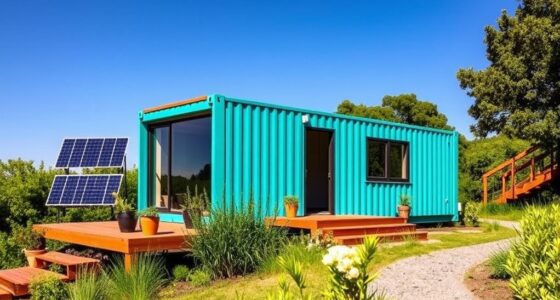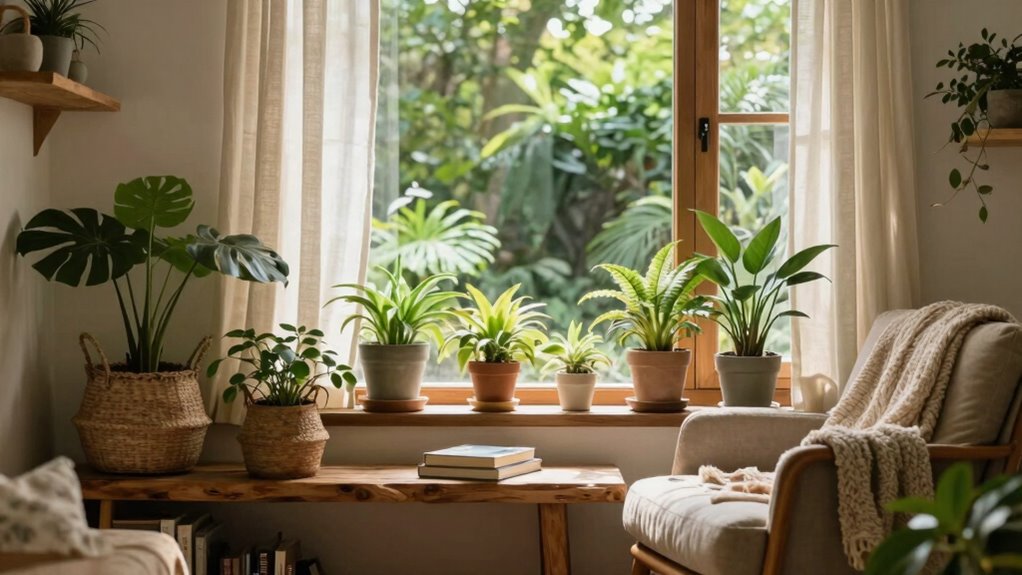

Biophilic design supports your daily well-being by filling your space with natural light, which boosts your mood, energy, and sleep patterns. Indoor plants improve air quality and create calming visuals that reduce stress and anxiety. Using natural materials like wood and stone evokes stability and comfort, helping you feel more centered. Views of nature and outdoor scenery foster relaxation and mental clarity. Keep exploring to discover how these elements can transform your environment into a healthier, more balanced space.
Key Takeaways
- Natural light boosts mood, energy, and regulates sleep, enhancing overall daily well-being.
- Indoor plants improve air quality and reduce stress, supporting mental clarity and emotional stability.
- Natural materials like wood and stone create calming environments that lower cortisol levels and promote relaxation.
- Views of natural scenery foster connection to nature, reducing anxiety and increasing feelings of tranquility.
- Integrating natural elements in design cultivates resilient, balanced spaces that support both mental and physical health.
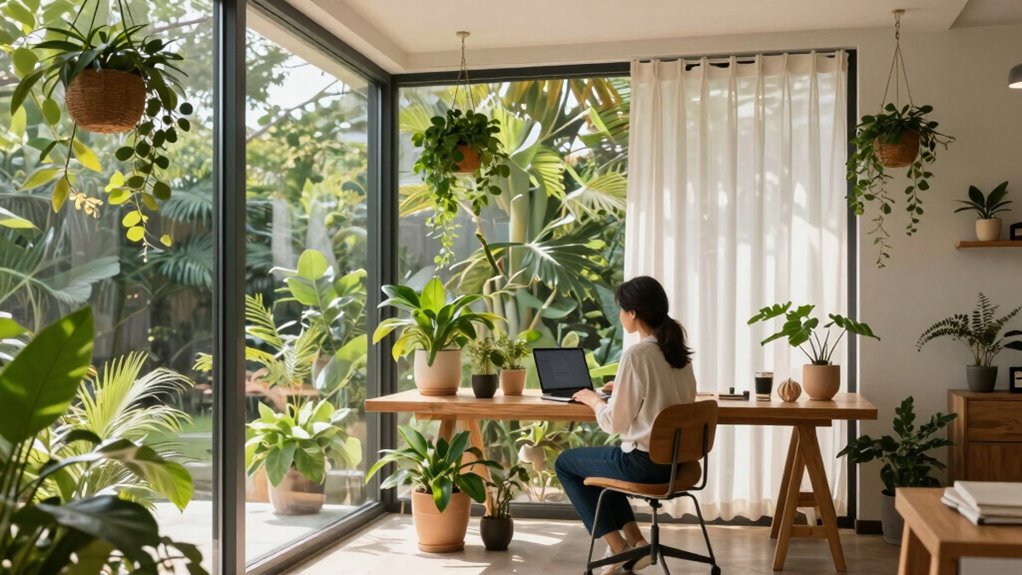
Have you ever wondered how your environment impacts your mood and health? The way your surroundings are designed can profoundly influence how you feel throughout the day. Biophilic design, which emphasizes connecting with nature, plays a key role in supporting your well-being. One of its most powerful elements is natural light. When your space is filled with sunlight, it boosts your energy, improves your mood, and helps regulate your sleep patterns. Natural light also reduces stress and makes you feel more alert, creating a positive feedback loop that enhances your overall health.
In addition to sunlight, incorporating indoor plants into your environment is a simple yet effective way to foster a connection with nature. Plants improve air quality by filtering toxins, which can make you breathe easier and feel more refreshed. Their greenery adds visual comfort and a calming presence, helping to reduce anxiety and mental fatigue. When you see plants thriving around you, it reminds you of nature’s resilience and beauty, offering a soothing distraction from daily stresses. Whether it’s a small potted fern on your desk or a larger indoor garden, plants create a sense of tranquility that supports mental clarity and emotional stability. Recognizing the natural elements in your environment can further deepen your sense of connection to nature.
Biophilic design also encourages the use of natural materials like wood, stone, and water features, which evoke a sense of groundedness and stability. These textures and elements mimic the outdoors, giving you a feeling of being connected to the earth even when indoors. Incorporating natural materials can enhance your space’s connection to nature and promote a sense of comfort and stability. This connection can foster feelings of safety and comfort, reducing feelings of confinement or stress. When your environment incorporates natural elements, your body responds by lowering cortisol levels and promoting relaxation, making it easier to focus and recharge. Additionally, integrating natural scenery through murals or views can deepen this connection and enhance your environment’s restorative qualities.
Furthermore, biophilic design promotes spatial arrangements that maximize views of the outdoors or incorporate natural scenery through windows and artwork. These visual connections to nature help you feel more centered and less anxious. When your environment blends seamlessly with natural elements, it cultivates a sense of harmony that supports your mental health. By consciously choosing to include natural light, indoor plants, and natural materials, you actively create a space that nurtures your body and mind. This intentional design approach helps you feel more balanced, energized, and resilient in your daily life.

Caromolly Light Therapy Lamp, Happy Lamp 10,000 LUX UV Free with 3 Color Temperature & 5 Brightness Level, Full Spectrum Light Wood Base Round Flaxen Fabric Shade for Home, Office, 4" × 8.4”
- Bright Light Output: 10,000 lux UV-free light therapy lamp
- Adjustable Color Temperature: Three modes: 2700K, 4000K, 6000K
- Touch Dimming Control: Smooth brightness adjustment from 10% to 100%
As an affiliate, we earn on qualifying purchases.
As an affiliate, we earn on qualifying purchases.
Frequently Asked Questions
How Can Biophilic Design Be Adapted for Small Urban Spaces?
You can adapt biophilic design for small urban spaces by installing vertical gardens to maximize greenery without taking up much room. Incorporate large windows or skylights to boost natural lighting, creating a brighter, more inviting environment. Use plants indoors and outdoors to connect with nature, even in limited spaces. These features enhance well-being by bringing nature inside and making your small space feel larger and more calming.
What Are Cost-Effective Ways to Incorporate Biophilic Elements?
You can incorporate biophilic elements cost-effectively by focusing on nature integration through budget-friendly greenery. Use potted plants, vertical gardens, or window planters to introduce greenery without high costs. Incorporate natural materials like wood or stone in furniture and décor to enhance the connection to nature. Additionally, maximize natural light and views of outdoor nature, creating a calming environment that supports well-being without overspending.
Are There Specific Plants Recommended for Indoor Biophilic Environments?
Think of your indoor space as a refreshing change—certain plants symbolize vitality and serenity. For indoor air quality and plant selection, opt for snake plants, pothos, or peace lilies. These resilient greenery options filter toxins and thrive in low light, making your environment healthier and more calming. Incorporating these plants not only enhances aesthetics but also boosts your well-being through improved indoor air and natural symbolism.
How Long Does It Take to See Benefits From Biophilic Design?
You can start experiencing benefits from biophilic design within a few days to weeks. As you spend time in wellness spaces infused with nature therapy elements like plants and natural light, your mood and stress levels often improve quickly. Consistent exposure to these environments enhances focus, reduces anxiety, and boosts overall well-being over time, making your daily routine more balanced and energized.
Can Biophilic Design Improve Mental Health Beyond Physical Spaces?
Yes, biophilic design can enhance mental health beyond physical spaces by strengthening your nature connection. When you’re surrounded by natural elements, it boosts emotional resilience, helping you manage stress and anxiety better. This connection to nature promotes feelings of calm and happiness, supporting your overall mental well-being. By integrating natural features into everyday environments, you create a continuous source of comfort and mental refreshment, improving your resilience over time.
Conclusion
By embracing biophilic design, you invite nature’s healing touch into your daily life, transforming ordinary spaces into sanctuaries of well-being. As nature’s silent symphony whispers peace into your routine, it’s clear that integrating natural elements isn’t just décor—it’s an essential rhythm for your mental and physical health. So, why not open the door to nature’s embrace? After all, in the dance between indoors and outdoors, your well-being finds its most harmonious step.