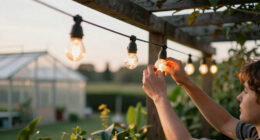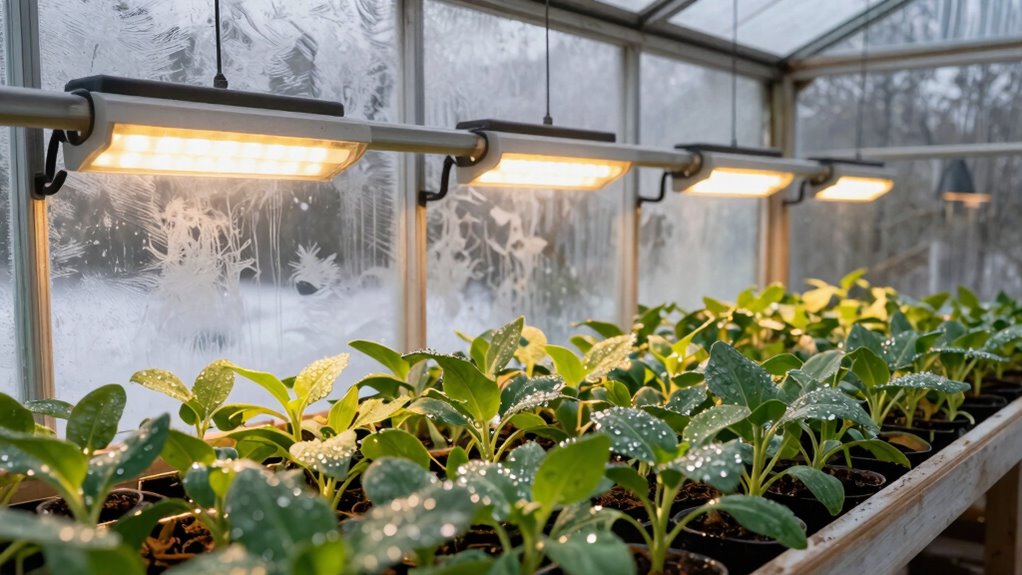

Supplemental lighting in winter boosts your crop production by extending daylight hours, helping plants grow more consistently despite shorter natural days. It improves light quality and intensity, encouraging uniform growth, better flowering, and higher yields. You’ll see enhanced crop quality, healthier plants, and better nutritional content. Plus, managing light spectrum lets you tailor conditions for your specific crops. If you want to discover how these changes can transform your winter growing, there’s much more to explore.
Key Takeaways
- Extends the growing season by providing sufficient light during shorter winter days.
- Improves crop uniformity and quality through consistent light exposure.
- Increases yields by optimizing plant growth conditions in low-light seasons.
- Enhances crop resilience and reduces stress responses via tailored light spectrum control.
- Reduces energy costs through efficient, targeted lighting that minimizes waste.
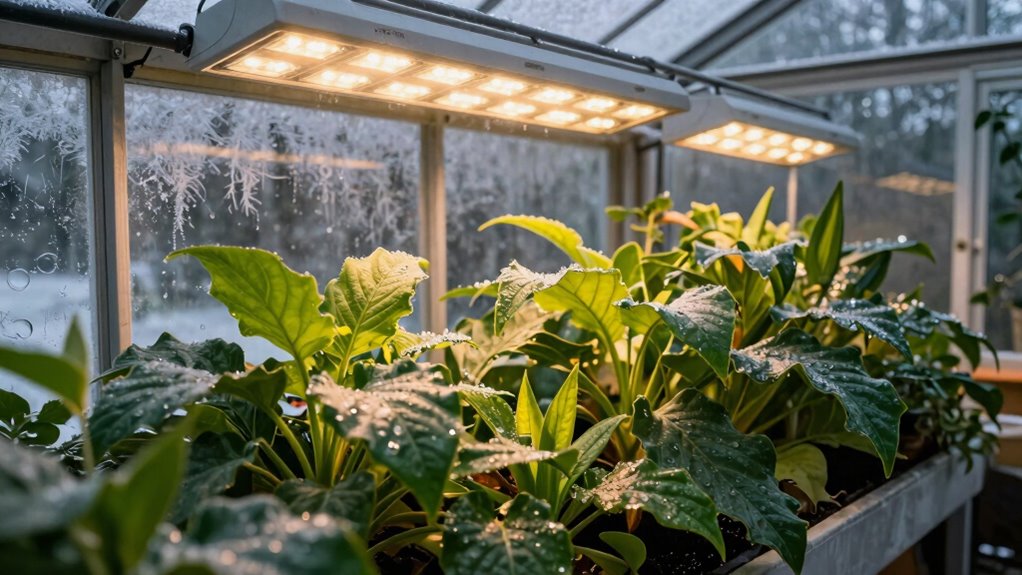
Supplemental lighting primarily impacts energy efficiency. Modern lighting systems are designed to maximize light output while minimizing energy consumption. LED fixtures, for example, offer high efficiency, delivering more usable light per watt than traditional options. This means you can achieve the necessary light levels for ideal plant growth without running up hefty energy bills. Properly calibrated lighting schedules ensure you’re providing just enough light to support healthy growth, avoiding unnecessary energy waste. As a result, your operation becomes more sustainable and cost-effective, even during the darker months.
Modern LED lighting maximizes growth with high efficiency, reducing energy costs and supporting sustainable winter cultivation.
Beyond energy considerations, supplemental lighting has a profound influence on crop quality. Consistent light exposure helps maintain uniform growth, preventing issues like elongated stems or uneven ripening. It encourages the development of robust stems, vibrant foliage, and high-quality fruits or flowers. When plants receive adequate light, they synthesize more chlorophyll and other essential compounds, leading to richer flavors, better coloration, and improved nutritional content. Additionally, the ability to control light spectrum allows growers to tailor conditions for optimal plant responses, further enhancing crop quality. This control over light parameters can also help mitigate stress responses that often occur in less controlled environments, ensuring healthier plants overall. Proper lighting management can also extend the growing season and improve overall crop yield, making your investment more profitable. Moreover, leveraging light spectrum control can help reduce plant stress and improve resilience during demanding growth phases. When growers utilize advanced lighting technology, they can fine-tune the lighting environment to better suit specific plant needs, leading to more consistent results. The consistency in quality can set your produce apart in the marketplace, satisfying consumer expectations and commanding better prices.

LBW Desk Grow Light, Full Spectrum Plant Light for Indoor Plants, Grow Lamps with 4/8/12H Timer, 10"-26" Height Adjustable, 6 Brightness Levels
- Full Spectrum LED Beads: 214 high-performance LEDs for full spectrum light
- Adjustable Timer Settings: 3/6/12-hour automatic timers for flexible scheduling
- Multiple Dimming Levels: 6 adjustable brightness levels for plant needs
As an affiliate, we earn on qualifying purchases.
As an affiliate, we earn on qualifying purchases.
Frequently Asked Questions
How Does Supplemental Lighting Affect Plant Nutrient Uptake During Winter?
Supplemental lighting boosts plant nutrient uptake during winter by enhancing photosynthesis efficiency, allowing your plants to produce more energy. With increased energy, their roots become more active, improving nutrient absorption from the soil. This means your plants stay healthier and stronger even in low-light conditions. By providing adequate light, you help maintain ideal growth, ensuring they get the nutrients they need despite the shorter winter days.
What Are the Long-Term Cost Implications of Using Supplemental Lighting?
Using supplemental lighting may feel like pouring money into a fountain—initial costs are steep, but benefits can flow long-term. You’ll need to weigh the economic sustainability against ongoing expenses, especially energy costs. As you optimize for energy efficiency, you might reduce operational costs over time, but initial investments can impact your budget. Planning for these long-term implications helps guarantee your winter production remains profitable and sustainable.
Can Supplemental Lighting Influence Plant Disease Resistance?
Supplemental lighting can influence plant disease resistance by promoting healthier growth and strengthening immune responses, which aid in disease suppression. By providing adequate light, you reduce stress that often worsens pathogen development. Proper lighting can also help plants develop thicker tissues, making it harder for pathogens to penetrate. Overall, strategic use of supplemental lighting can create an environment less conducive to disease, improving plant health and reducing reliance on chemical controls.
How Does Lighting Spectrum Impact Plant Growth in Winter?
Like Pandora opening her box, the right lighting spectrum releases better winter plant growth. You’ll notice that blue and red wavelengths boost light intensity and optimize photosynthesis efficiency, fueling healthy development even in dim winter days. By choosing the appropriate spectrum, you enhance plant vigor, ensuring robust growth despite shorter daylight hours. This strategic approach makes your winter crop production more resilient, productive, and thriving through the power of tailored light spectra.
What Are the Environmental Impacts of Supplemental Lighting Use?
Supplemental lighting increases energy consumption, leading to higher greenhouse gas emissions if the energy source isn’t renewable. It can also contribute to light pollution, disrupting local ecosystems and nocturnal wildlife. You can minimize these impacts by using energy-efficient LEDs, installing motion sensors, and directing lights downward. Responsible use helps balance the benefits of winter production with environmental sustainability, reducing your ecological footprint.
Conclusion
As winter’s chill sets in, supplemental lighting becomes your secret weapon, transforming how your crops thrive in the cold. Think of it as a guiding star, illuminating the path to better growth and higher yields. Without it, your winter production might drift into darkness, but with it, you hold the power to turn the season’s gloom into a flourishing oasis. Embrace supplemental lighting, and let your crops shine bright through even the coldest months.