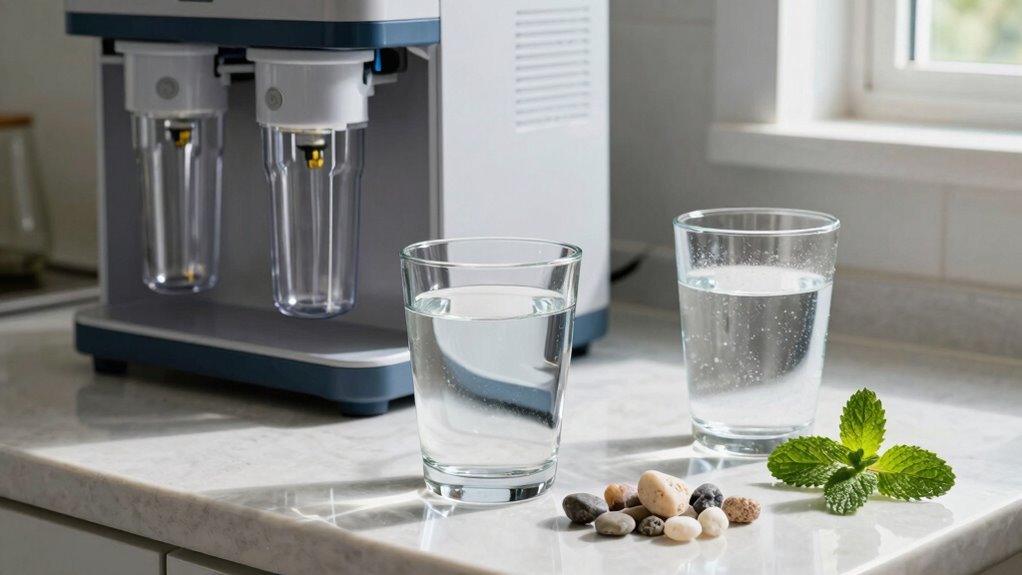

Reverse osmosis isn’t always the best choice because it removes almost all contaminants but also strips away beneficial minerals like calcium and magnesium. This can impact your health over time, especially if your diet doesn’t provide enough minerals. Plus, RO systems use a lot of water and energy, creating waste and environmental concerns. There are other filtration options that preserve minerals and are more sustainable. Keep exploring to discover which solution suits your needs best.
Key Takeaways
- RO removes beneficial minerals along with contaminants, potentially impacting long-term health if not compensated through diet.
- The process wastes significant water and energy, raising environmental concerns and sustainability issues.
- Alternative filters like activated carbon preserve minerals and require less water and energy, offering more sustainable options.
- RO is best suited for heavily contaminated water; for mildly polluted sources, less invasive filters may suffice.
- Choosing a filtration system should balance water safety, health benefits, and environmental impact, rather than defaulting to RO.
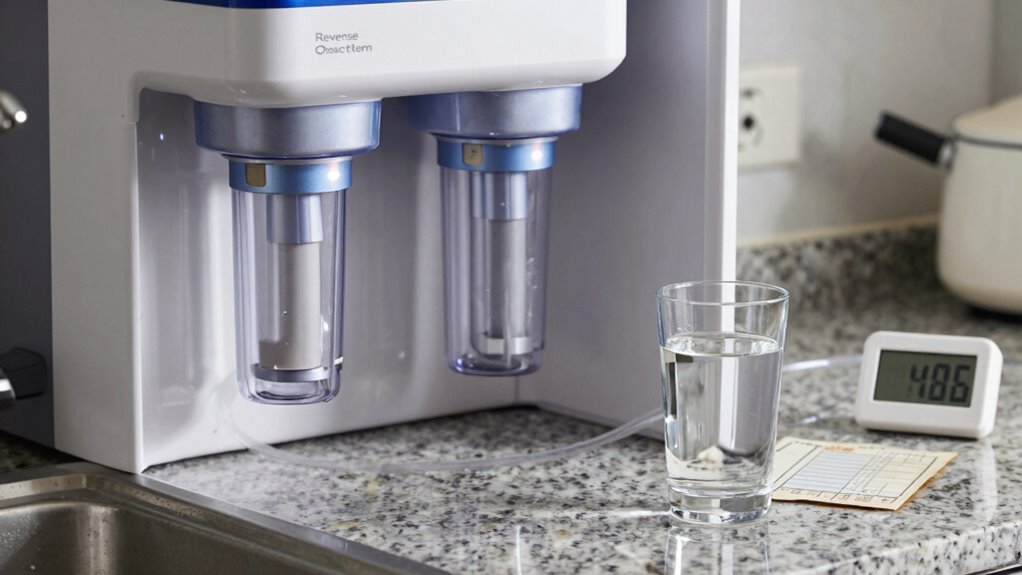
Is reverse osmosis really the best choice for clean water? You might assume it’s the gold standard, given its reputation for removing nearly all contaminants. But before you settle on it as your default water filtration method, it’s worth considering what it actually does to your water and the environment. Reverse osmosis is excellent at eliminating impurities, but it also strips away beneficial minerals, leading to water that’s practically mineral-free. This process, called water mineralization, is a double-edged sword. While mineral-free water might seem purer, it can lack the essential nutrients your body needs, like calcium and magnesium. Over time, drinking demineralized water might even impact your health, especially if your diet doesn’t compensate for these missing minerals.
Beyond the health implications, it’s important to think about the environmental impact of reverse osmosis systems. These systems typically require a significant amount of water and energy to operate. For every gallon of purified water you get, several gallons can be wasted as brine, which contains concentrated contaminants and minerals. This waste not only squanders resources but can also pose disposal problems, especially if your local environment isn’t equipped to handle high-salinity waste. The energy needed to run these systems, often powered by electricity, adds to your carbon footprint, contributing to greenhouse gas emissions. If you’re environmentally conscious, this aspect might make you reconsider relying solely on reverse osmosis. Additionally, exploring water treatment methods that are more sustainable can help reduce your environmental impact. Understanding the energy consumption of your filtration system can further guide you toward more eco-friendly choices.
While reverse osmosis is effective at removing harmful chemicals, bacteria, and heavy metals, it’s not fundamentally the best solution for everyone. Its tendency to remove beneficial minerals and its environmental footprint highlight the importance of exploring alternative filtration options. Systems like activated carbon filters or mineral cartridge filters can preserve water mineralization while still reducing unwanted contaminants. These alternatives often use less water and energy, making them more sustainable choices. Plus, they can enhance the taste and healthfulness of your water by maintaining those crucial minerals. Additionally, understanding water quality concerns can help you choose the most suitable filtration method for your needs. Considering the sustainability of your water system can also guide you toward more eco-friendly choices that align with your lifestyle.
Ultimately, the decision to use reverse osmosis should be based on your specific water quality needs, health considerations, and environmental values. If your water source is heavily contaminated with pollutants or pathogens, RO might be the best choice. But if your water is relatively clean, and you’re concerned about mineral content or sustainability, other filtration methods could serve you better. Remember, clean water isn’t just about purity—it’s also about maintaining a balance that benefits your health and respects our planet.

Waterdrop 10UA Under Sink Water Filter System, Reduces PFAS, PFOA/PFOS, Lead, Chlorine, Bad Taste & Odor, Under Counter Water Filter Connects Directly to Your Faucet, NSF/ANSI 42 Certified, 1 Year
- Affordable Replacement Filters: Less than $25.99 per filter, saves over 50%
- Customer Support: Backed by comprehensive after-sales service
- Designed for Cold Water: Compatible with municipal cold water only
As an affiliate, we earn on qualifying purchases.
As an affiliate, we earn on qualifying purchases.
Frequently Asked Questions
How Does Reverse Osmosis Affect Beneficial Minerals in Water?
Reverse osmosis removes many minerals from water, leading to mineral loss that can impact water taste and health benefits. As beneficial minerals like calcium and magnesium get filtered out, your water may taste flat or bland. While it effectively purifies water, it can strip away essential nutrients, so you might need to supplement your mineral intake or choose alternative filtration methods if maintaining mineral content is important for you.
Can Reverse Osmosis Systems Remove All Types of Contaminants?
Reverse osmosis systems effectively remove many contaminants, including heavy metals and algae, ensuring cleaner water. However, they might not eliminate all impurities like certain chemicals or viruses. While they excel at filtering out harmful substances, some smaller particles or volatile compounds can pass through. If you’re concerned about specific pollutants, consider adding specialized filters alongside your reverse osmosis system for thorough water purification.
What Is the Typical Lifespan of a Reverse Osmosis Membrane?
Think of your reverse osmosis membrane as a trusty filter that, with proper care, lasts about 2 to 3 years. Its durability depends on water quality and usage. You’ll need to monitor for signs of clogging or reduced flow, which signal the need for replacement. Regular maintenance extends membrane life, but expect to replace it periodically to guarantee the best filtration and water quality.
Are There Health Risks Associated With Demineralized Water?
You might face health risks with demineralized water since it lacks essential minerals like calcium and magnesium, which are crucial for your health. Drinking it long-term can lead to mineral deficiencies and affect your body’s functions. Additionally, demineralized water often has an altered taste, which may reduce your desire to drink enough water. To avoid these issues, consider mineral supplementation or using water filters that retain beneficial minerals.
How Does Reverse Osmosis Compare to Other Water Purification Methods?
Imagine your water as a symphony—each method plays a different tune. Reverse osmosis strips away impurities, lowering water pH and requiring diligent filter maintenance. Compared to activated carbon filters or UV purification, it’s more thorough but can also remove beneficial minerals. You’ll need to balance purity with taste and health, understanding that other methods might preserve minerals and reduce maintenance, so choose the one that best harmonizes with your needs.
Conclusion
Remember, while reverse osmosis is often hailed as the ultimate solution, it’s not always the perfect choice for everyone. Sometimes, it’s like wielding a sledgehammer when a gentle touch would suffice. By understanding the nuances and exploring other options, you can avoid turning your water into a chemical wasteland. Make informed decisions to guarantee your water remains pure, healthy, and perfectly suited to your needs—because your health deserves nothing less than the best.