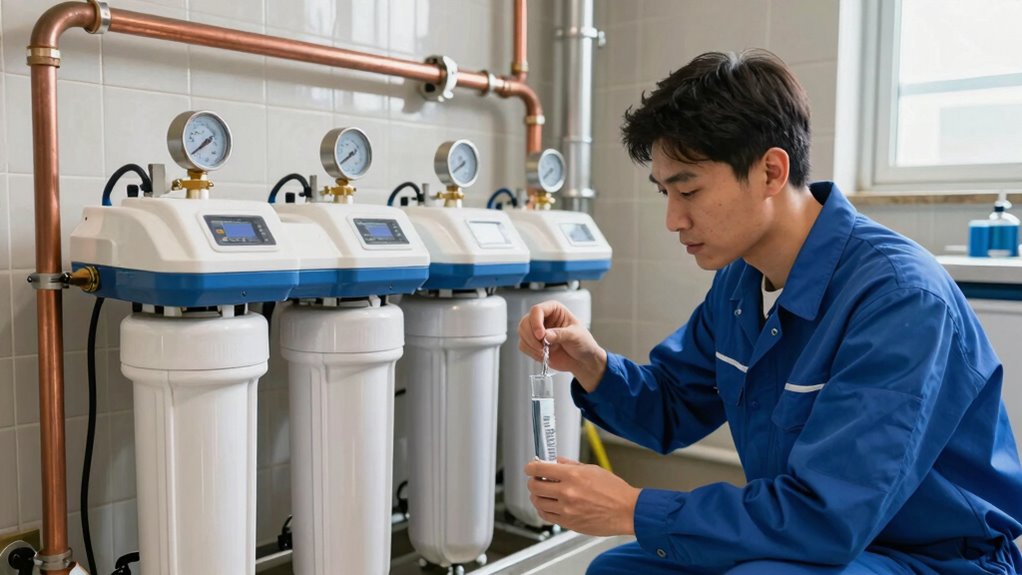

Before upgrading your whole-house water system, it’s essential to start with thorough testing rather than shopping for equipment. Testing reveals specific contaminants like chlorine, heavy metals, or bacteria, helping you choose the right filtration solutions. This prevents unnecessary expenses and guarantees the upgrades truly address your water issues. Proper planning based on detailed results maximizes effectiveness. If you want to understand how to pick the best approach for your home, keep exploring the key steps involved.
Key Takeaways
- Conduct comprehensive water testing to identify specific contaminants before selecting filtration equipment.
- Understanding water composition ensures the right system is chosen, avoiding unnecessary or ineffective upgrades.
- Regular plumbing inspections prevent debris and corrosion from undermining filtration efforts.
- Tailor your upgrade plan based on test results and plumbing condition for optimal water quality.
- Ongoing monitoring and maintenance safeguard long-term water safety and system efficiency.

If you’re looking to improve the quality of water throughout your home, whole-house water upgrades are a smart investment. But before you start shopping for new filtration systems or fixtures, it’s essential to begin with testing. Jumping straight into a purchase without understanding your water’s specific issues can lead to unnecessary expenses and ineffective solutions. Testing gives you a clear picture of what’s in your water and helps determine the best upgrades to address those problems efficiently.
Start by scheduling a detailed water test. This isn’t about just checking for taste or smell; you want detailed insights into contaminants like chlorine, heavy metals, bacteria, sediments, and other impurities. Once you have the test results, you can focus on targeted water filtration options that are designed to remove the specific pollutants present in your water. For example, if your test reveals high levels of iron or manganese, a specialized filtration system can be installed to handle those issues effectively. This approach guarantees your investment in whole-house water upgrades actually improves water quality rather than just adding unnecessary equipment.
Alongside testing, consider the state of your plumbing maintenance. Over time, pipes can develop mineral buildup, corrosion, or leaks that compromise water quality and flow. Plumbing maintenance becomes a vital part of the process because it guarantees your entire system functions at its best. Regular inspections and repairs not only prevent future problems but also maximize the lifespan of your upgrades. If your pipes are old or damaged, installing a new filtration system might not deliver the expected benefits. Upgrading your pipes or repairing leaks can make a significant difference in water clarity, pressure, and overall quality.
Understanding what’s in your water also guides your decisions about filtration technology. For instance, activated carbon filters are excellent at improving taste and removing chlorine, while reverse osmosis systems can eliminate a broader range of contaminants. Your testing results will help you assess which combination of water filtration devices best suits your home’s needs. Remember, whole-house water upgrades aren’t just about installing new equipment—they’re about creating a detailed plan that considers your water’s unique composition and your plumbing’s condition. Additionally, understanding water quality issues can help you choose the most effective and cost-efficient solutions for your home. Recognizing biodiversity impacts related to water sources can also inform sustainable choices that protect local ecosystems.
In the end, the key to successful whole-house water upgrades lies in starting with testing and thorough plumbing maintenance. This approach saves you money, guarantees you’re addressing the real issues, and provides you with clean, safe water throughout your home. Don’t rush into buying equipment—take the time to understand your water first, then upgrade wisely. Being aware of potential water quality concerns can also help you anticipate future challenges and plan for ongoing maintenance. Paying attention to water source quality can further prevent future contamination problems and ensure your water remains safe over time.

Express Water Whole House Water Filter System, Ultimate Protection, 3-Stage
- Whole House Water Filtration: 3-stage process for entire home
- Reduces Heavy Metals & Contaminants: Chlorine, Lead, Arsenic, PFAs, more
- Protects Pipes & Appliances: Prevents scale build-up and damage
As an affiliate, we earn on qualifying purchases.
As an affiliate, we earn on qualifying purchases.
Frequently Asked Questions
How Often Should I Retest My Household Water Quality?
You should retest your household water quality annually to guarantee water safety. Regular testing frequency helps you catch any changes or contaminants early, keeping your family safe. If your water source is private, like a well, test more often, especially after heavy rain or drought. Always stay proactive with testing to maintain clean, safe water, and address issues promptly before they become health risks.
Are DIY Water Testing Kits Reliable Enough?
DIY water testing kits can give you a basic idea of your water quality, but their water test accuracy has limitations. They often can’t detect all contaminants or provide detailed results, so relying solely on them isn’t ideal. For critical concerns, you should consider professional testing, which offers more precise, all-encompassing data. Ultimately, DIY kits are useful for initial assessments but shouldn’t replace thorough, expert analysis when ensuring your water’s safety.
What Are the Signs of Water Contamination in My Home?
You might notice changes in water’s color, smell, or taste, signaling possible contamination. Look out for discolored water, a foul odor, or unusual taste, which could indicate waterborne bacteria or plumbing corrosion. You may also see sediment or rust particles. If any of these signs appear, it’s essential to get your water tested promptly to identify issues and protect your health. Regular testing helps catch problems early.
How Do I Interpret Water Test Results Accurately?
Did you know over 15 million Americans rely on contaminated water sources? To interpret your water test results, focus on key indicators like bacteria, nitrates, and heavy metals. Water testing reports will specify contamination sources, making it easier to identify issues. Look for alarmingly high levels or any deviations from safe standards. Understanding these details helps you determine if your water’s safe or if you need treatment solutions.
Can Upgrading My Water System Improve Appliance Lifespan?
Upgrading your water system with proper water filtration and water softening can definitely improve appliance lifespan. Hard water causes mineral buildup, damaging appliances over time, while filtration removes harmful contaminants. By installing a water softener, you reduce mineral deposits, and with water filtration, you eliminate impurities. These upgrades protect your appliances, reduce maintenance costs, and extend their lifespan, ensuring you get the most out of your investments and enjoy cleaner, safer water daily.
Conclusion
Remember, upgrading your whole-house water system isn’t about rushing to buy the biggest, flashiest filter. It’s about understanding what your water truly needs through proper testing. Think of it like diagnosing a health issue—skip the checkup, and you might end up with a solution as useless as a screen door on a submarine. Take the time to test first; it’ll save you money, frustration, and guarantee your water is as pure as mountain spring water.