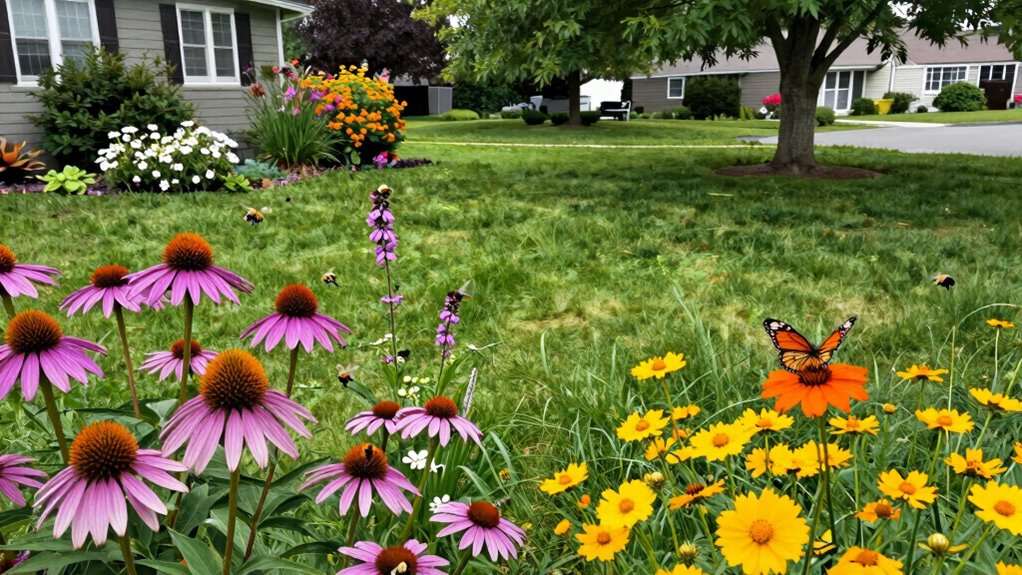

Pollinators need habitat across entire neighborhoods to thrive, as their survival depends on continuous access to food, safe spaces, and nesting sites. When habitats are connected, they can forage efficiently and migrate safely, which supports their populations and ecological roles. Small patches of flowering plants can make a big difference, especially when spread throughout the area. By creating these habitats, you help maintain healthy ecosystems. Keep exploring how your neighborhood can become a essential pollinator refuge.

Get garden gear delivered free with Prime
- Fast, free delivery on millions of items
- Prime Video, Amazon Music and more included
- Member-only deals all year
Key Takeaways
- Pollinators require diverse habitats across neighborhoods to access consistent food sources and nesting sites.
- Interconnected habitats increase pollinator survival by providing safe movement and migration corridors.
- Small habitat patches collectively support a larger, resilient pollinator population within urban areas.
- Neighborhood-wide habitats reduce exposure to pesticides and environmental threats.
- Creating continuous habitat networks helps sustain pollinator diversity and ecosystem health.
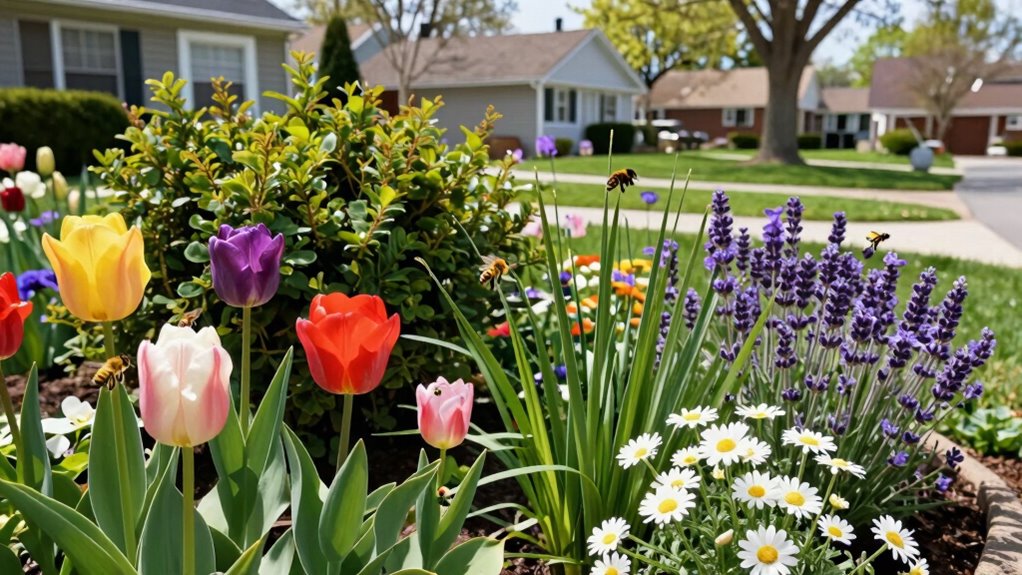
Pollinators play a crucial role in maintaining healthy ecosystems and supporting the food supply, but their habitats are increasingly disappearing across neighborhoods. As urban development expands, natural habitats shrink, making it harder for bees, butterflies, and other pollinators to find the resources they need. One effective way you can help is by creating an urban garden that provides a safe haven for these essential creatures. When you plant native flowers, shrubs, and trees, you offer pollinators the nectar and pollen they rely on for energy. An urban garden doesn’t have to be large; even small patches of flowering plants can make a difference. By transforming a corner of your yard or balcony into a pollinator-friendly space, you contribute to a network of habitats that support pollinator populations across the neighborhood.
However, planting alone isn’t enough if pesticides are part of the landscape. The impact of pesticides on pollinators is significant and often devastating. Many common pesticides contain chemicals that are toxic to bees and butterflies, impairing their ability to forage, navigate, and reproduce. When you use pesticides in your garden, you risk poisoning visiting pollinators, which can lead to declines in local populations. Opting for organic or natural pest control methods ensures that your garden remains a safe environment for these creatures. Avoiding chemical pesticides not only protects pollinators but also helps maintain the health of your entire garden ecosystem. It’s a small change that makes a big difference in safeguarding pollinator health across the neighborhood. Creating habitats for pollinators across neighborhoods is essential, as it helps sustain their populations amidst urban development. Developing native plant gardens can further support local pollinator species by providing familiar and sustainable food sources.
Supporting pollinators across neighborhoods requires more than just individual effort. When multiple residents create urban gardens and reduce pesticide use, these efforts coalesce into a network of habitats that sustain pollinator populations. This interconnected habitat system increases their chances of survival, especially as urban environments continue to grow. Additionally, implementing pollinator corridors can facilitate safe movement and migration for these vital species. As a neighbor, you can encourage others to join in by sharing your knowledge or planting pollinator-friendly species. Creating community gardens focused on native plants can amplify these efforts and foster a collective commitment to pollinator health. With everyone working together, neighborhoods can become essential refuges that support pollinator diversity, ensuring they thrive amidst urban landscapes.
native flower seeds for pollinator gardens
As an affiliate, we earn on qualifying purchases.
As an affiliate, we earn on qualifying purchases.
Frequently Asked Questions
How Do Pollinators Navigate Between Fragmented Habitats?
You might wonder how pollinators navigate between fragmented habitats, but they rely on pollination pathways that connect these areas. As they move, they follow scent trails, visual cues, and flower cues, which help them find food and mates. Habitat connectivity is essential because it creates safe corridors, enabling pollinators to travel efficiently and reducing the risks of getting lost or exhausted in fragmented landscapes.
What Are the Most Critical Habitat Features for Pollinator Health?
You need to provide diverse flowering plants to support pollinator nutrition, ensuring they have enough nectar and pollen. Additionally, include suitable nesting sites, like bare soil or hollow stems, to help pollinators reproduce and rest. By creating a variety of habitat features across your neighborhood, you enable pollinators to thrive, which benefits your local ecosystem, improves plant pollination, and supports overall biodiversity.
How Does Urban Development Impact Pollinator Movement?
Urban development acts like a giant maze for pollinators, blocking their natural movement and disrupting pollinator behavior. As cities grow, you’re unintentionally turning their delicate dance into a chaotic shuffle. Thoughtful urban planning can help, creating corridors and green spaces that allow pollinators to thrive. Without it, you risk stifling their crucial role in ecosystems, turning pollinators into city-dwelling fugitives rather than essential neighborhood neighbors.
Can Pollinators Thrive in Small, Isolated Patches?
Pollinators can survive in small, isolated patches, but their diversity and health depend on access to abundant nectar sources and varied habitats. When patches are too limited or disconnected, pollinator diversity decreases, and they struggle to find food and mates. To support thriving pollinator populations, it’s essential to create multiple, connected habitats across neighborhoods, ensuring they have enough resources to flourish and maintain healthy ecosystems.
How Can Neighborhoods Coordinate to Support Pollinator Corridors?
Did you know that creating pollinator corridors can increase pollinator populations by up to 50%? You can support this by collaborating through community planning, encouraging neighbors to plant native flowers, and establishing connected habitats. Neighborhoods can coordinate by designating shared spaces for pollinator-friendly plants and organizing planting events. Together, by working on pollinator corridors, you create a thriving ecosystem that benefits everyone’s gardens, local agriculture, and the environment.
Conclusion
Remember, every patch of blooming flowers and wild space you leave untouched is a lifeline for pollinators. Without your mindful choices across the entire neighborhood, these essential creatures may struggle to survive. Think of your yard as a crucial thread in a vibrant, interconnected tapestry—together, we can weave a future where pollinators thrive. Don’t let their story end on a silent note; instead, be the voice that gives them hope and a safe home.
Fall yard work Picks
leaf blowers
As an affiliate, we earn on qualifying purchases.