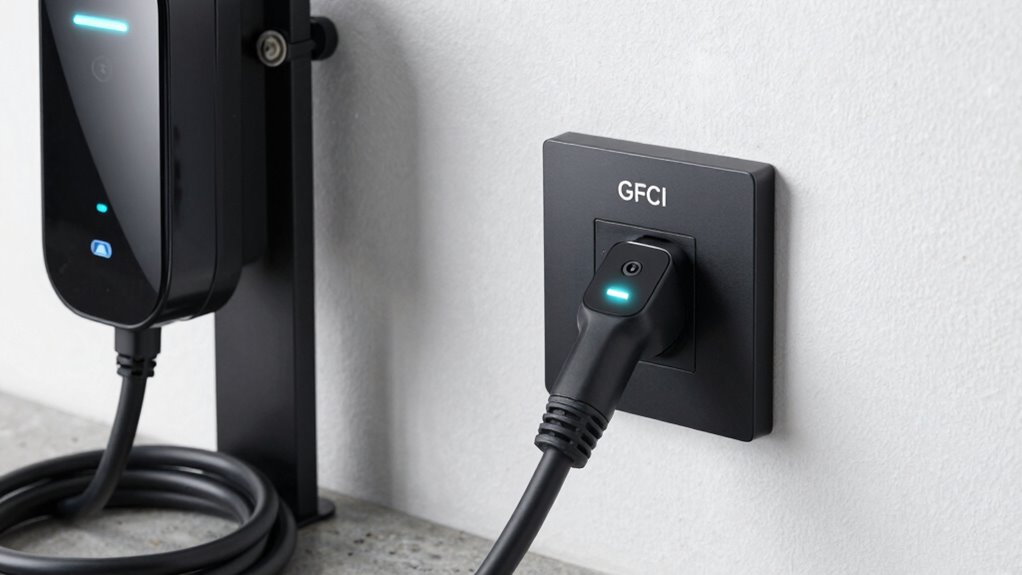
Nuisance trips happen with GFCIs during EV charging when harmless electrical noise, moisture, or minor wiring issues cause false ground fault detection. Overly sensitive GFCI devices or environmental factors like condensation can also trigger trips without real danger. Sometimes, aging or faulty GFCIs contribute to the problem. Understanding these common causes can help you prevent unnecessary shutdowns, and there’s more to discover on how to keep your charging setup safe and reliable.
Key Takeaways
- Nuisance trips often result from electrical noise, transient currents, or environmental factors triggering overly sensitive GFCIs.
- Wiring issues such as loose connections, corrosion, or improper grounding can cause false GFCI trips during EV charging.
- Moisture, condensation, or debris near connections increase the likelihood of nuisance trips in outdoor or garage setups.
- Aging or faulty GFCI devices may become overly sensitive or malfunction, leading to unnecessary trips.
- Using high-quality, properly rated GFCIs and regular maintenance can help prevent nuisance trips during EV charging.
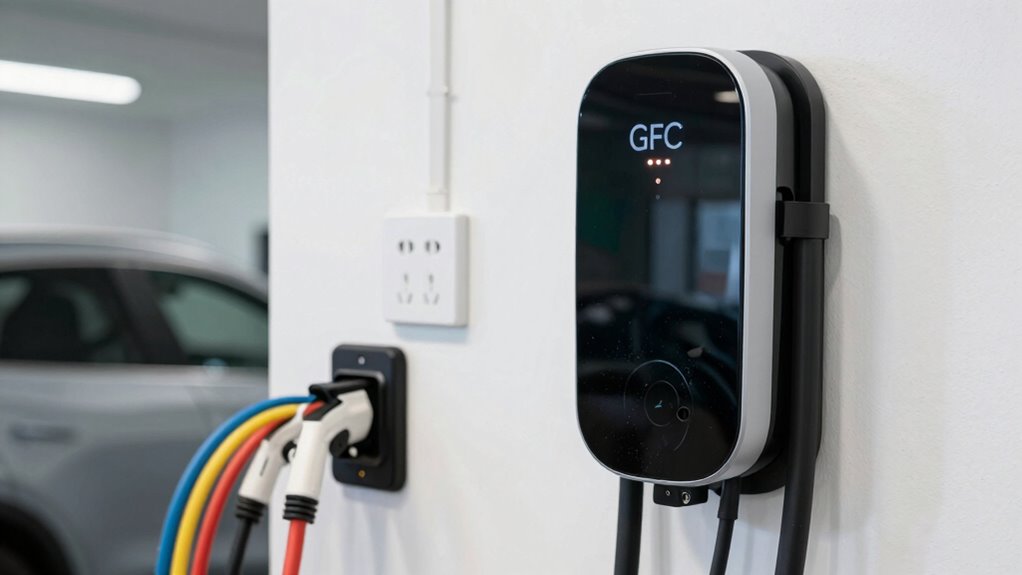
When installing electric vehicle (EV) chargers at home or in commercial settings, understanding the role of Ground Fault Circuit Interrupters (GFCIs) is essential. GFCIs are designed to provide critical circuit protection by quickly shutting off power if they detect a ground fault—an unintended path where current leaks to the ground. This rapid response helps prevent electric shocks and reduces the risk of fire, especially in environments where moisture or conductive materials increase electrical hazards.
Ground faults occur when electricity leaks from the wiring or device to the ground, often due to damaged insulation, faulty wiring, or moisture exposure. When this happens near your EV charger, it can trip the GFCI, cutting power to prevent harm. While this safety feature is vital, it can sometimes trip unnecessarily, leading to what’s known as “nuisance trips.” These nuisance trips happen even when no real danger exists, frustrating users and potentially discouraging proper use of the charger. Understanding why they occur helps you troubleshoot and minimize these interruptions.
Ground faults can cause nuisance GFCI trips, even without real danger, due to wiring issues or environmental factors.
One common cause of nuisance trips is electrical noise or transient current, which can be generated by household appliances, motors, or even the EV charger itself. These small, harmless surges can mimic ground faults on the GFCI’s sensitive detection system, causing it to trip. Additionally, wiring issues such as loose connections, corrosion, or improper grounding can lead to false trips. Sometimes, the GFCI is overly sensitive or faulty, reacting to minor fluctuations that wouldn’t otherwise pose a danger. In these cases, replacing or upgrading the GFCI can improve circuit stability.
Environmental factors also play a role. Moisture, condensation, or debris near the electrical connections can cause a ground fault signal to be falsely triggered. For outdoor or garage installations, ensuring proper sealing and insulation around the wiring and GFCI outlets is crucial. Furthermore, the age of the GFCI device impacts its performance; older units may become overly sensitive or malfunction over time, increasing nuisance trips.
To reduce nuisance trips, ensure your wiring is solid, connections are tight, and the GFCI is functioning correctly. Using high-quality, properly rated GFCIs designed for EV charging applications can also help. Sometimes, consulting an electrician is the best course of action to evaluate your system, identify potential issues, and guarantee your EV charger and electrical setup provide reliable, safe operation. Remember, while nuisance trips can be inconvenient, they are ultimately a safeguard designed to protect you and your property from electrical hazards. Regular maintenance and proper installation of ground fault protection can help prevent unnecessary trips and ensure safety.

SURAIELEC Outdoor GFCI Outlet Box with USB-C & USB-A Ports, 20 AMP
- USB Ports: Type-A and Type-C with 5V/4.5A output
- GFCI Receptacle: 120V, 20 Amp for safety
- Weatherproof Enclosure: All-metal, rust-resistant, rainproof design
As an affiliate, we earn on qualifying purchases.
As an affiliate, we earn on qualifying purchases.
Frequently Asked Questions
How Can I Prevent Nuisance Trips With My EV Charger?
To prevent nuisance trips with your EV charger, verify the ground fault is within the trip threshold by inspecting for moisture or debris around the outlet. Regularly test your GFCI to confirm it functions properly, and avoid using extension cords or adapters that may cause false trips. Keep the charging area dry and avoid overloading circuits, which can cause unnecessary ground fault detections and trips. Proper maintenance minimizes nuisance trips effectively.
Are Certain EV Charger Models More Prone to Nuisance Trips?
Yes, some EV charger models are more prone to nuisance trips due to electrical interference or grounding issues. You might notice certain brands or designs trip more often, especially if they lack proper shielding against interference or have poor grounding connections. To reduce this, choose models with good reviews, ensure professional installation, and periodically check for grounding problems. This way, you can minimize nuisance trips and keep your charger functioning smoothly.
What Maintenance Can Reduce Nuisance Trip Frequency?
Imagine you’re stranded in the digital age without proper maintenance—grounding issues and faulty wiring inspections are often behind nuisance trips. To reduce their frequency, regularly check and tighten connections, guarantee proper grounding, and inspect wiring for damage or corrosion. Keeping your electrical system in top shape minimizes false trips, so schedule routine professional inspections. This simple maintenance can save you time, frustration, and protect your charger and home.
Do Weather Conditions Affect GFCI Performance With EV Chargers?
Weather conditions can definitely affect GFCI performance with EV chargers. Moisture intrusion from rain or snow can cause grounding issues, leading to nuisance trips. Cold or humid weather increases the risk of moisture buildup around the outlet or wiring, which can falsely trip the GFCI. To prevent this, make certain proper sealing and weatherproofing, and check for grounding issues regularly, especially during extreme weather conditions.
Is Professional Installation Necessary to Minimize Nuisance Trips?
Yes, professional installation is essential to minimize nuisance trips caused by ground faults. An experienced electrician ensures the circuit breaker and GFCI are correctly wired and rated for your EV charger, reducing false trips. They also identify any underlying issues that could trigger unnecessary trips. Proper installation guarantees your safety and keeps your charging station functioning smoothly, preventing frequent circuit breaker trips and protecting against ground faults effectively.
Conclusion
Understanding why GFCI outlets trip when charging your EV helps you troubleshoot effectively. For example, if your charger keeps shutting off, it might be due to a minor ground fault or moisture. Imagine you’re in a rush, and the trip happens just as you’re about to leave—frustrating, right? But knowing these causes means you can address issues safely or call a pro, ensuring your EV charges smoothly without unnecessary interruptions.