
The cost of harnessing wind energy, while significant, is an important investment in the global shift to renewable power. Initial expenditures range from $1.2 million to $2.2 million per megawatt, depending on various factors such as location, project size, and equipment costs. Land acquisition, environmental impact assessments, and compliance with regulations account for up to 20% of the total project cost. Equipment and construction expenses are substantial, including procurement costs, construction expenses, and costs of turbines, towers, blades, transformers, and substations. As the world moves towards cleaner energy, understanding the intricacies of wind turbine power becomes increasingly important.

Get garden gear delivered free with Prime
- Fast, free delivery on millions of items
- Prime Video, Amazon Music and more included
- Member-only deals all year
Key Takeaways
- The average cost of building a wind turbine power plant ranges from $1.2M to $2.2M per MW, excluding additional expenses.
- Land acquisition, permits, and grid connection add significant costs, accounting for up to 20% of the total project cost.
- Maintenance costs average around $42,000 per year per turbine, affecting the overall price tag of wind turbine power.
- The return on investment for wind turbine power plants is typically achieved within 7-8 years, making it a viable option.
- Equipment and construction expenses, including turbines, towers, and substations, are substantial and vary based on location and project size.
As an affiliate, we earn on qualifying purchases.
Initial Investment Breakdown

The initial investment costs of a wind turbine power plant comprise a significant portion of the overall expenditure. This includes land acquisition, environmental impact assessments, and compliance with regulations, which can account for up to 20% of the total project cost. These costs are essential for ensuring the project's viability and meeting regulatory requirements.
Land acquisition costs vary depending on the location and size of the project. Environmental impact assessments and compliance with regulations involve fees for consultants, permits, and other expenses.
Additionally, equipment and construction expenses make up a substantial portion of the initial investment. This includes procurement costs, construction expenses, and costs of turbines, towers, blades, transformers, and substations.
Factors Affecting Efficiency
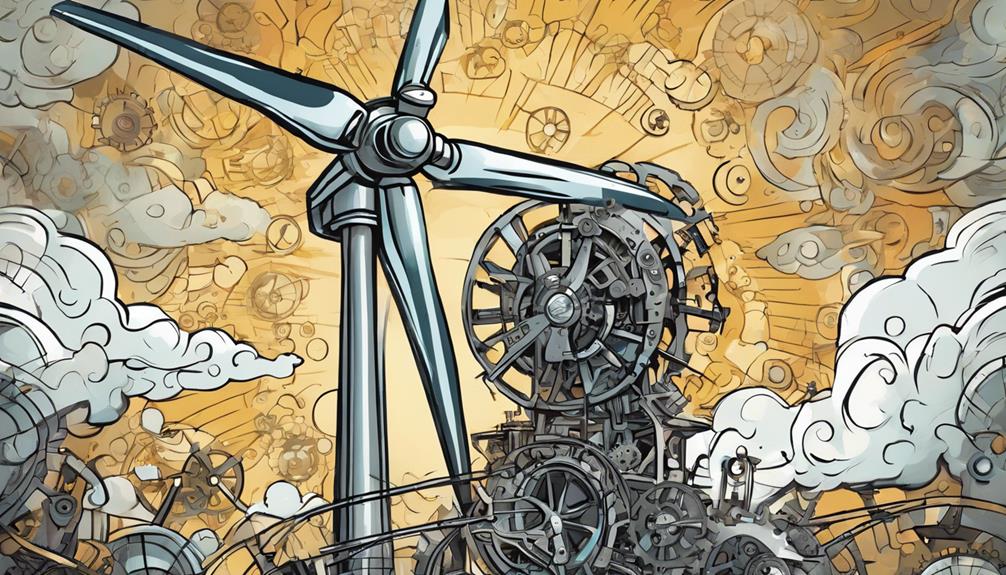
Wind turbine efficiency is heavily influenced by a combination of factors, including wind speed and consistency, turbine height, blade design and material, and regular maintenance and monitoring.
Wind speed and consistency are vital, as turbines operate at their best within specific speed ranges. Turbine height also impacts energy production, with taller turbines capturing more energy. Blade design and material affect performance, with advances in technology leading to improved efficiency.
Regular maintenance and monitoring are essential to ensure peak performance and extend the turbine's lifespan. Location in high-wind areas also enhances efficiency, making it a crucial consideration in site selection.
Blade Configuration Options

How do different blade arrangements impact the performance and cost-effectiveness of wind turbines?
The choice of blade design greatly influences energy production, maintenance costs, and overall efficiency.
Two-blade turbines are cost-efficient but less effective in high winds, while three-blade turbines offer effectiveness and reduced noise but incur higher manufacturing expenses.
Four-blade turbines provide stability, cost-effectiveness, and increased energy production.
Five-blade turbines offer enhanced torque at lower rotational speeds and better resistance against strong gusts of wind.
The selection of blade arrangement depends on factors such as performance, energy production, material expenses, wind conditions, and budget limitations.
Understanding these trade-offs is vital for optimizing wind turbine performance and minimizing expenses.
Environmental and Economic Impacts

As the world shifts towards renewable energy sources, wind turbines have emerged as an essential component in the fight against climate change, offering a cleaner and more sustainable alternative to fossil fuels.
The environmental benefits of wind turbines are undeniable, with a significant reduction in greenhouse gas emissions and contributions to cleaner air and water. Moreover, wind turbines help preserve natural resources and mitigate the impacts of climate change.
- Reduce greenhouse gas emissions and contribute to cleaner air and water
- Help preserve natural resources and mitigate climate change impacts
- Offer a cleaner and more sustainable alternative to fossil fuels
Power Plant Statistics

Statistics reveal that the average cost of building a wind turbine power plant ranges from $1.2 million to $2.2 million per megawatt (MW), with additional expenses incurred for land acquisition, permits, and grid connection. These costs are significant, but the long-term benefits of wind energy make it a viable option.
Maintenance costs are also a consideration, averaging around $42,000 per year per turbine. Despite the initial investment, the return on investment is typically achieved within 7-8 years. Construction timelines typically range from 12 to 18 months, depending on various factors.
Understanding these statistics is essential for investors, policymakers, and stakeholders seeking to harness the power of wind energy.
Frequently Asked Questions
How Do Wind Turbines Impact Local Wildlife and Their Natural Habitats?
Wind turbines can disrupt local wildlife habitats, causing bird collisions, bat fatalities, and altered behavior patterns, while also fragmenting natural habitats and potentially affecting species migration and breeding patterns.
Can Wind Turbines Be Used in Urban Areas or Only in Rural Locations?
Did you know that the average cost of a wind turbine ranges from $1.2 million to $2.2 million per MW? Wind turbines can be used in urban areas, but their efficiency is often compromised by lower wind speeds and turbulence, making rural locations generally more suitable.
What Is the Average Lifespan of a Wind Turbine Before Replacement?
The average lifespan of a wind turbine before replacement is around 20-25 years, depending on factors such as maintenance, wind conditions, and technological advancements, with some turbines operating for up to 30 years.
Are Wind Turbines Resistant to Extreme Weather Conditions Like Hurricanes?
'As fierce hurricanes release their fury, wind turbines stand tall, their robust designs and sturdy blades withstanding torrential rains and howling gusts, ensuring uninterrupted clean energy production even in the most turbulent weather conditions.'
Can Wind Turbines Be Recycled or Repurposed at the End of Their Lifespan?
At the end of their lifespan, wind turbines can be recycled or repurposed, with blades and components reused or repurposed, and steel and copper recovered, minimizing waste and supporting a circular economy.
What Factors Contribute to the Overall Price Tag of Wind Turbine Power?
When considering the overall price tag of wind turbine power, various factors impacting renewable energy costs come into play. These include the initial investment in equipment and installation, ongoing maintenance and repairs, land lease or purchase, transmission and distribution infrastructure, as well as government incentives and policies.
Conclusion
As the world shifts towards a sustainable future, the financial implications of wind turbine power plants take center stage.
While initial investment costs, equipment expenses, and ongoing maintenance fees contribute to the overall price tag, factors like wind speed, turbine height, and blade design notably impact efficiency.
Amidst the complexities, wind turbine power presents a tantalizing tradeoff: higher upfront costs for long-term environmental and economic gains.
Fall Picks
fall essentials
As an affiliate, we earn on qualifying purchases.