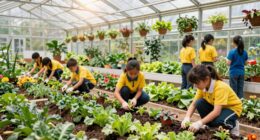
Transform your garden’s bounty into delicious, nutrient-rich meals by focusing on simple seasonal cooking. Use freshly harvested produce at peak ripeness, selecting ingredients that match the current season for the best flavor and nutritional value. Keep preparations minimal—olive oil, herbs, and a pinch of sea salt can elevate natural flavors. Incorporating these fresh ingredients into your meals will strengthen your connection to nature’s rhythm and boost your enjoyment of homegrown produce. Discover more ways to embrace garden-to-table cooking as you continue.
Key Takeaways
- Use fresh, seasonal produce to create flavorful, minimal-prep dishes that highlight natural flavors.
- Incorporate simple ingredients like olive oil, herbs, and sea salt to enhance seasonal vegetables and fruits.
- Prepare recipes that align with the harvest cycle to maximize freshness and nutritional value.
- Focus on quick cooking methods such as grilling, roasting, or steaming to preserve natural flavors.
- Plan meals around what’s in season to support sustainable eating and enjoy peak taste.
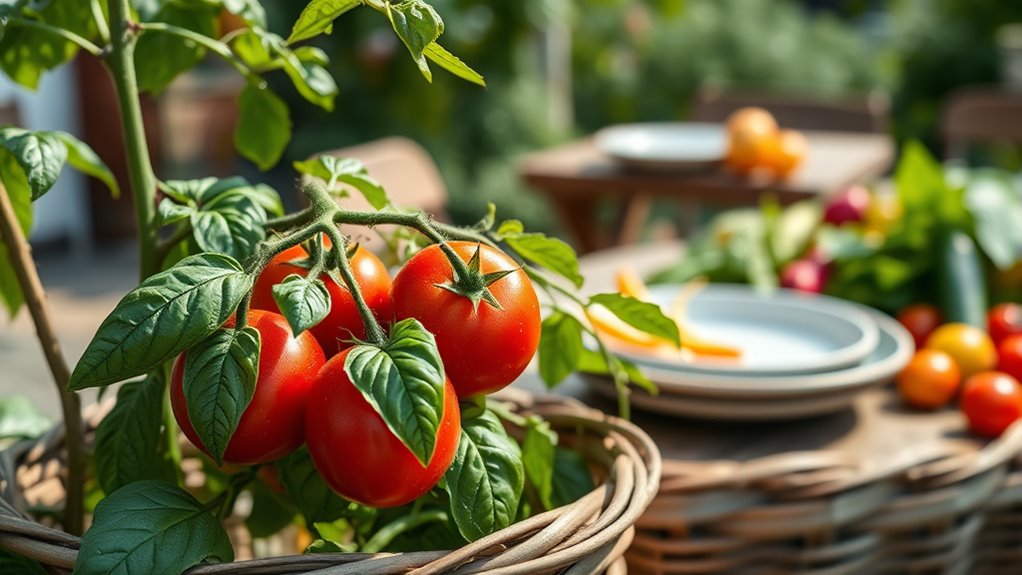
Have you ever wondered how fresh, flavorful produce makes its way from your garden directly to your dinner plate? The journey begins with understanding the importance of good gardening practices, starting with composting tips. Composting is a simple yet powerful way to enrich your soil naturally, ensuring your plants grow strong and healthy. When you add kitchen scraps, garden waste, and yard clippings to your compost bin, you create nutrient-dense soil that feeds your plants without relying on chemical fertilizers. This process not only reduces waste but also boosts the flavor and nutritional value of your harvest. Incorporating heirloom varieties into your garden is another way to enhance your seasonal produce. These heirlooms, passed down through generations, often boast richer flavors and unique textures that hybrid varieties can’t match. Growing heirlooms allows you to enjoy fruits and vegetables that are true to their heritage, giving your meals a distinct, authentic taste that celebrates tradition.
As you tend to your garden, keep in mind that selecting the right heirloom varieties for your climate and season can make a big difference. Whether it’s heirloom tomatoes, peppers, or beans, these varieties often require specific conditions, so research which ones thrive in your area. When the time comes to harvest, aim to pick your produce at peak ripeness for the best flavor. This means observing color, texture, and firmness, and sometimes even tasting a small piece. The more you understand your plants’ growth cycles, the more you’ll enjoy the satisfaction of picking produce straight from your garden at its flavor peak. Additionally, adopting agile gardening techniques can help you adapt quickly to changing weather and growing conditions, ensuring a successful harvest.
Once harvested, the journey from garden to table continues with simple, seasonal cooking. Use your fresh produce in recipes that highlight their natural flavors. For example, a ripe heirloom tomato can become a centerpiece in a salads or sandwiches, where its vibrant taste shines. Keep your preparations minimal—just a drizzle of good olive oil, a pinch of sea salt, and fresh herbs often suffice to elevate your seasonal bounty. By cooking seasonally, you preserve the freshness and nutrients of your produce, making every meal a celebration of your garden’s hard work. This approach not only connects you more deeply to the cycle of growth and harvest but also encourages you to savor the flavors of each season, transforming your garden’s bounty into memorable, wholesome meals.

PSW M20TP Garden Bowl, Planter Bowl, Centerpiece Bowl, Fairy Garden Planter 8 Inch, 1 Count (Pack of 1)
Made with Recycled Materials: A blend of recycled plastic, stone powder, and wood dust, PSW Pots are eye-catching…
As an affiliate, we earn on qualifying purchases.
As an affiliate, we earn on qualifying purchases.
Frequently Asked Questions
How Can I Extend the Harvest Season for My Garden Vegetables?
You can extend your harvest season by practicing companion planting and crop rotation. Companion planting helps protect your vegetables from pests and improves growth, while crop rotation prevents soil depletion and keeps diseases at bay. Use season-extending techniques like row covers, cold frames, or greenhouses to shield plants from early frosts. These methods, combined with smart planting strategies, allow you to enjoy fresh vegetables longer into the year.
What Are Quick Tips for Preserving Seasonal Produce?
Did you know that freezing vegetables can retain over 90% of their nutrients? To preserve seasonal produce quickly, use efficient freezing techniques like blanching before packing in airtight containers. For longer storage, pickling methods are great—submerge vegetables in a flavorful vinegar solution to add zest and extend shelf life. Both methods are fast, simple, and keep your garden’s bounty delicious and fresh well beyond harvest time.
Which Herbs Best Complement Seasonal Vegetables?
You should pair basil with tomatoes for a classic herb flavor combination, and use parsley to brighten root vegetables. Dill complements cucumbers and zucchini, while thyme enhances squash and carrots. To keep herbs fresh, store them properly in fresh water or wrapped in damp paper towels in the fridge. Experiment with herb flavor combinations to elevate your seasonal vegetables, making every dish vibrant and flavorful.
How Do I Prevent Pests Without Chemicals?
You can prevent pests naturally by using natural pest control methods and companion planting. Introduce beneficial insects like ladybugs and lacewings to keep pests in check. Plant companion species that repel pests near your vegetables, such as marigolds with tomatoes or basil with peppers. Keep your garden healthy with proper spacing and crop rotation. These strategies minimize pests without chemicals, helping your garden stay vibrant and safe for eating.
What Are Affordable Tools for Seasonal Cooking at Home?
You might be surprised to find that affordable kitchen gadgets truly make seasonal cooking easier and more enjoyable. Budget-friendly cooking tools like a good vegetable peeler, a versatile cast-iron skillet, and a sharp chef’s knife can transform your meal prep. These tools don’t have to be expensive to be effective. Investing in these essentials allows you to cook fresh, seasonal ingredients without breaking the bank, proving that good tools support great cooking.

Sereniseed Certified Organic Tomato Seeds (10-Pack) – Non GMO, Open Pollinated – Cherokee Purple, Chocolate Cherry, Green Zebra, Brandywine Pink, Black Krim and More – Tomato Seeds for Planting
USDA Certified Organic by Oregon Tilth
As an affiliate, we earn on qualifying purchases.
As an affiliate, we earn on qualifying purchases.
Conclusion
By embracing seasonal cooking from your garden, you not only enjoy fresher, tastier meals but also support local ecosystems. Did you know that eating seasonal produce can reduce your carbon footprint by up to 30%? So, next time you harvest those ripe tomatoes or crunchy carrots, remember that each meal you create connects you more deeply to nature. Keep experimenting with what’s in season, and watch your culinary skills—and your appreciation for the earth—grow.

Tifanso Stainless Steel Roasting Pan – Heavy Duty Turkey Roasting Baking Broiler Oven Pan with Rack and Handle for Oven, High Sided Easy to Clean Induction Roast Tray for Chicken, Vegetable, Lasagna
Healthy Material – The Tifanso heavy-duty turkey roasting pan with rack is made of high-quality, non-toxic stainless steel…
As an affiliate, we earn on qualifying purchases.
As an affiliate, we earn on qualifying purchases.

Pompeian Smooth Organic Extra Virgin Olive Oil – 16 Fl Oz – First Cold Pressed Olive Oil for Cooking – Smooth Taste for Sauteing, Stir-Frying, and Baking
ORGANIC SMOOTH EXTRA VIRGIN OLIVE OIL: Expertly crafted by The Olive Oil People, this USDA Certified Organic extra…
As an affiliate, we earn on qualifying purchases.
As an affiliate, we earn on qualifying purchases.