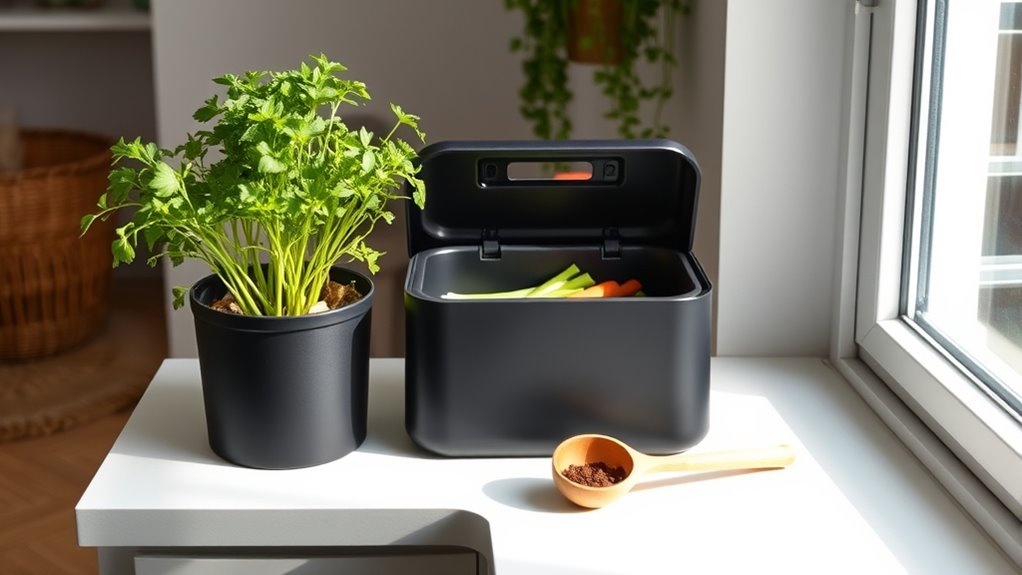

If you want to compost in your small apartment, vermicomposting is a great option. It produces nutrient-rich compost, needs minimal space, and stays odor-free if managed properly. You can use small containers like plastic bins or worm tumblers, placed out of direct sunlight. Regularly feed organic waste like vegetable peelings and coffee grounds, and monitor moisture levels. To make your composting journey easier and more effective, there’s plenty more to discover below.
Key Takeaways
- Use compact, odor-controlled vermicomposting bins suitable for small spaces like apartments.
- Place bins in well-ventilated areas away from direct sunlight, such as balconies or utility closets.
- Feed worms organic waste like vegetable peels and coffee grounds, avoiding meats and dairy to prevent odors.
- Maintain proper moisture and airflow to keep the composting process efficient and odor-free.
- Harvest nutrient-rich compost regularly to fertilize indoor plants or balcony gardens, supporting eco-friendly living.
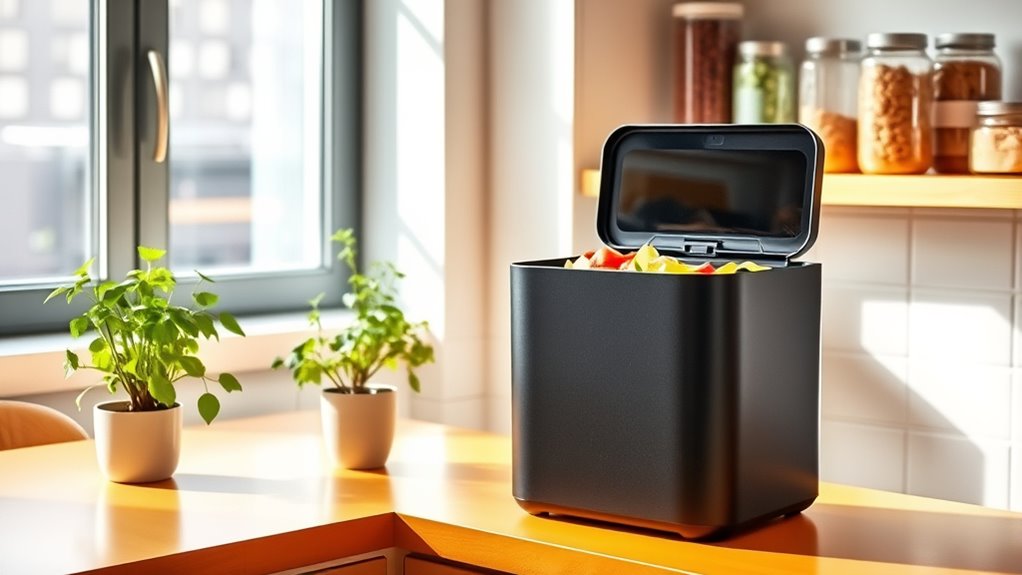
Living in a small apartment doesn’t mean you have to skip composting. In fact, you can turn your kitchen scraps into nutrient-rich compost right in your limited space. One of the most efficient ways to do this is through vermicomposting, which uses worms to break down organic waste quickly and effectively. The vermicomposting benefits are numerous: it produces high-quality compost, requires minimal space, and is virtually odor-free when managed properly. Plus, worms are natural recyclers, turning food scraps into rich soil in a matter of weeks. This makes vermicomposting an ideal choice for apartment dwellers who want to reduce waste and support their plants without the mess or smell associated with traditional composting. Additionally, understanding the terminology and proper techniques can help you troubleshoot common issues and keep your composting system running smoothly.
When starting out, choosing the right composting container options is vital. You’ll want something compact and easy to maintain, such as a small plastic bin, a wooden worm bin, or even a specialized vermicomposting tumbler. Plastic bins with lids are popular because they’re lightweight, affordable, and easy to seal, which helps contain odors and keeps pests out. Look for containers that have air holes or vents to guarantee proper oxygen flow, as worms need oxygen to thrive. Some people prefer stacking or tiered systems, which maximize vertical space and keep everything contained in a small footprint. If you want something more aesthetically pleasing, there are decorative bins designed specifically for vermicomposting, blending seamlessly into your apartment decor.
Regardless of your container choice, you’ll want to set it up in a spot that’s out of direct sunlight, like a balcony, utility closet, or under the kitchen sink. The key to successful vermicomposting is maintaining the right moisture level—moist but not soggy—and feeding the worms only organic waste like vegetable peelings, coffee grounds, and eggshells. Avoid adding meat, dairy, or oily foods, as these can cause odors and attract pests.
Managing your composting container involves regular checking and occasional harvesting. In just a few months, you’ll notice the worms processing your kitchen scraps into dark, crumbly compost. This can be used to fertilize your indoor plants or balcony garden, closing the loop and reducing waste. With a little effort, vermicomposting becomes a simple, eco-friendly routine that fits perfectly into apartment living. It’s a sustainable way to contribute to the environment while enjoying healthier plants and a cleaner kitchen. Getting familiar with composting terminology can also help you better understand the process and improve your success rate.

The Original VermiHut® Plus 5-Tray Worm Compost Bin – Indoor & Outdoor Vermicomposting System, Continuous Flow Food Waste Recycler for Organic Composting & Gardening – Drak Green
Compact, High-Efficiency Footprint Designed to maximize composting capacity while minimizing floor space.
As an affiliate, we earn on qualifying purchases.
As an affiliate, we earn on qualifying purchases.
Frequently Asked Questions
How Often Should I Empty My Apartment Compost Bin?
You should empty your apartment compost bin every 1 to 2 weeks to guarantee proper compost bin maintenance and prevent odors. Indoor compost scheduling depends on how much waste you generate, so monitor it regularly. If it fills quickly or starts smelling, empty it sooner. Consistent emptying keeps your compost healthy and odor-free, making indoor composting manageable in small apartments. Adjust your schedule as needed for best results.
Can I Compost Meat or Dairy in a Small Apartment?
You can compost meat and dairy disposal, but it’s not ideal for small apartments due to odor and pests. Meat composting attracts bacteria and pests, making it harder to manage in limited spaces. If you do, make certain your compost bin has a tight lid, is regularly emptied, and is kept in a well-ventilated area. Consider alternatives like bokashi or worm composting to handle meat and dairy safely indoors.
What Are the Best Odor Control Methods for Indoor Composting?
Back in the day, you’d keep your compost pile fresh and odor-free by focusing on odor absorption and air circulation. To do this, add carbon-rich materials like shredded paper or dry leaves, and turn your compost regularly to promote airflow. Using a sealed bin with a charcoal filter helps trap smells, while opening vents ensures proper air circulation. These methods work together to keep indoor composting odorless and fresh.
How Do I Prevent Pests in My Tiny Compost Setup?
To prevent pests in your tiny compost setup, use pest-resistant materials like sealed, smell-proof containers. Make sure your container has a tight-fitting lid and avoid leaving food scraps exposed. Regularly turn and mix your compost to reduce odors that attract pests. Keep your compost in a cool, dry place, and cover it with a layer of carbon-rich materials like dry leaves or shredded paper. These steps help keep pests at bay while managing odors effectively.
Is It Necessary to Use a Specific Compost Bin for Apartments?
You don’t need a specific compost bin for apartments, but choosing the right materials helps. Opt for odor-proof, breathable bins made from plastic or metal to prevent pests and smells. Check your apartment’s compost regulations, as some places have restrictions. Keep your bin sealed, maintain proper moisture, and turn compost regularly to stay within rules and avoid issues. This way, you can compost effectively without special equipment.

EPICA Countertop Compost Bin Kitchen | 1.3 Gallon | Odorless Composting Bin with Carbon Filters | Indoor Compost Bin with Lid | Stainless Steel Kitchen Composter for Food Scraps & Waste Recycling
FEATURED IN BON APPETIT & FORBES: Recognized by renowned magazines, EPICA’s compost bin is a perfectly sized marvel…
As an affiliate, we earn on qualifying purchases.
As an affiliate, we earn on qualifying purchases.
Conclusion
Living in a small apartment might limit your space, but it doesn’t have to limit your impact. Composting shows you can turn kitchen scraps into garden gold, even in tight quarters. It’s a small act with big results—reducing waste while nurturing new life. So, embrace this eco-friendly habit; after all, sometimes the tiniest spaces can make the biggest difference. Your apartment might be small, but your green footprint can be enormous.

Underground Worm Farm, Garden Mini vermicomposting bin for use in Outdoor Gardening from Kitchen Food Waste, with Holes and lid, White (10.2×4.3×4.3IN)
Converting organic waste into nutrient-rich garden materials has created a year-round outdoor fine composting system, optimizing horticultural practices…
As an affiliate, we earn on qualifying purchases.
As an affiliate, we earn on qualifying purchases.

No-Waste Composting: Small-Space Waste Recycling, Indoors and Out. Plus, 10 projects to repurpose household items into compost-making machines (No-Waste Gardening)
As an affiliate, we earn on qualifying purchases.
As an affiliate, we earn on qualifying purchases.