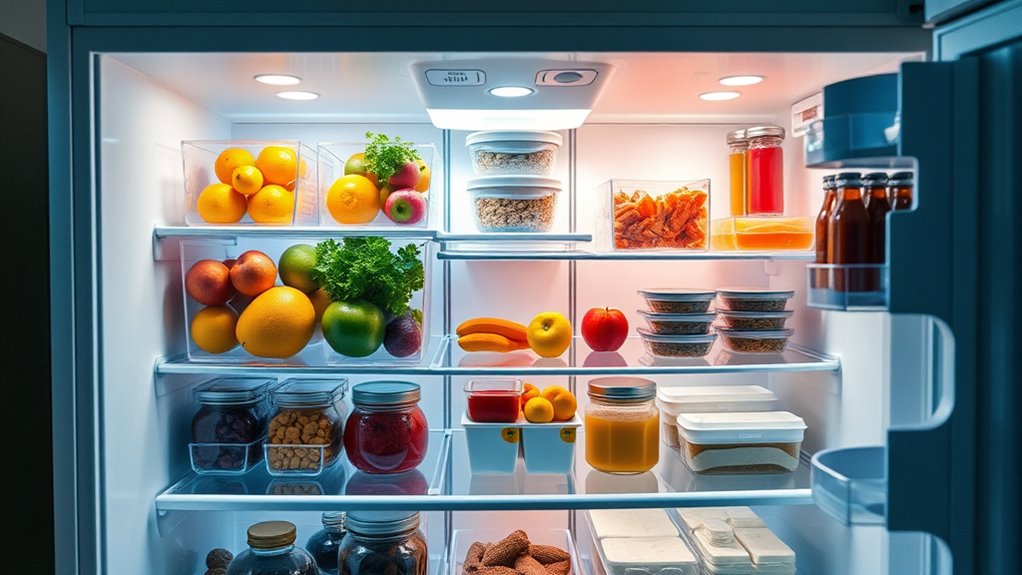

To waste less food, start by organizing your fridge with designated zones for dairy, vegetables, meats, and leftovers. Use clear containers and label everything with contents and expiry dates to quickly spot near-expiring items. Place older items at the front for easy use and store raw meats on the bottom to prevent cross-contamination. Regularly check for spoilage and plan meals to use ingredients efficiently. Keep exploring for more tips to maximize freshness and minimize waste.
Key Takeaways
- Create designated zones for different food groups to improve visibility and prevent cross-contamination.
- Regularly monitor expiration dates and prioritize using items approaching expiry to reduce waste.
- Label containers with contents and storage dates for easy identification and efficient inventory management.
- Store raw meats on the bottom to prevent drips and organize items with clear containers for quick access.
- Schedule routine fridge checks and cleaning to maintain freshness, prevent spoilage, and promote sustainable habits.

A well-organized fridge can save you time, reduce waste, and keep your groceries fresh longer. When you keep your fridge tidy, it’s easier to see what you have, plan meals efficiently, and avoid letting food spoil unnoticed. One key to effective organization is paying attention to expiration dates. Regularly checking these dates helps you prioritize what to use first, preventing items from expiring and going to waste. Set a weekly reminder to scan your fridge and discard anything past its prime. This habit keeps your fridge clutter-free and ensures you’re consuming fresh, safe food.
Another essential aspect is container labeling. When you store leftovers or prepped ingredients, label each container with the contents and date it was stored. Use clear, legible labels or masking tape to mark the date and item name. This way, you can quickly identify what needs to be eaten soon and avoid guessing or opening multiple containers unnecessarily. Proper labeling reduces the chances of consuming food that’s past its prime or forgotten at the back of the fridge, which often leads to waste. It also streamlines your shopping by giving you an accurate inventory of what you already have.
To maximize the benefits, organize your fridge into zones. Designate specific areas for dairy, vegetables, meats, and leftovers. Place items with the earliest expiration dates toward the front or at eye level so you’re reminded to use them first. Keep raw meats on the bottom shelf to prevent drips from contaminating other foods. Use clear containers or bins to group similar items together, making it easier to find what you need and quickly spot items nearing their expiration. When you combine this with diligent container labeling, your fridge becomes a well-oiled system that minimizes waste. Additionally, understanding how self-watering plant pots work can inspire you to adopt more sustainable habits in your kitchen, such as reusing containers or creating self-watering systems for herbs on your windowsill.
Maintaining a routine of checking expiration dates and labeling items not only saves money but also promotes healthier eating habits. It prevents you from accidentally eating spoiled food, which could lead to illness or food poisoning. Plus, knowing exactly what’s in your fridge helps you plan meals around existing ingredients, reducing impulse purchases and extra trips to the store. Over time, these small habits create a smarter, more efficient fridge that works for you, not against you. With a little effort, you’ll find your fridge stays cleaner, fresher, and more organized, making your overall kitchen experience more enjoyable and less wasteful.
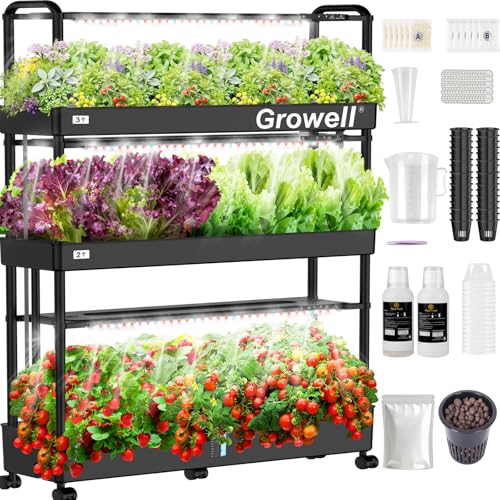
Large Hydroponics Growing System Kit, 48 Pods Vertical Hydroponic Garden, with 48 Large Buckets, 40L Indoor Garden System for Herb Vegetable Fruit, with 2 Light Modes, Auto Circulating Water System
3-Tier Large Hydroponics Growing System: Boasting 48 pods paired with 48 large 3-inch planting buckets. Growell vertical hydroponics...
As an affiliate, we earn on qualifying purchases.
Frequently Asked Questions
How Often Should I Reorganize My Fridge for Optimal Freshness?
You should reorganize your fridge weekly to maintain peak freshness. Check your fridge temperature, ensuring it stays at 37-40°F, and adjust as needed. Regularly review your freezer organization to prevent items from getting lost or spoiled. By staying on top of these tasks, you’ll reduce waste, keep food fresher longer, and make meal prep more efficient. A quick tidy-up each week keeps your fridge functioning perfectly and your food safe.
What Are the Best Containers to Prevent Spoilage?
Think of your containers as the bouncers of your fridge, keeping spoilage out. Opt for airtight containers to seal freshness tightly, and choose BPA-free options for safety. These containers act like loyal gatekeepers, preventing moisture and air from sneaking in, which helps your food stay fresh longer. Investing in durable, well-fitting containers minimizes waste and keeps your fridge organized, making sure your produce and leftovers stay delicious and safe.
How Can I Track Expiration Dates Efficiently?
To track expiration dates efficiently, start using expiration tracking apps or labels that clearly mark dates on containers. Regularly check your inventory and update your records to stay aware of what’s nearing spoilage. Practice good inventory management by organizing older items in the front. This way, you prevent waste and ensure you consume products before they expire, saving money and reducing food waste.
Are There Eco-Friendly Ways to Reduce Fridge Energy Use?
Think of your fridge as a tiny eco-friendly spaceship. To keep it running efficiently, adopt energy saving techniques like setting the right temperature, keeping it full but not overcrowded, and ensuring door seals are tight. Use eco-friendly refrigeration practices by avoiding overstuffing and defrosting regularly. These steps help reduce energy use, cut costs, and protect the environment, making your fridge a responsible, planet-friendly part of your home.
What Are Quick Tips for Meal Planning Based on Fridge Contents?
You can start meal planning by inspecting your fridge contents to see what’s available. Use this info to create a meal prep plan that minimizes waste. Make a grocery list based on what you need to complete your meals, avoiding unnecessary purchases. This way, you save time and money, reduce food waste, and keep your fridge organized. Regularly updating your plan guarantees you use ingredients efficiently and stay on track.

LYCereal Hydroponics Growing System, 30-Plant Indoor Hydroponic Tower with Timer and Pump System, Plants Germination Kit, Vertical Hydroponic System for Gardening Lover (No Seed)
Easy, Low Maintenance: Just minutes a week to add water and nutrients - our advanced hydroponics system does...
As an affiliate, we earn on qualifying purchases.
Conclusion
Now that you’ve learned how to organize your fridge smarter, imagine what you could save—on waste, money, and time. But here’s the twist: your fridge isn’t just storage; it’s a secret weapon against spoilage. Keep experimenting, stay vigilant, and watch how your habits transform. The real game-changer? It’s just one clever tweak away. Ready to open the full potential of your fridge? The next step might surprise you—are you prepared?

Woolooloo Large Hydroponics Growing System Kit, 5-Tier Indoor Herb Garden with Smart Climate Control, Auto Misting, Full Spectrum Grow Light, Vertical Hydroponic System for Home or Commercial
5-Tier Large hydroponics growing system kit Growing System: Maximize your indoor gardening with a modular 5-tier hydroponic kit...
As an affiliate, we earn on qualifying purchases.

NOVAMART Hydroponic Plant Growing System – 36-Site PVC Indoor Garden Tower with AU/US Plug | Soil-Free Vertical Hydro Grow Kit with Planting Baskets, Sponges & Irrigation Tube | White
● 🌱 Complete Hydroponic System – 36 Plant Capacity: Grow fresh herbs, leafy greens, and vegetables at home...
As an affiliate, we earn on qualifying purchases.