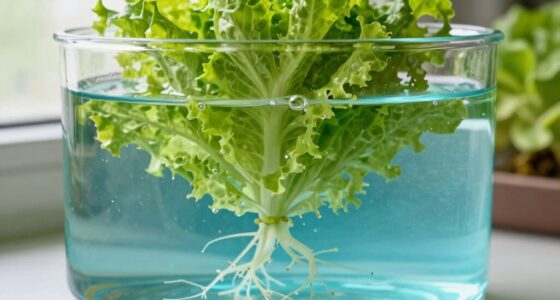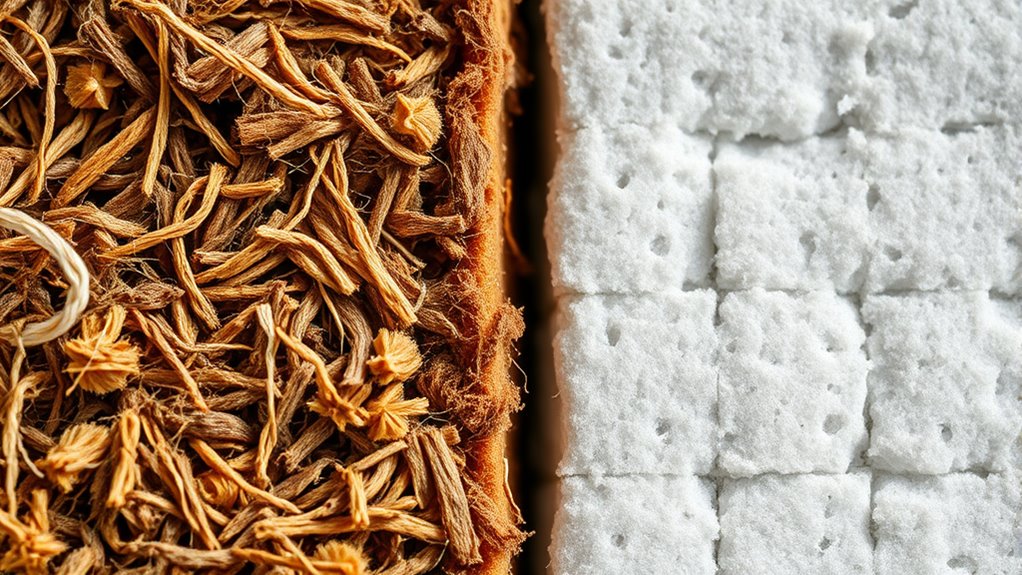

When choosing between coco coir and rockwool, consider your priorities. Coco coir retains nutrients well, offers good moisture retention, and is environmentally friendly, making it ideal if you want sustained nutrient availability and eco-conscious practices. Rockwool drains water faster and promotes quick root growth, which suits growers focused on rapid drainage and minimizing overwatering risks. Understanding these differences helps you pick the best substrate for your setup—continue exploring for more tips.

Get garden gear delivered free — and shop member deals
- Fast, free delivery on millions of items
- Access to Prime Big Deal Days deals on October 6–7
- Prime Video, Amazon Music and more included
Key Takeaways
- Coco coir retains nutrients and moisture, ideal for sustained nutrient availability and water balance.
- Rockwool offers superior water drainage, reducing risks of overwatering and root rot.
- Coco coir enhances aeration with natural fibers, promoting healthy root development.
- Rockwool requires careful pH balancing and handling due to its synthetic composition.
- Choice depends on grower priorities: nutrient stability and eco-friendliness versus drainage and quick water runoff.
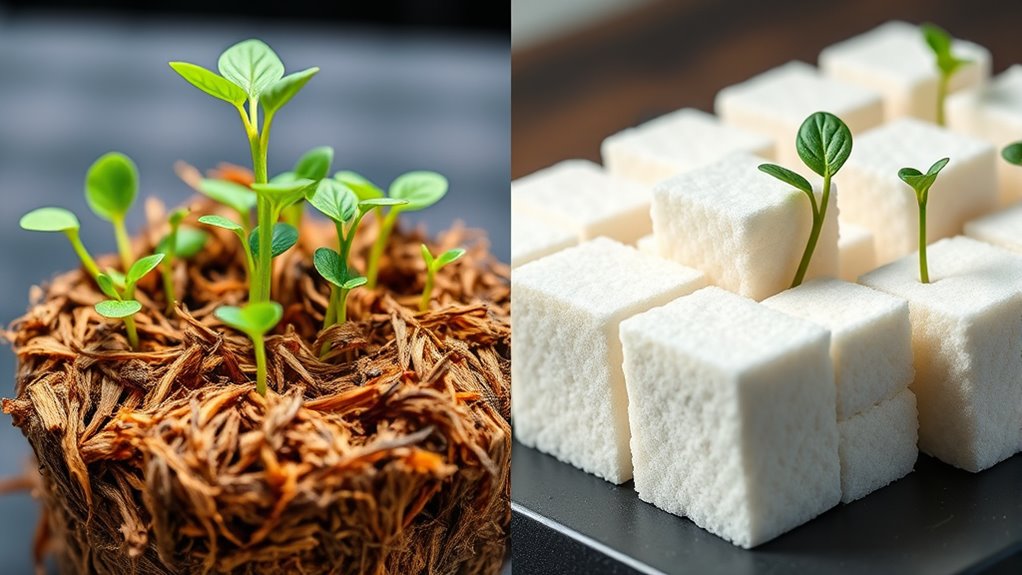
When choosing a growing medium for your hydroponic or soil-based garden, understanding the differences between coco coir and rockwool is vital. Both substrates offer unique benefits and challenges, especially when it comes to nutrient retention and water drainage. Coco coir, made from coconut husks, is known for its excellent ability to hold onto nutrients while still allowing excess water to drain effectively. Its porous structure creates a balance that helps prevent overwatering, which can be a common problem in hydroponic systems. This means your plants can access nutrients over a sustained period, reducing the frequency of nutrient solution applications. The fiber composition of coco coir creates air pockets that facilitate good aeration, which is essential for healthy root development. When you water your plants, coco coir retains enough moisture to keep roots hydrated but releases excess water efficiently, maintaining ideal oxygen levels around the roots. Additionally, coco coir’s natural pH buffering capacity helps maintain a stable environment for nutrient uptake.
In contrast, rockwool, a synthetic mineral fiber, has a different approach to water management. It boasts superior water drainage compared to many other substrates, which can be advantageous in situations where quick removal of excess water is necessary. However, this quick drainage can sometimes mean that rockwool doesn’t hold onto nutrients as effectively as coco coir does. You might find yourself needing to supplement or adjust your feeding schedule more often because nutrients tend to wash out faster. Despite this, rockwool’s structure provides good aeration, supporting healthy root growth. Its ability to drain water rapidly helps prevent root rot and other issues caused by waterlogged roots, making it a popular choice for hydroponic growers who prefer a medium that minimizes water retention.
Choosing between coco coir and rockwool depends on your specific needs. If you prioritize sustained nutrient availability and prefer a medium that retains moisture well while draining excess water, coco coir is a reliable choice. Its natural composition makes it environmentally friendly and easier to manage over time. On the other hand, if quick water drainage and reducing the risk of overwatering are more important for your setup, rockwool might be better suited. Keep in mind that each medium requires different handling and nutrient management strategies. Coco coir may need periodic flushing to remove accumulated salts, whereas rockwool often needs careful pH balancing. Ultimately, your decision should align with your grower’s goals, the plants you’re cultivating, and your preferred maintenance routine. Understanding substrate properties can help optimize your growing results.
As an affiliate, we earn on qualifying purchases.
Frequently Asked Questions
Which Substrate Is More Environmentally Sustainable?
You’ll find coco coir more environmentally sustainable because it’s an eco-friendly option, being biodegradable and made from natural coconut husks. It decomposes naturally, reducing waste and environmental impact. Rockwool, on the other hand, isn’t biodegradable and consumes more energy during production. If sustainability is your priority, choosing coco coir aligns better with eco-conscious gardening, offering a more sustainable and biodegradable substrate option that supports environmental health.
How Do Costs Compare Over a Plant’s Lifecycle?
You’ll find coco coir generally offers better cost efficiency over a plant’s lifecycle, leading to long-term savings. While initial costs for rockwool might be comparable or slightly higher, coco coir’s durability and reusability reduce replacement expenses. Plus, coco coir’s natural properties lower the need for additional amendments, saving you money over time. Overall, investing in coco coir can make your gardening more economical in the long run.
Are There Specific Plants That Prefer One Substrate?
Certain plants prefer one substrate over the other based on their plant growth and pH preferences. For example, orchids thrive better in rockwool because it provides excellent aeration and maintains stable pH levels, ideal for their growth. Conversely, plants like tomatoes and herbs often favor coco coir, as it retains moisture and has a pH closer to their ideal range. Knowing your plant’s specific needs helps you choose the best substrate.
Can These Substrates Be Reused or Recycled?
Think of these substrates as seeds of sustainability. You can reuse coco coir by rinsing and reconditioning it, while rockwool can be recycled through specific methods like crushing or melting. Recycling methods depend on their biodegradability factors: coco coir is biodegradable and eco-friendly, making it easier to repurpose or compost. Rockwool, although durable, requires careful disposal to minimize environmental impact. Your mindful approach helps nurture both your plants and the planet.
What Are the Common Pests or Diseases Associated?
You should watch out for common pests like fungus gnats and spider mites, which can infest both substrates. To guarantee pest prevention, keep your grow area clean and monitor plants regularly. Diseases such as mold or root rot can develop if conditions are too damp, so choose substrates with good disease resistance. Proper ventilation and maintaining ideal humidity levels help protect your plants and keep pests and diseases at bay.
Conclusion
Ultimately, choosing between coco coir and rockwool depends on your needs and preferences. Coco coir offers natural, eco-friendly benefits, while rockwool provides excellent aeration and stability. Remember, “you get what you pay for,” so consider the long-term costs and benefits of each. By understanding their differences, you can make an informed decision that helps your plants thrive. Trust your instincts, and you’ll find the perfect fit for your growing journey.
Fall Picks
fall essentials
As an affiliate, we earn on qualifying purchases.