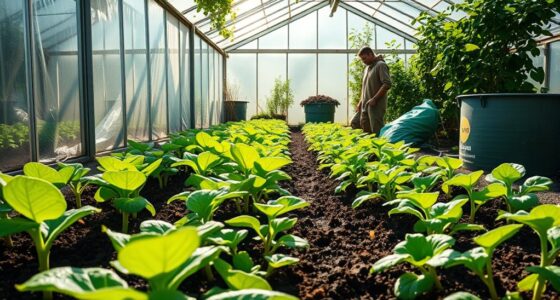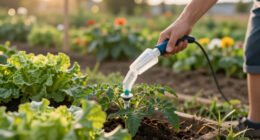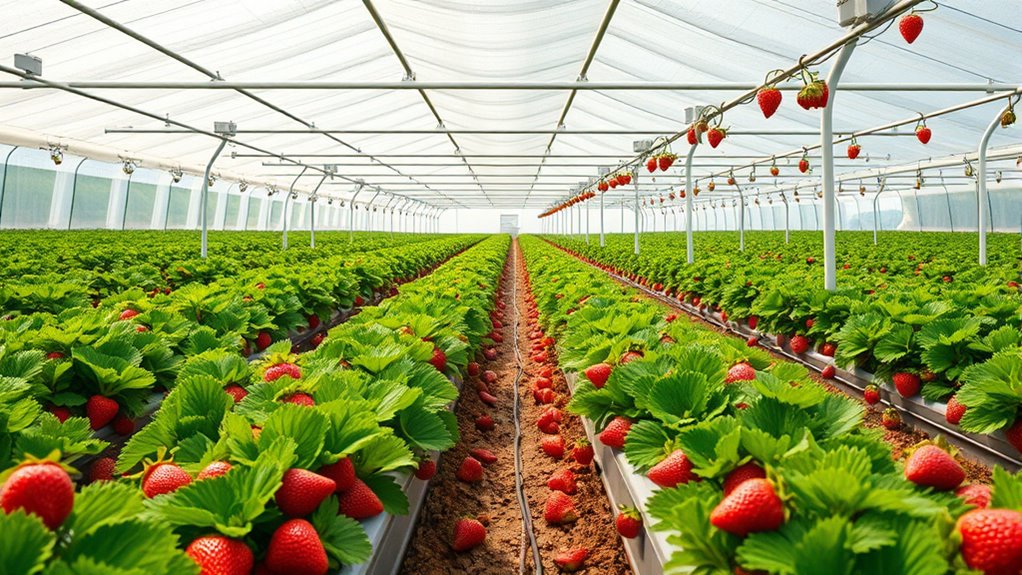

Growing strawberries under cover extends your harvest season, boosts plant health, and helps manage pests and diseases more effectively. You should prepare well-drained, fertile soil with organic matter, clear weeds, and monitor pH levels regularly. Covering your beds creates a physical barrier, protecting plants from pests and harsh weather. Good soil practices and pest management support healthy growth and higher yields. Keep exploring to discover key tips for successful strawberry production under cover.

Get garden gear delivered free — and shop member deals
- Fast, free delivery on millions of items
- Access to Prime Big Deal Days deals on October 6–7
- Prime Video, Amazon Music and more included
Key Takeaways
- Covering strawberries extends the harvest season and provides protection from pests and harsh weather conditions.
- Soil under cover should be well-drained, fertile, and maintained at pH 6.0 to 7.0 for optimal growth.
- Using physical barriers and regular pest monitoring under cover helps prevent pest infestations and disease spread.
- Covering reduces soil erosion, conserves moisture, and minimizes disease risk through better soil management.
- Proper soil preparation and integrated pest management under cover promote healthy plants and higher yields.
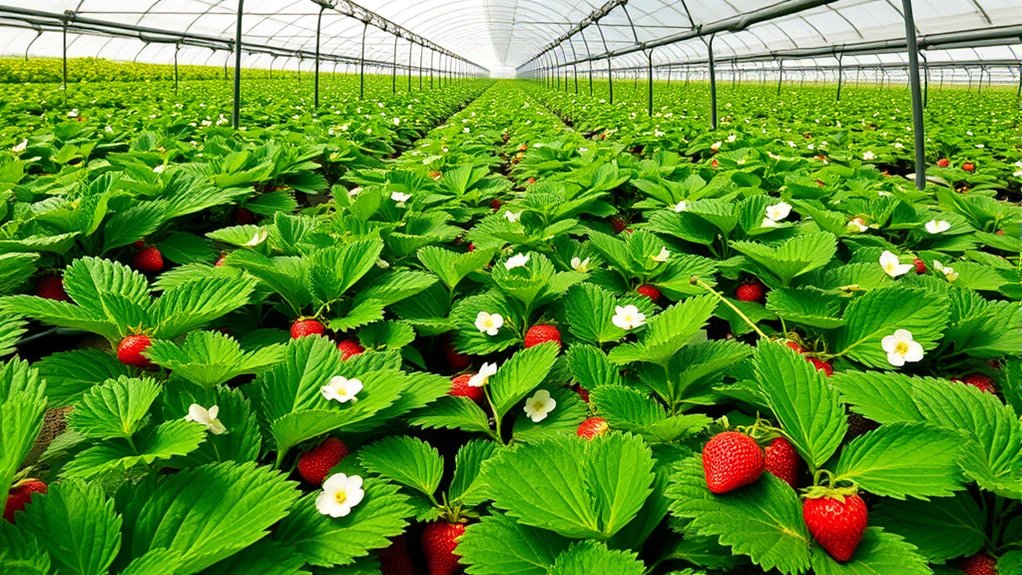
Growing strawberries under cover offers growers a way to extend the harvest season and protect plants from pests and harsh weather. To make the most of this setup, proper soil preparation is vital. Before planting, you need to ensure your soil is well-drained, fertile, and has the right pH level, typically around 6.0 to 7.0. Start by clearing any weeds and debris, then loosen the soil to improve aeration. Incorporate organic matter, such as compost or well-rotted manure, to boost nutrient content and improve soil structure. This foundation helps your strawberries establish strong roots and promotes healthy growth. Keep in mind that a clean, prepared bed minimizes disease risk and creates an ideal environment for your plants. Regular soil testing can help monitor soil health and ensure optimal conditions for growth.
Pest management becomes more manageable under cover, but it’s still essential to stay vigilant. The controlled environment reduces exposure to many pests, but some can still find their way in. Regular monitoring is key. Check your plants frequently for signs of pests like aphids, spider mites, or slugs, and address issues promptly. Using integrated pest management strategies, such as introducing beneficial insects or applying organic controls, helps keep pest populations in check without harming your plants or the environment. Covering the strawberries also makes physical barriers easier to implement, preventing larger pests like birds or rodents from reaching the fruit.
Additionally, soil preparation influences pest management by creating an inhospitable environment for soil-borne diseases and pests. Proper drainage prevents waterlogging, which can lead to root rot and attract fungal pathogens. Rotating crops or planting strawberries in raised beds can further reduce disease pressure. Applying mulch over the soil surface not only conserves moisture but also suppresses weeds and reduces pest habitats. When you prepare your soil thoroughly and maintain a clean, pest-free environment, you set the stage for healthy, productive strawberry plants.
strawberry cover crop protection
As an affiliate, we earn on qualifying purchases.
As an affiliate, we earn on qualifying purchases.
Frequently Asked Questions
What Are the Best Strawberry Varieties for Cover Production?
You should choose strawberry varieties like Albion, Mara des Bois, or Sweet Charlie for cover production, as they thrive under controlled conditions. Make certain your soil nutrients are rich and well-balanced to promote healthy growth. Maintain ideal planting density to maximize yield without overcrowding, which can hinder air circulation. These varieties perform well in cover systems, offering high yields and good disease resistance, making them ideal choices for your strawberry cover production.
How Does Cover Type Affect Strawberry Flavor?
Think of cover types like a chef’s choice of pan—affecting the flavor of your strawberries. A well-ventilated cover enhances air circulation, preventing mold and boosting flavor, while soil moisture levels under different covers influence sweetness. I once saw a grower improve flavor by switching to a cover with better air flow, showing how cover type directly impacts taste by creating ideal conditions for strawberries to develop their full flavor profile.
What Pests Are Most Common in Covered Strawberry Systems?
In covered strawberry systems, you’ll often face pests like spider mites, aphids, and thrips. These pests can cause pollination challenges, reducing fruit quality and yield. You might also encounter disease management issues, such as Botrytis or powdery mildew, which thrive in humid environments. Regular monitoring and integrated pest management are essential to keep pests at bay and maintain healthy plants under cover.
How Does Cover Management Impact Strawberry Yield?
Cover management considerably boosts strawberry yield by up to 30%, ensuring ideal soil nutrients and water management. When you maintain proper cover practices, you prevent soil erosion and moisture loss, creating a stable environment for plants. This consistency allows strawberries to grow healthier and produce more fruit. By controlling cover, you also reduce weed competition, further enhancing yield potential. Good cover management directly supports higher productivity and better-quality strawberries.
Can Strawberries Be Grown Year-Round Under Cover?
Yes, you can grow strawberries year-round under cover. To guarantee successful production, maintain ideal soil fertility and adjust your watering techniques accordingly. Use cover systems like tunnels or greenhouses to control temperature and humidity, preventing seasonal gaps. Regularly monitor soil health and water consistently to promote healthy growth. This approach allows you to enjoy fresh strawberries throughout the year, regardless of external weather conditions.
Conclusion
Growing strawberries under cover is like building a cozy nest for your plants, shielding them from harsh weather and pests. Just last season, I watched my berries thrive despite an unexpected cold snap, proving that protection truly makes a difference. With the right environment, your strawberry crop can flourish beyond the seasons. Think of it as giving your plants a warm, safe home—one that rewards you with sweeter, better yields every time.
Fall yard work Picks
leaf blowers
As an affiliate, we earn on qualifying purchases.