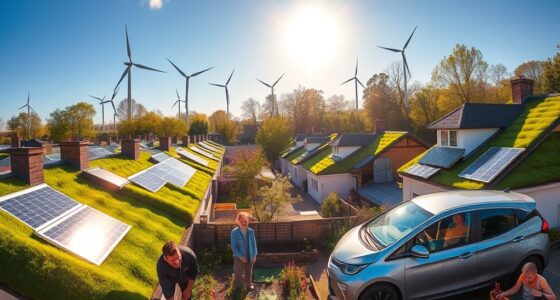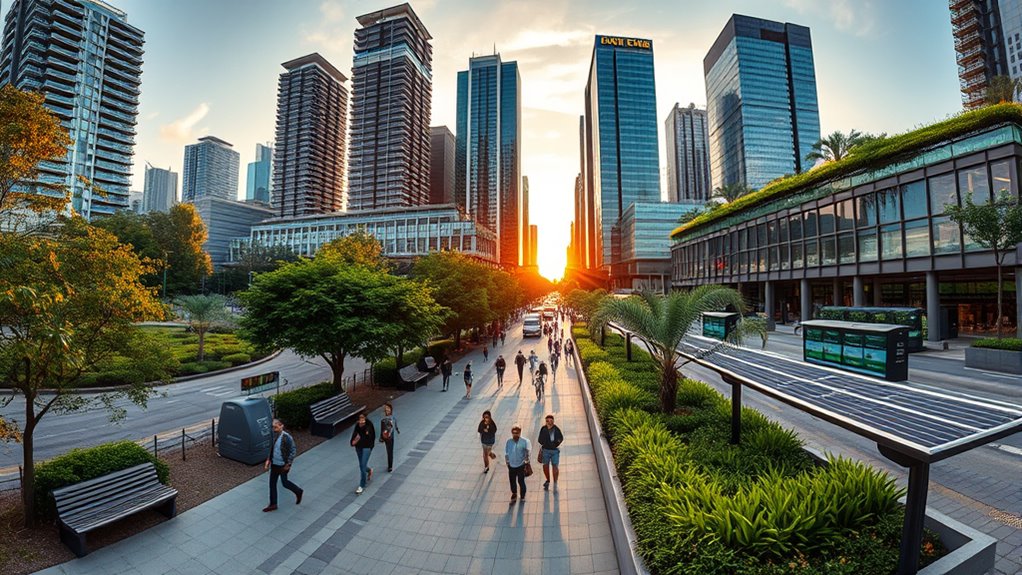

To measure sustainable cities, focus on key metrics like urban heat levels, which you can track through temperature sensors across neighborhoods to identify hotspots and assess mitigation efforts. Green infrastructure indicators, such as green cover and projects like green roofs, show progress in cooling and environmental benefits. Additionally, tracking health impacts, energy demand, and environmental improvements helps evaluate overall sustainability. Keep exploring to discover how these measures guide smarter urban planning and lasting resilience.
Open a free Amazon Business account
Business pricing, bulk buying and tax-exempt orders.
As an affiliate, we earn on qualifying purchases.
Key Takeaways
- Urban heat levels and hotspots identified through temperature sensors inform heat mitigation efforts.
- Green infrastructure metrics include green cover extent, quality, and growth over time as indicators of environmental progress.
- Reduction in heat-related health issues and energy demand serve as health and efficiency metrics.
- Data integration evaluates green infrastructure impacts on air quality, stormwater management, and overall sustainability goals.
- Continuous measurement of urban heat and green cover guides strategic planning, resource allocation, and policy effectiveness.
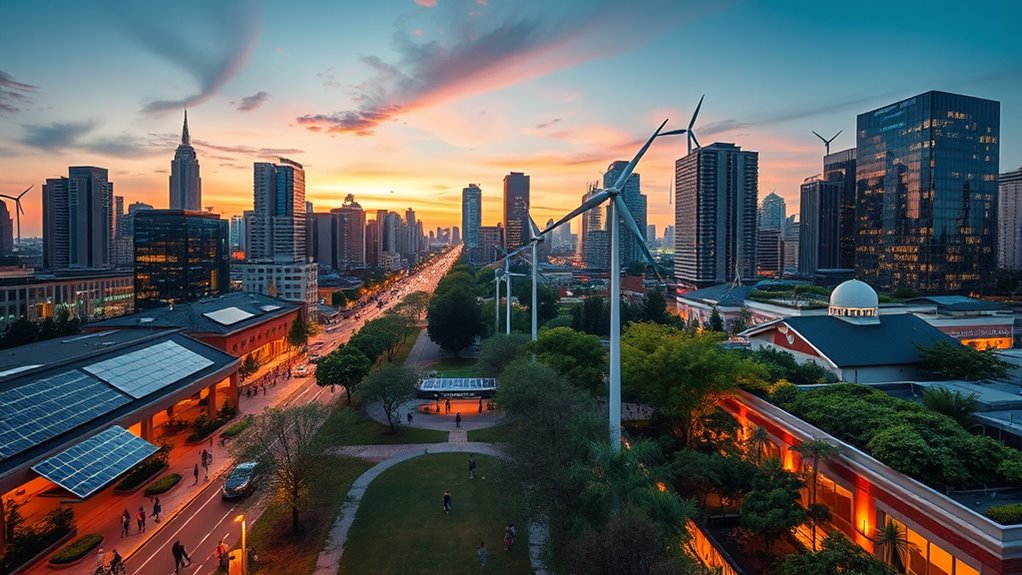
Creating sustainable cities requires clear, measurable indicators that track progress and identify areas for improvement. One crucial aspect to consider is how your city manages urban heat. Elevated temperatures in urban areas, often called the urban heat island effect, can significantly impact residents’ health, energy consumption, and overall quality of life. To gauge how well your city is tackling this issue, you should monitor urban heat levels regularly. This involves using temperature sensors across different neighborhoods to identify hotspots and track changes over time. The data helps you understand whether your initiatives, like increasing green infrastructure, are effectively cooling the environment. Green infrastructure plays a vital role here; it includes parks, green roofs, street trees, and permeable surfaces designed to absorb heat and reduce temperature extremes. Measuring the extent and quality of green infrastructure gives you a clear indicator of your city’s efforts to mitigate urban heat. For example, mapping green cover or tracking the number of new green roofs installed provides tangible data points to evaluate progress. These metrics enable you to compare different districts and prioritize areas most in need of intervention.
Additionally, incorporating necessary cookies such as basic site features can ensure consistent data collection and analysis. You should also consider how these green solutions influence other sustainability goals. For instance, increasing green infrastructure not only lowers urban heat but also improves air quality, promotes biodiversity, and enhances stormwater management. By quantifying these benefits—such as the reduction in heat-related illnesses or decreased cooling energy demand—you get a comprehensive view of your city’s sustainability performance. Regular reporting on these metrics makes it easier to communicate successes and identify gaps. If certain neighborhoods still experience high temperatures despite green initiatives, you can adjust strategies accordingly, perhaps by adding more trees or expanding green roofs.
Moreover, tracking the growth of green infrastructure over time can motivate further investments. When you see measurable improvements—like a drop in urban heat levels or increased green cover—you’re more likely to allocate resources toward expanding these projects. These indicators serve as tangible proof of progress, reinforcing the importance of integrating green infrastructure into urban planning. Ultimately, by systematically measuring urban heat and green infrastructure, you gain actionable insights that help you create a cooler, healthier, and more sustainable city where residents can thrive. This approach makes sustainability goals more tangible, guiding your decision-making and fostering resilient urban environments for years to come.
As an affiliate, we earn on qualifying purchases.
Frequently Asked Questions
How Do Cultural Factors Influence Sustainability Metrics?
Cultural factors, like social norms and values, shape how you perceive sustainability efforts. When a community values environmental conservation, it’s more likely to adopt eco-friendly practices. Conversely, if economic growth outweighs environmental concerns, sustainability metrics may reflect lower priorities. Your cultural background influences attitudes toward resource use, waste management, and urban planning, affecting how sustainability initiatives are implemented and measured. Understanding these factors helps tailor more effective, culturally sensitive sustainability strategies.
What Role Does Citizen Participation Play in Measuring Sustainability?
Citizen participation plays a vital role in measuring sustainability by fostering community engagement and informing policy development. When you get involved, you provide valuable insights and feedback that help authorities assess the effectiveness of sustainability initiatives. Your active participation guarantees that policies reflect local needs, promotes transparency, and encourages collective responsibility. Ultimately, your engagement makes sustainability metrics more accurate and meaningful, driving real progress toward a more resilient and inclusive city.
Are There Regional Differences in Sustainable City Metrics?
Think of cities as different gardens, each with unique soil and climate. Regional differences in sustainable city metrics stem from varied urban planning priorities and green infrastructure investments. In some areas, emphasis on renewable energy and waste management shines, while others focus on transportation or water conservation. These variations reflect local needs, resources, and policies, making sustainability a tailored journey rather than a one-size-fits-all path.
How Do Economic Disparities Affect Sustainability Assessments?
Economic disparities, like income inequality and economic polarization, considerably impact sustainability assessments. You’ll find that cities with high disparities often face challenges in achieving equitable resource distribution, affecting access to clean energy, transportation, and green spaces. These disparities skew sustainability metrics, making it harder to gauge true environmental and social progress. Addressing economic inequality helps create balanced development, ensuring sustainability efforts benefit all residents, not just the affluent few.
What Innovative Technologies Are Emerging for City Sustainability Measurement?
You can leverage innovative technologies like smart grids and IoT sensors to measure city sustainability more effectively. Smart grids optimize energy use and reduce waste, while IoT sensors monitor air quality, traffic, and resource consumption in real-time. These tools provide precise data, helping you identify inefficiencies and track progress toward sustainability goals. By adopting these technologies, you enhance your city’s ability to become more resilient, efficient, and environmentally friendly.
Conclusion
By focusing on key sustainability metrics, you can truly make a difference in creating greener, healthier cities. Did you know that cities account for over 70% of global CO₂ emissions? That means your efforts in improving energy efficiency, waste management, and transportation can substantially reduce this impact. Remember, every small step counts toward building a more sustainable future. Stay committed, measure your progress, and inspire others to join you in transforming urban spaces into thriving, eco-friendly environments.
NFL season / tailgating Picks
team gear
As an affiliate, we earn on qualifying purchases.