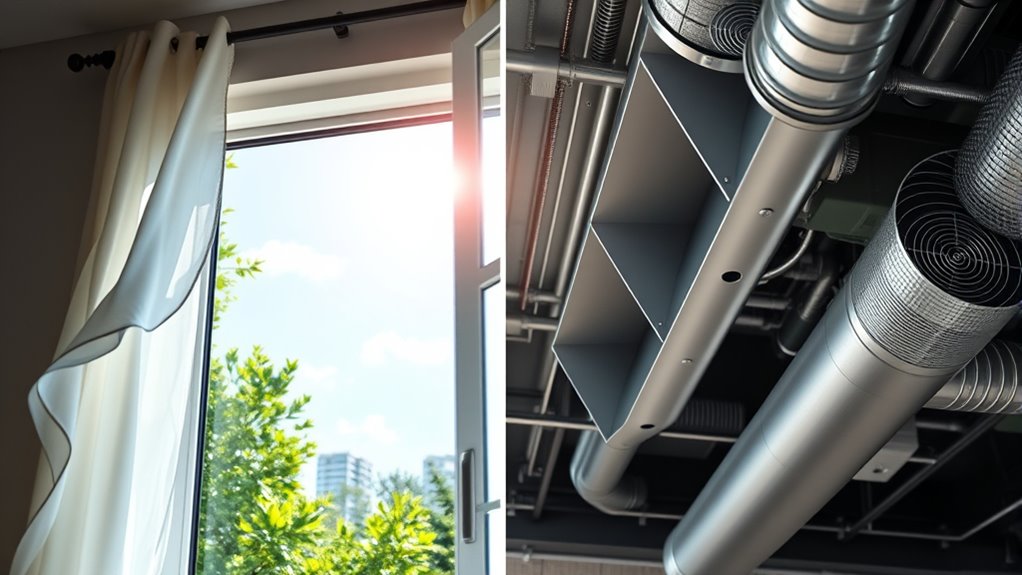

Natural ventilation uses wind and temperature differences to flow air through openings like windows and vents, making it energy-efficient and cost-effective. Mechanical systems rely on fans and ductwork to actively circulate air, providing consistent airflow regardless of outdoor conditions. While natural methods depend on the environment, mechanical options offer more control but require power and maintenance. To understand which suits your shelter best, explore the details ahead.

Get garden gear delivered free with Prime
- Fast, free delivery on millions of items
- Prime Video, Amazon Music and more included
- Member-only deals all year
Key Takeaways
- Natural ventilation relies on wind and temperature differences to circulate air, while mechanical systems use fans and ducts for controlled airflow.
- Natural methods are energy-efficient and cost-effective but depend on outdoor conditions, whereas mechanical systems provide consistent airflow regardless of weather.
- Mechanical ventilation offers adjustable airflow and better humidity control, while natural ventilation may be limited during adverse weather.
- Proper ventilation enhances safety, reduces condensation, and improves air quality in tents and shelters.
- The choice between natural and mechanical systems depends on environmental factors, budget, and maintenance capabilities.

You are trained on data up to October 2023. Natural ventilation relies on the movement of air through openings such as windows, vents, and chimneys, often driven by wind and temperature differences. Mechanical ventilation, on the other hand, uses fans and duct systems to actively circulate air, providing controlled airflow regardless of outdoor conditions. Proper ventilation is essential in camping tents and shelters to reduce condensation, improve air quality, and ensure comfort in various environments. A ventilation system can significantly impact the overall safety and livability of a campsite or shelter setting.
portable ventilation fan for tents
As an affiliate, we earn on qualifying purchases.
As an affiliate, we earn on qualifying purchases.
Frequently Asked Questions
What Are the Cost Differences Between Natural and Mechanical Ventilation?
The cost comparison shows natural ventilation is generally cheaper, with lower installation expenses since it relies on open windows and vents. Mechanical systems, like fans and HVAC units, cost more upfront due to equipment and professional installation. However, mechanical ventilation offers better control and efficiency, which can save you money long-term. You’ll need to weigh the initial investment against ongoing energy costs to decide what’s best for your space.
How Does Climate Influence the Choice of Ventilation System?
When choosing a ventilation system, climate plays a big role—think of it as tailoring your outfit for the weather. In hot, humid areas, mechanical systems often offer better climate adaptation and ventilation efficiency, keeping indoor air fresh and comfortable. Conversely, natural ventilation suits cooler, milder climates, saving energy and money. You need to match your system to your environment to guarantee comfort and efficiency, like finding the perfect fit.
Can Hybrid Systems Combine Natural and Mechanical Ventilation Effectively?
Yes, hybrid systems can effectively combine natural and mechanical ventilation, enhancing overall efficiency. You’ll benefit from ventilation integration that maximizes natural airflow when conditions are favorable and switches seamlessly to mechanical support during extreme weather or low airflow situations. This hybrid efficiency reduces energy consumption, improves air quality, and offers adaptable control. By carefully designing and managing these systems, you can optimize comfort and sustainability in your building.
What Maintenance Is Required for Mechanical Ventilation Systems?
Imagine you’re a tech whiz in a world before smart homes—mechanical systems need regular care. You should replace filters every 3 to 6 months to guarantee clean air and energy efficiency. Duct cleaning every 3-5 years helps prevent dust buildup and maintains airflow. Keep an eye on system components, and schedule professional checkups annually to catch issues early. Proper maintenance keeps your ventilation system running smoothly and efficiently.
Are There Health Risks Associated With Each Ventilation Type?
You should be aware that both natural and mechanical ventilation can impact your indoor air quality. Natural systems might let in allergens and pollutants from outside, increasing health risks. Mechanical systems, if not maintained properly, can circulate dust, mold, and other allergens indoors. Regular cleaning and filter changes help reduce these risks for both types, ensuring you breathe cleaner, healthier air and minimizing potential health issues related to indoor pollutants.
Conclusion
So, whether you choose natural or mechanical ventilation, the decision isn’t just about comfort—it’s about what’s coming next. Will the natural flow of fresh air be enough to keep you safe and healthy? Or will the advanced technology of mechanical systems surprise you with unseen benefits? The future of indoor air quality is full of possibilities, and your choice could hold the key. Are you ready to discover what’s truly best for your space?
Fall yard work Picks
leaf blowers
As an affiliate, we earn on qualifying purchases.