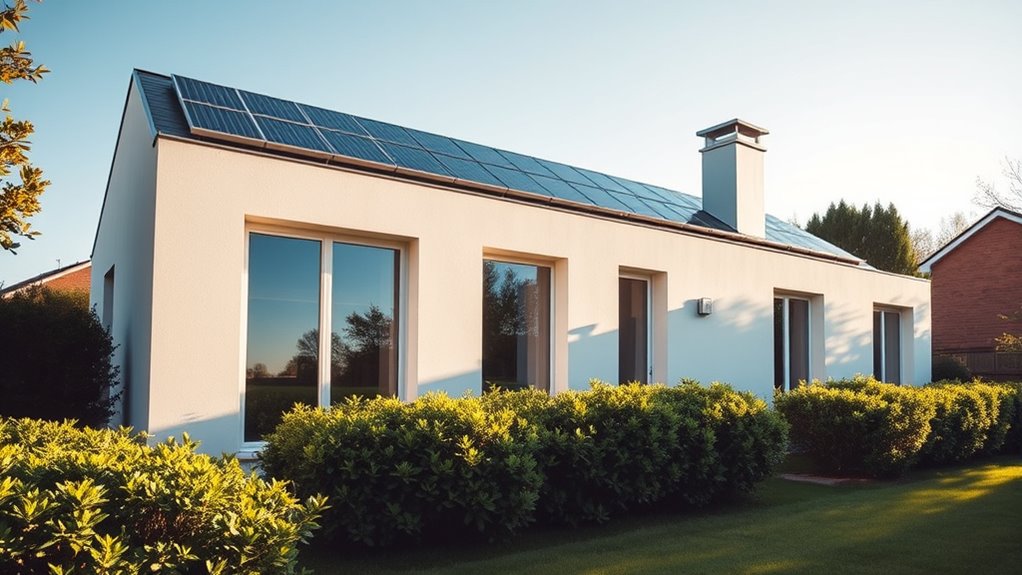

Passive House innovations dramatically cut your energy bills by combining advanced thermal glazing, airtight construction, and a high-performance building envelope. These features keep your home warmer in winter and cooler in summer while reducing drafts and cold spots. The airtight design minimizes heat loss and maintains stable indoor temperatures, decreasing your reliance on heating and cooling. If you keep exploring, you’ll discover even more ways to maximize efficiency and comfort in your home.
Key Takeaways
- Advanced thermal glazing minimizes heat transfer, keeping indoor temperatures stable and reducing energy needed for heating and cooling.
- An improved building envelope with superior insulation enhances energy efficiency and supports high-performance thermal components.
- Airtight construction seals all gaps, preventing air leaks and maintaining consistent indoor temperatures with minimal energy use.
- Combining these innovations significantly reduces reliance on HVAC systems, lowering overall energy consumption and utility bills.
- Enhanced indoor comfort through minimized drafts, noise reduction, and controlled ventilation improves energy savings and living quality.

Have you ever wondered how recent innovations are transforming the Passive House standard? It’s exciting to see how new technologies are making these ultra-efficient buildings more accessible and effective. One of the key advancements is the improved use of thermal glazing. Traditional windows often let heat escape during winter and let in unwanted heat during summer, which can substantially raise your energy bills. Now, with high-performance thermal glazing, the game changes. These advanced windows feature multiple layers of glass with inert gas fills and special coatings that drastically reduce heat transfer. As a result, your home stays warmer in the winter and cooler in the summer, requiring less energy for heating and cooling. This not only cuts costs but also boosts your comfort year-round. Furthermore, thermal glazing isn’t just about better insulation; it also minimizes drafts and cold spots near windows, creating a more consistent indoor temperature. When paired with other energy-efficient measures, these windows become a cornerstone of Passive House design, helping you achieve impressive energy savings. Innovations in building envelope are also crucial for maximizing efficiency.
Alongside thermal glazing, airtight construction has become a fundamental innovation that’s revolutionizing Passive House standards. Many homeowners overlook the importance of airtightness, but in reality, it’s essential for reducing energy loss. By sealing all gaps, cracks, and leaks in your building’s shell, you prevent conditioned air from escaping and unconditioned air from entering. This means your heating and cooling systems don’t have to work as hard, dramatically lowering your energy consumption. Modern airtight construction techniques involve using advanced tapes, membranes, and sealants that create a continuous, airtight barrier. The result is a building that maintains stable indoor temperatures with minimal energy input. Plus, airtightness enhances indoor air quality by allowing you to control ventilation more effectively through heat recovery systems. You’ll notice fewer drafts, less noise infiltration, and a more comfortable, healthier environment. Implementing airtight construction isn’t just about sealing; it’s about designing a building envelope that optimizes energy efficiency without sacrificing comfort. This innovation aligns perfectly with Passive House principles, pushing the boundaries of what’s possible in residential energy performance.

Nkiy Quen 3 Layer 63 x 47 Inches Winter Insulated Window Curtain-Oxford Thermal Insulated Window Blanket with Fastener-Gray Window Insulation Kit for Winter Keeping Warm
Practical Set:We offer you 1 piece 63"L x 47"W gray winter insulated curtain, 1 roll 18ft fasteners and…
As an affiliate, we earn on qualifying purchases.
As an affiliate, we earn on qualifying purchases.
Frequently Asked Questions
What Is the Initial Cost of Passive House Renovations?
The initial cost of passive house renovations varies based on your home’s size and existing condition. You should do a thorough cost analysis to understand the expenses involved. While the upfront investment might seem high, it often balances out through lower energy bills. Keep in mind, the renovation timeline can be longer due to specialized work involved, but the long-term savings and comfort make it worthwhile for many homeowners.
How Long Does It Take to Retrofit a Building to Passive House Standards?
You wonder how long it takes to retrofit a building to passive house standards, but the timeline isn’t straightforward. It depends on your project’s scope, building size, and retrofit challenges you encounter. Typically, a retrofit can take anywhere from several months to over a year. Planning carefully and addressing potential issues early helps minimize delays. Stay patient—this transformative upgrade promises long-term energy savings and comfort that make the wait worthwhile.
Are Passive House Innovations Effective in Extreme Climates?
In extreme climates, passive house innovations are highly effective because they enhance climate adaptability and insulation performance. You’ll notice that advanced insulation materials and airtight construction help maintain comfortable indoor temperatures, reducing energy needs. These innovations work well in both hot and cold environments, ensuring your building remains energy-efficient year-round. So, you can confidently rely on passive design features to cope with challenging weather conditions and cut your energy bills substantially.
What Maintenance Is Required for Passive House Systems?
You’ll need to regularly check your ventilation filters and replace them as needed to guarantee good indoor air quality. HVAC upkeep is also essential; schedule inspections for your heating and cooling systems annually. Keep an eye on seals and insulation for wear, and clean any air intake or exhaust vents. Staying on top of these maintenance tasks helps your passive house operate efficiently, saving energy and reducing your bills.
Can Passive House Techniques Be Integrated Into Existing Older Homes?
Yes, you can integrate passive house techniques into older homes, but you’ll face retrofit challenges like balancing historic preservation with energy efficiency. Upgrading windows, adding insulation, and sealing leaks can improve performance without compromising your home’s character. Carefully planning these improvements helps conserve your home’s charm while reducing energy costs. Work with specialists experienced in retrofitting historic buildings to ensure your upgrades meet both preservation standards and passive house goals.
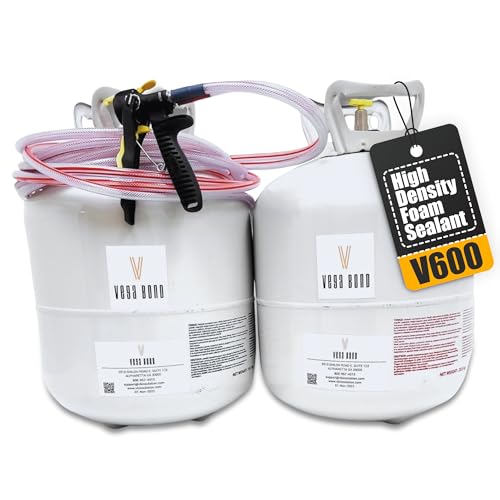
Vega Bond Spray Foam Insulation Kit V600 – Closed Cell Spray Foams for DIY Project, Airtight Sealant, Foam Insulation, Covers up to 600 Sq ft, Easy Application for Large Projects 2 Part Kit Off Yellow
AIRTIGHT COVERAGE FOR MULTIPLE SURFACES: This diy spray foam insulation kit fills cracks, gaps, and wall junctures. Ideal…
As an affiliate, we earn on qualifying purchases.
As an affiliate, we earn on qualifying purchases.
Conclusion
By embracing these Passive House innovations, you’re not just saving energy—you’re transforming your home into a fortress of efficiency. With these cutting-edge features, your energy bills could shrink faster than you can blink, making your savings almost feel like an unstoppable tidal wave. So, why settle for less? Take the leap today and enjoy a future where comfort and cost-effectiveness collide in the most epic way possible. Your wallet—and the planet—will thank you!

GE SCS2000 Aluminum Gray 20 oz Sausage Pack – High Performance Silicone Glazing & Weatherseal Sealant for Curtainwall, Storefront, Skylights & Window Systems, Glass-to-Metal Perimeter Joint Caulk
APPLICATION – GE SCS2000 Aluminum Gray is a high-performance silicone sealant for glazing and weatherseal joints on curtainwall,…
As an affiliate, we earn on qualifying purchases.
As an affiliate, we earn on qualifying purchases.

Reach Barrier 3009 Garage Door Insulation Kit
Reach Barrier(Tm) Reflective Insulation And Bubble Barrier Technology Blocks Up To 95-Percent Of Radiant Heat Which Will Help…
As an affiliate, we earn on qualifying purchases.
As an affiliate, we earn on qualifying purchases.