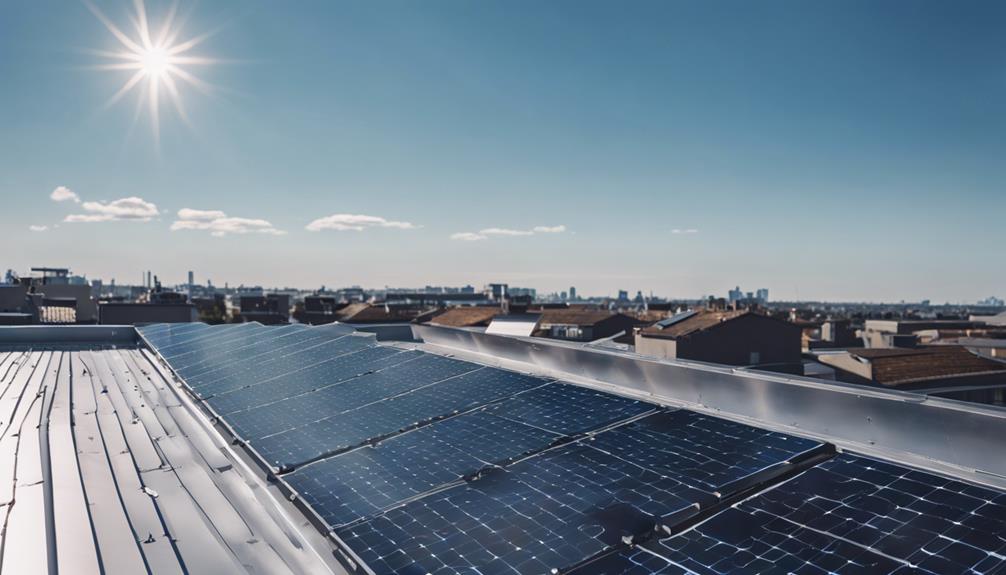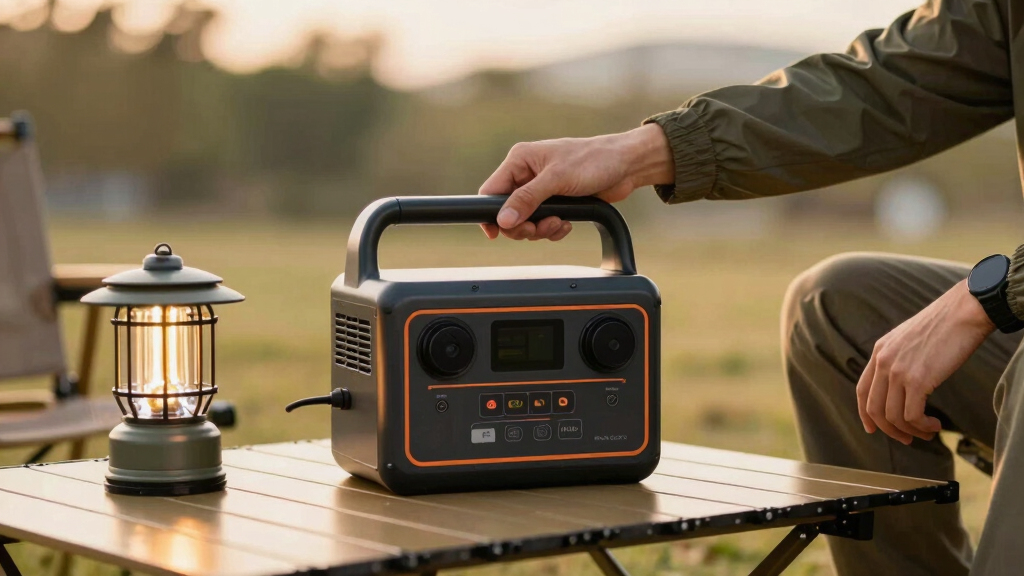

When selecting the best portable power station for emergency preparedness, reliability and capacity are key. The Jackery Explorer 1000 v2 stands out for its solid balance of power and portability, making it ideal for most home backup needs. The Jackery HomePower 3600 Plus offers immense capacity for larger emergencies or RV use, though it’s bulkier and more expensive. Conversely, smaller models like the Explorer 300 excel in portability but may fall short in sustained power during prolonged outages. The main tradeoffs involve balancing capacity, size, and price — keep reading for the full breakdown of these options.

Get garden gear delivered free with Prime
- Fast, free delivery on millions of items
- Prime Video, Amazon Music and more included
- Member-only deals all year
Complete the kit


Key Takeaways
- High-capacity models like the Jackery HomePower 3600 Plus provide extensive backup power but are heavier and costlier.
- Portability varies significantly; smaller units are easier to carry but may lack sufficient runtime for long emergencies.
- Solar compatibility is a valuable feature for off-grid or prolonged outages, but not all models support fast or high-input solar charging.
- Battery chemistry impacts longevity and safety; LiFePO4 batteries generally last longer and are more stable in emergencies.
- Additional features like multiple outlets, UPS functions, and expandability can enhance usability but often increase cost.
| FosPower NOAA Emergency Weather Radio A1 7400mWh Solar Hand Crank |  | Best for Multi-Source Emergency Power and Communication | Power Bank Capacity: 7400mWh (2000mAh) | Power Sources: Solar, Hand Crank, AAA Batteries | Radio Bands Supported: AM, FM, Weather Band | VIEW LATEST PRICE | See Our Full Breakdown |
| Jackery Explorer 1000 v2 Portable Power Station, 1070Wh, 1500W |  | Best for Extended Home Backup and Camping | Wattage: 1500 watts | Capacity: 1070Wh | Voltage: 120 volts | VIEW LATEST PRICE | See Our Full Breakdown |
| Portable Power Station 300W, 192Wh Solar Generator with 110V AC Outlet, LiFePO4 Battery Backup, 8 Ports |  | Best for Compact, Versatile Emergency and Outdoor Use | Wattage: 300 watts | Battery Capacity: 192Wh | Battery Type: LiFePO4 | VIEW LATEST PRICE | See Our Full Breakdown |
| Daran Portable Power Station 600W (1200W Surge) – 288Wh Solar Generator with LiFePO4 Battery |  | Best for Powering High-Watt Devices in Emergencies | Battery Capacity: 288Wh | Power Output: 600W (1200W Surge) | Battery Type: LiFePO4 | VIEW LATEST PRICE | See Our Full Breakdown |
| Jackery HomePower 3600 Plus Portable Power Station, 3600W AC Output, 3584Wh LFP Solar Generator |  | Best for Large-Scale Home and RV Emergency Power | Output Wattage: 3600W | Capacity: 3584Wh | Voltage: 120V & 240V in parallel | VIEW LATEST PRICE | See Our Full Breakdown |
| Jackery Explorer 300 Portable Power Station, 292Wh |  | Best Overall for Lightweight Emergency Power | Capacity: 292Wh | Weight: 7.5 lbs | Outlets: 2 AC, 1 USB-C PD, 2 USB-A, 1 car port | VIEW LATEST PRICE | See Our Full Breakdown |
| UDPOWER S1200 Portable Power Station 1200W (Surge 1800W), Max 400W Solar Input, UPS, UL2743, for Home RV Emergency, Pure Sine Wave |  | Best for Robust Backup Power with High Capacity | Wattage: 1200W | Surge Power: 1800W | Battery Type: LiFePO4 | VIEW LATEST PRICE | See Our Full Breakdown |
| Anker SOLIX S2000 Portable Power Station, 2010Wh, 3000W Peak, Home Backup |  | Best for High-Capacity, Extended Emergency Power | Wattage: 2010Wh | Peak Power: 3000W | Battery Type: Battery Powered | VIEW LATEST PRICE | See Our Full Breakdown |
| portable power station for emergency preparedness | Weight | Battery Type | Wattage |
|---|---|---|---|
| FosPower NOAA Emergency Weathe | — | — | — |
| Jackery Explorer 1000 v2 Porta | 23.8 pounds | — | 1500 watts |
| Portable Power Station 300W | 5.84 lbs | LiFePO4 | 300 watts |
| Daran Portable Power Station 6 | 8.3 lbs | LiFePO4 | — |
| Jackery HomePower 3600 Plus Po | 77.2 pounds | LFP (Lithium Iron Phosphate) | — |
| Jackery Explorer 300 Portable | 7.5 lbs | — | — |
| UDPOWER S1200 Portable Power S | 25.8 lbs | LiFePO4 | 1200W |
| Anker SOLIX S2000 Portable Pow | 35.7 lbs | Battery Powered | 2010Wh |
More Details on Our Top Picks
FosPower NOAA Emergency Weather Radio A1 7400mWh Solar Hand Crank
This weather radio stands out for combining a small power bank with multiple manual and solar power sources, making it highly versatile in emergency scenarios where power is scarce. Unlike larger stations like the Jackery Explorer 1000, it doesn’t supply high wattage but excels in providing essential communication and light, which are often overlooked in emergency prep. The inclusion of NOAA weather broadcasts and LED lights adds critical situational awareness and illumination. Its limited 2W output restricts device charging to small gadgets, but for weather updates and basic device power, this is sufficient. Manual effort to generate power via crank or solar can be tiring, yet it offers independence from grid power. The compact design makes it easy to carry in a bug-out bag, but the small capacity means it won’t support larger appliances.
Pros:- Multiple power sources including solar, hand crank, and batteries
- Built-in NOAA weather broadcast and LED lights
- Charges small devices via USB-C
Cons:- Limited output power (2W) restricts device charging
- Manual effort required for solar or crank power
Best for: Preppers who prioritize reliable weather alerts and small device charging in a lightweight, multi-source device
Not ideal for: Those needing to power larger electronics or run home appliances during outages
- Power Bank Capacity:7400mWh (2000mAh)
- Power Sources:Solar, Hand Crank, AAA Batteries
- Radio Bands Supported:AM, FM, Weather Band
- Output Power:2 watts
- Display Type:Tuner
- Connectivity Technology:USB-C
Our verdict“This option is ideal for users who need a compact, multi-source emergency radio with basic device charging and weather updates.”
Jackery Explorer 1000 v2 Portable Power Station, 1070Wh, 1500W
The Jackery Explorer 1000 v2 offers a robust 1070Wh capacity and 1500W continuous output, making it suitable for powering multiple home essentials or larger appliances during outages. Compared to the smaller Daran 600W, it provides more power for longer periods, though it lacks an included solar panel, requiring separate purchase if solar charging is desired. Its fast 1-hour recharge capability and durable battery with over 10 years lifespan make it appealing for users seeking reliability over many emergencies. While it’s somewhat heavy at nearly 24 pounds, its compact dimensions help with portability for a portable home backup system. It’s less suitable for lightweight backpackers or those needing a smaller, more portable unit, but it excels where high capacity and dependable power are critical.
Pros:- High capacity at 1070Wh for extended use
- Fast 1-hour recharge with AC outlet
- Multiple ports including USB-C, USB-A, and AC outlets
Cons:- Solar charging requires separate panels
- Relatively heavy for portable use
Best for: Homeowners or campers needing reliable, high-capacity power with fast recharge times
Not ideal for: Hikers or backpackers requiring ultra-lightweight, compact solutions
- Wattage:1500 watts
- Capacity:1070Wh
- Voltage:120 volts
- Additional Features:Fast Charging, LFP Battery
- Weight:23.8 pounds
- Dimensions:12.87″L x 8.82″W x 9.72″H
Our verdict“This model makes the most sense for those prioritizing power capacity and reliability in home or extended outdoor settings.”
Portable Power Station 300W, 192Wh Solar Generator with 110V AC Outlet, LiFePO4 Battery Backup, 8 Ports
This compact 300W power station with a 192Wh LiFePO4 battery bridges the gap between portability and functionality. Unlike the larger Jackery 1000, its smaller capacity limits prolonged use of high-power devices, but it offers more ports and a lightweight design, making it suitable for outdoor camping and short-term emergencies. The fast recharge options—via AC or solar—make it practical for quick turnaround times. The inclusion of multiple ports, including USB-C and AC outlets, supports a broad range of devices. Its long cycle life over 3,500 cycles and safety protections add to its appeal. However, it’s not suitable for powering large appliances or extended power needs, and its limited capacity might require frequent recharges during prolonged emergencies.
Pros:- Multiple charging ports including USB-C and AC
- Lightweight at 5.84 lbs, highly portable
- Fast recharge via solar or AC
Cons:- Limited to 300W continuous power
- Battery capacity may not support high-power devices for long
Best for: Outdoor enthusiasts or urban preppers needing a lightweight backup for small devices
Not ideal for: Users seeking to run high-wattage appliances or long-term power supply
- Wattage:300 watts
- Battery Capacity:192Wh
- Battery Type:LiFePO4
- Recharge Time:As fast as 2 hours
- Weight:5.84 lbs
- Outlets:8 ports including AC, USB
Our verdict“This pick makes the most sense for users who want a portable, multi-port backup for small devices in outdoor or urban settings.”
Daran Portable Power Station 600W (1200W Surge) – 288Wh Solar Generator with LiFePO4 Battery
The Daran 600W station offers a solid balance of power and portability with a 288Wh capacity and 600W continuous output, making it suitable for running higher-watt appliances during outdoor or emergency situations. It surpasses the smaller LiFePO4 units like the 300W station by providing more wattage, though it is still limited in capacity compared to the Jackery Explorer 1000. Its fast recharging via AC and solar, combined with multiple ports, makes it versatile for various devices. The 8.3-pound weight is manageable for many users, but it’s still heavier than ultra-portable options. This unit is less suitable for powering large appliances over extended periods but works well for short-term high-wattage needs such as small refrigerators or power tools.
Pros:- High-wattage output (600W continuous) with 1200W surge
- Fast recharge via solar and AC
- Long cycle life with safety protections
Cons:- Limited capacity of 288Wh for extended use
- Does not include solar panel or charging cable
Best for: Preppers who need to operate high-watt devices temporarily during outages or outdoor activities
Not ideal for: Those requiring prolonged power supply or lightweight portability
- Battery Capacity:288Wh
- Power Output:600W (1200W Surge)
- Battery Type:LiFePO4
- Weight:8.3 lbs
- Cycle Life:3500+ cycles
- Outlets:Multiple including USB and AC
Our verdict“This unit is best suited for users needing reliable high-wattage output for short periods in emergency or outdoor scenarios.”
Jackery HomePower 3600 Plus Portable Power Station, 3600W AC Output, 3584Wh LFP Solar Generator
The Jackery HomePower 3600 Plus stands out for its massive 3584Wh capacity and 3600W continuous output, making it ideal for home backup or RV use where large power demands are common. It surpasses the smaller units like the Daran or the portable 300W models in capacity and power, though its weight of over 77 pounds limits portability. Despite the bulk, its wheels and telescopic handle make moving it manageable for most users. It’s less suitable for backpackers or those seeking lightweight options, but for those looking to run multiple appliances or entire systems, this station offers scalability with optional expansion up to 21kWh. Its limited number of outlets means users might need multiple units for bigger setups.
Pros:- Massive capacity expandable to 21kWh
- Multiple charging options including solar, AC, and DC
- Wheels and telescopic handle for easier mobility
Cons:- Heavy at 77.2 pounds, despite portability features
- Limited to 2 outlets, may require multiple units for full setup
Best for: Homeowners or RV travelers needing a scalable, high-capacity backup power source
Not ideal for: Individuals requiring ultra-lightweight or highly portable power units
- Output Wattage:3600W
- Capacity:3584Wh
- Voltage:120V & 240V in parallel
- Weight:77.2 pounds
- Number of Outlets:2
- Battery Type:LFP (Lithium Iron Phosphate)
Our verdict“This model suits users seeking large-scale, expandable power solutions for home or RV scenarios, accepting its weight and size tradeoffs.”
Jackery Explorer 300 Portable Power Station, 292Wh
The Jackery Explorer 300 stands out for its combination of portability and versatility, making it ideal for emergency preparedness where weight and size are critical. Weighing only 7.5 lbs, it can easily be carried in a backpack, unlike larger options like the Anker SOLIX S2000, which offers higher capacity but is too bulky for quick deployment. Its multiple outlets ensure you can charge phones, small appliances, or even run a portable fridge during outages. However, it’s limited to a 300W rated output, which restricts use to smaller devices, and the absence of an included solar panel means additional investment is needed for solar recharging. This pick makes the most sense for individuals seeking a reliable, lightweight emergency backup for essential devices without the bulk of larger units.
Pros:- Extremely lightweight and portable with an integrated handle
- Multiple versatile outlets including USB-C PD and car port
- LiFePO4 chemistry offers over 4,000 charge cycles for longevity
Cons:- Lacks an included solar panel, requiring extra purchase
- Limited to 300W output, unsuitable for high-power appliances
Best for: Individuals who need a portable, easy-to-carry power source for charging essential devices during short-term emergencies or outdoor activities.
Not ideal for: Homeowners needing to power larger appliances or run entire home backup systems, as the capacity and output are limited.
- Capacity:292Wh
- Weight:7.5 lbs
- Outlets:2 AC, 1 USB-C PD, 2 USB-A, 1 car port
- Rated Output:300W
- Peak Surge:600W
- Charge Cycles:Over 4,000
Our verdict“This power station is perfect for those prioritizing portability and essential device charging during emergencies.”
UDPOWER S1200 Portable Power Station 1200W (Surge 1800W), Max 400W Solar Input, UPS, UL2743, for Home RV Emergency, Pure Sine Wave
The UDPOWER S1200 offers a substantial 1200W continuous power with a surge capacity of 1800W, making it well-suited for emergency backup scenarios where more demanding appliances might be involved. Compared to the Jackery Explorer 300, which is limited to small devices, the S1200 can handle larger gadgets like small refrigerators or medical devices. Its pure sine wave inverter ensures clean power, essential for sensitive electronics. While its 25.8-pound weight makes it less ideal for quick carry, its long battery cycle life—over 4,000 cycles—means it can serve reliably over many years. The limited solar input of 400W might slow recharging in cloudy weather, but fast AC charging in 1.5 hours offsets this for most emergency needs. This unit is best for users who need more power and can handle a slightly heavier device for home or RV backup.
Pros:- High-capacity 1200W inverter with surge support up to 1800W
- Long-lasting LiFePO4 battery with over 4,000 cycles
- Multiple outlets including 2 USB-C PD ports and 5 AC outlets
Cons:- Relatively heavy at 25.8 pounds, less portable for quick moves
- Limited to 400W solar input, which may slow recharging in overcast conditions
Best for: Preppers, RV owners, or homeowners seeking a powerful, reliable backup with versatile charging options.
Not ideal for: People who require ultra-lightweight gear for frequent outdoor use or quick portability, as it’s relatively heavy and bulkier than smaller units.
- Wattage:1200W
- Surge Power:1800W
- Battery Type:LiFePO4
- Battery Cycles:4000+
- Input Power:Max 400W solar
- Weight:25.8 lbs
Our verdict“This model suits users needing substantial backup power for home or RV, accepting some weight for increased capacity and power.”
Anker SOLIX S2000 Portable Power Station, 2010Wh, 3000W Peak, Home Backup
The Anker SOLIX S2000 delivers a remarkable 2010Wh capacity, making it ideal for sustained power during extended outages or large-scale emergencies. Its 3000W peak output surpasses most portable units like the UDPOWER S1200, allowing it to run larger appliances or multiple devices simultaneously. Despite its substantial capacity, it maintains a relatively compact and lightweight profile for its class, weighing 35.7 pounds. However, the lack of a 12V DC port limits its compatibility with some vehicle-based or certain appliances. The support for solar charging adds flexibility, though detailed solar input specifications were not provided. This model is best suited for users who want a portable yet powerful backup for home, camping, or emergency needs and are willing to manage a slightly larger device.
Pros:- Large 2010Wh battery capacity for extended runtime
- Supports up to 3000W peak power for heavy appliances
- Compact design considering its capacity and weight
Cons:- Lacks a 12V DC port, limiting some device compatibility
- Price and detailed solar input specs not specified, potentially affecting recharging options
Best for: Homeowners or preppers needing a high-capacity power source capable of running multiple devices for long periods during outages.
Not ideal for: People requiring ultra-light, portable options for frequent outdoor adventures, as it’s heavier than smaller units and less suited for quick transport.
- Wattage:2010Wh
- Peak Power:3000W
- Battery Type:Battery Powered
- Running Wattage:1500W
- Weight:35.7 lbs
- Dimensions:8.19 x 11.1 x 12.7 inches
Our verdict“This power station is best for those prioritizing high capacity and long runtimes over ultra-lightweight portability.”
How We Picked
Products were selected based on a combination of capacity, reliability, usability, and versatility. Priority was given to models with proven durability, good safety features, and options suitable for emergency backup in diverse scenarios. We assessed charging options, port variety, weight, and expandability, recognizing that a perfect emergency power station balances power output with portability. The ranking considers value for money, ensuring that each pick offers a clear advantage for its intended use. Our goal was to highlight models that perform well under stress, with features that cater to both casual prep and serious disaster scenarios.
| portable power station for emergency preparedness | Battery Type |
|---|---|
| FosPower NOAA Emergency Weathe | — |
| Jackery Explorer 1000 v2 Porta | — |
| Portable Power Station 300W | LiFePO4 |
| Daran Portable Power Station 6 | LiFePO4 |
| Jackery HomePower 3600 Plus Po | LFP (Lithium Iron Phosphate) |
| Jackery Explorer 300 Portable | — |
| UDPOWER S1200 Portable Power S | LiFePO4 |
| Anker SOLIX S2000 Portable Pow | Battery Powered |
Factors to Consider When Choosing Best Portable Power Station For Emergency Preparedness
Choosing the best portable power station for emergency preparedness involves understanding several key factors. These devices must deliver reliable power, be easy to operate during stressful situations, and fit your specific needs — whether for home backup, RV use, or off-grid survival. Consider how much capacity you need, how portable the unit is, and whether it can be recharged via solar or mains power. Being clear about your priorities helps avoid common pitfalls like buying too small a unit or sacrificing safety features for price.Capacity and Runtime
Capacity, measured in watt-hours (Wh), determines how long your devices can run during an outage. Larger capacity units like the Jackery HomePower 3600 Plus provide extended runtime for essential appliances but are heavier and more expensive. Smaller models, such as the Explorer 300, are lightweight and portable but may only power small devices for a few hours. Buyers should match capacity to their expected needs, avoiding underpowered units that can’t sustain critical devices during prolonged outages.
Port Selection and Versatility
Look for units with multiple outlets, including AC, USB, and DC ports, so you can connect various devices simultaneously. Some models also feature USB-C or carport options, increasing versatility. The ability to expand capacity or connect additional batteries can be a game-changer in emergencies, especially for long-term power needs. Be cautious of models with limited ports or incompatible connectors, which can limit usability when multiple devices are involved.
Recharge Options and Speed
Fast recharging via AC wall outlets is standard, but solar compatibility adds resilience for off-grid or prolonged power outages. Not all units support high solar input, which can delay recharge times. If you expect to rely on solar, verify the maximum input wattage and panel compatibility. Also, consider whether the unit supports pass-through charging, allowing it to power devices while recharging itself, which can be crucial during extended emergencies.
Battery Chemistry and Longevity
LiFePO4 batteries are increasingly common in higher-end models, offering longer cycle life and improved safety over traditional lithium-ion batteries. This means your power station will last longer over years of repeated use, a key factor in emergency preparedness. Cheaper units may use less durable chemistries that degrade faster, risking failure when you need them most. Investing in a safer, longer-lasting battery can be worthwhile for critical emergency use.
Size, Weight, and Portability
Size and weight directly impact how easily you can carry or store your power station. Compact models are suitable for backpacking or vehicle use, while larger units are better for static home backup. Consider how often you will move the device and whether the included handles or wheels are sufficient. Remember, larger capacity often means increased weight, so weigh the importance of portability versus power capacity based on your scenario.
Frequently Asked Questions
Can I rely solely on a portable power station for my entire home during a blackout?
While some high-capacity models can power essential appliances and possibly sustain your home for a limited period, most portable power stations are better suited for backup or supplemental power rather than a complete home solution. For full household coverage, you’ll need a very large, often expensive system with multiple batteries or integration with a home backup system. In most cases, these stations are ideal for critical devices like medical equipment, lights, and communication devices during short-term outages.
How long does a typical portable power station last on a full charge during an emergency?
The runtime depends on the capacity and the load. For instance, a 1000Wh unit powering a 100W device could last around 10 hours, but this varies with the device’s power draw. Larger units like the Jackery HomePower 3600 Plus can run larger appliances or multiple devices for longer periods. Always consider your essential power needs and choose a model with ample capacity to cover those demands for the expected duration of an outage.
Is solar recharging practical during an emergency, or is it too slow?
Solar recharging can be practical if you have the right panels and sufficient sunlight, especially for extended outages where grid power isn’t available. However, solar recharge rates vary based on panel size, weather, and the power station’s maximum input. Smaller units may take many hours or days to fully recharge via solar, so it’s best used as a supplementary option rather than the primary charging method in an emergency. Planning for multiple charging options provides the most reliable backup plan.
What should I look for to ensure my power station is safe during use in emergencies?
Safety features such as over-voltage, over-current, short circuit, and thermal protection are essential. Units with an UL or equivalent safety certification demonstrate compliance with safety standards. Also, consider units with built-in battery management systems (BMS) that prevent overcharging and overheating. Ensuring your device has these protections reduces the risk of accidents during stressful situations, which is vital in emergency preparedness.
When is it worth investing in a high-capacity, more expensive power station?
Investing in a high-capacity model makes sense if you plan to power multiple devices for extended periods, use it as a primary emergency backup, or need to run larger appliances. These units often feature advanced safety, expandability, and faster recharging options, which can justify their higher price tags. If your goal is to ensure reliable power for critical devices during long outages, spending more on a premium model will likely provide better peace of mind and dependability.
Conclusion
For most households, the Jackery Explorer 1000 v2 strikes the best balance of capacity, portability, and affordability, making it the ideal overall choice. Those seeking maximum power for long-term outages should consider the Jackery HomePower 3600 Plus, despite its size and cost. Beginners or those with minimal space might find the Explorer 300 sufficient, while preppers with larger needs or RV owners will appreciate models like the UDPOWER S1200 or Anker SOLIX S2000. Carefully match your specific needs with these options to ensure your emergency preparedness is both reliable and manageable.
As an affiliate, we earn on qualifying purchases.Halloween Picks
halloween