

If you want to capture stunning Milky Way shots in 2025, I recommend trying out the VILTROX 75mm f/1.2 PRO for Sony APS-C, the Sony E 16mm F2.8 wide-angle prime, the VILTROX 75mm f/1.2 XF PRO for Fuji X-mount cameras, and the AstrHori 6mm fisheye for Nikon Z. Each lens offers exceptional low-light performance and unique perspectives. Keep in mind the factors that matter most, and you’ll be well on your way to incredible nightscapes. Want to learn more? Keep going for the full scoop.
Key Takeaways
- Opt for ultra-wide lenses like Sony E 16mm F2.8 or AstrHori 6mm F2.8 for expansive sky coverage and immersive Milky Way shots.
- Prioritize large apertures (f/1.2–f/2.8) to maximize light capture and reduce exposure times in low-light conditions.
- Choose lightweight, portable lenses such as the Sony E 16mm F2.8 for ease of travel and spontaneous astrophotography sessions.
- Consider optical quality and minimal distortion to ensure sharp, natural-looking star and Milky Way images.
- Ensure lens compatibility with your camera system and prefer manual focus options for precise control in dark environments.

VILTROX 75mm f/1.2 F1.2 EF PRO EF Lens for Sony E-Mount Ultra Wide Angle APS-C Auto Focus Prime Lens Compatible with Sony E-Mount Mirrorless Cameras A7M/R/S Series A7Cc A9 A1 A6x00 Fs5
F1.2 Super Large Aperture: VILTROX 75mm F1.2 EF lens is equipped with bright f/1.2 maximum aperture suits that...
As an affiliate, we earn on qualifying purchases.
VILTROX 75mm f/1.2 PRO E Lens for Sony APS-C Cameras
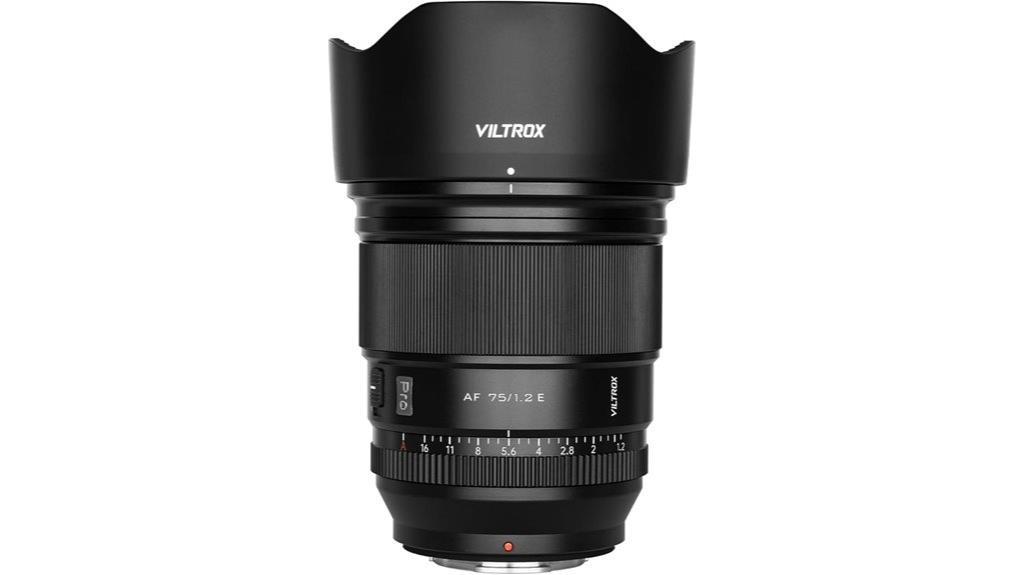
If you’re serious about capturing stunning Milky Way shots with your Sony APS-C camera, the VILTROX 75mm f/1.2 PRO E Lens is a top choice. Its 75mm focal length offers a perfect wide view, while the large f/1.2 aperture guarantees excellent low-light performance. With 16 lens elements, including high-refractive index glass, it delivers sharp, detailed images even at maximum aperture. The lens’s fast, precise autofocus, supported by the latest STM motor, makes focusing effortless. Plus, its lightweight design and compatibility with Sony’s E-mount cameras make it versatile and easy to use in various astrophotography situations.
Best For: astrophotographers and portrait photographers seeking a high-performance lens for Sony APS-C mirrorless cameras in low-light conditions.
Pros:
- Excellent low-light performance with a bright f/1.2 aperture, ideal for astrophotography and portraits.
- Sharp, detailed images maintained even at maximum aperture due to advanced optical design.
- Fast and precise autofocus with minimal breathing, perfect for both stills and videos.
Cons:
- Relatively heavy at 2.79 pounds, which may affect portability for extended shoots.
- Higher price point compared to standard lenses, potentially limiting accessibility.
- Designed specifically for APS-C sensors, limiting full-frame compatibility.

Sony E 16mm F2.8 Wide-Angle Prime Lens (SEL16F28) | Compact Pancake Design, Lightweight Travel |Filter Kit, Cap Keeper, Cleaning Kit, and More
Sony USA Authorized. Sony E 16mm f/2.8 Lens (Silver) with 49mm 3-piece filter kit, cleaning kit, and lens...
As an affiliate, we earn on qualifying purchases.
Sony E 16mm F2.8 Wide-Angle Prime Lens
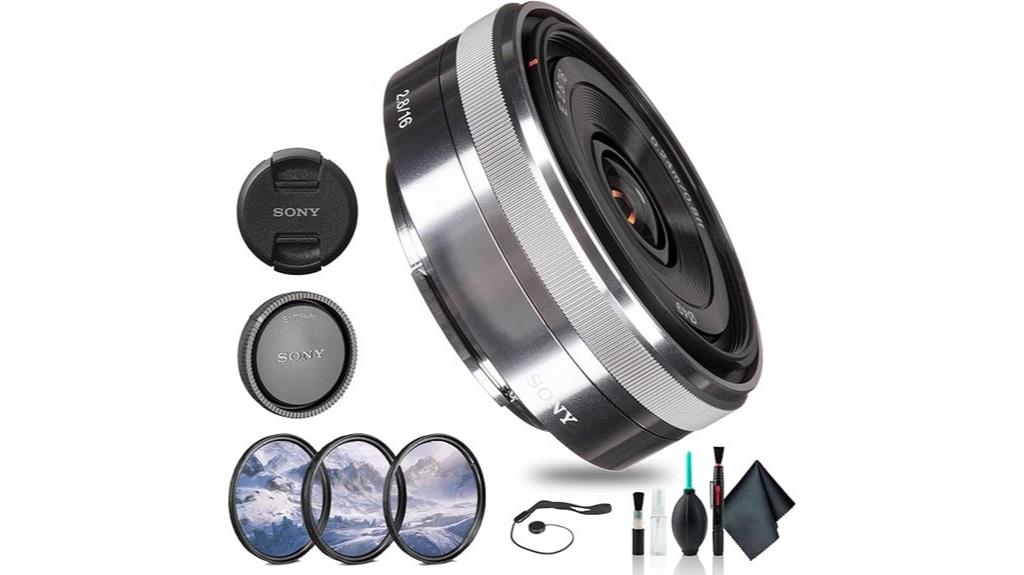
The Sony E 16mm F2.8 Wide-Angle Prime Lens stands out as an ideal choice for astrophotographers seeking a compact, high-quality lens to capture the Milky Way. Its pancake design measures just 22.5 mm and weighs only 67 g, making it perfect for travel and quick setups. With a 24 mm equivalent focal length, it offers a wide field of view, while its optical elements reduce distortion and flare for sharp, natural images. The responsive autofocus and short 0.24-meter minimum focus distance enable creative close-up shots. Plus, it includes a filter kit and accessories, ensuring portability without sacrificing performance.
Best For: astrophotographers and travelers seeking a compact, high-quality wide-angle lens for capturing the Milky Way, landscapes, and everyday scenes with excellent portability and optical performance.
Pros:
- Ultra-compact pancake design weighing only 67 g for easy portability
- Wide 24 mm equivalent focal length ideal for landscapes, interiors, and astrophotography
- Reduced distortion and flare with sharp, natural images thanks to aspherical elements
Cons:
- Fixed 16mm focal length limits zoom versatility
- No image stabilization feature, which may affect handheld shooting in low light
- Limited close-up capability with a minimum focus distance of 0.24 meters

VILTROX 75mm f/1.2 F1.2 XF PRO Level Ultra Wide Angle Auto Focus APS-C Lens Compatible with Fuji X-Mount Cameras X-T5 X-H2 X-H2S X-T30 II X-T4 X-A7 X-E3 X-E4 X-H1X-Pro2 X-T4 X-T10 X-T20
【F1.2 Large Aperture Lens】VILTROX 75mm F1.2 XF lens is equipped with bright f/1.2 maximum aperture suits working in...
As an affiliate, we earn on qualifying purchases.
VILTROX 75mm f/1.2 XF PRO APS-C Lens for Fuji X-Mount Cameras
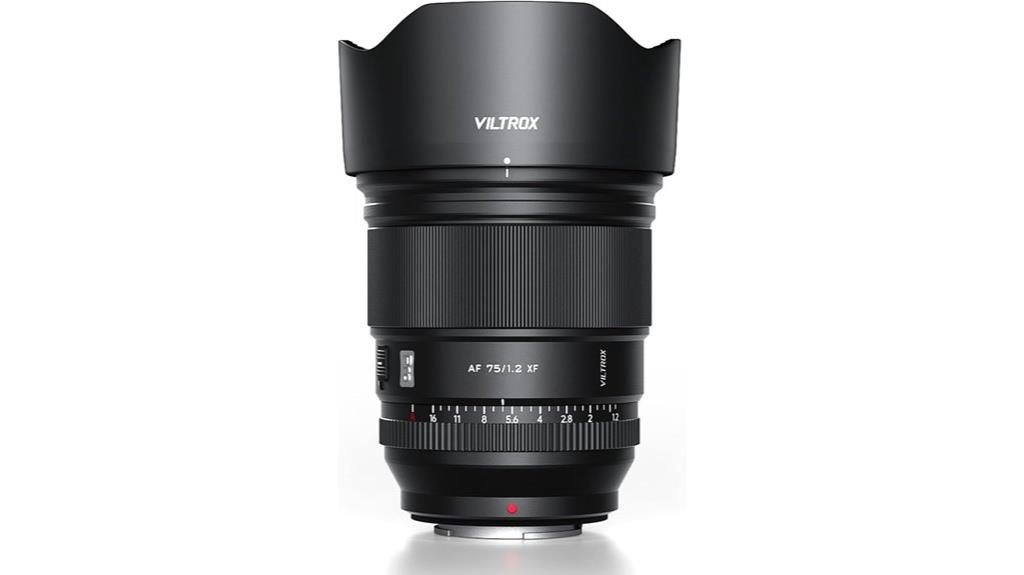
The VILTROX 75mm f/1.2 XF PRO APS-C lens stands out as an excellent choice for astrophotographers who want sharp, detailed images of the Milky Way. Designed for Fuji X-mount APS-C cameras, it features a large f/1.2 aperture that excels in low-light conditions, capturing the night sky with clarity. With 16 lens elements in 11 groups, including high-refractive index elements, it delivers crisp, high-resolution images. Its fast, quiet autofocus and manual override make focusing precise and effortless. Built tough with durable protection, this lens is reliable in various environments, making it perfect for capturing stunning night sky scenes.
Best For: astrophotographers and night sky enthusiasts seeking a high-performance lens for capturing detailed, sharp images of the Milky Way and other celestial objects in low-light conditions.
Pros:
- Large f/1.2 aperture allows excellent low-light performance and beautiful background blur.
- Equipped with 16 lens elements in 11 groups, ensuring high-resolution, detailed images.
- Fast, quiet autofocus with manual override offers precise focusing, ideal for astrophotography.
Cons:
- Relatively heavy at 2.82 pounds, which may be cumbersome for extended handheld shooting.
- Designed specifically for Fuji X-mount APS-C cameras, limiting compatibility with other systems.
- Higher price point reflecting premium build quality and optical performance.

AstrHori 6mm F2.8 Circular Fisheye Lens for Nikon Z Mount, 220° Ultra-Wide Full Frame Manual Lens for Astronomy, Night Sky & Milky Way Photography, Landscape, Architecture and Creative Shots
【Extraordinary 220° Field of View】Capture an ultra-wide perspective beyond the human eye. With a massive 220° angle of...
As an affiliate, we earn on qualifying purchases.
AstrHori 6mm F2.8 Circular Fisheye Lens for Nikon Z Mount
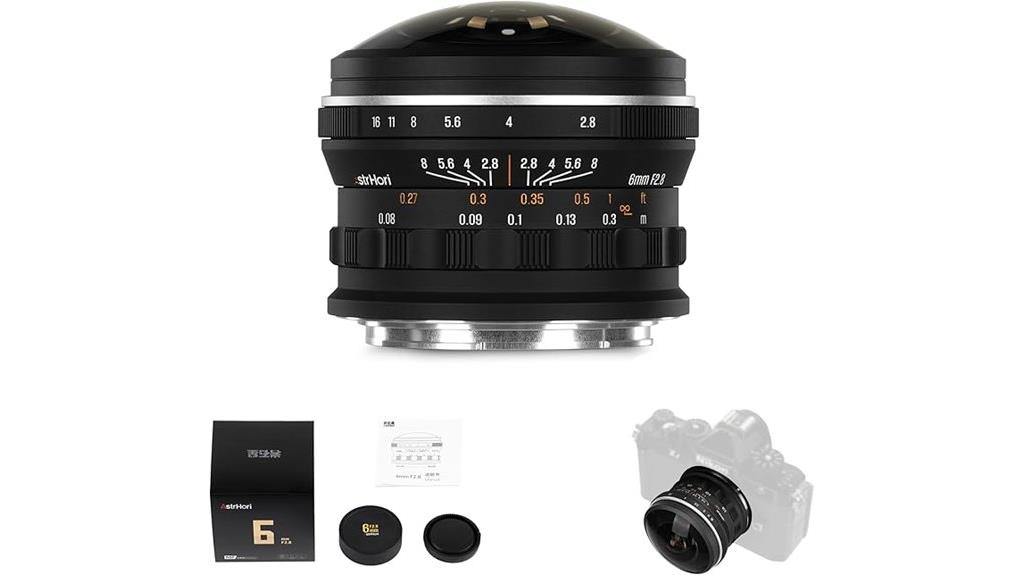
For astrophotographers seeking a unique perspective on the night sky, the AstrHori 6mm F2.8 Circular Fisheye Lens offers an exceptional 220° ultra-wide field of view that captures the entire Milky Way in a single shot. Its bright F2.8 aperture guarantees excellent low-light performance, perfect for astrophotography and night scenes. The true circular fisheye effect delivers dramatic edge distortion and artistic flair, ideal for creative storytelling or VR projects. Compact and durable with all-metal construction, it’s travel-ready for outdoor adventures. Manual focus provides precise control, making it a versatile tool for both amateur and professional astrophotographers aiming to capture immersive celestial panoramas.
Best For: astrophotographers and creative enthusiasts seeking a unique, immersive fisheye perspective for night sky, landscape, and artistic photography.
Pros:
- Ultra-wide 220° field of view captures expansive scenes and celestial panoramas in a single shot
- Bright F2.8 aperture ensures excellent low-light performance for astrophotography and night scenes
- Compact all-metal construction offers durability and portability for outdoor and travel use
Cons:
- Manual focus requires precise adjustment, which may be challenging for some users
- Compatibility limited to Nikon Z mount full-frame mirrorless cameras, restricting use with other systems
- Larger size (approximately 61 x 64.8 x 64.8 inches) and weight (1.21 pounds) may be less convenient for handheld shooting
Factors to Consider When Choosing Wide-Field Lenses for Milky Way Photography

When selecting a wide-field lens for Milky Way photography, I consider factors like focal length and aperture size to get the best night sky shots. Low-light performance and lens compatibility are also vital to guarantee sharp images without hassle. Additionally, I keep in mind the lens’s size and portability for easy transport during outdoor shoots.
Focal Length Choices
Choosing the right focal length for your wide-field lens is essential because it directly influences how much of the sky you’ll capture and the overall composition of your Milky Way shots. A shorter focal length, like 14mm or 16mm, offers a broader field of view, letting you include more of the Milky Way and foreground elements in a single shot. These ultra-wide lenses often produce a fisheye effect, adding an artistic, immersive feel. On the other hand, longer focal lengths, such as 75mm or 85mm, narrow the view, allowing you to focus on specific sections of the galaxy for detailed, intimate shots. Your choice depends on whether you prefer expansive landscapes or close-up astrophotography, but remember that focal length also affects optical distortion and distance from foreground objects.
Aperture Size Importance
A larger aperture size, such as f/1.2 or f/2.8, is essential for astrophotography because it allows more light to reach your camera sensor. This means you can capture the faint glow of the Milky Way and distant stars more effectively. Wide-field lenses with big apertures also enable shorter exposure times, helping you avoid star trails caused by Earth’s rotation. Additionally, a large aperture improves image quality in low-light conditions by reducing the need for high ISO settings, which can introduce noise. It also creates a shallower depth of field, allowing you to isolate stars and add a sense of depth to your images. Ultimately, a wide aperture grants greater flexibility, ensuring bright, detailed Milky Way shots in varying light conditions.
Low-Light Performance
To excel in Milky Way photography, focusing on low-light performance is essential, and this starts with selecting a wide-field lens that can gather ample light. A lens with a large maximum aperture, like f/1.2 or f/2.8, lets in more light, which improves overall brightness and detail. Fast lenses enable higher shutter speeds, reducing star trails and motion blur during nighttime shoots. Shooting at lower ISO settings minimizes noise, resulting in cleaner, sharper images in dark conditions. Additionally, optical qualities such as high-refractive index elements and low distortion help maintain clarity and brightness in low-light environments. Proper focus control and minimal lens flare are also vital, ensuring images are sharp, well-exposed, and free of distracting artifacts in challenging lighting conditions.
Lens Compatibility
Selecting the right wide-field lens for Milky Way photography involves guaranteeing compatibility with your camera system. First, check that the lens mount matches your camera body—this is essential for proper attachment and functionality. Make sure the lens supports manual focus, as precise focusing is critical for sharp night sky images. The focal length should be wide enough to capture expansive scenes, typically between 14mm and 24mm. A wide aperture, ideally f/2.8 or larger, is necessary to gather enough light in low-light conditions. Finally, confirm that the lens suits your sensor size—whether APS-C or full-frame—to achieve the desired field of view. Compatibility ensures smooth operation and peak image quality, making your astrophotography sessions more successful.
Size and Portability
Since portability is essential for capturing the night sky away from city lights, choosing a compact and lightweight wide-field lens can make a significant difference. Smaller lenses are easier to carry and set up in remote outdoor locations, which is vital for spontaneous Milky Way shots. Their minimalistic or pancake designs often deliver excellent image quality without adding bulk to your camera bag. Reduced size and weight also lessen fatigue during long shoots, allowing me to stay comfortable while waiting for the perfect shot. Additionally, a portable lens makes quick adjustments easy, so I can capture fleeting moments or spontaneous compositions without fussing with heavy gear. Overall, a travel-friendly lens enhances mobility and convenience, helping me focus on the scene rather than my equipment.
Optical Distortion Effects
Optical distortion is a key factor to contemplate when choosing a wide-field lens for Milky Way photography. Fisheye and ultra-wide lenses often produce prominent barrel distortion, creating a curved horizon that can add an artistic touch to your shots. However, high distortion levels can warp star shapes and celestial patterns, sometimes requiring post-processing correction for accuracy. Moderate distortion can enhance the feeling of vastness in the night sky and boost creativity, but too much can reduce realism. The amount of distortion varies with lens design—prime wide-angle lenses generally exhibit less distortion than fisheye or specialized ultra-wide options. Understanding these characteristics helps you decide whether to embrace the distortion for artistic purposes or correct it for precise astrophotography.
Autofocus Capabilities
While autofocus systems can be impressive on many lenses, they’re generally less important for Milky Way photography because most astrophotographers prefer manual focus for maximum accuracy in low-light conditions. Autofocus can help quickly find distant stars, but manual focus offers better control and precision, which is *vital* during long exposures. Some lenses feature advanced autofocus modes like eye or face detection, but these are irrelevant for star photography. That said, fast and accurate autofocus systems can be useful if you switch between astrophotography and daytime or wildlife shooting, adding versatility. Ultimately, most high-quality wide-field lenses for night sky photography prioritize smooth, precise manual focus rings, emphasizing that autofocus isn’t a primary factor when choosing a lens for Milky Way shots.
Durability and Build
Choosing a wide-field lens for Milky Way photography means prioritizing durability and build quality to guarantee reliable performance in outdoor conditions. I look for lenses with all-metal construction, as they withstand rough handling and harsh environments better. Weather-sealed designs are essential to protect against dust, moisture, and temperature changes during late-night shoots. Durable coatings on the lens surface help prevent scratches, fingerprints, and lens flare, ensuring consistent image quality over time. Reinforced lens mounts and sturdy focus rings are crucial for maintaining stability and precise focus in challenging conditions. When I select a lens, I consider its reputation for reliability and high build quality to minimize the risk of equipment failure in remote or extreme environments. This ensures I can focus on capturing stunning images without worry.
Frequently Asked Questions
How Do Lens Coatings Affect Star and Light Flare Control?
Lens coatings play a vital role in controlling star and light flare. They reduce reflections and internal lens scatter, which minimizes unwanted glare and ghosting around bright stars or light sources. I’ve found that high-quality coatings, like multi-coated or anti-reflective layers, greatly improve image clarity and contrast in night sky photography. This means I get cleaner, sharper star images with less distracting flare, making my Milky Way shots look stunning.
What Is the Best Aperture Setting for Capturing the Milky Way?
Think of your camera as a telescope peering into the universe; the aperture is the gateway to capturing the night’s secrets. I recommend setting it to f/2.8 or wider for Milky Way shots. This opens the door wide enough to gather as much starlight as possible, revealing the galaxy’s splendor. Just remember, the wider the aperture, the better your chances of capturing those breathtaking, starry vistas.
How Does Sensor Size Influence Lens Choice for Astrophotography?
Sensor size really impacts my lens choice for astrophotography. With larger sensors, like full-frame, I get better light sensitivity and less noise, so I prefer wider apertures and wider lenses to maximize light capture. For smaller sensors, like APS-C or Micro Four Thirds, I need to use lenses with a longer focal length or higher ISO settings. Overall, bigger sensors give me more flexibility for capturing stunning Milky Way shots.
Are There Specific Lens Brands Known for Better Low-Light Performance?
Absolutely, brands like Canon, Nikon, and Sony are known for their excellent low-light lens performance. I’ve found their fast primes and wide-angle lenses really excel in capturing the night sky’s details. Sigma and Tamron also make fantastic third-party options that boost light gathering without breaking the bank. When I choose a lens, I prioritize those with wide apertures and good optical quality for stunning astrophotography results.
How Important Is Lens Weight and Size for Outdoor Astrophotography Sessions?
Lens weight and size are pretty important for outdoor astrophotography because I often hike or trek to find the perfect spot. A lightweight, compact lens makes my setup easier to carry and less tiring during long shoots. Plus, smaller gear is less conspicuous, which helps in avoiding light pollution. I always prioritize portability without sacrificing image quality, making my astrophotography sessions more enjoyable and successful.
Conclusion
Did you know that over 80% of professional astrophotographers swear by wide-field lenses for stunning Milky Way shots? Whether you’re into ultra-wide fisheyes or fast prime lenses, choosing the right gear can make all the difference. With options like the VILTROX 75mm or Sony’s 16mm, you’re well-equipped to capture breathtaking night skies. So, pick your ideal lens and start turning those starry nights into unforgettable images!