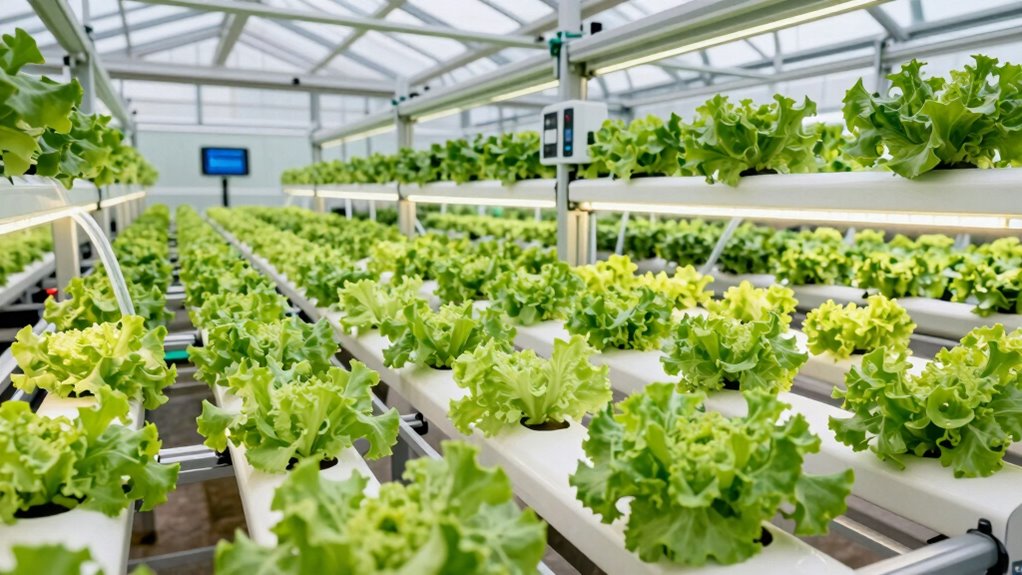

Choosing the right NFT hydroponic system for commercial lettuce cultivation depends on your space, scale, and experience level. Among the top options, the Large Hydroponics Growing System stands out for large-scale, automated operations suitable for professional farms. The NFT Hydroponics Growing System, 36 Pods offers a compact, beginner-friendly setup ideal for small commercial ventures or high-tech urban farms. Meanwhile, the WooRoot Max 148-Pod Tower provides a high-density, automated solution for those aiming for maximum yield in limited space. Each system presents tradeoffs between price, complexity, and scalability, which I will clarify below to help you find the best fit for your commercial lettuce needs.
Complete the kit


Key Takeaways
- The largest system, WooRoot Max, offers highest yield and automation but demands a higher budget and technical setup.
- The 36-pod NFT system excels in small-scale or urban farms with limited space, prioritizing ease of installation and maintenance.
- The 72-site and 108-site models provide a middle ground, balancing capacity with ease of use and flexibility for indoor and outdoor use.
- Consider your scale and experience: larger systems require more initial setup but offer greater automation and yield, while smaller ones suit beginners or space-constrained operations.
- Water efficiency and automation features vary significantly—assess these based on your operational priorities and resource availability.


| nft hydroponic system for lettuce commercial | Application | Dimensions | Plant Sites |
|---|---|---|---|
| Large Hydroponics Growing Syst | Commercial, educational | — | — |
| NFT Hydroponics Growing System | — | 38.7 x 6.1 x 45.3 inches | — |
| NFT Hydroponic Growing System | — | 26.4 x 21.3 x 40.5 inches | 36 |
| Hydroponic Growing System with | Indoor/outdoor, commercial | — | 72 |
More Details on Our Top Picks
Large Hydroponics Growing System, 148-Pod Vertical Hydroponic Tower Garden
The WooRoot Max offers a truly impressive capacity with 148 pods spread across five tiers, making it ideal for large-scale operations. Its automated nutrient circulation and 24/7 LED lighting support continuous, year-round production, reducing manual labor. Compared to smaller systems, this model’s complex setup and higher price reflect its professional-grade features and scalability. However, the initial investment and technical knowledge needed might be prohibitive for smaller or novice growers. This system excels when maximum yield and automation are priorities, especially in commercial or educational settings.
Pros:- Maximizes space with high-density vertical design
- Automated nutrient and lighting controls reduce labor
- Supports continuous, year-round cultivation
- Suitable for professional, educational, and research applications
Cons:- High initial cost and setup complexity
- Requires technical knowledge for installation and maintenance
- Limited to indoor environments
Best for: Large commercial growers, research institutions, educational farms
Not ideal for: Small-scale farms, beginners, budget-conscious growers
- Pod Count:148
- Tiers:5
- Lighting:100W full-spectrum LED
- Nutrient Reservoir Capacity:34L
- Automation:Yes, 30-day cycles
- Application:Commercial, educational
Our verdict“Best for large-scale, automated commercial lettuce production with the budget and expertise to support it.”
NFT Hydroponics Growing System, 36 Pods Wall-Mounted Indoor Garden with Full Spectrum Grow Lights and Water Recycling
This wall-mounted system combines space-saving vertical design with efficient water recycling, making it excellent for limited indoor spaces. The four full-spectrum LED grow lights promote rapid growth, and its simple installation suits those new to hydroponics. Compared to larger systems, it’s less suitable for high-volume lettuce production but perfect for small commercial ventures or urban farms aiming for quality and convenience. The main tradeoff is its limited capacity and the need for electrical outlets, which might restrict placement options.
Pros:- Compact, space-efficient vertical design
- Fast growth with full-spectrum LED lights
- Water recycling for resource efficiency
- Easy to install and maintain
Cons:- Limited capacity—only 36 plants
- Requires electrical outlets for lights and pump
- Seeds and nutrients not included
Best for: Urban farms, small commercial setups, tech-savvy growers
Not ideal for: Large-scale farms, those needing high yield, or outdoor use
- Number of Pods:36
- Dimensions:38.7 x 6.1 x 45.3 inches
- Grow Lights:4 x 35.4-inch full spectrum LED
- Water Pump Power:21W
- Flow Rate:224 GPH
- Installation:Wall-mounted
Our verdict“Ideal for small, high-tech urban farms or startups looking for a manageable, indoor NFT system.”
NFT Hydroponic Growing System Kit – Full-Spectrum Grow Lights & Timer, 36 Plant Sites, Food-Grade PVC-U Pipes, Auto Water Pump & Timer for Indoor Gardening
This compact NFT system is tailored for those starting in hydroponic lettuce cultivation or with limited space. Its simple assembly and full-spectrum grow lights support healthy plant development, and the auto water pump reduces manual intervention. While its capacity is modest—36 plant sites—it offers a water-efficient design and quick setup, making it suitable for kitchens or balconies. The main tradeoff is its limited scalability and the lack of included nutrients or seeds, which require additional purchase.
Pros:- Easy to assemble and operate
- Water-efficient NFT system
- Full-spectrum LED grow lights support plant health
- Fits small indoor spaces like kitchens or balconies
Cons:- Limited to 36 plants, not suitable for large-scale production
- Customer rating average (3.4/5)
- Nutrients and seeds not included
Best for: Beginners, indoor small-scale growers, hobbyist farms
Not ideal for: Large commercial farms, those seeking high yield, or outdoor setups
- Plant Sites:36
- Dimensions:26.4 x 21.3 x 40.5 inches
- Grow Light:Full-spectrum, 2×35.4 inches
- Pipe Material:Food-grade PVC-U
- Watering System:Auto pump and timer
- Assembly Time:Approx. 12 minutes
Our verdict“Best suited for beginners or small indoor farms focusing on lettuce and herbs with minimal setup effort.”
Hydroponic Growing System with 72 Sites and 8 Pipes for Indoor Garden
This system offers a balanced approach with 72 plant sites across eight PVC pipes, suitable for both indoor and outdoor use. Its circulation system and included accessories facilitate easy maintenance and adaptation to different crops, including lettuce and strawberries. Compared with smaller models, it provides greater capacity without overly complicating setup, but it does require electrical power for circulation and has a larger footprint. This makes it ideal for growers looking for a flexible, scalable solution without going into industrial size.
Pros:- Adequate capacity for commercial lettuce production
- Includes comprehensive accessories and circulation system
- Suitable for indoor and outdoor gardens
- Relatively easy to assemble
Cons:- Requires electrical power for circulation
- Limited information on maintenance specifics
- Size may be challenging for small spaces
Best for: Mid-scale commercial growers, flexible indoor/outdoor farms
Not ideal for: Very small spaces or large-scale professional farms requiring automation
- Plant Sites:72
- Pipe Quantity:8
- Pipe Length:31.5 inches
- Material:PVC
- Includes:Baskets, pump, timer, tools
- Application:Indoor/outdoor, commercial
Our verdict“A versatile, scalable NFT system that balances capacity and ease of use for mid-sized commercial lettuce farms.”

How We Picked
Our selection process focused on systems that are designed specifically for NFT hydroponic lettuce cultivation with a commercial intent. We prioritized systems with scalable capacity, automation features, and ease of assembly. We evaluated product specs, user reviews, and manufacturer reputation to identify options suitable for both small-scale and large-scale commercial growers. Cost, water efficiency, and operational complexity also played key roles in our rankings, ensuring the options cater to a range of experience levels and investment capacities.
| nft hydroponic system for lettuce commercial | Application |
|---|---|
| Large Hydroponics Growing Syst | Commercial, educational |
| NFT Hydroponics Growing System | — |
| NFT Hydroponic Growing System | — |
| Hydroponic Growing System with | Indoor/outdoor, commercial |
Factors to Consider When Choosing Nft Hydroponic System For Lettuce Commercial
Selecting the right NFT hydroponic system for your commercial lettuce operation hinges on your scale, budget, and technical expertise. Smaller systems like the NFT Wall-Mounted Garden are great for urban farms or startups with limited space but may not meet high-volume demands. Mid-sized options such as the 72-site system offer more flexibility and capacity without overwhelming complexity. The WooRoot Max serves large-scale farms or educational institutions seeking maximum automation and yield, but with a higher investment. Understanding your space constraints, desired production volume, and automation needs will guide you toward the most suitable choice.
Scale and Capacity
Determine how many plants you wish to grow and the space available. Small systems with 36 plant sites are perfect for urban farms or boutique operations. Mid-range systems with 72 or 108 sites serve growing commercial needs, while the larger, automated systems cater to high-yield, professional farms requiring maximum output and minimal manual work.
Automation and Water Efficiency
Evaluate how much automation you need. Systems like the WooRoot Max offer automated nutrient and light control, ideal for busy or large-scale operations. Water recycling features in smaller systems help reduce resource use, but check if they meet your efficiency goals and maintenance capacity.
Ease of Installation and Use
Beginners or those with limited technical skills should lean toward plug-and-play systems like the 36-pod NFT or beginner kits, while experienced growers can handle more complex setups like the large vertical tower. Consider the time and effort you can commit to installation and ongoing maintenance.
Budget and Investment
Pricing varies widely. Smaller, simple systems are more affordable but may limit production. Larger, automated systems require a significant upfront investment but can deliver higher yields and less manual labor over time. Match your budget with your production goals to find the best fit.
Frequently Asked Questions
Can I grow large plants like tomatoes or peppers in an NFT system?
Most NFT systems, especially those designed for leafy greens and herbs, are not suitable for larger plants such as tomatoes or peppers due to space and root support limitations. If you want to cultivate larger plants, consider systems specifically designed for bigger crops with more robust support and space management.
How much maintenance do NFT hydroponic systems require?
Maintenance varies based on system size and automation. Smaller, beginner-friendly systems typically need weekly checks for nutrient levels, water pH, and light adjustments. Larger, automated systems like the WooRoot Max reduce manual labor but still require periodic system calibration and cleaning to prevent clogs or microbial issues.
Is water recycling in NFT systems effective for resource conservation?
Yes, water recycling significantly reduces water consumption compared to traditional soil farming. Properly maintained NFT systems with water recycling can cut water use by up to 90%, making them more sustainable and cost-effective over time, especially in areas with limited water access.
How difficult is it to assemble a commercial NFT hydroponic system?
Assembly complexity depends on the system size. Small systems with clear instructions can be set up in a few hours, while larger, multi-tiered systems may require more technical knowledge and planning. Many products include comprehensive instructions and tools to facilitate quick assembly, but some professional-grade systems might need prior experience or expert assistance.
What factors should I consider when choosing an NFT system for commercial lettuce?
Focus on capacity, automation features, water and energy efficiency, space requirements, and your technical expertise. Larger, automated systems favor high-volume growers with the resources to manage them, while smaller systems are better suited for startups or urban farms with limited space and experience.
Conclusion
For small-scale or urban lettuce farms, the NFT Wall-Mounted Growing System offers a manageable, space-efficient option. Mid-sized growers aiming for flexibility and higher capacity should consider the 72-site or 108-site systems, which balance ease of use with scalability. Large commercial operations or educational institutions that prioritize maximum yield and automation will find the WooRoot Max to be a worthwhile investment despite its higher complexity and cost. Matching your size, budget, and automation needs will ensure you select a system that supports your growth ambitions effectively.