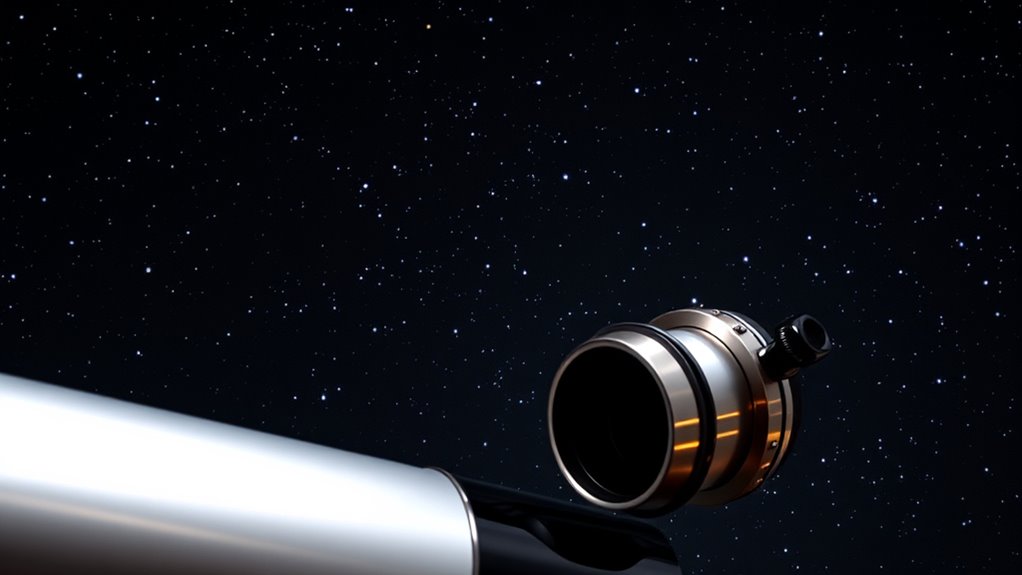

When choosing a 130mm triplet apo refractor for astrophotography, I focus on optical quality, portability, and ease of use. Top picks include the Explore Scientific ED102 for its sharp images and user-friendly design, the SVBONY SV550 for its versatility and included accessories, and the Explore Scientific ED80 for a more portable option. Each offers different tradeoffs: the ED102 provides high detail but is heavier; the SV550 supports deep-sky imaging with extras, but needs additional accessories; and the ED80 is compact but less capable for deep-sky work. Understanding these differences helps narrow the best choice for your specific needs.
Open a free Amazon Business account
Business pricing, bulk buying and tax-exempt orders.
Create a free accountAs an affiliate, we earn on qualifying purchases.
Complete the kit


Key Takeaways
- The Explore Scientific ED102 offers the highest optical performance but is heavier and more expensive.
- The SVBONY SV550 balances versatility with included accessories, making it ideal for both planetary and deep-sky imaging.
- The Explore Scientific ED80 is the most portable option, perfect for travel and quick setups, but less suited for demanding deep-sky astrophotography.
- Weight, accessories, and ease of setup are key considerations that influence which refractor fits best.
- All options feature high-quality apochromatic optics, but tradeoffs in size and price vary significantly.


| 130mm triplet apo refractors for astrophotography | Focal Length | Focal Ratio | Weight | Optical Design |
|---|---|---|---|---|
| SVBONY SV550 80ED F6 Triplet A | 480mm | F6 | 3.75 kg (8.27 lbs) | Triplet Apochromatic |
| Explore Scientific ED80 Essent | 480mm | f/6 | 6 pounds | — |
| Explore Scientific ED102 Essen | 714 mm | F7 | 12 pounds | Air-Spaced Triplet |
| Explore Scientific FCD100 Seri | 714mm | f/7 | 11 pounds | Air-Spaced Triplet |
More Details on Our Top Picks
SVBONY SV550 80ED F6 Triplet Apochromatic Refractor Telescope with Field Flattener and Camera Angle Adjuster
The SVBONY SV550 80ED stands out for its combination of high-quality triplet APO optics and included accessories like a field flattener and camera rotator, which support both planetary and deep-sky imaging. Compared with larger setups, it offers excellent image sharpness for its size and is surprisingly portable. However, its shorter focal length and limited aperture mean it may not capture as much detail in faint deep-sky objects. For those seeking a flexible, portable system with good image quality, this model is a solid choice, but beginners might find the setup complexity a challenge without additional guidance.
Pros:- High-contrast, color-accurate images with triplet APO design
- Includes field flattener and camera rotator for improved imaging
- Lightweight and portable for field use
Cons:- Requires additional accessories for full astrophotography setup
- Setup can be complex for newcomers
- Limited focal length for certain deep-sky imaging needs
Best for: Intermediate astrophotographers seeking portability and versatility
Not ideal for: Deep-sky astrophotographers targeting faint objects or users needing a dedicated astrophotography platform
- Optical Design:Triplet Apochromatic
- Apochromatic Glass:S-FPL51 low-dispersion ED
- Focal Length:480mm
- Focal Ratio:F6
- Weight:3.75 kg (8.27 lbs)
- Focus Mount:Dual-speed 2.5-inch magnesium alloy
Our verdict“A flexible, portable choice for intermediate users who want high-quality optics with useful accessories.”
Explore Scientific ED80 Essential Series Air-Spaced Apochromatic 80mm Triplet Refractor Telescope for Astrophotography
The Explore Scientific ED80 is a favorite among amateur astrophotographers who value portability without sacrificing optical quality. Its 80mm aperture and fast F6 focal ratio produce sharp, high-contrast images with minimal chromatic aberration, making it ideal for capturing planetary detail and wide-field shots of the night sky. Compared to larger models, its compact size makes travel and quick setups effortless. The main tradeoff is its smaller aperture, which limits deep-sky imaging of faint objects. For users prioritizing ease of transport and setup, this refractor offers strong performance in a lightweight package.
Pros:- High-contrast images with minimal chromatic aberration
- Extremely portable and easy to set up
- Good for planetary and wide-field astrophotography
Cons:- Manual focus can be fiddly during imaging
- Limited aperture for faint deep-sky objects
- Requires additional accessories for advanced imaging
Best for: Beginners and travel-focused astrophotographers
Not ideal for: Deep-sky imaging of faint galaxies or nebulae requiring larger apertures
- Objective Lens Diameter:8 centimeters
- Focal Length:480mm
- Focal Ratio:f/6
- Mount:Equatorial
- Focus Type:Manual
- Weight:6 pounds
Our verdict“A lightweight, high-quality option for beginners and travelers wanting sharp images in a compact form.”
Explore Scientific ED102 Essential Series Air-Spaced Apochromatic 102mm Triplet Refractor Telescope for Astrophotography
The Explore Scientific ED102 excels in delivering high-contrast, detailed images thanks to its 102mm aperture and ED glass, which effectively reduces chromatic aberration. Its air-spaced triplet optical design produces sharp images of planets, the Moon, and brighter deep-sky objects, making it a versatile choice for dedicated astrophotographers seeking more light-gathering power. While it adds some weight compared to smaller models, its modular design with a retractable dew shield and precise collimation system offers both convenience and performance. The main drawback is its weight, which demands a sturdy mount, and it isn’t as portable as smaller scopes.
Pros:- High-quality ED glass minimizes chromatic aberration
- Large 102mm aperture for detailed deep-sky imaging
- Retractable dew shield and precise collimation system
Cons:- Heavy and less portable
- Manual focus only, no electronic controls
- Requires additional accessories for full imaging setup
Best for: Advanced amateurs and serious astrophotographers needing detailed images
Not ideal for: Travelers or beginners who prefer lighter, simpler setups
- Optical Design:Air-Spaced Triplet
- Aperture:10.2 cm
- Focal Length:714 mm
- Focal Ratio:F7
- Optical Coatings:Multi-Coated
- Weight:12 pounds
Our verdict“A strong choice for those who prioritize image detail and are prepared to handle the extra weight.”
Explore Scientific FCD100 Series ED102 102mm f/7 Air-Spaced Aluminum Apochromatic Triplet Refractor Telescope (OTA Only)
The FCD100 ED102 offers excellent chromatic correction thanks to its FCD100 ED glass and air-spaced triplet design, making it ideal for astrophotography where image quality is paramount. Its 714mm focal length yields a 1.75-degree field of view, suitable for capturing wide-field images of the Milky Way or large nebulae. As an OTA-only model, it provides flexibility but requires compatible mounting and accessories. Its weight is manageable, but users should ensure their mount can handle the weight, especially for prolonged sessions. While it lacks motorized focus, its high optical quality makes it worth considering for dedicated astrophotographers.
Pros:- High-precision FCD100 ED glass for superb chromatic correction
- Air-spaced triplet optical design for sharp images
- Good balance of size and performance
Cons:- OTA only, additional equipment needed
- Manual focus and no motorized controls
- Requires sturdy mount for optimal results
Best for: Experienced astrophotographers seeking premium optical quality
Not ideal for: Beginners or those seeking an all-in-one package
- Objective Lens Diameter:10.2 centimeters
- Focal Length:714mm
- Focal Ratio:f/7
- Weight:11 pounds
- Coating:Multi-Coated
- Optical Design:Air-Spaced Triplet
Our verdict“A high-end optical tube for users committed to achieving exceptional astrophotography results.”

How We Picked
Our selection process focused on optical quality, ease of use, versatility for astrophotography, and value for the price. We prioritized models with proven optical designs, high-quality ED glass, and features that support astrophotography, such as field flatteners and rotators. We also considered portability, weight, and compatibility with common mounts, ensuring each option serves a different user profile. Accessories included and user reviews played a role in assessing real-world usability and setup complexity.
| 130mm triplet apo refractors for astrophotography | Optical Design | Focal Ratio |
|---|---|---|
| SVBONY SV550 80ED F6 Triplet A | Triplet Apochromatic | F6 |
| Explore Scientific ED80 Essent | — | f/6 |
| Explore Scientific ED102 Essen | Air-Spaced Triplet | F7 |
| Explore Scientific FCD100 Seri | Air-Spaced Triplet | f/7 |
Factors to Consider When Choosing 130mm Triplet Apo Refractors For Astrophotography
Choosing the right 130mm triplet apo refractor for astrophotography involves balancing optical quality, portability, and your specific imaging goals. Larger apertures generally offer better detail, but they also come with increased weight and complexity. Smaller models are easier to handle and travel with but may limit your ability to capture faint deep-sky objects. Features like field flatteners, collimation systems, and mount compatibility are critical for sharp, high-quality images. Here, I break down key factors to consider based on your experience level and imaging needs.Optical Quality and Aperture
The primary consideration is the optical design and glass quality. Triplet apochromatic lenses minimize chromatic aberration, resulting in crisper, more accurate images. Larger apertures, such as 102mm, gather more light, making them suitable for faint deep-sky objects, but they also demand sturdier mounts and more careful handling. Conversely, smaller 80mm scopes are more portable and easier to use but limit deep-sky capabilities. Your choice depends on your target objects and willingness to handle heavier gear.
Portability and Setup
If you plan to travel or set up quickly, smaller and lighter models like the ED80 excel in portability. However, they often require additional accessories for optimal astrophotography. Larger scopes like the ED102 or the 80ED with extras are better suited for fixed observatory setups or stable field environments. Consider your mount’s capacity and whether you prefer a lightweight transportable system or a more robust, high-performance setup.
Accessories and Compatibility
Many high-quality refractors benefit from accessories like field flatteners, rotators, and precise collimation tools. Ensure your chosen scope is compatible with these and that your mount can handle its weight. OTA-only models provide flexibility but require additional components. For beginners, bundled packages with included accessories might simplify the process, while experienced users may prefer selecting individual components for tailored setups.
Price and Value
Optical performance often correlates with price, but it’s essential to balance your budget with your goals. The ED80 offers great value for beginners or casual astrophotographers, while the ED102 provides more detailed images at a higher cost and weight. Premium models like the FCD100 deliver top-tier optical quality but at a premium price. Decide what features and performance levels justify your investment based on your experience and ambitions.
Frequently Asked Questions
What is the main advantage of a triplet apo refractor for astrophotography?
The key benefit of a triplet apo refractor is its ability to minimize chromatic aberration, resulting in sharp, high-contrast images with true color fidelity. This makes it especially valuable for capturing detailed planetary and deep-sky images, where optical clarity is paramount.
How does aperture size affect astrophotography results?
A larger aperture, such as 102mm, collects more light, enabling the imaging of fainter objects and revealing finer detail. However, it also increases weight and requires a sturdier mount. Smaller scopes like the 80mm are more portable and easier to handle but may struggle with very faint deep-sky objects, limiting their use to brighter targets.
Are these scopes suitable for beginners?
Yes, particularly the smaller models like the ED80, which offer a manageable size and straightforward operation. However, users should be prepared for some manual adjustments and additional accessories. Larger, more complex scopes may require more experience and technical knowledge to maximize their potential.
What accessories are essential for astrophotography with these refractors?
Essential accessories include field flatteners, camera rotators, good mounts with sufficient weight capacity, and collimation tools. These components help achieve sharp, distortion-free images. Depending on your scope, some items may be included or need to be purchased separately, so consider compatibility and your specific imaging goals.
How important is the mount in astrophotography with a 130mm refractor?
The mount is critical for high-quality astrophotography because it must provide precise tracking to avoid star trails and image distortion. Heavier, larger scopes like the ED102 require sturdy equatorial mounts, while smaller scopes can often be paired with lighter mounts. Invest in a mount that matches your scope’s weight and your imaging ambitions for the best results.
Conclusion
For newcomers or those prioritizing portability, the Explore Scientific ED80 is an excellent starting point due to its lightweight design and solid optical quality. Intermediate users seeking a versatile setup that balances size and imaging performance will find the SVBONY SV550 a compelling option, especially with its included accessories. Serious astrophotographers or those aiming for high-detail deep-sky imaging should consider the Explore Scientific ED102 or the FCD100 ED102 for their superior optical performance and detailed images. Ultimately, your choice depends on your experience, target objects, and how much weight and complexity you’re willing to handle.
NFL season / tailgating Picks
team gear
As an affiliate, we earn on qualifying purchases.