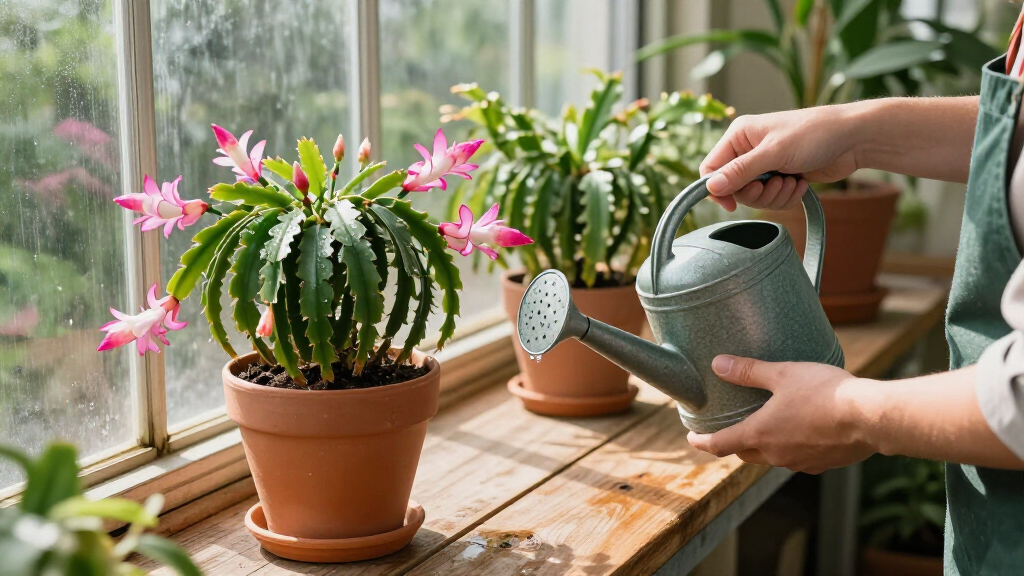
The best Christmas cactus fertilizers provide gentle, manageable feeding rather than a heavy dose meant for fast growth. I’d choose TPS Nutrients Cactus Fertilizer as the best overall starting point for a straightforward liquid formula, while Espoma Organic Cactus! Plant Food stands out for shoppers who prefer an organic-labeled option and Schultz Cactus Plus for those seeking a concentrated formula. The main tradeoffs are liquid versus mist or measured servings, broader cactus formulas versus Christmas-cactus-specific products, and convenience versus control over dilution. Read on for how all 15 options differ and which fits your care routine.

Get garden gear delivered free — and shop member deals
- Fast, free delivery on millions of items
- Access to Prime Big Deal Days deals on October 6–7
- Prime Video, Amazon Music and more included
Complete the kit



Key Takeaways
- The roundup’s clearest all-purpose pick is TPS Nutrients Cactus Fertilizer: its liquid format makes it a practical starting point for routine feeding, while the separate TPS succulent formula is positioned around compact growth.
- Purpose-built and general cactus formulas serve different buyers: Cactiva and the Christmas Cactus Liquid Fertilizer name the holiday cactus directly, while most other options cover cactus and succulent plants more broadly.
- Application style changes the workload: liquid concentrates require measuring and dilution, Gardenera’s mist offers a spray-based routine, and Grow Queen’s 11-serving pack emphasizes pre-portioned use.
- Pack size and concentration are not interchangeable: Grow More’s 16-ounce bottle gives more volume, while Schultz’s 4-ounce bottles are concentrated; buyers should compare how each is meant to be mixed before choosing.
- Specialty and organic-positioned options trade breadth for a narrower fit: the kelp fertilizer and Cactiva’s iron-highlighted formula may appeal to targeted shoppers, while broad-use products suit homes feeding several types of cacti or succulents.







| Christmas cactus fertilizer | Brand | Form | Target plants | Volume |
|---|---|---|---|---|
| TPS Nutrients Cactus Fertilize | TPS Nutrients | Liquid | Cacti, succulents, jade, aloe, and desert plants | 8 fluid ounces |
| TPS Nutrients Succulent Fertil | TPS Nutrients | Liquid | Succulents, cacti, Echeveria, and jade | 8 fluid ounces |
| Espoma Organic Cactus! Plant F | Espoma | Liquid | Cactus, succulents, palms, and citrus | — |
| Cactiva Christmas Cactus Ferti | Cz Garden Supply | Granules | — | — |
| Cute Farms Succulent | Cute Farms | Liquid | Succulents, cacti, and aloe | 8 fluid ounces |
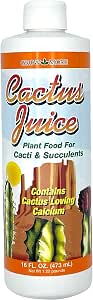
| Grow More Cactus Juice 1-7-6 L | Grow More | Liquid | Cacti, succulents, and snake plants | 16 fl oz |
| Gardenera 3-1-2 Succulent and | Gardenera | Ready-to-use spray mist | Succulents and cacti | 8 oz |
| Home + Tree Succulent and Cact | Element Nutrients | Liquid | Succulents and cacti, including Christmas cactus | 32 fl oz |
| Grow Queen Complete Organic Ca | Grow Queen | — | — | — |
| Miracle-Gro Succulent Plant Fo | Miracle-Gro | Liquid | Succulents and cacti, including jade and aloe | — |
| Christmas Cactus Liquid Fertil | TPS Nutrients | Liquid | — | 8 fluid ounces |
| Schultz Cactus Plus 2-7-7 Liqu | Schultz | Liquid | — | — |
| Organic Christmas Cactus Liqui | TATAWORM | — | — | 2 ounces |
| Miracle-Gro Indoor Plant Food | Miracle-Gro | Liquid | — | — |
| Cactus and Succulent Indoor Pl | The Grow Co | Granules | Cacti, succulents, and aloe vera | — |
More Details on Our Top Picks
TPS Nutrients Cactus Fertilizer – Liquid Plant Food for Healthy Growth, 8 oz
For a Christmas cactus owner who wants a gentle feed suited to cactus roots, TPS Nutrients Cactus Fertilizer is my most balanced pick in this group. Its NPK formula includes kelp and micronutrients, which gives it a broader support profile than a single-purpose bloom supplement, while the stated use for cacti and succulents fits these plants better than a general houseplant food. The mix is 1 teaspoon per pint of water, a clear measure, though it takes more dilution work than Cute Farms’ ready-to-use pump bottle. The 8-ounce size is a practical fit for a few plants but may run out quickly across a large collection. Its desert-plant focus also makes it less versatile than Espoma Organic Cactus! Plant Food, which lists palms and citrus among its target plants.
Pros:- Cactus- and succulent-focused formula suits plants with sensitive roots.
- Kelp and micronutrients add support beyond the listed NPK nutrients.
- Clear mixing ratio makes dilution straightforward.
- Designed to support root development, steady growth, and blooming.
Cons:- The 8-ounce bottle may need replacing often for larger collections.
- Requires measuring and mixing before each feeding.
- Its desert-plant focus limits usefulness for general houseplants.
Best for: Christmas cactus owners with a small or medium collection who want a dilute, cactus-focused liquid feed with kelp and micronutrients.
Not ideal for: Growers seeking a ready-to-use product, feeding a large collection, or wanting one fertilizer for a broad mix of houseplants.
- Brand:TPS Nutrients
- Form:Liquid
- Volume:8 fluid ounces
- Target plants:Cacti, succulents, jade, aloe, and desert plants
- Key ingredients:NPK, kelp, and micronutrients
- Mixing ratio:1 teaspoon per pint of water
- Origin:Made in USA
Our verdict“Choose TPS Nutrients if you want a gentle, cactus-specific liquid feed and do not mind diluting a small bottle.”
TPS Nutrients Succulent Fertilizer – Liquid Plant Food for Compact Growth, 8 oz
TPS Nutrients Succulent Fertilizer earns its place for growers who prioritize restrained, compact growth rather than a broad flowering-plant formula. The product description highlights steady growth and helping prevent legginess in succulents, a useful emphasis for indoor plants where stretched growth can spoil their shape. Its gentle liquid feed is intended to support roots without buildup, though the available details do not list an NPK ratio or specific added ingredients. Compared with TPS Nutrients Cactus Fertilizer, this option makes compact form its central selling point; the cactus-focused sibling more explicitly lists kelp and micronutrients and mentions blooming. The dilution rate is 1 teaspoon per gallon, less concentrated than that other TPS product’s stated mix, and the 8-ounce bottle can be limiting for many plants.
Pros:- The formula is positioned for compact growth and reduced legginess.
- Gentle feeding is intended to limit root stress and nutrient buildup.
- Suitable for indoor and outdoor use.
- Mixes into water for adjustable application.
Cons:- The 8-ounce bottle may not last long across a large collection.
- Requires careful measurement and dilution.
- The provided product details do not specify an NPK ratio or added micronutrients.
Best for: Indoor succulent and Christmas cactus owners focused on avoiding stretched growth who are comfortable measuring diluted liquid fertilizer.
Not ideal for: Buyers who want a product with a disclosed NPK analysis, a ready-to-use pump, or an emphasis on flowering support.
- Brand:TPS Nutrients
- Form:Liquid
- Volume:8 fluid ounces
- Target plants:Succulents, cacti, Echeveria, and jade
- Mixing ratio:1 teaspoon per gallon of water
- Use:Indoor and outdoor plants
- Origin:Made in USA
Our verdict“Pick this TPS formula if compact growth is your priority and you prefer a diluted feed over a ready-to-use product.”
Espoma Organic Cactus! Plant Food, Natural & Organic Fertilizer for Cactus, Succulents, Palm, and Citrus, 8 oz, Pack of 2
Espoma Organic Cactus! Plant Food is the pick for buyers who want an organic option that can serve more than a Christmas cactus. Its listed target plants include cacti, succulents, palms, and citrus, giving it more range than either TPS formula, both of which center on cacti and succulents. The pack contains two 8-ounce units, a useful supply advantage over the single-bottle TPS and Cute Farms options. Feeding is straightforward—half a cap per quart of water—but the recommended schedule of every 2–4 weeks calls for regular attention. Compared with Cute Farms’ no-mix pump, Espoma involves more preparation; compared with the TPS cactus formula, it offers organic positioning and broader plant coverage, but the supplied details do not list kelp or an NPK ratio.
Pros:- Organic and natural fertilizer positioning.
- Two 8-ounce units provide more total product than the single-bottle picks.
- Listed for cacti, succulents, palms, and citrus.
- Simple cap-based dilution instructions.
Cons:- Requires repeated feeding every 2–4 weeks.
- Needs mixing before application, unlike Cute Farms’ pump formula.
- The provided details do not specify an NPK ratio or particular micronutrients.
Best for: Plant owners who prefer an organic fertilizer and want one liquid product for Christmas cactus plus other listed plant types.
Not ideal for: Growers who want no-mix convenience, infrequent feeding, or a product with a clearly listed NPK ratio.
- Brand:Espoma
- Form:Liquid
- Pack quantity:2 units
- Liquid volume:8 fluid ounces
- Target plants:Cactus, succulents, palms, and citrus
- Mixing ratio:½ cap per quart of water
- Application frequency:Every 2–4 weeks
Our verdict“Choose Espoma if organic positioning and coverage across several plant types matter more to you than no-mix convenience.”
Cactiva Christmas Cactus Fertilizer with 2% Iron
Cactiva Christmas Cactus Fertilizer is the most specifically targeted option here: it is formulated for Christmas, Thanksgiving, Easter, and orchid cacti rather than desert cacti generally. Its granular format and listed 2% iron, calcium, magnesium, and micronutrients distinguish it from the liquid feeds in this lineup, including the more broadly targeted TPS and Espoma products. That focus may appeal to growers who want a product framed around flowering tropical cacti and container soil support. The main drawback is practical: the provided product details include no dosage or application instructions, so it is harder to use confidently than the measured dilution directions on Espoma or TPS. The one-ounce unit is also smaller than the liquid bottles, and the details do not specify its NPK analysis.
Pros:- Specifically formulated for flowering tropical cacti, including Christmas cactus.
- Granular form differs from the liquid options in this roundup.
- Includes listed iron, calcium, magnesium, and micronutrients.
- Intended for indoor and outdoor container plants.
Cons:- The provided details do not include dosage or application instructions.
- The one-ounce unit is a small quantity.
- No NPK analysis is provided in the product details.
Best for: Experienced growers of Christmas, Thanksgiving, Easter, or orchid cacti who specifically want a granular, tropical-cactus-focused fertilizer.
Not ideal for: Beginners who need clear application directions, or buyers who want a larger liquid supply with a stated dilution rate.
- Brand:Cz Garden Supply
- Form:Granules
- Unit quantity:1 ounce
- Iron:2%
- Suitable plants:Christmas, Thanksgiving, Easter, and orchid cacti
- Listed nutrients:Calcium, magnesium, iron, and micronutrients
- Growing environment:Indoor and outdoor containers
- Country of manufacture:USA
Our verdict“Consider Cactiva for its tropical-cactus focus and granular format only if you can obtain clear application directions before use.”
Cute Farms Succulent, Cacti, & Aloe Fertilizer – Gentle Monthly Use Liquid Plant Food, 8 oz
Cute Farms Succulent, Cacti, & Aloe Fertilizer is the easiest pick to apply: its pre-mixed liquid and dispensing pump remove the dilution step required by TPS Nutrients Cactus Fertilizer and Espoma Organic Cactus! Plant Food. That makes it appealing for a few indoor pots and for anyone who finds measuring a nuisance. The listed 16-9-25 NPK ratio gives buyers more formula detail than the provided descriptions for the other liquid picks, while the product is intended for monthly use. The tradeoff is that a fixed, ready-to-use solution offers less control over dilution, and monthly feeding still requires a recurring routine. Compared with Cactiva’s granular tropical-cactus-specific option, Cute Farms is easier to dispense but less narrowly tailored to Christmas cactus flowering.
Pros:- Pre-mixed formula removes the need to measure and dilute.
- Pump dispenser makes application simple and includes a locking system to help prevent spills.
- Listed 16-9-25 NPK ratio gives a clear nutrient analysis.
- Monthly-use format offers a straightforward feeding routine.
Cons:- Monthly application is more frequent than a slow-release feeding approach.
- A ready-to-use liquid may be less practical for large-scale outdoor use.
- Its target list covers cacti broadly rather than focusing specifically on Christmas cactus.
Best for: Busy indoor growers with a small collection who want a ready-to-use pump bottle and a simple monthly feeding routine.
Not ideal for: Large outdoor collections, growers who prefer to control dilution, or buyers seeking a fertilizer specifically formulated for flowering tropical cacti.
- Brand:Cute Farms
- Form:Liquid
- Volume:8 fluid ounces
- NPK ratio:16-9-25
- Application method:Dispensing pump
- Target plants:Succulents, cacti, and aloe
- Application schedule:Monthly use
- Origin:Made in USA
Our verdict“Choose Cute Farms if you value pump-and-feed convenience for a few plants more than adjustable dilution or a Christmas-cactus-specific formula.”
Grow More Cactus Juice 1-7-6 Liquid Fertilizer (16 oz)
For Christmas cactus growers who want a fertilizer aimed at root support, Grow More Cactus Juice stands out with its 1-7-6 formula and added calcium. Its higher middle number sets it apart from the more balanced 3-1-2 blends in Home + Tree Succulent and Cactus Fertilizer and Gardenera’s mist, making this a distinct choice for a collection of cacti and succulents rather than an all-purpose foliage feed. You do need to dilute it at one teaspoon per gallon, so measuring is part of the routine; Gardenera is simpler to apply straight from its spray bottle. The 16-ounce size may also run short for a large collection. I’d choose this for growers comfortable mixing fertilizer who value a cactus-oriented formula, while following the label and avoiding overfeeding.
Pros:- 1-7-6 formula is specifically positioned for cacti and succulents.
- Calcium is included to support root and foliage growth.
- Liquid concentrate lets growers prepare a diluted feeding solution.
- Made in the USA.
Cons:- Requires measuring one teaspoon per gallon before use.
- The 16-ounce bottle may be inconvenient for large plant collections.
- Its formula is less balanced than the 3-1-2 options from Home + Tree and Gardenera.
Best for: Christmas cactus owners who also grow other cacti or succulents and are comfortable measuring a diluted feed.
Not ideal for: Growers who want a ready-to-use product or need a larger bottle for frequent feeding across a substantial collection.
- Brand:Grow More
- NPK ratio:1-7-6
- Volume:16 fl oz
- Form:Liquid
- Mixing ratio:1 teaspoon per gallon
- Target plants:Cacti, succulents, and snake plants
- Origin:USA
Our verdict“Choose Grow More if you want a cactus-focused, calcium-rich concentrate and don’t mind mixing each application.”
Gardenera 3-1-2 Succulent and Cactus Fertilizer Mist, 8 oz
Gardenera’s ready-to-use mist is the easiest pick here for someone who wants to avoid measuring concentrate: shake the bottle, spray from about 12 inches away, and follow its weekly-use directions. That convenience contrasts with Grow More Cactus Juice, which requires dilution, and Home + Tree, which also needs mixing before application. Its 3-1-2 blend is formulated for cacti and succulents, including the kind of plants often kept alongside a Christmas cactus. The tradeoff is less control over the feeding routine: the supplied directions call for frequent use, and the product description cautions against overwatering. The 8-ounce bottle is also a smaller ready-to-use supply than Home + Tree’s 32-ounce concentrate. I’d pick it for a small collection when straightforward application matters more than bottle capacity or a detailed ingredient list.
Pros:- Ready-to-use spray avoids dilution and measuring.
- 3-1-2 formula is intended for succulents and cacti.
- Spray application is straightforward for a small collection.
- Directions specify an application distance and weekly use.
Cons:- The 8-ounce bottle may not go far across a larger collection.
- Weekly use calls for a more frequent routine than Grow Queen’s long-duration serving.
- The product description does not provide a specific ingredient list.
Best for: New or busy growers with a small succulent collection who prefer a spray bottle over measuring fertilizer concentrate.
Not ideal for: Owners of many plants who want a larger supply, or buyers who require a disclosed ingredient list before choosing a fertilizer.
- Brand:Gardenera
- Formula:3-1-2
- Volume:8 oz
- Form:Ready-to-use spray mist
- Application:Spray from about 12 inches away
- Recommended use:Weekly or with watering
- Target plants:Succulents and cacti
- Package quantity:1
Our verdict“Choose Gardenera for convenient spray feeding of a small cactus or succulent collection, not for maximum capacity or ingredient transparency.”
Home + Tree Succulent and Cactus Fertilizer
Home + Tree makes the most sense for growers feeding a range of succulents and cacti, with Christmas cactus named among its target plants and a 3-1-2 formula shared by Gardenera’s mist. Its 32-ounce bottle offers more concentrate than that 8-ounce ready-to-use spray, while the 1:32 mixing ratio lets you prepare a diluted solution for watering. The dispenser cap can make measuring less fiddly than a plain bottle, though this still requires mixing; Gardenera wins on immediate convenience. This pick also has a distinctive environmental element: each bottle sold supports planting a native tree in America’s National Forests. The available product details do not specify a feeding schedule, so buyers should follow the label rather than assume a frequency. I’d favor it for a mixed collection, but skip it if you want a spray-and-go product.
Pros:- 3-1-2 formula is intended for succulents and cacti, including Christmas cactus.
- 32-ounce bottle provides more concentrate than Gardenera’s 8-ounce mist.
- Dispenser cap supports easier measuring.
- Each bottle sold supports planting a native tree in America’s National Forests.
Cons:- Requires dilution at a 1:32 ratio before use.
- Mixing takes more preparation than Gardenera’s ready-to-use spray.
- The supplied product details do not state a feeding frequency.
Best for: Plant owners feeding several kinds of succulents and cacti who want a larger bottle of concentrate and a dispenser cap.
Not ideal for: People who prefer ready-to-use mist, or growers who don’t want to measure and dilute fertilizer before feeding.
- Brand:Element Nutrients
- Formula:3-1-2
- Volume:32 fl oz
- Form:Liquid
- Mixing ratio:1:32
- Target plants:Succulents and cacti, including Christmas cactus
- Package quantity:1
Our verdict“Choose Home + Tree if you want a larger 3-1-2 concentrate for a mixed cactus collection and are willing to dilute it.”
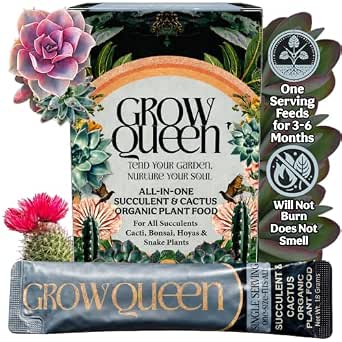
Grow Queen Complete Organic Cactus & Succulent Fertilizer – 11 Servings
For growers who want fewer feeding sessions, Grow Queen Complete offers a different approach from the liquid fertilizers in this lineup: each serving is described as providing nutrition for 2 to 8 months, rather than relying on frequent diluted or ready-to-use applications like Gardenera’s weekly mist or Miracle-Gro’s every-two-weeks schedule. The product is OMRI Listed and adds beneficial microbes to soil, making it the organic choice here. Its stated coverage—up to 44 plants or 22 gallons of soil—also suits a substantial collection. There is a visible tradeoff: the microbes may create surface growth that resembles mold, and the instructions call for scratching the product into the soil or covering it if that appearance bothers you. I’d choose it for lower-frequency organic feeding, but not for growers who want a clean-looking soil surface or precise liquid dosing.
Pros:- OMRI Listed organic fertilizer.
- Each serving is described as lasting 2 to 8 months.
- Coverage is listed for up to 44 plants or 22 gallons of soil.
- Odorless, pet-friendly, and formulated with beneficial microbes.
Cons:- Surface growth resembling mold may appear after application.
- May need to be scratched into the soil or covered to conceal surface growth.
- The 2-to-8-month duration is a broad range rather than a single fixed schedule.
Best for: Organic-minded growers with multiple cacti or succulents who want a soil-applied product and fewer feeding sessions.
Not ideal for: Plant owners who prefer liquid feeding, want a tidy soil surface, or need a fixed feeding interval rather than a stated 2-to-8-month duration.
- Brand:Grow Queen
- Type:Organic fertilizer
- Servings:11
- Coverage:Up to 44 plants or 22 gallons of soil
- Duration per serving:2 to 8 months
- Certification:OMRI Listed
- Other attributes:Vegan and pet-friendly
Our verdict“Choose Grow Queen for organic, longer-duration soil feeding if you accept the possibility of visible microbial growth on the surface.”
Miracle-Gro Succulent Plant Food, Liquid Fertilizer, 8 fl oz, 2-Pack
Miracle-Gro Succulent Plant Food suits growers who want a repeatable schedule: it feeds instantly and is directed for use every two weeks. Its two application methods add flexibility—you can pump it directly onto the soil or dilute it in water—unlike Gardenera’s mist, which is applied as a spray, or Grow Queen’s soil-based servings. The 0.5-1-1 formula is a milder NPK profile than Grow More Cactus Juice’s 1-7-6, so these products serve different preferences rather than being direct equivalents. The tradeoff is commitment to regular feeding; Grow Queen is designed for longer intervals, though its soil application and possible surface growth won’t suit everyone. I’d choose this pack for owners of a few indoor cacti who prefer clearly stated recurring directions, but skip it if remembering fortnightly feeding is unlikely.
Pros:- Formulated for succulents and cacti, including jade and aloe.
- Feeds instantly.
- Can be applied directly to soil or diluted in water.
- Two 8-ounce bottles provide a paired supply.
Cons:- Requires regular feeding every two weeks.
- The 0.5-1-1 NPK profile differs substantially from Grow More Cactus Juice’s 1-7-6 formula.
- Diluted use requires measuring eight pumps per quart of water.
Best for: Indoor cactus and succulent owners who want instant liquid feeding, two application options, and a stated every-two-weeks routine.
Not ideal for: Growers who want long intervals between applications or would rather use a ready-to-use spray or soil-applied organic serving.
- Brand:Miracle-Gro
- Form:Liquid
- Pack size:Two 8 fl oz bottles
- NPK formula:0.5-1-1
- Application options:Apply directly to soil or mix with water
- Dilution directions:Eight pumps per quart of water
- Feeding frequency:Every 2 weeks
- Target plants:Succulents and cacti, including jade and aloe
Our verdict“Choose Miracle-Gro if you want flexible liquid application and can keep up with a two-week feeding schedule.”
Christmas Cactus Liquid Fertilizer, 8 oz
Made specifically for Christmas cactus, this kelp-enriched liquid is the most directly tailored pick in this group. Its description connects feeding with growth, repeat blooms, and reduced bud drop, while the 1-teaspoon-per-quart dilution gives indoor growers a straightforward routine. Compared with Schultz Cactus Plus 2-7-7, which is aimed broadly at cacti, this formula speaks more directly to holiday cactus care. That specialization is its main advantage, not a guarantee that blooms or retained buds will follow; light, watering, and seasonal conditions still matter. The tradeoffs are its indoor-potted focus and the need to measure and dilute each application. I’d choose it for a grower prioritizing Christmas cactus over a multipurpose cactus feed, but pick Miracle-Gro Indoor Plant Food if applying directly to soil matters more than species-specific positioning.
Pros:- Formulated for indoor Christmas cactus and potted plants
- Kelp-enriched formula is intended to support growth and repeat blooms
- Description says it may help reduce bud drop
- Clear mixing direction of 1 teaspoon per quart of water
Cons:- Requires measuring and dilution before each use
- Intended for indoor potted use rather than a general outdoor feeding routine
Best for: Indoor growers who want a liquid feed marketed specifically for Christmas cactus and are comfortable mixing it into watering.
Not ideal for: Growers seeking a ready-to-use feed or one formula for outdoor plants and a broad collection of species.
- Brand:TPS Nutrients
- Form:Liquid
- Target species:Cactus
- Specific use:Plant growth
- Volume:8 fluid ounces
- Mixing ratio:1 teaspoon per quart of water
Our verdict“Choose this for a Christmas cactus-focused liquid feed; choose Miracle-Gro Indoor Plant Food if direct application is your priority.”
Schultz Cactus Plus 2-7-7 Liquid Plant Food, 4 oz (2-Pack)
Schultz Cactus Plus 2-7-7 suits buyers who want a cactus-formulated liquid feed in a compact two-bottle pack. Its stated dilution—1 teaspoon per gallon of water—is less frequent measuring by volume than the Christmas Cactus Liquid Fertilizer’s teaspoon-per-quart directions, which may fit growers mixing larger batches. The formula is targeted to cacti rather than Christmas cactus specifically, so it is a less specialized choice for someone focused on holiday blooms. The pack contains two 4-ounce bottles, offering a reserve bottle without requiring one large container. The main limitation is that the product information supplies no Christmas-cactus-specific bloom or bud-drop claims, and it still needs dilution before use. Compared with TATAWORM Organic Christmas Cactus Liquid Kelp Fertilizer, Schultz is the simpler broad cactus option; TATAWORM provides more explicit Christmas cactus and organic-use positioning.
Pros:- Formulated for cacti
- 2-7-7 formula is clearly identified
- Dilution direction is 1 teaspoon per gallon of water
- Two separate 4-ounce bottles provide a second bottle for later use
Cons:- Requires dilution before use
- Product details do not specify Christmas cactus or bloom-focused benefits
- Small individual bottles may be less convenient for frequent, larger-volume feeding
Best for: Cactus owners who mix larger watering batches and want two small bottles of a general cactus liquid fertilizer.
Not ideal for: Growers choosing primarily for Christmas cactus bloom support or those who prefer ready-to-use feeding.
- Brand:Schultz
- Formula:2-7-7
- Form:Liquid
- Target species:Cacti
- Package quantity:2 bottles
- Bottle size:4 fluid ounces each
- Mixing ratio:1 teaspoon (5 ml) per gallon of water
Our verdict“Pick Schultz for a straightforward, concentrated cactus feed, but choose TATAWORM if Christmas cactus-specific and organic-use claims matter more.”
Organic Christmas Cactus Liquid Kelp Fertilizer, 2 oz
TATAWORM’s liquid kelp formula is the most clearly specified choice here for growers seeking Christmas cactus care with organic-use positioning. It is made with Maine-sourced North Atlantic rockweed, is described as OMRI Listed for organic use, and calls out root development and plant vitality alongside blooms. Its small 2-ounce bottle is concentrated enough to make up to 12 gallons, although the modest container size should not be mistaken for a ready-to-use product. The directions ask for ¼ teaspoon per quart every 2–3 weeks during active growth, a more detailed routine than Schultz Cactus Plus 2-7-7 provides. The costs in convenience are measuring, repeat applications, and a slightly marine scent. Compared with the Christmas Cactus Liquid Fertilizer, TATAWORM gives more sourcing and organic-use detail, while the TPS option offers a simpler teaspoon-per-quart ratio.
Pros:- OMRI Listed for organic use
- Made with North Atlantic rockweed sourced from Maine
- Concentrated 2-ounce bottle makes up to 12 gallons
- Directions specify a dilution and application interval for active growth
Cons:- Requires dilution and applications every 2–3 weeks during active growth
- Slightly marine scent may not suit scent-sensitive indoor growers
- Small bottle requires careful measuring
Best for: Christmas cactus growers who prioritize an OMRI Listed-for-organic-use kelp feed and can follow a scheduled dilution routine.
Not ideal for: People sensitive to marine scents, or growers who want a ready-to-use product with minimal repeat measuring.
- Brand:TATAWORM
- Type:Liquid kelp fertilizer
- Volume:2 ounces
- Coverage:Makes up to 12 gallons
- Source:North Atlantic rockweed (Ascophyllum nodosum) from Maine
- Application:Mix 1/4 teaspoon per quart; apply every 2–3 weeks during active growth
- Certifications and claims:OMRI Listed for organic use, non-GMO, and cruelty-free
- Made in:USA
Our verdict“Choose TATAWORM for organic-use kelp positioning and detailed feeding directions, provided its scent and repeat schedule suit your routine.”
Miracle-Gro Indoor Plant Food for Cactus and Succulents, 8 fl oz, 2-Pack
Flexible application is the clearest reason to choose this two-bottle Miracle-Gro pack: the liquid can go directly onto soil or be mixed with water. That gives it an advantage over Schultz Cactus Plus 2-7-7 and TATAWORM Organic Christmas Cactus Liquid Kelp Fertilizer, both of which specify dilution. The product is made for indoor cacti and succulents, and its phosphorus and potassium are described as supporting growth and resiliency. It also suits households feeding plants such as jade, aloe, and kalanchoe, rather than just one Christmas cactus. The tradeoff is a two-week reapplication schedule, which asks for more regular attention than The Grow Co’s granules, listed to feed for up to nine months. Its product description also recommends separate potting mix for best results, so this is not a complete growing setup on its own.
Pros:- Can be applied directly to soil or mixed with water
- Formulated for indoor cacti and succulents
- Suitable for plants including jade, aloe vera, and kalanchoe
- Two 8-ounce bottles provide 16 fluid ounces total
Cons:- Requires reapplication every two weeks
- Product description recommends separate potting mix for best results
- Broad cactus-and-succulent positioning is less Christmas cactus-specific than the TPS or TATAWORM options
Best for: Indoor plant owners feeding several types of cacti and succulents who value a choice between direct soil application and mixing.
Not ideal for: Growers who want Christmas cactus-specific bloom claims, a long-lasting single application, or a fertilizer-only solution without separate potting mix.
- Brand:Miracle-Gro
- Form:Liquid
- Pack quantity:2 bottles
- Bottle size:8 fluid ounces
- Total volume:16 fluid ounces
- Application method:Apply directly to soil or mix with water
- Mixing directions:8 pumps per 1 quart of water
- Reapplication interval:Every two weeks
- Key nutrients:Phosphorus and potassium
Our verdict“Choose Miracle-Gro for flexible application across indoor succulents, but pick The Grow Co if you want a longer interval between feeds.”
Cactus and Succulent Indoor Plant Fertilizer, 5 oz
The Grow Co’s ready-to-use granules stand apart from every liquid option in this group: sprinkle them around the potting mix or poke them into the soil, then rely on the stated feeding duration of up to nine months. That makes this the low-maintenance choice for someone who does not want to dilute and apply liquid on a recurring schedule, unlike Miracle-Gro Indoor Plant Food, which calls for feeding every two weeks. It is intended for potted cacti and succulents and can be used indoors or outdoors, with root development, growth, color, and blooms listed among its aims. The tradeoff is less flexibility at application time: growers must work granules into the potting mix, and the product is not presented as a Christmas cactus-specific formula. I’d favor TATAWORM for targeted kelp positioning, but choose The Grow Co for a longer feeding interval.
Pros:- Ready-to-use granules need no dilution
- Listed feeding duration is up to nine months
- Can be used indoors or outdoors
- Suitable for potted cacti, succulents, and aloe vera
Cons:- Requires sprinkling granules around the potting mix or poking them into soil
- Broad cactus-and-succulent positioning is not specific to Christmas cactus
- Slow-release granules offer less application-by-application control than liquid feeds
Best for: Busy owners of potted cacti or succulents who prefer a ready-to-use granular feed and fewer applications.
Not ideal for: Growers who want a liquid feed, precise control over each watering, or a formula specifically described for Christmas cactus.
- Brand:The Grow Co
- Form:Granules
- Weight:5 ounces
- Feeding duration:Up to 9 months
- Application method:Sprinkle around potting mix or poke into soil
- Use:Plant food and root development
- Target plants:Cacti, succulents, and aloe vera
- Pack count:1
Our verdict“Choose The Grow Co for fewer feeding sessions, but select a liquid such as the Christmas Cactus Liquid Fertilizer for more targeted Christmas cactus positioning.”
How We Picked
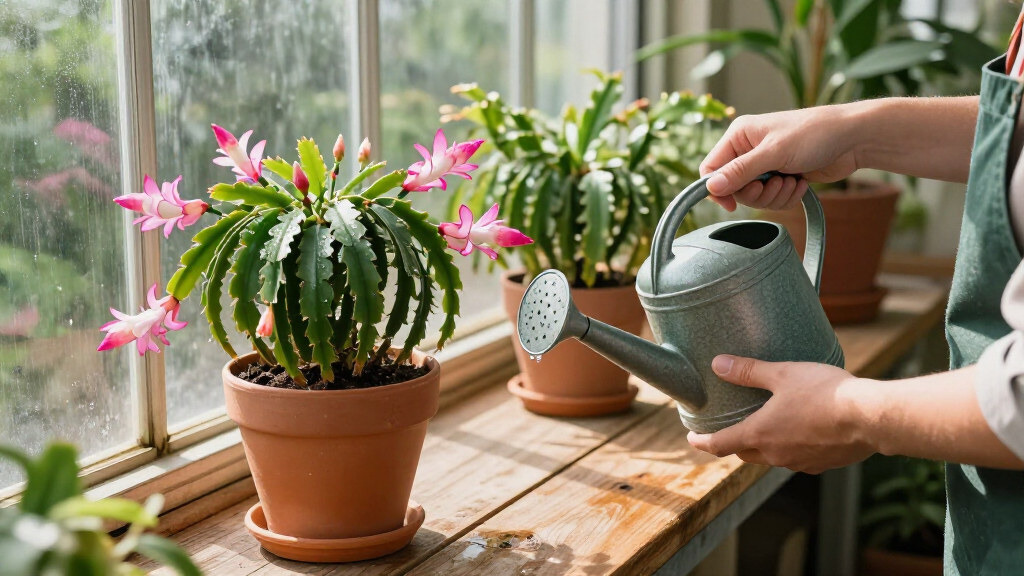
I compared these 15 products on factors that matter for feeding a Christmas cactus: whether the label identifies the plant or covers it as part of a wider cactus and succulent group, how the product is applied, how clearly its format supports repeat use, and what the stated formula details suggest about buyer control. A liquid concentrate can fit an adjustable routine, but it asks the buyer to measure and dilute; a mist or pre-portioned serving can reduce that work, though it may offer a different level of control. I also weighed stated differentiators such as Schultz’s 2-7-7 formula, Grow More’s 1-7-6 formula, Cactiva’s 2% iron, and the organic or kelp positioning of selected products.
The ranking favors useful fit for ordinary Christmas cactus care, practical application, and enough product information to make a reasoned choice—not the biggest bottle or the most specialized wording alone. TPS Nutrients Cactus Fertilizer leads as a straightforward general-purpose liquid pick, while plant-specific, organic-positioned, compact, and concentrated options rank for buyers whose priorities differ. I treat listed product details as the basis for comparison and do not assume that a specialized label guarantees better results. The best choice still depends on following the label and matching feeding to the plant’s condition and growing season.
| Christmas cactus fertilizer | Form |
|---|---|
| TPS Nutrients Cactus Fertilize | Liquid |
| TPS Nutrients Succulent Fertil | Liquid |
| Espoma Organic Cactus! Plant F | Liquid |
| Cactiva Christmas Cactus Ferti | Granules |
| Cute Farms Succulent | Liquid |
| Grow More Cactus Juice 1-7-6 L | Liquid |
| Gardenera 3-1-2 Succulent and | Ready-to-use spray mist |
| Home + Tree Succulent and Cact | Liquid |
| Grow Queen Complete Organic Ca | — |
| Miracle-Gro Succulent Plant Fo | Liquid |
| Christmas Cactus Liquid Fertil | Liquid |
| Schultz Cactus Plus 2-7-7 Liqu | Liquid |
| Organic Christmas Cactus Liqui | — |
| Miracle-Gro Indoor Plant Food | Liquid |
| Cactus and Succulent Indoor Pl | Granules |
Factors to Consider When Choosing Best Christmas Cactus Fertilizers
Choosing a fertilizer is only part of a Christmas cactus feeding routine. I’d weigh the plant’s current health, your willingness to measure or dilute, and whether you are feeding one holiday cactus or a mixed collection. These broader checks can prevent common mismatches that a product label alone cannot resolve.
Match the formula to your plant’s needs, not just its name
A product labeled for Christmas cactus may feel like the safest match, but a broad cactus and succulent formula can also suit buyers caring for several plant types. I’d use the label’s listed plants and directions as the deciding evidence rather than assuming a narrower name means a stronger or better formula. A specialty feature such as added iron may appeal when that is the stated priority, but it should not replace diagnosing a plant problem. If the cactus is struggling, check light, watering, drainage, and root condition before increasing fertilizer. Feeding cannot correct an underlying care issue and may add stress if the plant is already in poor shape. Choose specificity for convenience and clarity, not as a promise of a particular bloom response.
Decide how much measuring you want to do
Liquid concentrates offer flexibility, but they require accurate measuring and dilution according to the label. That can be useful when you want to control how much solution you prepare, though it adds a step and leaves room for mixing errors. A mist or pre-portioned servings may simplify the routine for someone who prefers less measuring, but convenience does not mean every format is applied in the same way. Read whether a product is meant for soil application, spraying, or another method before buying. Avoid combining application methods or adding extra fertilizer because a plant looks slow to grow. The best format is the one you can use consistently and correctly.
Compare concentration with usable volume
Bottle size alone does not show how long a fertilizer will last. A larger container may provide more liquid, while a smaller concentrated product may be diluted for use; the label’s mixing directions determine the practical amount of feeding solution. Compare the number of applications only when that information is stated, and do not infer it from ounces alone. This matters especially when choosing between a 16-ounce liquid, a smaller concentrate, and a pack with stated servings. If directions are unclear or missing, that limits how confidently you can plan repeat use. Pick the package that gives you clear instructions and a manageable amount for your plants.
Feed around growth and rest, not the calendar alone
Christmas cacti can have periods of active growth and rest, so a fixed year-round schedule may not suit every plant or home. Follow the product label and adjust to the plant’s condition and seasonal growth rather than feeding more often to encourage blooms. A plant that is stressed, recently repotted, or not actively growing may not benefit from extra fertilizer. Too-frequent feeding can leave excess salts in the potting mix, particularly when watering and drainage are poor. If you are unsure, use the label’s least demanding routine rather than improvising a stronger mix. A simple feeding record can help you avoid accidental repeat applications.
Treat organic positioning and specialty claims as priorities, not guarantees
Organic-labeled or kelp-positioned products may suit buyers who want those ingredients or product attributes, while conventional liquid formulas may appeal to shoppers focused on straightforward application. Those distinctions do not by themselves show that one fertilizer will outperform another on every Christmas cactus. Likewise, a product highlighting iron or a particular nutrient ratio is a reason to inspect its directions and intended use, not to add it automatically to an established routine. Check whether the formula fits the plants you own and whether its application works with your watering habits. Avoid stacking multiple fertilizers unless their labels explicitly support that plan. Choosing one suitable product and using it as directed is easier to manage than mixing several claims.
Buy for your collection size and storage habits
A multipack may make sense when you feed several plants or want a spare bottle, but it can be unnecessary for a single cactus that needs little fertilizer at a time. Small containers can be easier to store and use up, while a larger bottle may suit a wider collection if its instructions and shelf-life guidance work for your routine. Check the packaging and storage directions before purchasing in bulk. Keep fertilizer clearly labeled and away from children and pets, and avoid transferring it to an unmarked container. If you are new to feeding Christmas cactus, a manageable package can reduce waste while you learn the label’s routine. Let the number of plants and your ability to store the product guide pack size.
Frequently Asked Questions
Should I choose a Christmas-cactus-specific fertilizer or a general cactus formula?
Either can make sense if the label supports use on Christmas cactus and gives clear application directions. A named Christmas cactus product may be easier to identify for a single holiday cactus, while a broader cactus and succulent formula can be more convenient if you feed a mixed collection. I would compare instructions and application format before treating the narrower label as an advantage. Check whether the formula matches your routine and whether you can follow its dilution guidance. If the plant has a specific symptom, investigate its care conditions rather than relying on a specialty label to solve it.
Is a concentrated liquid better value than a ready-to-use mist?
Not automatically: concentration, bottle size, application method, and stated directions all affect how much usable product you get. A concentrate can suit someone who is comfortable measuring and mixing, while a mist may reduce preparation steps. Do not compare ounces as though both formats are applied at the same strength or in the same quantity. Look for clear dilution instructions and the amount needed per application. If you prefer a low-effort routine, convenience may matter more than potential yield; if you want control, a measured concentrate may fit better.
Can I use a fertilizer that is not labeled specifically for Christmas cactus?
Many products in this roundup are labeled for cacti, succulents, or both rather than naming Christmas cactus alone. Before using one, confirm that the label includes a relevant plant group and follow its directions rather than applying a general houseplant dose by assumption. The plant’s growing conditions and overall health still matter, since fertilizer is not a substitute for suitable light, watering, and drainage. Avoid feeding more often or at a stronger dilution than directed. If the label does not clarify use for your plant, choose a product with clearer guidance.
Should I fertilize a Christmas cactus to make it bloom?
Fertilizer alone does not guarantee flowers, so I would not increase feeding to force a bloom. Flowering depends on the plant’s broader care and seasonal conditions, and a stressed plant may not benefit from extra nutrients. Follow the fertilizer label during suitable growth periods and avoid excess feeding. Review light exposure, watering, and the plant’s seasonal routine before changing fertilizer. A balanced care approach is a better starting point than switching to a stronger product solely for blooms.
Which kind of fertilizer is easiest for a first-time Christmas cactus owner?
I’d look for clear directions, a familiar application method, and a package size suited to one plant. A standard liquid can work well if its dilution steps are easy to follow, while pre-portioned servings or a mist may reduce measuring. Ease depends on the label and your habits, so check whether the product is applied to soil or foliage and how often it is intended to be used. Start with the stated routine rather than adding extra feed when growth seems slow. A simple, repeatable method is more useful to a beginner than a specialized formula with directions that are hard to interpret.
Conclusion
For most shoppers, I recommend TPS Nutrients Cactus Fertilizer as the best overall because it offers a straightforward liquid format for routine use. For best value, compare Miracle-Gro Succulent Plant Food and Espoma Organic Cactus! Plant Food by their multipack format and the product qualities you prefer; the best fit depends on your plants and application routine. Espoma is my best premium-style pick for buyers who specifically want an organic-positioned formula, while Grow Queen Complete Organic Cactus & Succulent Fertilizer is the best beginner-friendly option for those drawn to its stated 11-serving format. For a more targeted need, choose Cactiva if its 2% iron feature matches your priorities, or the Organic Christmas Cactus Liquid Kelp Fertilizer if you want a plant-specific kelp option. Whichever you select, follow its label and avoid using fertilizer to compensate for problems with light, watering, or drainage.
Fall yard work Picks
leaf blowers
As an affiliate, we earn on qualifying purchases.