If you want to save water long-term and make a major upgrade, installing low-flow fixtures like toilets and showerheads is your best choice. They reduce water use across your entire home and help lower bills. If you’re looking for a quick, cost-effective way to improve efficiency, aerators are ideal—they attach easily to existing faucets and cut water flow without replacing fixtures. Keep exploring to discover which option best fits your water-saving goals and lifestyle.
Key Takeaways
- Low-flow fixtures replace entire units; aerators are small attachments for existing faucets, making aerators easier and cheaper to install.
- Low-flow fixtures offer comprehensive water savings; aerators provide quick, targeted flow reduction without fixture replacement.
- Choose low-flow fixtures for long-term conservation goals; opt for aerators for immediate efficiency improvements.
- Both maintain water pressure while reducing flow; fixtures impact performance more than aerators.
- Combining both strategies maximizes water conservation and efficiency in your home.
When it comes to conserving water in your home, understanding the difference between low-flow fixtures and aerators is essential. Both play a noteworthy role in improving plumbing efficiency and reducing your water bills, but they serve slightly different purposes. Knowing which one to choose depends on your specific needs and goals for water conservation. Low-flow fixtures, such as toilets, showerheads, and faucets, are designed to limit the amount of water used during operation. These fixtures typically restrict flow rates to a set maximum—like a showerhead that uses no more than 2.0 gallons per minute (GPM)—to cut down on unnecessary water use without sacrificing performance. Installing low-flow fixtures can make a noticeable difference in your monthly water bill and help reduce strain on local water resources. They’re especially beneficial if you’re aiming for long-term water conservation without compromising comfort.
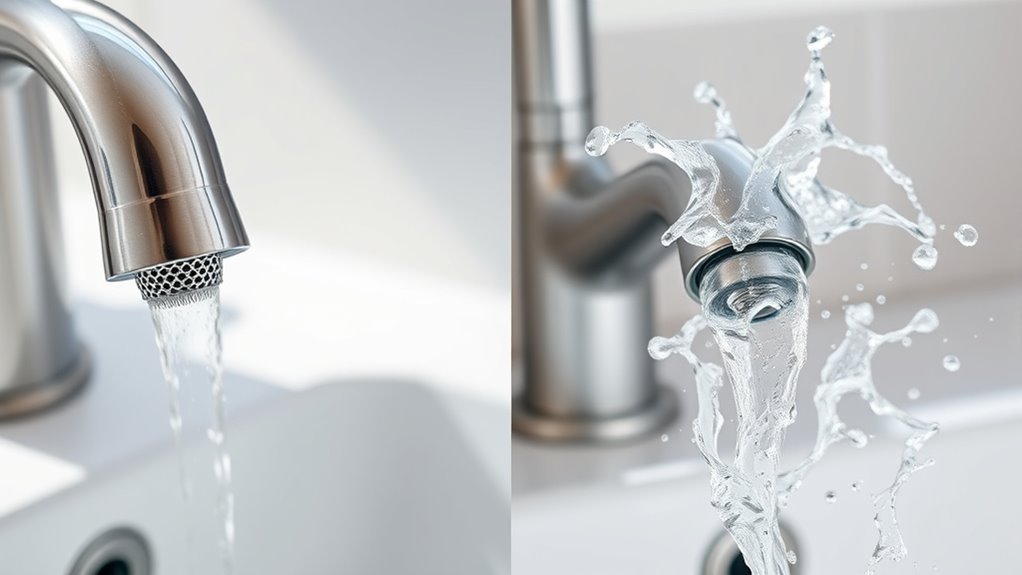
On the other hand, aerators are small devices that attach to the end of faucets. They work by mixing air with water flow, which maintains pressure while reducing the total volume of water coming out. This simple addition can markedly enhance plumbing efficiency, especially if your existing fixtures are high-flow or outdated. Aerators are easy to install and cost-effective, making them a popular choice for homeowners interested in quick improvements. They help you save water during daily activities like brushing your teeth, washing dishes, or rinsing your hands. Since aerators don’t change the overall fixture but just modify the water flow at the outlet, they are a practical way to achieve immediate water conservation benefits without a major overhaul. Additionally, many homes are evaluated through home energy audits that can identify opportunities to improve water and energy efficiency simultaneously.
Choosing between low-flow fixtures and aerators depends on your goals. If you want a thorough upgrade that reduces water use across your entire household, investing in low-flow toilets, showerheads, and faucets is the way to go. However, if you’re happy with your current fixtures but want a simple, affordable way to boost plumbing efficiency, attaching aerators is a smart move. Both options help you contribute to water conservation efforts while still enjoying the functionality you need. Remember, combining these strategies can maximize savings, making your home more eco-friendly and cost-efficient. Ultimately, understanding these tools allows you to make informed decisions that align with your conservation goals and lifestyle.

HOROW HR-ST076WD Dual Flush Elongated Toilet with Soft Close Seat, High-Efficiency Supply, Standard Bathroom Toilet 12" Rough-In, White Finish
Dual Flush Modern Design: Our elongated toilet is a more classic style, with smooth shape and one-piece molding….
As an affiliate, we earn on qualifying purchases.
As an affiliate, we earn on qualifying purchases.
Frequently Asked Questions
Do Low-Flow Fixtures Really Save Water Without Sacrificing Performance?
Yes, low-flow fixtures save water without sacrificing performance. They enhance water conservation by reducing flow rates while maintaining adequate pressure. Modern low-flow fixtures are designed for fixture efficiency, ensuring you don’t notice a difference in usability. You can enjoy effective water usage, lower utility bills, and contribute to environmental sustainability, all without compromising comfort or functionality. Upgrading to these fixtures makes a smart and eco-friendly choice for your home.
Are Aerators Compatible With All Types of Faucets?
You might be surprised to learn that aerators aren’t compatible with all types of faucets. Before you buy, check your faucet’s compatibility and consider installation considerations like size and threading. Sometimes, you’ll need adapters or different aerator models to fit perfectly. So, it’s smart to measure and verify your faucet type beforehand, ensuring easy installation and maximum water savings without any hassle or performance loss.
How Long Does It Take to Recoup the Cost of Installation?
It usually takes a few months to a year to recoup the installation cost of aerators or low-flow fixtures, thanks to cost savings on your water bill. Your installation timeline is quick—often just an hour or two—so you start saving almost immediately. Over time, the reduced water usage leads to significant savings, making the investment worthwhile. Keep track of your bills to see your savings grow.
Can Aerators Prevent Mineral Buildup in Faucets?
Yes, aerators can help prevent mineral buildup in faucets. By mixing air with water, they reduce the flow rate and minimize mineral deposits that cause clogging. Regular faucet maintenance with aerators also makes it easier to spot and clean mineral buildup early. This not only keeps your faucets functioning smoothly but also extends their lifespan, saving you time and money on repairs and replacements.
Are There Eco-Friendly Options for Low-Flow Fixtures and Aerators?
Yes, you can find eco-friendly low-flow fixtures and aerators made from sustainable materials like bamboo, recycled plastics, or biodegradable options. These choices help reduce environmental impact by minimizing resource use and waste. When shopping, look for products labeled as eco-friendly or biodegradable, and prioritize brands committed to sustainability. By choosing these options, you support environmentally responsible practices while saving water and energy in your home.

LDR Industries 520 1100CP-18 Water Saving Showerhead with Push Button Flow Control, Chrome Plated Brass
LDR 502 1100 Water Saving Showerhead with Push Button Flow Control, Chrome Plated Brass
As an affiliate, we earn on qualifying purchases.
As an affiliate, we earn on qualifying purchases.
Conclusion
Ultimately, choosing between low-flow fixtures and aerators is like selecting your own hero in a story—each has its strengths. Low-flow options save water effortlessly, much like a wise old sage, while aerators bring a burst of efficiency with every use, reminiscent of a clever trickster. Consider your needs and preferences, and you’ll craft a solution that turns your bathroom into a chapter of sustainability—where every drop counts, and your choices echo like a legend.
faucet aerator
As an affiliate, we earn on qualifying purchases.
As an affiliate, we earn on qualifying purchases.
water conservation fixtures
As an affiliate, we earn on qualifying purchases.
As an affiliate, we earn on qualifying purchases.