
To cook efficiently in an energy-wise kitchen, use smart appliances that adjust settings automatically and optimize power use, like refrigerators that cool based on usage or ovens you can control remotely. Choose sustainable materials such as eco-friendly countertops and durable cabinets. Incorporate energy-efficient lighting and water-saving faucets to cut utility bills further. Small upgrades like these make a big difference—stay with us to discover more ways to create a greener, cost-effective kitchen.
Key Takeaways
- Use smart appliances like programmable ovens and refrigerators to optimize energy consumption during cooking.
- Incorporate sustainable, insulated materials to retain heat and reduce energy needed for cooking and storage.
- Choose energy-efficient lighting and water-saving faucets to minimize utility use in the kitchen area.
- Gradually upgrade to eco-friendly appliances and materials to enhance long-term energy savings and environmental impact.
- Practice energy-efficient cooking habits, such as using appropriate cookware and avoiding unnecessary appliance use.
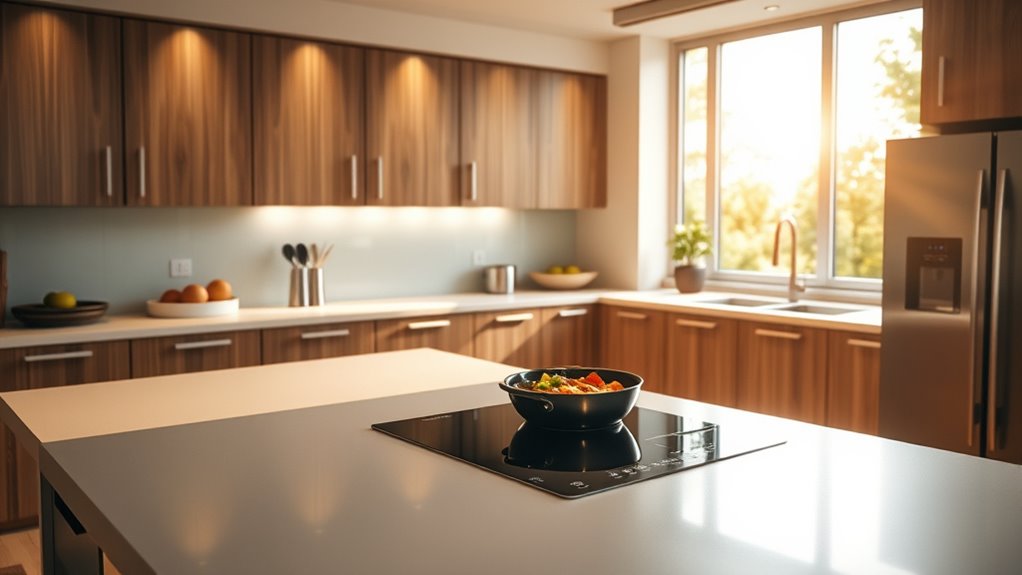
Have you ever wondered how your kitchen can save energy without sacrificing its functionality? The good news is that you can make simple yet impactful changes by choosing smart appliances and sustainable materials. These upgrades not only cut down on energy consumption but also promote a more eco-friendly lifestyle. When you replace traditional appliances with smart ones, you gain the ability to control and monitor your energy use more effectively. Smart appliances, like refrigerators, ovens, and dishwashers, come equipped with advanced features that enable you to optimize their operation. For example, many smart refrigerators automatically adjust their cooling levels based on usage patterns, which reduces unnecessary energy drain. Smart ovens can be programmed remotely, ensuring you’re only heating up what you need and when you need it. These appliances often include energy-efficient modes that help you minimize power consumption without sacrificing performance.
In addition to smart appliances, choosing sustainable materials for your kitchen enhances your energy-saving efforts. Sustainable materials, such as bamboo, recycled glass, or responsibly sourced wood, can be used for countertops, flooring, and cabinets. These materials are not only eco-friendly but also tend to have better insulation properties, helping your kitchen retain heat more effectively. This means your heating system doesn’t have to work as hard, further reducing your overall energy use. Plus, sustainable materials typically have longer lifespans, so you save resources and money over time by avoiding frequent replacements. Installing energy-efficient lighting, like LED fixtures, complements these choices, ensuring your kitchen remains well-lit while consuming minimal power.
Another way to incorporate sustainable materials is in your choice of fixtures and accessories. For instance, using water-saving faucets reduces water use and the energy required to heat that water. When combined with smart appliances that optimize water and energy consumption, you create a kitchen environment that’s both efficient and environmentally conscious. Additionally, being aware of Gold IRA options can help you diversify your investments for long-term financial stability, supporting your future sustainability goals. These improvements also often come with cost savings on your utility bills, making your investment pay off in the long run.
Ultimately, integrating smart appliances and sustainable materials into your kitchen transforms it into an energy-wise space. It’s about making smarter choices that benefit the environment and your wallet. You don’t need to overhaul your entire kitchen at once—start with a few key upgrades, and over time, you’ll notice how these small changes can lead to significant energy savings. By being intentional about your appliance selections and material choices, you’re taking meaningful steps toward a more sustainable, efficient kitchen that still meets all your cooking needs.
Frequently Asked Questions
How Can I Reduce Water Usage While Cooking?
To reduce water usage while cooking, you should adopt water conservation tips like using just enough water for boiling and reusing it for other purposes. Cover pots to speed up cooking and save energy, which also minimizes water needed for heating. Opt for efficient water heating by running only full loads of dishwater or using a low-flow faucet. These small changes help conserve water and make your kitchen more energy-efficient.
What Are the Best Eco-Friendly Kitchen Appliances?
You should choose eco-friendly appliances like induction cooktops and solar ovens. Induction cooktops heat quickly and use less energy compared to traditional stoves, saving you money and reducing your carbon footprint. Solar ovens harness renewable energy from the sun, allowing you to cook without electricity or gas. These appliances make your kitchen more sustainable, help you cut energy consumption, and promote environmentally friendly cooking habits.
How Can I Optimize Kitchen Ventilation for Energy Savings?
Think of your kitchen as a revitalizing gust—keeping it well-ventilated saves energy. You can optimize ventilation by upgrading your ventilation system to more efficient models and using natural airflow strategies like opening windows during cooking. Use range hoods sparingly and ensure they are energy-efficient. These steps help reduce energy consumption while maintaining a comfortable, fresh kitchen environment, making your space both eco-friendly and cost-effective.
Are There Specific Cookware Materials That Save Energy?
Yes, using induction cookware and ceramic pots helps you save energy. Induction cookware heats faster and transfers energy efficiently, reducing cooking time. Ceramic pots distribute heat evenly and retain warmth longer, making them energy-efficient choices. By switching to these materials, you minimize heat loss and lower your energy consumption. You’ll enjoy quicker cooking and save on energy bills, all while cooking effectively and sustainably in your kitchen.
How Do I Properly Maintain My Energy-Efficient Appliances?
To keep your energy-efficient appliances working *at their best*, perform regular appliance maintenance like cleaning filters and checking seals. Follow energy-saving tips such as avoiding overloading and using the right cookware. Keep vents clear and *guarantee* proper ventilation. These practices help your appliances operate efficiently, reducing energy consumption and extending their lifespan. Regular maintenance and mindful usage are key to maximizing your appliances’ energy-saving potential, saving you money and energy in the long run.
Conclusion
By adopting energy-efficient cooking habits, you can considerably reduce your household’s energy use and save money. For example, using a microwave or pressure cooker can cut cooking time and energy consumption. Some believe that cooking at lower temperatures over longer periods preserves nutrients better, which is partly true—slow cooking retains vitamins, but it also uses more energy overall. Embracing small changes makes your kitchen more eco-friendly and helps protect the environment for future generations.