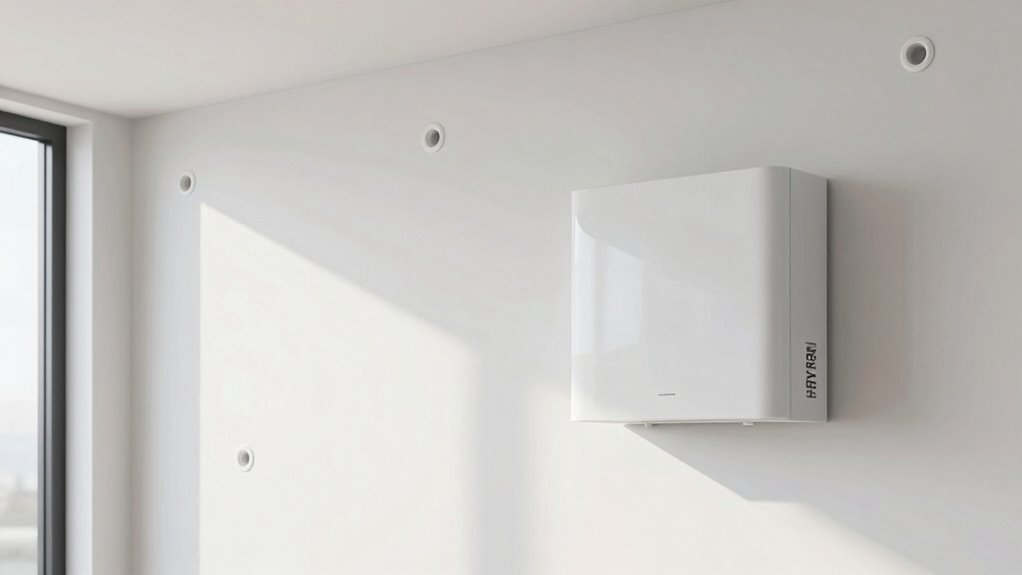
Ductless HRVs and ERVs offer a smart way to improve indoor ventilation without tearing into walls or ceilings. They operate independently, so you avoid the mess and disruption of installing ductwork, making them ideal for retrofits or adding fresh air in small spaces. These systems are easy to install in closets, utility rooms, or exterior walls, reducing disruption and costs. To discover how these compact solutions can work for your home, keep exploring your options.
Key Takeaways
- Ductless HRVs/ERVs install quickly without wall or ceiling modifications, ideal for retrofit and renovation projects.
- They operate independently, providing effective ventilation without extensive ductwork or tearing apart existing structures.
- Compact, standalone units can be placed near high-traffic areas like kitchens or bathrooms for targeted air quality improvement.
- These systems are easily maintained with accessible filters, eliminating the need to dismantle duct passages.
- They enhance indoor air quality and energy efficiency while preserving interior aesthetics, avoiding disruptive construction.
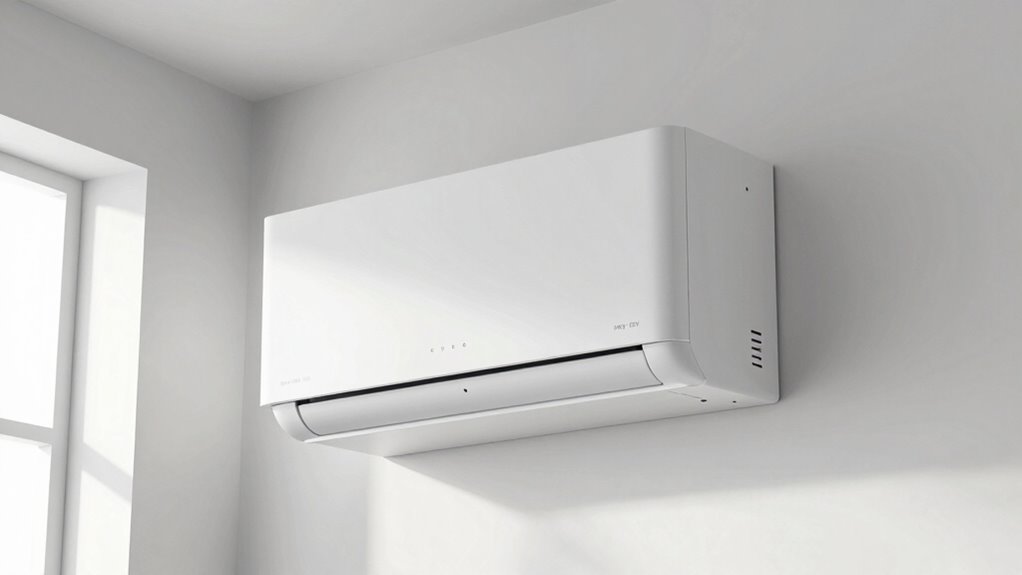
Ductless HRVs (Heat Recovery Ventilators) and ERVs (Energy Recovery Ventilators) offer an efficient way to improve indoor air quality without the need for extensive ductwork. If you’re looking to upgrade your ventilation system, these units provide a smart solution that combines performance with convenience. One of the key advantages is their impressive energy efficiency. Unlike traditional systems that require large, hidden duct networks, ductless HRVs and ERVs operate independently, reducing energy losses and optimizing airflow. This means you get fresh air circulating through your home without considerably increasing your energy bills. The heat or energy recovery components ensure that you retain warmth during winter or coolness during summer, making your system more efficient overall.
Installation benefits are another compelling reason to consider ductless HRVs and ERVs. Since these units don’t rely on ductwork, installation is quicker, cleaner, and less disruptive. You won’t need to tear apart walls or ceilings, which saves you both time and money. This makes them an excellent choice for retrofit projects or homes where adding ductwork isn’t feasible. You can typically install them in existing spaces like closets, utility rooms, or even on exterior walls, which simplifies the process further. Additionally, because they are compact and standalone, maintenance is easier—you can access filters and components without dismantling extensive duct systems.
These systems also offer flexible placement options. You’re not limited by existing duct routes or the need to hide bulky equipment. Instead, you can position them closer to areas with higher air quality concerns, such as kitchens or bathrooms. This targeted approach enhances overall ventilation effectiveness and ensures you’re constantly breathing cleaner, healthier air. Moreover, the absence of ductwork reduces the risk of mold or dust accumulation within hidden passages, contributing to a healthier indoor environment.
Another notable installation benefit is their scalability. Whether you live in a small apartment or a large home, ductless HRVs and ERVs can be tailored to your needs. Modular designs mean you can add units or upgrade existing ones as your requirements change, without overhauling your entire ventilation system. This adaptability is especially valuable if you’re planning future renovations or expanding your living space.

Greenhouse Heater 1500W with APP Remote Control, Greenhouse Heater With Thermostat, Portable Outdoor Heater for Plants Vegetables Flowers,Smart Electric Safe Heater for Green house,Grow Tents,Garage
Remote Control, Convenient and Smart: Our greenhouse heater can be connected to your smartphone by downloading the "Smart...
As an affiliate, we earn on qualifying purchases.
Frequently Asked Questions
How Do Ductless Hrvs/Ervs Compare in Efficiency to Traditional Systems?
Ductless HRVs and ERVs are generally more energy-efficient than traditional systems because they recycle indoor air without extensive ductwork, reducing energy loss. You’ll also find that installation costs are lower since they don’t require tearing into walls or installing complex duct networks. This makes ductless systems a smart choice for maintaining good ventilation with less hassle and better energy savings, especially in retrofit situations.
Can Ductless Hrvs/Ervs Be Integrated With Smart Home Systems?
Yes, ductless HRVs and ERVs can be integrated with smart home systems. Many models offer smart home compatibility, allowing you to control ventilation settings remotely through apps or voice commands. This integration enables you to monitor performance and adjust airflow from anywhere, providing convenience and energy efficiency. Look for systems with remote monitoring features and compatibility with popular platforms like Alexa or Google Home for seamless control.
What Maintenance Is Required for Ductless Ventilation Units?
Did you know that regular maintenance can extend your ductless ventilation unit’s lifespan by up to 30%? You should replace filters every 3-6 months and perform system cleaning annually. These steps guarantee peak air quality and efficiency. Keep an eye on filter condition and clean the system’s core parts to prevent dust buildup. Proper upkeep helps your unit run smoothly and saves you money on repairs.
Are Ductless Hrvs/Ervs Suitable for All Climate Zones?
Ductless HRVs and ERVs are generally suitable for many climate zones due to their climate adaptability, but they may face installation challenges in extreme conditions. In very cold or humid environments, you might need additional features or modifications to optimize performance. Always consult a professional to assess your specific climate and home setup, ensuring your ductless ventilation system operates efficiently and effectively without costly adjustments later.
How Noisy Are Ductless Hrv/Erv Units During Operation?
Ductless HRV/ERV units are generally quiet during operation, with noise levels often comparable to a refrigerator or background hum. Modern models feature sound insulation that minimizes noise transmission, so you might barely notice when they’re running. If noise is a concern, look for units with sound-dampening features and proper placement, such as away from bedrooms or quiet zones, to guarantee minimal disruption while maintaining effective ventilation.

LHUKSGF Greenhouse Heater with Digital Thermostat, Grow Tent Heaters, Overheat Protection, Fast Heating for Green House, Flower Room, Yellow
【Greenhouse Heater】: The greenhouse heater is equipped with a thermostat that easily heats up to 150 ft ²...
As an affiliate, we earn on qualifying purchases.
Conclusion
Think of ductless HRVs and ERVs as the secret passageways of your home’s ventilation—the hidden tunnels that bring fresh air without tearing down walls. They’re your home’s quiet guardians, maintaining comfort and air quality like a skilled conductor guiding an orchestra. With these systems, you’re not just upgrading your space; you’re creating an effortless flow of life and energy. Embrace this modern solution and let your home breathe easy, quietly and beautifully.

Greenhouse Heater with Thermostat, Auto Temperature Control Kit with Digital Display, Fast Heating, Overheat Protection, for Grow Tent, Greenhouse, Flower Room, Patio, Winter Plants
Auto Temperature Control Kit: This kit includes a reliable greenhouse heater and a precise digital thermostat, designed to...
As an affiliate, we earn on qualifying purchases.

GNRZZT Greenhouse Heater with Digital Thermostat, Green House Heater for Plants,1500W Electric Grow Tent Heaters, Overheat Protection, Fast Heating for Green House, Flower Room, Yellow
EFFICIENT HEATING: The stainless steel greenhouse heater, equipped with a digtial thermostat, efficiently heats up to 160 ft²...
As an affiliate, we earn on qualifying purchases.