
If your compost has odors, is too wet, or not heating up, you might have a pH imbalance, poor airflow, or excess moisture. Test the pH and add materials like eggshells or lime to balance acidity, while mixing in dry browns or shredded paper to absorb moisture and improve aeration. Turning the pile regularly and maintaining proper moisture levels will help it decompose efficiently. To troubleshoot more common issues and keep your compost healthy, continue exploring these tips.
Key Takeaways
- Regularly test pH levels and add lime or eggshells to neutralize acidity, or coffee grounds and fruit scraps for alkalinity.
- Aerate the compost frequently by turning it to improve airflow and reduce foul odors caused by anaerobic conditions.
- Maintain proper moisture levels—moist but not soaked—and cover during rain to prevent excess water and bad smells.
- Monitor temperature; a cooling pile and bad odors indicate the need for ingredient adjustments or increased aeration.
- Balance greens and browns, and troubleshoot issues by adjusting ingredients, moisture, and turning to promote healthy composting.
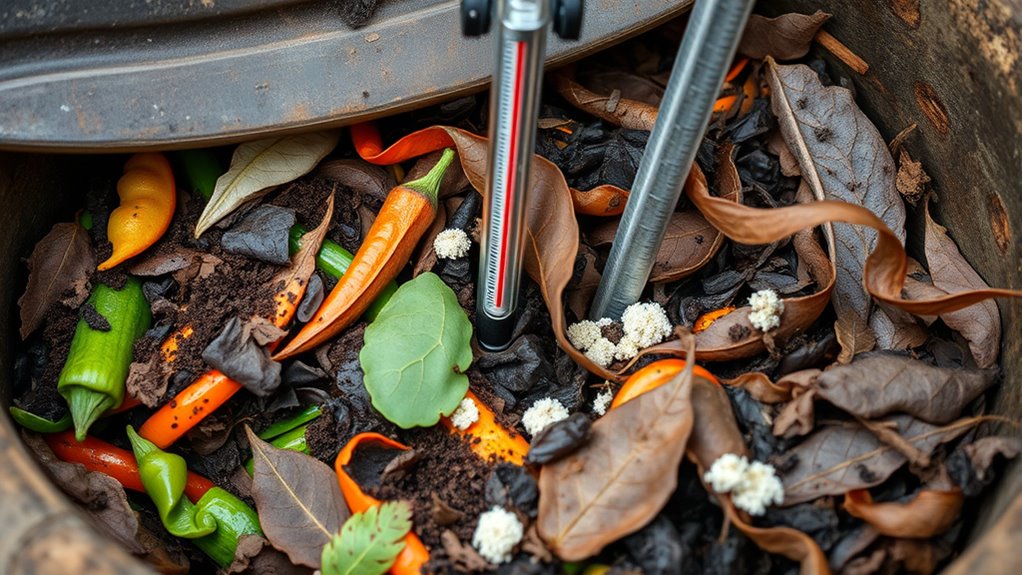
Starting a home compost can be rewarding, but it often comes with challenges that can frustrate beginners. One common issue is managing the pH imbalance in your compost pile. If your compost becomes too acidic or too alkaline, it can slow down decomposition and create problems like foul odors or an unhealthy environment for beneficial microbes. To keep the pH balanced, you should regularly monitor it using simple testing kits. If your compost leans too acidic, adding a bit of crushed eggshells or lime can help neutralize the acidity. Conversely, if it’s too alkaline, incorporating organic materials like coffee grounds or fruit scraps can bring the pH back into a healthy range. Maintaining a proper pH is vital because it guarantees microbes thrive, which accelerates composting and minimizes issues like smell.
Odor control is another challenge in home composting, especially when the pile gets too wet or contains excessive nitrogen-rich materials like kitchen scraps. An unpleasant smell indicates that your compost might be anaerobic—lacking enough oxygen—which encourages harmful bacteria and produces foul odors. To fix this, you should aerate your compost regularly by turning it with a pitchfork or compost turner. This introduces oxygen, helping microbes work more efficiently and reducing odors. Also, balancing greens (nitrogen-rich scraps) with browns (carbon-rich materials like dry leaves or shredded paper) can prevent odors caused by excess nitrogen. If your compost smells bad, adding more browns and turning the pile are effective steps. Guaranteeing proper moisture levels is equally important; your compost should be moist but not soaked. Too much water can create anaerobic conditions, leading to odor issues and a sluggish compost process. Covering your compost or adding dry materials during rainy weather can help keep moisture levels in check.
It’s also helpful to keep an eye on your compost’s texture and temperature. A healthy pile heats up, indicating microbial activity, but if it cools down or smells bad, it might need more aeration or adjustments in ingredients. When troubleshooting, start by checking the balance of greens and browns, adjusting moisture, and turning the pile to improve airflow. Remember that industry trends and innovations in composting can offer new solutions and tools for better management. Be patient—composting is a natural process that takes time, but with proper management of pH and odor, you’ll create rich, healthy compost in no time. Remember, small adjustments can make a big difference, and over time, you’ll develop a better sense of what your compost needs, making the whole process smoother and more successful.
Frequently Asked Questions
How Long Does Compost Take to Fully Decompose?
Compost typically takes about three to six months to fully decompose, but this depends on your compost’s maturity and the decomposition timeline. Factors like temperature, moisture, and aeration affect how quickly organic materials break down. Keep turning your pile and maintaining proper conditions; you’ll see it mature faster. Once it’s dark, crumbly, and earthy-smelling, your compost has reached maturity and is ready to use.
Can I Compost Meat or Dairy Products?
You shouldn’t compost meat or dairy products because meat biodegradation attracts pests and causes odors. Dairy contamination can also lead to bacterial growth, making your compost unsafe. If you really want to include these items, use a specialized compost bin designed for meat and dairy, and handle it carefully. Otherwise, it’s best to keep these out to maintain a healthy, odor-free compost pile that decomposes efficiently.
What Should I Do if My Compost Smells?
Imagine your compost smells so bad, it’s making your whole backyard unpleasant. To fix this, first, improve odor control by adding more carbon-rich materials like leaves or shredded paper. Then, increase compost aeration by turning the pile regularly, which helps release trapped gases. This process reduces odor, speeds up decomposition, and keeps your compost healthy and odor-free. Keep at it, and your compost will smell fresh again.
How Often Should I Turn My Compost Pile?
You should turn your compost pile every 3 to 7 days to guarantee proper aeration. The size of your compost pile influences how often you need to turn it; larger piles may require more frequent aeration to prevent odors and promote decomposition. Use aeration techniques like turning with a pitchfork or aeration tools to introduce oxygen. Regular turning speeds up composting and keeps the process odor-free.
Is It Safe to Use Compost on Edible Plants?
Yes, it’s safe to use compost on edible plants once it’s fully mature. You should check for food safety by ensuring the compost has broken down completely, with no foul odors or visible raw materials. Mature compost is dark, crumbly, and has a mild earthy smell. Using well-composted material minimizes the risk of pathogens and ensures your plants get healthy nutrients without any safety concerns.
Conclusion
Troubleshooting your home compost might seem tricky at first, but with patience, you’ll get the hang of it. For example, imagine noticing a foul smell; simply turning the pile and adding more brown materials can fix this. Keep monitoring moisture levels and aerate regularly. Over time, you’ll see your compost transform into rich, dark soil. Stick with it—your garden will thank you for the effort, and you’ll enjoy the satisfaction of sustainable gardening success.