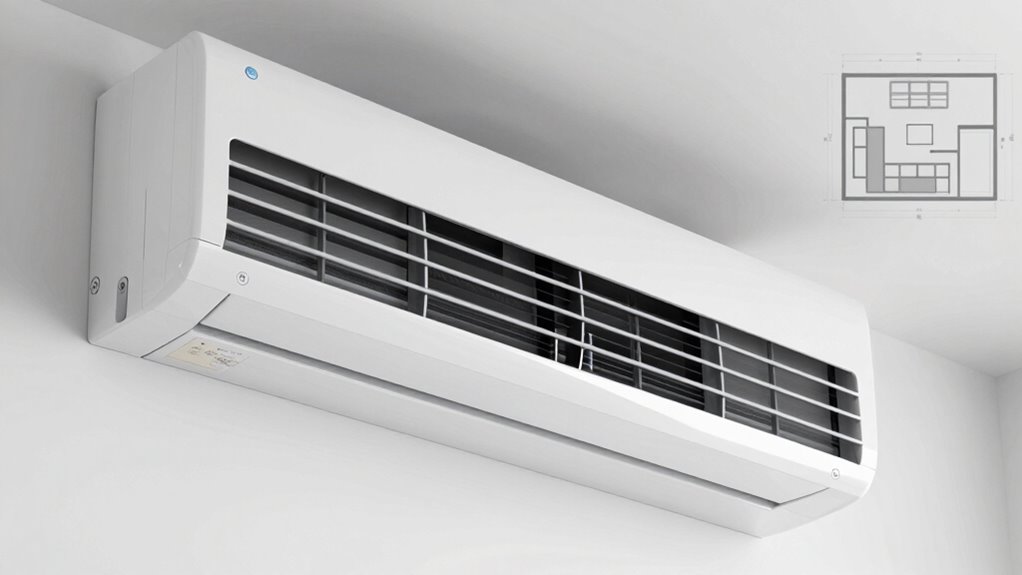
When sizing a mini-split, don’t just rely on square footage. Factors like ceiling height, insulation, window placement, and heat loads from electronics matter too. An oversized unit cycles on and off, wasting energy, while an undersized one struggles to maintain comfort. Proper load calculations lead to efficient cooling and heating. Keep these details in mind, and you’ll understand why bigger isn’t always better. Continuing further will give you even deeper insight.
Key Takeaways
- Accurate mini-split sizing requires considering factors like ceiling height, insulation, window placement, and heat load, not just square footage.
- Oversized or undersized units lead to inefficient operation, higher energy costs, and uneven temperature control.
- Proper load calculations involve assessing sun exposure, occupancy, and electronic devices for precise system sizing.
- Correct installation and placement of indoor/outdoor units are crucial for optimal airflow and system efficiency.
- Relying solely on square footage ignores key variables, risking poor performance and reduced equipment lifespan.
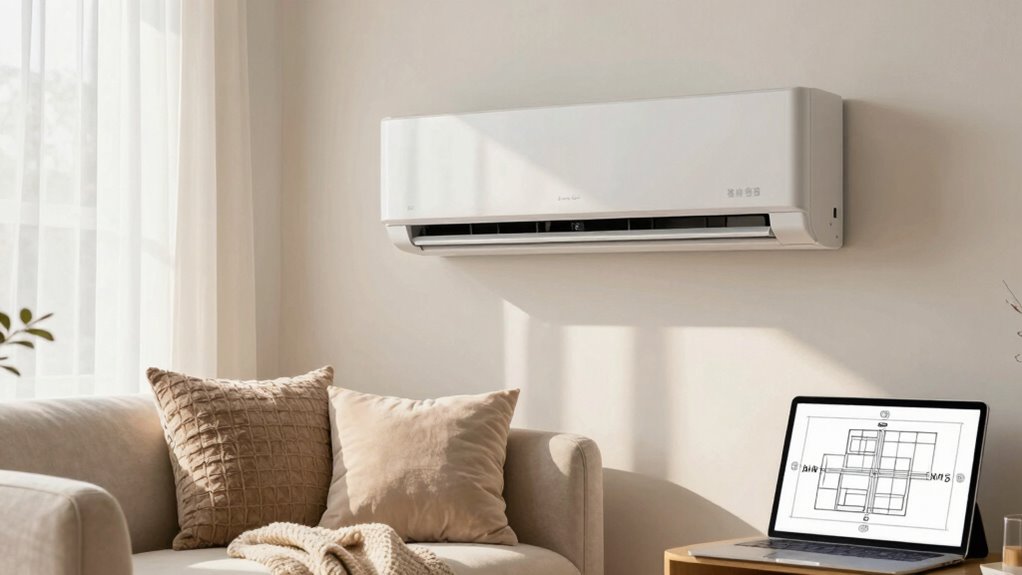
Choosing the right mini-split size is essential to guarantee efficient cooling and heating in your space. When selecting a unit, many people focus solely on the square footage of the room, but this approach can lead to issues like inadequate temperature control or increased energy bills. Instead, you should consider factors that influence energy efficiency and installation considerations to find a unit that truly fits your needs. Proper sizing ensures your mini-split operates at peak efficiency, saving you money and providing consistent comfort. Additionally, understanding the mechanics of French press brewing can help when assessing how heat transfer impacts the system’s performance. Energy efficiency is a key reason to avoid oversizing or undersizing your mini-split. An oversized unit will cycle on and off frequently, which wastes energy and causes uneven temperature distribution. Conversely, a unit that’s too small will run constantly without reaching the desired temperature, increasing energy consumption and wearing out faster. To get the right size, you need to look beyond just the room’s size. Think about ceiling height, insulation quality, window placement, and the number of electronic devices that generate heat. These all impact how much cooling or heating power you’ll need. When you consider these factors, you can choose a mini-split that runs more efficiently, reducing your energy bills and minimizing environmental impact. Installation considerations are equally important when determining the correct size. Proper installation ensures your mini-split performs as intended and maintains energy efficiency. For instance, the placement of the indoor and outdoor units influences airflow and heat exchange. An improperly installed unit can lead to reduced efficiency, higher energy consumption, and even equipment failure. Additionally, ductless mini-splits require a precise refrigerant charge, which depends on the size of the system. An incorrectly sized unit may require extra refrigerant or cause issues with heat transfer, further decreasing efficiency and increasing costs. Another critical aspect is load calculation, which involves evaluating your space’s unique heating and cooling needs. You might think that a simple calculation based on square footage suffices, but professional load calculations consider factors like sun exposure, room orientation, and occupancy levels. These elements affect how much heating or cooling your unit needs to provide. When you pay attention to these installation considerations, you ensure that your mini-split isn’t just the right size on paper but is also capable of providing consistent comfort without excessive energy use.
Frequently Asked Questions
How Does Insulation Quality Affect Mini-Split Sizing?
Insulation quality greatly impacts mini-split sizing because better insulation increases thermal resistance, reducing heat transfer. If your insulation has a high impact, your space stays warmer in winter and cooler in summer, meaning a smaller unit can handle the load. Poor insulation, on the other hand, lowers thermal resistance, requiring a larger or more powerful mini-split to maintain comfort. Always consider insulation when determining the right size for your system.
Can Multiple Indoor Units Be Connected to One Outdoor Unit?
Imagine your home as a bustling city, with different neighborhoods needing tailored comfort. Multiple indoor units can connect to one outdoor unit, like districts sharing a central power plant. To do this effectively, you must consider zoning strategies and outdoor unit compatibility. Properly planned, it guarantees each zone gets the right temperature without overloading the system, providing efficient, personalized comfort across your entire home.
How Does Room Occupancy Impact Mini-Split Capacity Needs?
Occupant behavior and window placement considerably impact your mini-split’s capacity needs. If a room has many occupants or heavy window exposure, it may generate more heat or cold, requiring a higher capacity unit. You should consider these factors rather than just room size. Properly evaluating occupant activity and window location helps ensure your system efficiently maintains comfort without being under- or over-sized.
What Are the Energy Efficiency Considerations for Different Sizes?
Imagine opening better energy efficiency with your mini-split choices. Smaller units often have lower maintenance requirements, making them easier to keep running smoothly, while larger systems might consume more power but offer enhanced zoning strategies for targeted comfort. Careful selection guarantees ideal performance, saving you money and energy. Don’t overlook these factors—your system’s efficiency hinges on understanding size impacts, maintenance needs, and zoning options, so choose wisely and enjoy long-term savings.
How Does Local Climate Influence Mini-Split Selection?
Your local climate greatly influences your mini-split choice. In different climate zones, you’ll need units with specific heating and cooling capacities to handle temperature extremes. Regional humidity levels also matter; high humidity areas require units with dehumidification features, while dry zones need efficient cooling. By considering these factors, you guarantee your mini-split system operates efficiently, providing comfort year-round tailored to your climate zone and regional humidity.
Conclusion
Now that you know sizing isn’t just about square footage, you’ll make smarter choices. For example, if your living room has high ceilings or lots of windows, it might need a larger mini-split than the square footage suggests. Imagine installing a 12,000 BTU unit in a 200 sq ft room with extra insulation—you might not get enough cooling. Take the time to assess your space’s unique features so your mini-split keeps you comfortable all year round.