
Governments are implementing robust adaptation plans to help you prepare for extreme weather. These include building resilient infrastructure like stormwater systems, flood barriers, and reinforced buildings to protect critical services. Emergency plans feature early warning systems, evacuation routes, and public education efforts. Communities are encouraged to develop personal safety measures, such as emergency kits and safe shelters. With ongoing funding and policy support, these strategies aim to minimize damage and speed recovery—discover how advanced preparations can better safeguard your life and property.
Key Takeaways
- Governments invest in resilient infrastructure like flood barriers and reinforced buildings to protect communities during extreme weather events.
- Emergency preparedness plans include early warning systems, evacuation routes, and public education to ensure timely responses.
- Urban resilience strategies focus on upgrading drainage systems and green spaces to reduce flood and heatwave impacts.
- Community involvement encourages personal preparedness, such as emergency kits and identifying safe shelters, to complement government efforts.
- Funding and policies are allocated to support infrastructure improvements, disaster response, and innovative solutions tailored to local vulnerabilities.

Are you ready to face the increasing threat of extreme weather events? With climate change intensifying storms, floods, heatwaves, and other natural disasters, it’s essential to understand how governments are working to boost urban resilience and improve emergency preparedness. These strategies are designed to protect communities like yours, guaranteeing safety and swift recovery when disaster strikes. Knowing what measures are in place helps you stay informed and better prepared for any situation.
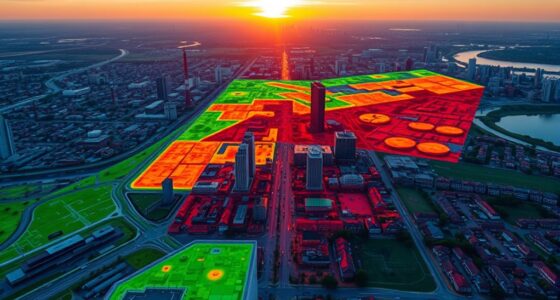
Urban resilience is at the heart of many government adaptation plans. Cities are especially vulnerable to extreme weather because of dense populations, infrastructure challenges, and limited green spaces. Governments are investing in resilient infrastructure—such as stormwater management systems, flood barriers, and reinforced buildings—that can withstand severe conditions. These measures reduce the risk of catastrophic damage and help keep essential services running during emergencies. For you, this means living in communities that are better equipped to handle disasters, with roads, bridges, and utilities designed to bounce back quickly after a storm or flood. Additionally, implementing high-contrast projectors in public communication can enhance emergency alerts, making vital information more visible during crises.
Cities are investing in resilient infrastructure to better withstand extreme weather and protect essential services.
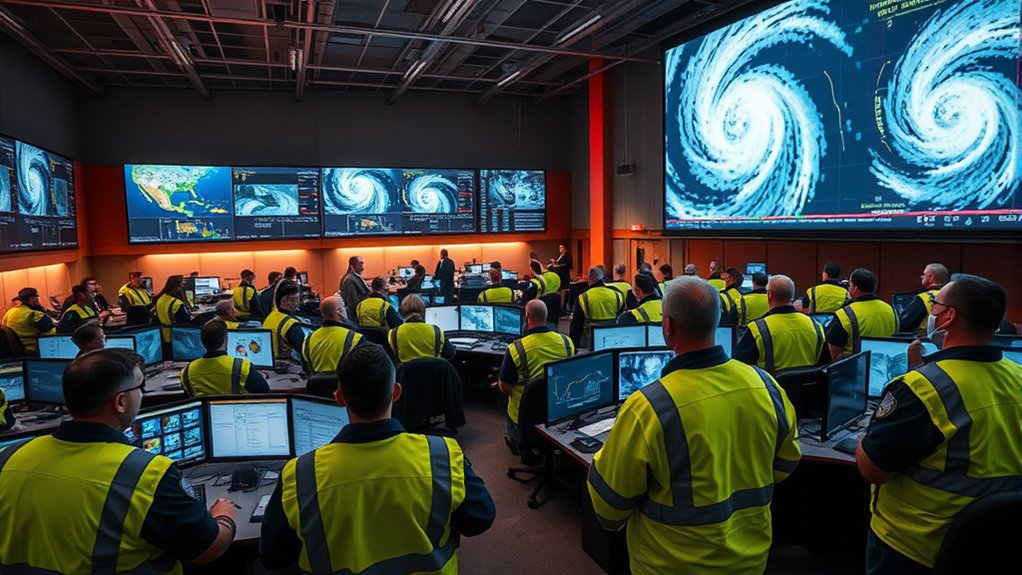
Emergency preparedness is equally essential. Governments are creating detailed plans that include early warning systems, evacuation routes, and public education campaigns. These plans aim to alert residents well in advance of impending threats, giving you time to secure your property, gather supplies, and evacuate if necessary. Local authorities often conduct drills to test these procedures, ensuring everyone knows what to do when disaster strikes. As an individual, staying informed through official channels and participating in these drills can considerably improve your safety and readiness.
Additionally, many government plans emphasize community involvement. They encourage residents to develop personal and neighborhood emergency kits, establish communication networks, and identify safe locations. These proactive steps empower you to take control of your safety, reducing reliance solely on government response. By integrating community efforts with broader urban resilience initiatives, governments are creating a more robust safety net for everyone.
Funding and policy support are also essential components of these adaptation plans. Governments are allocating resources to improve infrastructure, enhance emergency services, and develop innovative solutions tailored to their unique vulnerabilities. This strategic investment not only minimizes the impact of extreme weather but also accelerates recovery, helping communities bounce back faster. For you, this means living in a place where authorities are actively working to mitigate risks and guarantee your safety.

Survival Kit, 262Pcs Survival Gear and Supplies with First Aid Kit Pouch and Crossbody Bag, Emergency Kit with Tent, Camping Axe Hammer, Survival Shovel w/Pick, Bug Out Bag Gifts for Men Women
- Family Emergency Preparedness: Designed for critical first 72 hours
- Includes Comprehensive First Aid: Bright red pouch with medical supplies
- Survival Gear for Emergencies: Food, water, warmth, and light essentials
As an affiliate, we earn on qualifying purchases.
As an affiliate, we earn on qualifying purchases.
Frequently Asked Questions
How Do Governments Prioritize Which Regions to Protect First?
You might wonder how governments decide which regions to protect first. They use resource allocation strategies based on risk evaluation, appraising areas most vulnerable to extreme weather events. Priorities often go to regions with high population densities, critical infrastructure, or those facing imminent threats. By appraising these risks, governments guarantee that limited resources are directed to areas where protection can save the most lives and reduce damage effectively.
What Funding Sources Support Climate Adaptation Initiatives?
You can access climate finance from government budgets, international aid, and private sector investments to support adaptation initiatives. Adaptation grants are a key source, providing targeted funding for projects that enhance resilience. These funds help you implement measures like flood defenses or sustainable infrastructure. By leveraging climate finance and adaptation grants, you can guarantee your community is better prepared for extreme weather events, reducing risks and protecting livelihoods effectively.
How Effective Are Current Emergency Communication Systems During Disasters?
During a hurricane, emergency alerts like sirens and texts are essential, but communication barriers can limit their reach. You might miss critical updates if signals are down or language isn’t accessible. While current systems often deliver timely info, their effectiveness varies depending on infrastructure and inclusivity. Improving these systems involves addressing barriers and ensuring alerts reach everyone, so you stay informed and safe during disasters.
Are There Specific Plans for Protecting Vulnerable Populations?
You’ll find that specific plans focus on protecting vulnerable populations through targeted community outreach and technology integration. Governments often use these strategies to guarantee those at higher risk, like the elderly or disabled, receive timely alerts and assistance. By actively engaging communities and leveraging technology, they aim to reduce harm and improve emergency response effectiveness, making sure everyone stays safe during extreme weather events.
How Do Governments Coordinate With Private Sectors in Disaster Preparedness?
Your government teams up with private sectors through public-private partnerships, which are vital—like the backbone of disaster preparedness. They coordinate by sharing risk assessment strategies, ensuring everyone’s on the same page. You’ll find these collaborations streamline resource allocation and response efforts, making disaster plans more effective. This synergy helps communities bounce back faster, showing that working together is the ultimate way to face extreme weather challenges head-on.
Conclusion
As you consider these government adaptation plans, one thing becomes clear: the next extreme weather event could strike at any moment. Are you truly prepared to respond? The strategies are in place, but the true test lies ahead. Will you be ready when nature’s unpredictable fury arrives? Stay informed, stay vigilant—because the future’s surprises may change everything in an instant. Don’t wait until it’s too late; the time to act is now.