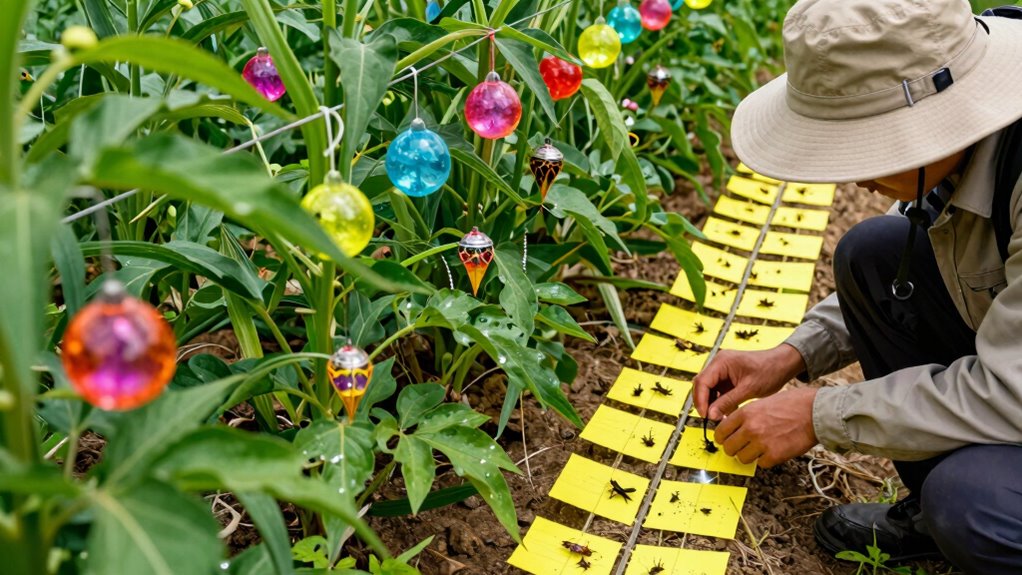
IPM monitoring tech involves using advanced traps, lures, and scouting routines to detect pests early and measure biological control success. You can set up targeted traps and use lures designed for specific pests, while routine scouting helps you observe crop damage and pest presence directly. Combining these methods with digital tools enhances your ability to analyze trends and make informed decisions. Keep exploring to discover how these tools can improve your pest management strategies even further.
Key Takeaways
- Traps and lures provide real-time pest detection and help monitor pest population dynamics effectively.
- Routine scouting, enhanced with electronic sensors and mobile apps, enables precise and timely pest observations.
- Monitoring natural predators and beneficial organisms ensures biological control effectiveness and ecological balance.
- Data collected from traps, lures, and scouting is analyzed to identify pest trends, hotspots, and emergence periods.
- Digital tools and visualization software transform raw monitoring data into actionable insights for integrated pest management.
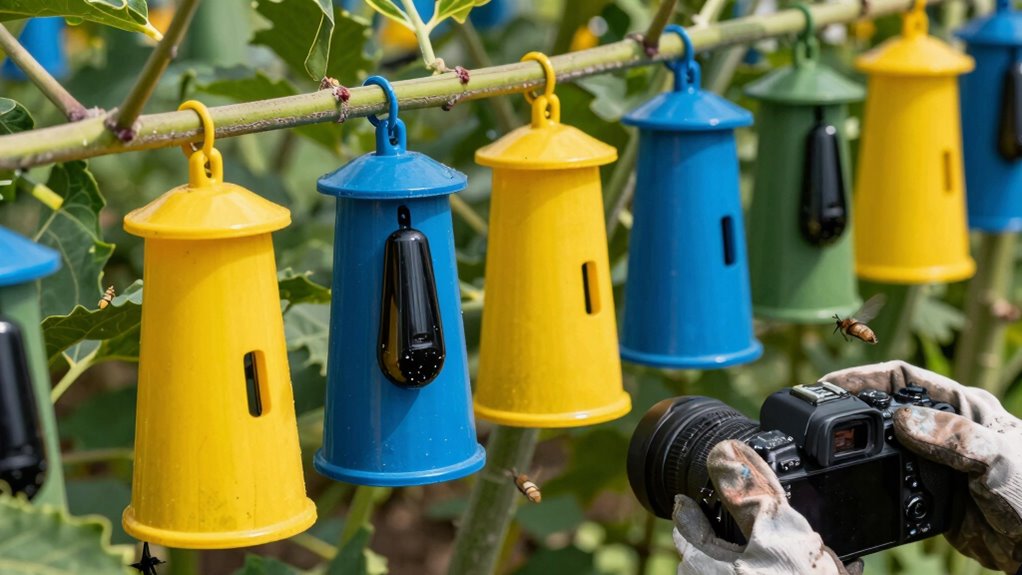
Integrated Pest Management (IPM) monitoring technology is revolutionizing how you detect and control pests more efficiently. By leveraging advanced tools like traps, lures, and scouting routines, you gain real-time insights that help you make targeted decisions, reducing reliance on chemical controls. One key aspect of this technology is biological control, where natural predators or beneficial organisms are used to manage pest populations. Monitoring tools play a fundamental role here, enabling you to track the presence and effectiveness of these biological agents, ensuring they’re doing their job without overextending their reach. This precise observation helps maintain ecological balance and reduces the need for pesticides, making your pest management more sustainable.
Data analysis sits at the heart of modern IPM monitoring. As you collect data from various traps and scouting efforts, you can analyze patterns and trends over time. This allows you to identify pest population peaks, emergence periods, and potential infestation hotspots. With sophisticated data analysis, you don’t just react to pests — you anticipate their movements, enabling proactive intervention. This proactive approach minimizes crop damage and lowers input costs, giving you more control over your pest management strategy. Digital tools and software now make it easier to visualize this data, turning raw numbers into actionable insights.
When you set up biological control methods, monitoring becomes even more critical. For example, if you introduce a predator to control aphids, you need to regularly check trap catches and scout signs to assess whether the predator is establishing well and reducing pest numbers. This ongoing surveillance, combined with data analysis, helps you determine if adjustments are necessary, such as releasing more predators or shifting to alternative methods. Additionally, traps and lures are designed to attract specific pests, making their monitoring highly targeted. By regularly inspecting these devices, you gather valuable information about pest activity, which feeds into your overall IPM plan.
Furthermore, scouting routines are indispensable because they provide direct observations of pest presence and damage levels. These routines can be enhanced with technological tools like electronic sensors or mobile apps that record and transmit data instantly. This integration of scouting and data analysis ensures you’re not just relying on visual assessments but are also benefiting from precise, quantifiable information. Advanced monitoring tools and technologies are transforming traditional scouting into a more efficient, data-driven process. Altogether, these advancements enable you to fine-tune your pest management strategies, optimize biological control efforts, and implement timely interventions, making your IPM approach smarter, more effective, and environmentally friendly.

Dual-Sided Yellow Sticky Traps for Insect Monitoring – 24 Pack Plant Sticky Cards for Fungus Gnats, Whiteflies & Aphids, Non-Toxic IPM Traps for Indoor & Outdoor Plants
Dual-Sided Sticky Traps for Insect Monitoring: These yellow sticky traps feature adhesive on both sides and are designed…
As an affiliate, we earn on qualifying purchases.
As an affiliate, we earn on qualifying purchases.
Frequently Asked Questions
How Often Should Traps Be Checked During Peak Pest Activity?
During peak pest activity, you should check traps daily to guarantee effective trap maintenance and accurate pest identification. Frequent checks help you catch early signs of infestations, allowing quick action. Keep traps clean and replace lures as needed. Regular monitoring minimizes pest populations and prevents outbreaks. By staying vigilant and maintaining your traps properly, you optimize your pest management efforts and protect your crops or property efficiently.
What Are the Best Locations for Placing Monitoring Traps?
You should place traps where pest habitat is likely, such as along walls, near entry points, or close to crops and plants. Focus on high-traffic areas and spots with previous pest activity. Proper trap placement involves positioning traps at the right height—usually at pest level—and spacing them appropriately to maximize detection. Regularly check these locations to monitor pest activity and adjust placement if needed to improve effectiveness.
How Do Lure Types Vary for Different Pest Species?
Think of lure types as tailored keys for pest species. You customize lure composition with pest-specific attractants, which vary based on the pest’s sensory preferences. For example, pheromones attract moths, while food-based lures entice beetles. By understanding these differences, you can select the right lure to effectively target each pest, increasing your chances of detection and control. Tailoring your approach makes your monitoring efforts more precise and successful.
Can Traps Be Reused After Pest Removal?
Yes, traps can often be reused after pest removal if you perform proper trap maintenance. First, follow pest removal procedures by cleaning the trap thoroughly to eliminate residual pests and debris. Check for any damage or residue that may affect its effectiveness. If the trap remains intact and clean, you can reset it with fresh lures or attractants, ensuring it continues to monitor pest activity effectively.
What Signs Indicate a Need for Increased Scouting Frequency?
You should increase scouting frequency if you notice changes in pest behavior, such as more frequent or larger infestations, or if traps become overwhelmed or dirty. Signs like increased pest activity or trap clutter suggest you need to check traps and perform maintenance more often. Staying vigilant helps catch issues early, ensuring your pest management remains effective and prevents larger infestations from developing.
electronic pest scouting sensors
As an affiliate, we earn on qualifying purchases.
As an affiliate, we earn on qualifying purchases.
Conclusion
By mastering trap placement, using effective lures, and maintaining consistent scouting routines, you’ll naturally stay ahead of pest issues. It’s funny how a simple routine can suddenly reveal unexpected pests, saving you time and trouble. When you pay close attention and adapt your methods, you might just find that pest problems resolve themselves before they even escalate. In the end, good monitoring becomes your best tool, turning coincidence into your secret weapon for successful IPM.
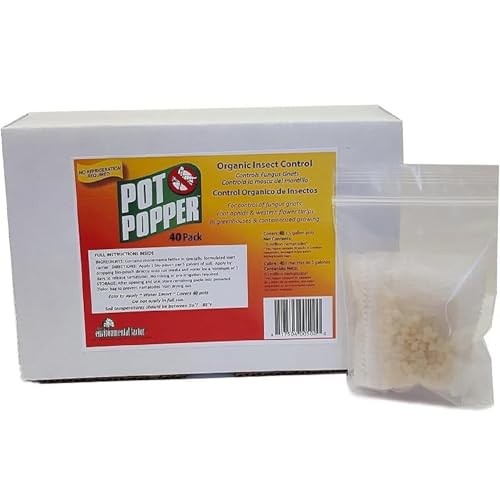
The Environmental Factor Pot Popper Organic Insect Control. Biological Pest Control with Slow-Release Nematodes for Fungus Gnats, Root Aphids & Western Flower Thrips in Containers – 40 Pouches
ORGANIC & EFFECTIVE: Utilizes naturally occurring Steinernema feltiae nematodes that target fungus gnat larvae, root aphids, and the…
As an affiliate, we earn on qualifying purchases.
As an affiliate, we earn on qualifying purchases.
pest detection mobile apps
As an affiliate, we earn on qualifying purchases.
As an affiliate, we earn on qualifying purchases.