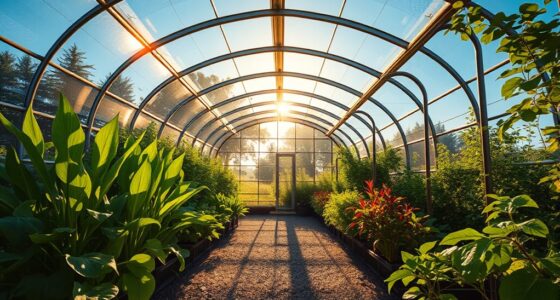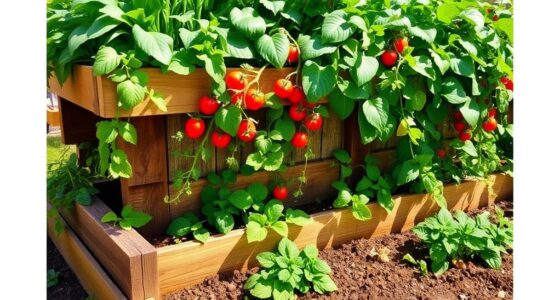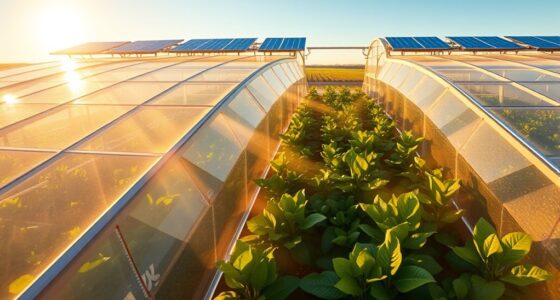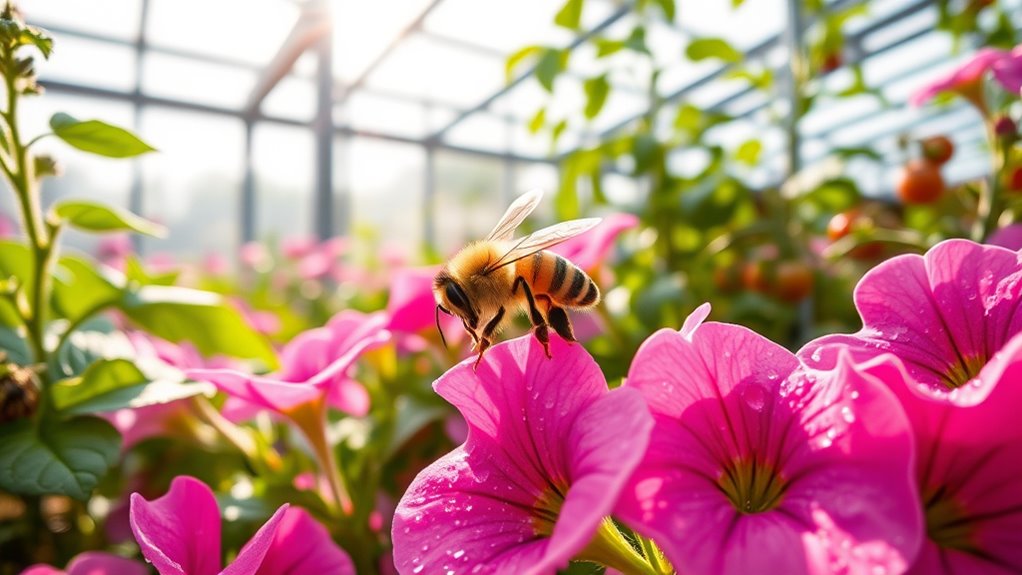

In greenhouses, pollination goes beyond just relying on bees. You can use mechanical tools like vibrators or robotic arms to transfer pollen effectively. Airflow systems mimic natural wind to spread pollen evenly across flowers. Some setups introduce biological pollinators like managed bumblebees for natural fertilization. Additionally, sensors help monitor flower receptivity, ensuring ideal conditions. If you keep exploring, you’ll discover how these tech-forward methods combine for reliable, high-quality crop production year-round.
Key Takeaways
- Mechanical tools and robotic systems mimic natural pollination, ensuring consistent fruit set in greenhouses.
- Airflow-based methods create gentle breezes to transfer pollen effectively among flowers.
- Managed biological agents like bumblebees can supplement or replace natural insect pollination.
- Sensor technology monitors flower receptivity and pollen movement for precise pollination control.
- Combining multiple methods optimizes pollination efficiency and crop quality in controlled environments.
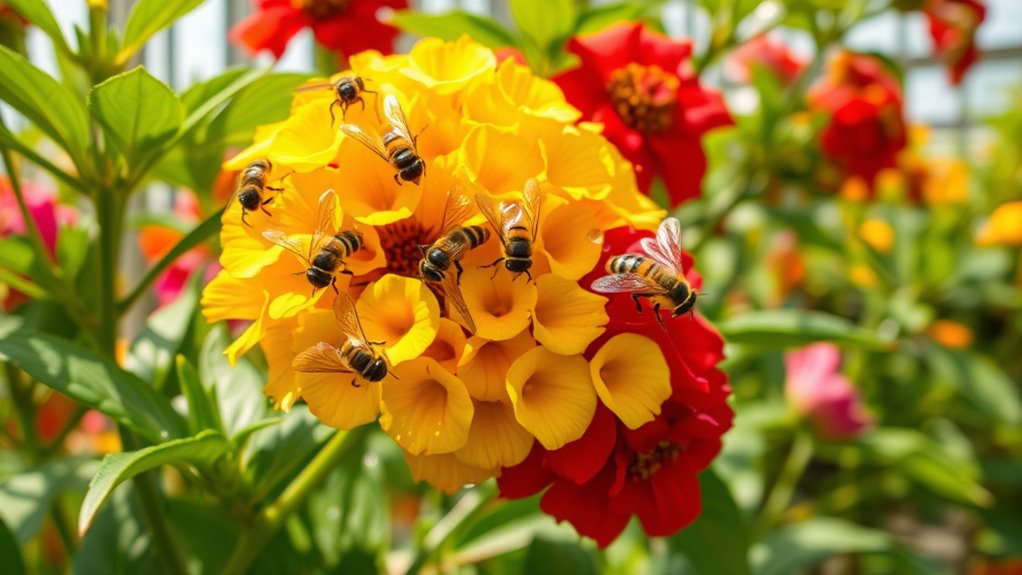
Have you ever wondered how plants in greenhouses produce fruit and seeds without natural pollinators? The answer lies in innovative pollination technology that’s transforming greenhouse ecosystems. Since pollinators like bees and butterflies often can’t access enclosed environments, growers have turned to alternative methods to ensure successful pollination. These techniques are vital for maintaining the productivity and quality of greenhouse crops, especially as demand for fresh produce increases year-round.
Pollination technology in greenhouses involves a variety of approaches designed to mimic natural processes. Mechanical pollinators, such as vibration tools or robotic arms, are used to shake or transfer pollen from flower to flower. These devices are often programmed to simulate the natural movements of bees or wind, ensuring even distribution of pollen. In some cases, growers employ airflow-based systems that generate gentle breezes to carry pollen across flowers, replicating the role of wind in open ecosystems. These methods are carefully calibrated to maximize pollination efficiency, reducing the reliance on manual labor and increasing consistency.
Mechanical and airflow systems mimic natural pollination, ensuring consistent, efficient crop fertilization in greenhouses.
In addition to mechanical solutions, some greenhouses incorporate biological pollinators like bumblebees or other managed insects. These pollinators are introduced into the greenhouse ecosystem under strict control, providing a natural but contained means of pollination. This approach can be especially effective for crops that depend heavily on insect activity. However, it requires careful management to prevent the spread of diseases and to guarantee that the introduced insects thrive in the artificial environment.
The development of pollination technology has made it possible to sustain high crop yields regardless of external environmental factors. For example, in high-tech greenhouses, sensors monitor flower receptivity and pollen distribution, allowing for precise interventions. This integration of technology into greenhouse ecosystems ensures that pollination occurs at ideal times and conditions, resulting in better fruit set and seed production. It also helps prevent issues like poor fruit quality or uneven ripening that can occur when pollination is inadequate.
Ultimately, the evolution of pollination technology in greenhouses exemplifies how science and innovation can adapt natural processes to controlled environments. By combining mechanical devices, biological agents, and smart monitoring systems, you can achieve efficient, dependable pollination that supports sustainable crop production. This guarantees that your greenhouse crops reach their full potential, providing fresh, high-quality produce all year round without relying solely on natural pollinators. Incorporating high-tech monitoring further optimizes the process, ensuring maximum efficiency and crop health.
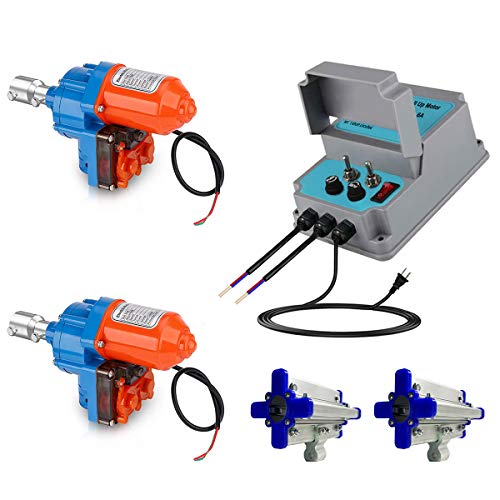
UYGALAXY Greenhouse Film Roll Up Motors with Limit Switch and Creeper (2 Packs) + Transformer Controller Joint Box (AC110V to DC24V) for Chicken Coop Greenhouse Ventilation System, Automatic Venting
【 Roll up motor + Converter controller】All-In-One kit with wall plug. Automatic agriculture with switches, free your hands…
As an affiliate, we earn on qualifying purchases.
As an affiliate, we earn on qualifying purchases.
Frequently Asked Questions
Can Plants Self-Pollinate Without Bees or Other Pollinators?
Yes, plants can self-pollinate without bees or other pollinators. Self-pollination benefits include ensuring seed production even when pollinators are scarce, offering pollinator independence. You’ll find many plants, like tomatoes and wheat, naturally self-fertile, making them reliable for greenhouse cultivation. This process simplifies growing conditions and guarantees harvests, especially when attracting pollinators isn’t feasible. Embracing self-pollination can enhance your productivity and reduce reliance on external pollinating agents.
How Do Temperature and Humidity Affect Greenhouse Pollination?
Like a delicate dance, temperature regulation and humidity control set the rhythm for successful greenhouse pollination. When you maintain ideal temperatures, you guarantee pollen stays viable, while proper humidity prevents pollen clumping or desiccation. Too hot or cold, and the symphony falters; too dry or humid, and pollination efficiency drops. By mastering these elements, you orchestrate a thriving environment where plants can flourish, even without bees.
Are There Risks of Pests Spreading Through Pollination Methods?
Yes, there’s a risk of pests spreading through pollination methods, especially with cross-species transmission. When you use natural pollinators like bees or other insects, they might carry pests or diseases from one plant to another. Additionally, pesticides can impact pollinator health and increase pest resistance, making infestations worse. To minimize risks, monitor for pests regularly and choose pest-friendly, pollinator-safe practices.
What Are the Costs Associated With Different Pollination Techniques?
You’re in the hot seat when weighing pollination methods, and the costs can be quite the puzzle. Manual pollination has high labor expenses, but offers precise control. Using bees or other biological agents may reduce labor costs but incur expenses for equipment and maintenance. A cost comparison shows that each technique balances initial investments and ongoing expenses differently, so you need to contemplate your budget and crop needs carefully to avoid throwing money down the drain.
How Does Artificial Pollination Impact Plant Genetic Diversity?
Artificial pollination can reduce genetic variation if you’re not careful, as it often involves selecting specific plants or traits for breeding. This targeted approach can limit the diversity within your crops, making them more vulnerable to pests and diseases. To maintain healthy genetic variation, you should incorporate diverse breeding strategies, combining natural pollination methods with controlled techniques to promote resilient, adaptable plant populations.

RUNWUSHENG Plant Pollination Tool – USB Rechargeable Vibrating Pollinator for Greenhouse Crops Like Tomatoes and Strawberries
【Gentle Vibration Technology】 Provides consistent vibrations to assist pollen transfer in flowering plants. Designed to support the pollination…
As an affiliate, we earn on qualifying purchases.
As an affiliate, we earn on qualifying purchases.
Conclusion
While some might think natural pollinators aren’t necessary indoors, relying solely on manual methods can be inefficient and labor-intensive. Embracing bees and other pollinators in greenhouses boosts crop yields and enhances plant health naturally. You might worry about safety or maintaining these insects, but with proper management, they’re safe and sustainable. Incorporating pollinators isn’t just an eco-friendly choice; it’s a smart way to guarantee your greenhouse thrives with minimal effort.

AMERLIFE 8x12x7FT Polycarbonate Greenhouse, Walk in Greenhouse with Quick-Connect System, Green House with 4 Vent Windows and Swing Lockable Door, Greenhouses for Outdoors, Sunroom Black
Quick-connect Design: This greenhouse kit features a simplified assembly process with innovative quick-connect joints. The user-friendly design allows…
As an affiliate, we earn on qualifying purchases.
As an affiliate, we earn on qualifying purchases.
managed bumblebees for greenhouse pollination
As an affiliate, we earn on qualifying purchases.
As an affiliate, we earn on qualifying purchases.