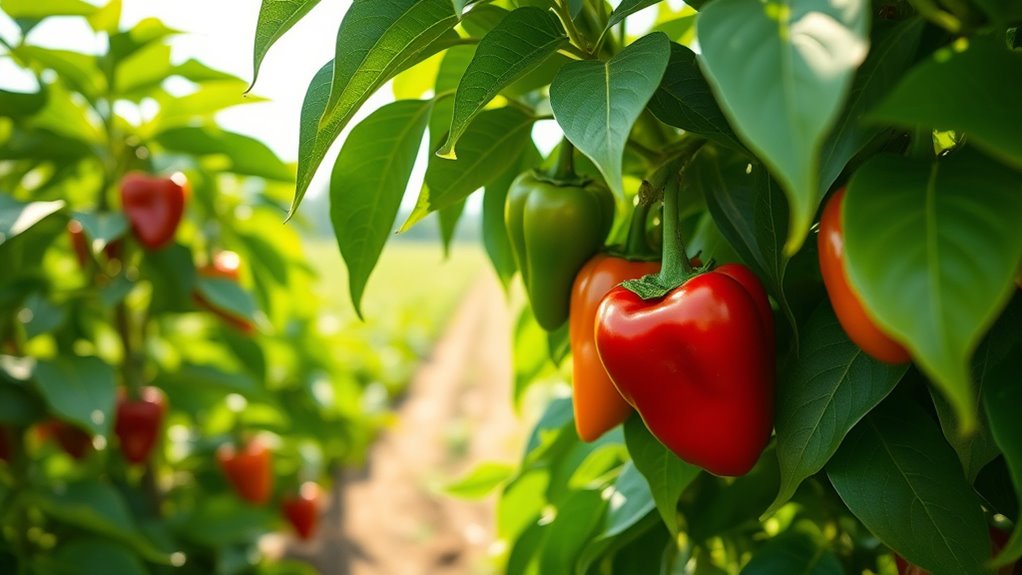

To grow healthy pepper crops, you should guarantee they get full sun for at least six hours daily and thrive in temperatures between 70°F and 85°F, with cooler nights. Use well-drained, loamy soil rich in organic matter, and maintain proper soil pH and nutrients with compost and balanced fertilizers. Keep the soil consistently moist and mulch around plants to conserve moisture. For more detailed tips, continue exploring expert recommendations on climate and nutritional needs.
Key Takeaways
- Peppers thrive in full sun with temperatures between 70°F and 85°F; avoid extremes below 55°F or above 90°F.
- Well-drained, loamy soil rich in organic matter supports healthy pepper growth.
- Maintain consistent soil moisture and mulch to conserve water and prevent weeds.
- Use balanced, slow-release fertilizers to meet nutritional needs during different growth stages.
- Ensure good air circulation and proper site selection to prevent diseases and promote steady development.
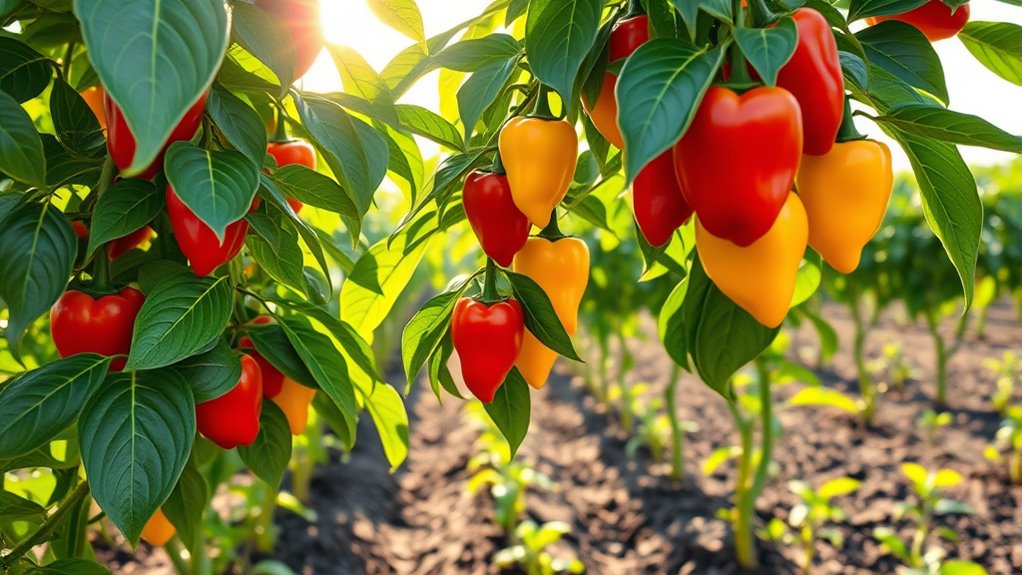
Have you ever wondered what it takes to grow healthy, flavorful peppers? It all begins with understanding the essential climate and nutrition needs of your plants. Peppers thrive in warm temperatures, ideally between 70°F and 85°F during the day, with slightly cooler nights. Consistent warmth encourages steady growth and fruit development. If the weather dips below 55°F or rises above 90°F, your plants could struggle, leading to poor fruiting or blossom drop. To optimize growth, choose a planting site with full sun exposure, ensuring your peppers receive at least six hours of direct sunlight daily. Good air circulation is also critical to prevent fungal diseases, especially in humid climates. Proper soil drainage is essential; soggy soils foster root rot and other issues. Aim for well-drained, loamy soil rich in organic matter, and consider raised beds if your land tends to retain water. Maintaining optimal soil pH and nutrient balance is fundamental for healthy pepper development. Nutrition plays a key role in producing vibrant, flavorful peppers. Your plants need a balanced supply of macronutrients: nitrogen, phosphorus, and potassium. A nitrogen-rich fertilizer promotes lush foliage, but overdoing it can lead to excessive leafy growth at the expense of fruit. Phosphorus encourages healthy root development and flowering, while potassium supports fruit quality and overall plant vigor. Incorporate compost or organic matter into your soil before planting to provide a steady nutrient supply. During the growing season, use a balanced, slow-release fertilizer, adjusting based on your plants’ growth stage. Regular watering is essential, but avoid overwatering which can lead to root diseases. Keep the soil consistently moist but not waterlogged, and mulch around plants to conserve moisture and suppress weeds. Managing pests effectively is key to a successful pepper crop. Implement pest control strategies such as crop rotation, removing weeds that harbor pests, and using natural predators like ladybugs for aphid control. Keep a close eye on your plants, and if you notice pests, treat early with organic options such as neem oil or insecticidal soap. Proper harvesting techniques also play a role in maintaining plant health and ensuring the best flavor. Harvest peppers when they reach their full color and size—usually firm and glossy. Use sharp scissors or pruning shears to gently pick the peppers, avoiding damage to the plant. Regular harvesting encourages the plant to produce more fruit and prevents overripe peppers from attracting pests or rotting. With diligent attention to climate, nutrition, pest control strategies, and proper harvesting techniques, you’ll be well on your way to growing healthy, delicious peppers.

Dura-Bench Original Greenhouse Bench Top, 2t x 4ft, Non-Overlap
Durable and Smooth: These panels are made from UV protected, high-impact, abrasion-resistant polypropylene, ensuring long-lasting durability and a...
As an affiliate, we earn on qualifying purchases.
Frequently Asked Questions
What Are the Best Pest Control Methods for Pepper Crops?
You should use integrated pest management to control pests in your pepper crops effectively. Combine biological control methods, like releasing beneficial insects such as ladybugs or parasitic wasps, with cultural practices like crop rotation and proper sanitation. Regular monitoring helps you catch infestations early. Avoid relying solely on chemicals, as integrated pest management promotes eco-friendly solutions, keeps pests in check, and protects your crop’s health and productivity.
How Does Soil Ph Affect Pepper Plant Growth?
Soil pH considerably impacts your pepper plant growth by affecting nutrient availability. If the soil is too acidic or alkaline, your plants may struggle to absorb essential nutrients. You should monitor soil acidity regularly and perform pH adjustment as needed. Adjusting pH with lime or sulfur can create ideal conditions, ensuring your peppers grow healthy and yield well. Proper pH management helps prevent deficiencies and promotes stronger, more productive plants.
What Are Common Diseases That Affect Pepper Crops?
You should watch out for common diseases like bacterial spot, powdery mildew, and verticillium wilt. To prevent these, practice disease prevention strategies such as crop rotation and proper sanitation. Keep your pepper plants healthy by avoiding overwatering and ensuring good airflow. Regularly inspect your crops for early signs of disease, and remove infected plants promptly to reduce the risk of spreading. This proactive approach helps keep your peppers healthy and productive.
How Can I Improve Pepper Yield in Poor Soils?
Did you know that improving poor soils can boost pepper yields by up to 50%? To achieve this, you should use soil amendment strategies like adding organic matter or compost to enhance fertility. Additionally, practicing crop rotation helps prevent soil depletion and reduces disease risks. Combining these approaches revitalizes your soil, promotes healthy plant growth, and markedly increases your pepper crop productivity.
What Are Effective Organic Fertilizers for Peppers?
You can improve your pepper plants by using effective organic fertilizers like rich compost, which provides essential nutrients and improves soil health. Additionally, consider foliar feeding with liquid organic fertilizers to boost nutrient absorption directly through the leaves. These methods help enhance growth, increase yield, and promote healthy peppers, especially in poor soils. Regular application of compost and foliar feeds guarantees your peppers receive the nutrition they require to thrive.

Yaheetech Potting Bench Table Horticulture Germination Table & Outdoor Garden Work Bench Platform w/Display Rack/Storage Shelf/Hanger/Thoughtful Sink Brown
Natural Fir, Plant with Confidence: Made from untreated fir wood, this raised garden potting bench is strong and...
As an affiliate, we earn on qualifying purchases.
Conclusion
So, next time you savor that fiery pepper, remember it’s been sweating under the sun and craving nutrients just like us. Ignoring climate and nutrition needs isn’t just bad farming; it’s a spicy recipe for disappointment. If we keep neglecting these essentials, we might end up with peppers as bland as your excuses. Perhaps, it’s time to give these fiery gems the love they deserve—before they decide to give up their heat for good.

6×10 FT Greenhouse, Large Walk in Greenhouses for Outdoors and Garden Planting, Polycarbonate Greenhouse with Enhanced Aluminum Frame, Green Houses with Quick Setup Structure and Roof Vent, Black
【Effortless Assembly】Create your beautiful gardening space quickly with our greenhouse kit. The package comes with a clear instruction...
As an affiliate, we earn on qualifying purchases.

Greenhouse Heater 1500W with APP Remote Control, Greenhouse Heater With Thermostat, Portable Outdoor Heater for Plants Vegetables Flowers,Smart Electric Safe Heater for Green house,Grow Tents,Garage
Remote Control, Convenient and Smart: Our greenhouse heater can be connected to your smartphone by downloading the "Smart...
As an affiliate, we earn on qualifying purchases.