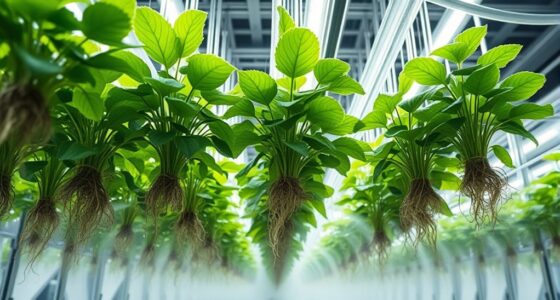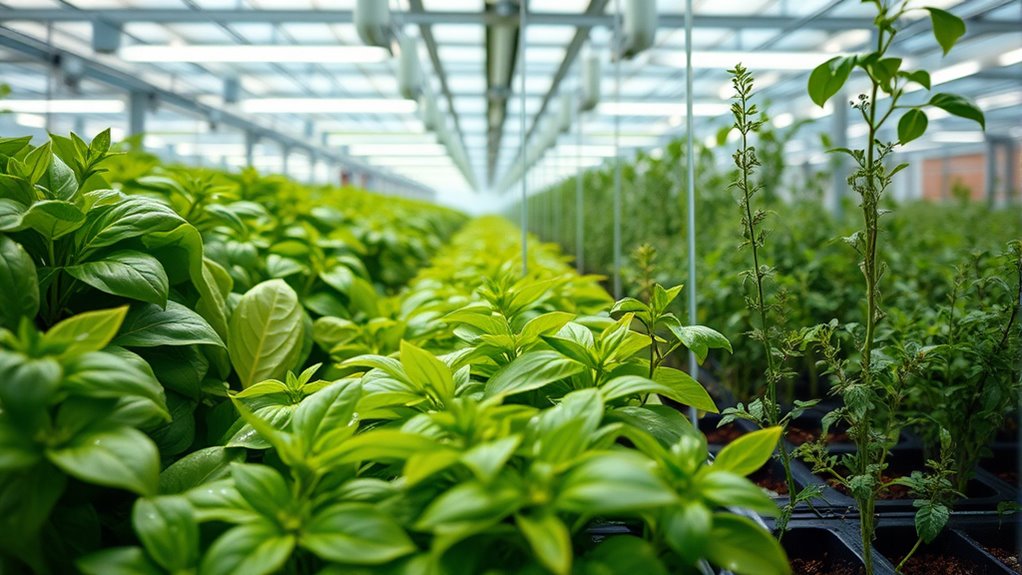

Growing basil and herbs in greenhouses allows you to produce fresh, high-quality herbs year-round by controlling environment factors like temperature, humidity, and light. Using hydroponic systems, you can optimize water and nutrients for faster growth and higher yields. Implementing integrated pest management keeps pests and diseases at bay without relying heavily on chemicals. Maintaining a clean and healthy space guarantees your herbs stay vibrant and safe. Explore further to discover how environmental controls enhance your greenhouse herb success.
Key Takeaways
- Greenhouses enable year-round basil and herb cultivation through controlled environmental conditions.
- Hydroponic systems in greenhouses boost growth speed, yield, and quality of herbs like basil.
- Integrated pest management and environmental controls prevent pests and diseases naturally.
- Maintaining optimal humidity, temperature, and airflow minimizes pest risks and promotes healthy herb development.
- Clean, well-managed greenhouses support sustainable, chemical-free herb production with higher crop yields.
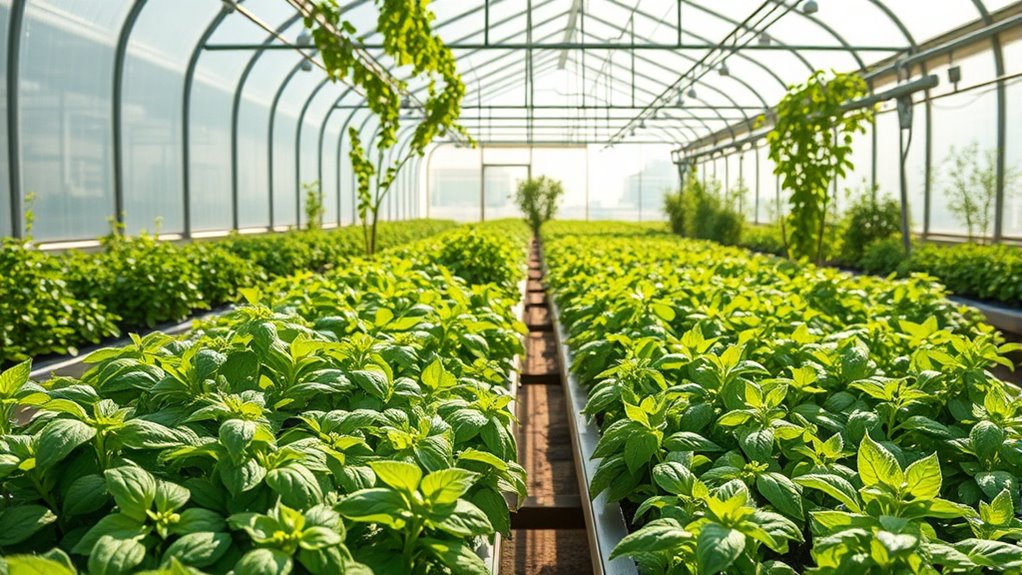
Have you ever wondered how herbs are grown year-round regardless of outdoor weather conditions? When you grow herbs like basil in a greenhouse, you gain control over the environment, allowing for continuous production no matter the season. One of the most effective ways to do this is through hydroponic systems, which involve growing plants in nutrient-rich water instead of soil. These systems provide precise control over water, nutrients, and oxygen levels, resulting in faster growth and higher yields. With hydroponics, you don’t have to worry about soil-borne diseases or pests that can compromise plant health. This method also reduces the need for chemical pesticides, making your basil and herbs cleaner and safer for consumption.
In a greenhouse setting, pest management becomes a critical aspect of maintaining healthy herb plants. While growing herbs indoors minimizes exposure to many pests, it doesn’t eliminate the need for vigilant pest control. You must identify and manage pests early to prevent infestations that could damage your crops. Integrated pest management (IPM) strategies work best here. This approach combines biological controls, such as introducing beneficial insects that prey on pests, with cultural practices like maintaining proper humidity and airflow. Regular monitoring helps you catch pest issues before they escalate, reducing the necessity for chemical interventions. If you do need to apply pesticides, opt for organic options that won’t harm your herbs or disrupt your pest management balance.
Controlling the greenhouse environment further supports pest management efforts. Temperature, humidity, and light levels can be adjusted to create conditions less favorable for pests while promoting healthy herb growth. For example, basil thrives in warm, well-lit environments; keeping these conditions steady discourages common pests like aphids and whiteflies. Additionally, maintaining cleanliness inside the greenhouse minimizes hiding spots for pests and prevents disease spread. Proper ventilation helps reduce humidity, which in turn lowers the risk of fungal infections and pest proliferation. Maintaining a clean environment is essential for overall plant health and pest prevention.

GENORTH LAPOND A-Type Hydroponics Growing System Kit for Vegetables,Fruits and Herbs,with 72 Plant Sites and Food-Grade PVC-U Pipes,Suitable for Indoor and Outdoor,All
【All New Design】The A-Type design provides better plant lighting than other similar products, free from upper layer obstruction.Multi-surface...
As an affiliate, we earn on qualifying purchases.
Frequently Asked Questions
What Are the Best Varieties of Basil for Greenhouse Cultivation?
You should choose basil varieties like Genovese, Thai, and lemon basil for greenhouse cultivation because they’re popular and versatile. Look for pest-resistant varieties to minimize issues and consider herb companion planting to protect your basil naturally. These choices help guarantee healthy growth, better yields, and easier maintenance, making your greenhouse more productive and sustainable. Incorporating these varieties and strategies maximizes your success with basil cultivation.
How Do I Control Pests in a Greenhouse Herb Production System?
Pest control in your greenhouse is as critical as breathing! You should implement biological pest control by introducing natural predators like ladybugs or predatory mites. Combine this with integrated pest management (IPM) practices—regular monitoring, maintaining cleanliness, and removing infested plants. These strategies work together to keep pests at bay naturally, ensuring your herbs stay healthy and vibrant without resorting to harmful chemicals.
What Is the Optimal Temperature Range for Basil Growth Indoors?
You should keep the temperature between 70-85°F (21-29°C) for ideal basil growth indoors. Make certain your lighting conditions are bright, with at least 12-16 hours of light daily, and maintain humidity levels around 50-60%. These factors work together to promote healthy, vigorous basil plants. Monitor temperature regularly, adjust lighting as needed, and control humidity to prevent diseases and support lush growth.
How Often Should Greenhouse Herbs Be Fertilized?
You should fertilize your greenhouse herbs every 2 to 4 weeks, depending on their growth stage. An interesting fact is that proper fertilization can boost herb yields by up to 30%. During this fertilization schedule, make certain you replenish soil nutrients to support healthy growth. Over-fertilizing can harm your plants, so observe their needs closely and adjust accordingly for vibrant, flavorful herbs.
Can Herbs Grown in Greenhouses Be Sold Commercially Year-Round?
Yes, you can sell herbs grown in greenhouses year-round. To maximize shelf life, maintain ideal greenhouse conditions and use effective lighting techniques like supplemental LED lighting. This ensures your herbs stay fresh longer and meet quality standards. Consistent care, proper watering, and temperature control also help produce healthy, market-ready herbs throughout the year, giving you a steady supply for your customers.

Spider Farmer DWC Hydroponics Grow System with 7-Gallon Deep Water Culture, New Triangular Cover Design, Recirculating Drip Garden System with Top Drip Kit, 11W Air Pump, 4 Buckets
𝐍𝐞𝐰 𝐓𝐫𝐢𝐚𝐧𝐠𝐥𝐞 𝐂𝐨𝐯𝐞𝐫 𝐃𝐞𝐬𝐢𝐠𝐧: Uncover to easily add water and measure liquid parameters, enhancing usability. Features a 7-gallon...
As an affiliate, we earn on qualifying purchases.
Conclusion
By growing basil and herbs in greenhouses, you harness the power of modern technology—think of it as having your own greenhouse-powered flux capacitor! With controlled environments, you can enjoy fresh herbs year-round, no matter what the calendar says. Embrace this method, and you’ll be the master of your herb kingdom, just like the legendary alchemists of old. So, gear up and start your green thumb adventure today—your culinary future will thank you!
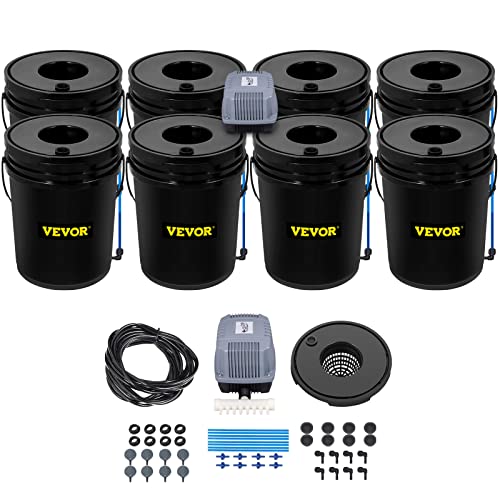
VEVOR DWC Hydroponic System, 5 Gallon 8 Buckets, Deep Water Culture Growing Bucket, Hydroponics Grow Kit with Pump, Air Stone and Water Level Device, for Indoor/Outdoor Leafy Vegetables
8PCS PP Buckets: Our DWC hydroponic system is equipped with 8 buckets made of high-quality PP material for...
As an affiliate, we earn on qualifying purchases.

Hydroponics Growing System Kit with Wheels, 108 Plant Sites Gardening Aquaponics Tower, 4-Tier Food-Grade PVC-U Pipes Water Pump Timer for Leafy Vegetables, Indoor, Outdoor (34"x62"x15" in 108 Holes)
Space-Saving Vertical Structure: Designed with a 4-level upright layout, this planter offers 108 growing sites while using only...
As an affiliate, we earn on qualifying purchases.