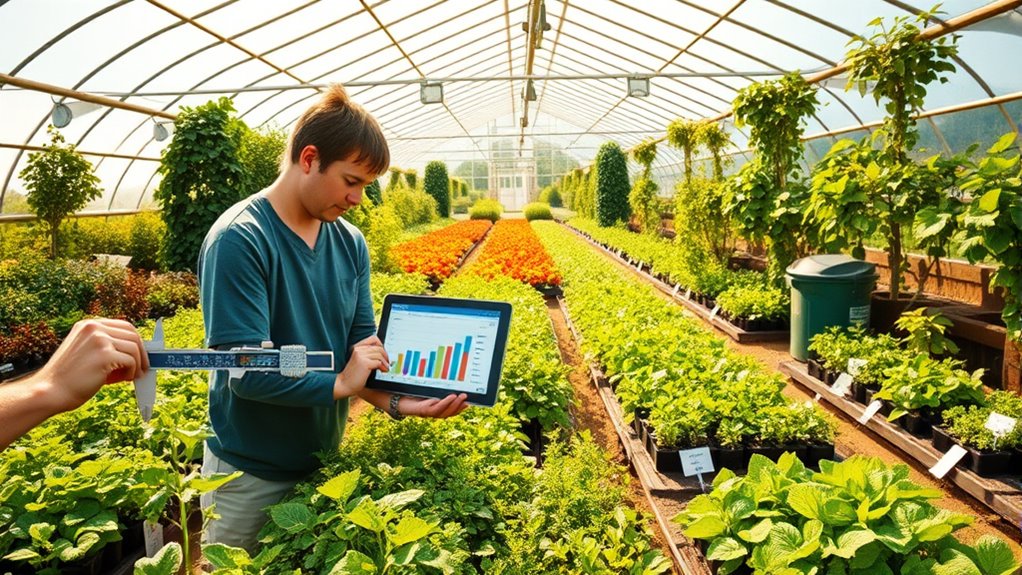

To measure the impact of your community greenhouse, focus on sustainability metrics like compost output, water savings, and energy use, using AI tools for detailed analysis. Track community engagement through volunteer numbers, workshop participation, and feedback to gauge connection levels. Additionally, assess partnerships and educational outcomes, such as student involvement and collaborations. Monitoring these indicators over time helps identify strengths and areas for improvement, enabling you to maximize both environmental and social benefits—continue exploring for more insights.
Key Takeaways
- Track eco-friendly practices such as compost output, water savings, and energy efficiency improvements.
- Measure community engagement through volunteer numbers, workshop attendance, and participant diversity.
- Assess educational outcomes by monitoring student involvement and awareness of sustainability topics.
- Evaluate partnerships based on collaborations, joint projects, and resource sharing with local organizations.
- Analyze overall impact by combining environmental benefits with community participation and feedback.

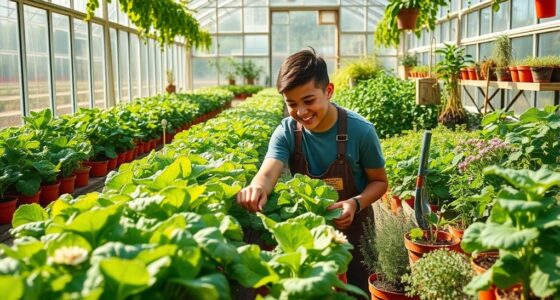
Community greenhouses are essential spaces that foster local food production, education, and social connection. When you’re evaluating their impact, it’s important to look at how well they promote sustainable practices. These greenhouses serve as living laboratories where you can measure the adoption of eco-friendly methods like composting, water conservation, integrated pest management, and energy efficiency. Tracking these practices helps you determine whether the greenhouse is truly reducing its environmental footprint. For example, you might measure the volume of compost generated on-site or monitor water usage before and after implementing drip irrigation systems. By quantifying these sustainable practices, you gain a clear picture of how your community greenhouse is contributing to a healthier environment. Incorporating AI-driven data analysis can further enhance your ability to interpret these metrics accurately.
Community greenhouses promote sustainability through eco-friendly practices like composting and water conservation, reducing environmental impact.
Community engagement is equally crucial in gauging impact. When you involve local residents, schools, and organizations, you create a sense of ownership and shared responsibility. To gauge community involvement, consider metrics like the number of volunteers, workshop participants, or community events held. You can also track the diversity of participants, which indicates how well your greenhouse reaches different demographic groups. Engagement metrics aren’t just about participation numbers; they also reveal the quality of involvement. For instance, regular feedback, testimonials, or surveys can show how meaningful the activities are to community members. If residents feel connected and invested, it signals that your greenhouse is fostering a strong community spirit.
Another way to measure community involvement is through partnerships with local schools, nonprofits, or businesses. These collaborations often translate into joint projects, funding, or shared resources, amplifying your greenhouse’s impact. Recording the number and types of these partnerships offers insight into your community’s support network. Additionally, you might look at educational outcomes, such as the number of students learning about sustainable farming or nutrition. These metrics not only evaluate participation but also reflect the long-term influence of your greenhouse on community awareness and habits.
Ultimately, combining these metrics—sustainable practices and community involvement—provides a complete view of your greenhouse’s success. You want to see continuous improvement in eco-friendly methods while simultaneously building strong relationships within your community. Regularly collecting and analyzing this data helps you identify strengths and areas for growth, ensuring that your community greenhouse remains an important, sustainable hub. By focusing on these impact indicators, you can effectively demonstrate how your efforts are making a positive, lasting difference for both the environment and the people you serve.
Top picks for "measur impact metric"
Open Amazon search results for this keyword.
As an affiliate, we earn on qualifying purchases.
Frequently Asked Questions
How Do Community Greenhouses Impact Local Food Security?
Community greenhouses boost your local food security by promoting urban agriculture and strengthening food sovereignty. They enable you to grow fresh produce year-round, reducing dependence on store-bought food and supply chain disruptions. By empowering you to produce your own healthy food, greenhouses foster self-sufficiency and resilience in your community. This direct access to nutritious food improves overall well-being and helps create a more sustainable, food-secure neighborhood.
What Are the Most Cost-Effective Ways to Measure Greenhouse Success?
To measure greenhouse success cost-effectively, you should focus on simple cost analysis to track expenses versus outputs, like produce yield or volunteer hours. Engage volunteers to record participation levels, which reflect community involvement and sustainability. Regularly compare these metrics to your goals, and use low-cost surveys to gather feedback. This approach saves money while providing meaningful insights into your greenhouse’s impact and efficiency.
How Can Community Engagement Be Quantified Effectively?
You can quantify community engagement by tracking participation rates in greenhouse activities, such as workshops or volunteer days. Additionally, assess social cohesion by gathering feedback through surveys that measure strengthened relationships, sense of belonging, and community trust. Observing increased collaboration and shared responsibilities also indicates higher engagement levels. Combining these quantitative and qualitative methods gives you a clear, effective picture of how well your community connects and participates.
What Long-Term Environmental Benefits Are Associated With Greenhouses?
You can see that greenhouses promote long-term environmental benefits through sustainable practices like water conservation and composting, which reduce resource use. They also enhance biodiversity by providing habitats for native plants and pollinators. As you maintain these practices, you contribute to healthier ecosystems, improved air quality, and climate resilience, ensuring that your community’s green spaces support ecological stability for years to come.
Are There Standardized Metrics for Comparing Different Community Greenhouse Projects?
You’ll find that standardized benchmarks and comparative indicators are still evolving for community greenhouse projects. While some organizations develop specific metrics to evaluate sustainability, productivity, and community engagement, there’s no universal standard yet. To effectively compare different projects, you should focus on key indicators like energy efficiency, crop yield, and social impact. Establishing clear benchmarks helps track progress and identify best practices across various community greenhouses.
Conclusion
By tracking these metrics, you’re planting seeds for a thriving community greenhouse. Like a gardener tending to each bloom, measuring impact helps you nurture growth, spot what works, and clear away obstacles. With every data point, you’re watering the roots of sustainability and connection. Embrace these tools, and watch your community blossom into a vibrant oasis of green, where every harvest is a tribute to your dedication and the shared love for nature’s bounty.