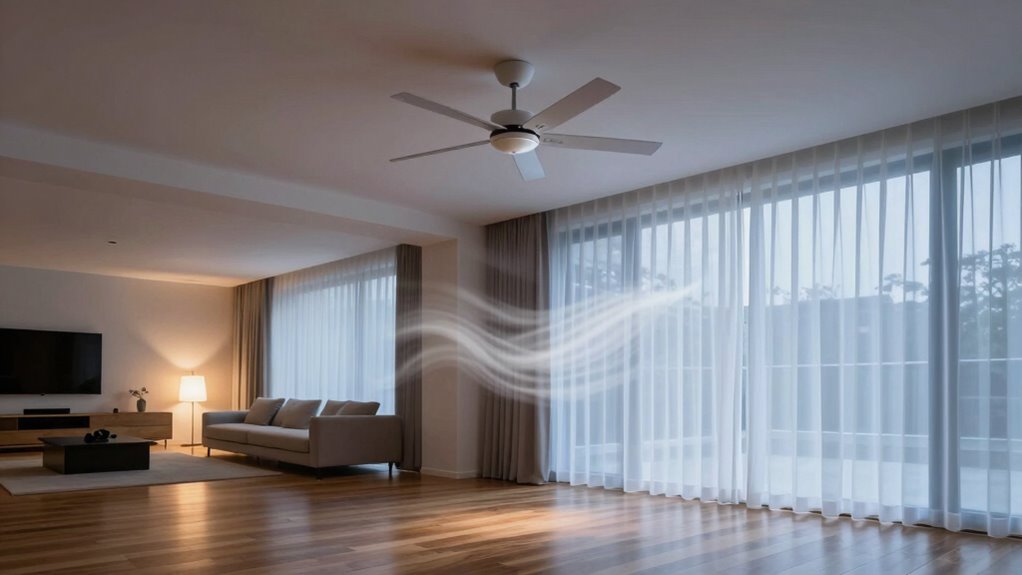

Whole-house fans are a simple, natural way to cool your home overnight. By opening windows at night, you draw in cool outdoor air, while warm indoor air is exhausted through attic vents, creating a invigorating breeze. This process lowers indoor temperatures efficiently and reduces reliance on air conditioning. If you want to discover how to maximize this energy-saving trick, there’s more to explore on how it works and how to get started.
Key Takeaways
- Whole-house fans draw in cool outdoor air at night and exhaust warm indoor air through attic vents, naturally lowering indoor temperatures.
- They provide an energy-efficient alternative to air conditioning, reducing cooling costs and consumption.
- Proper installation and placement are crucial for maximum effectiveness, often requiring professional assessment.
- Ideal in dry, cooler evenings; less effective in humid or very hot climates.
- Using the fan is simple: open windows at night, turn on the fan, and enjoy a refreshing, naturally cooled home.
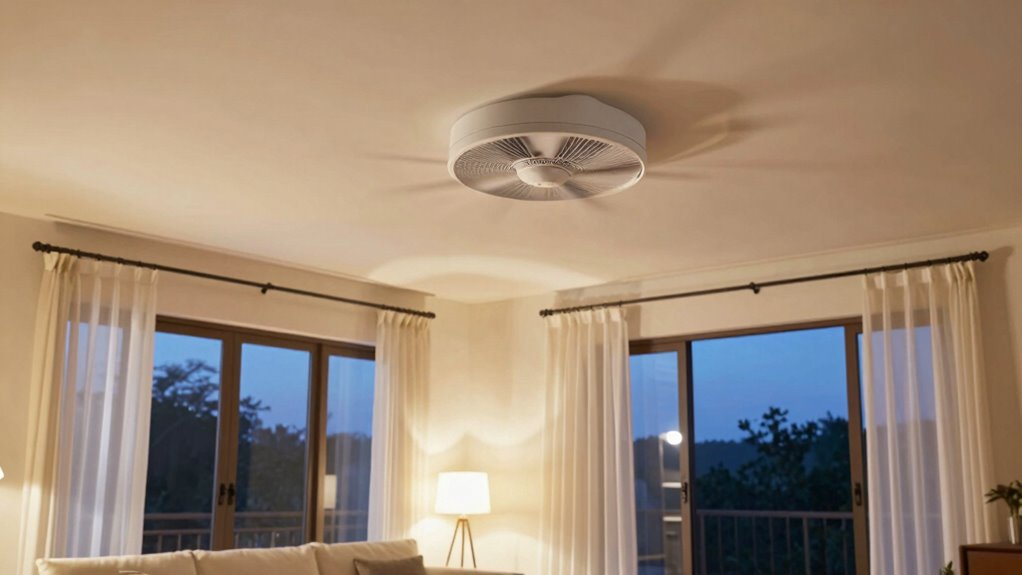
Have you ever thought about how to cool your entire home efficiently without relying solely on air conditioning? Whole-house fans offer a smart solution that can markedly improve your home’s energy efficiency while reducing cooling costs. Unlike traditional air conditioning units, these fans work by drawing in cooler outdoor air during the evening and night, then exhausting warm indoor air through attic vents. This process naturally lowers indoor temperatures, making your home more comfortable without the hefty energy bills associated with running an AC all day.
Whole-house fans cool your home naturally, saving energy and reducing costs.
One of the main advantages of installing a whole-house fan is its potential for energy efficiency. Since it uses less electricity than conventional air conditioners, you’ll notice a marked decrease in your energy consumption and utility bills. These fans operate mainly at night, when outdoor air tends to be cooler, maximizing their cooling effect without overtaxing your home’s electrical system. Additionally, because they help remove hot, stagnant air from your home, you can often set your thermostat higher during the day, saving even more energy. This approach aligns well with eco-conscious living and reduces your carbon footprint.
That said, many homeowners worry about the upfront installation costs. While the initial expense of purchasing and installing a whole-house fan can seem high, it’s important to weigh these costs against long-term savings. Installation costs vary depending on your home’s size, existing ductwork, and venting options, but generally, they are a reasonable investment considering the energy savings and increased comfort. Plus, professional installation ensures that the fan is correctly integrated into your home’s ventilation system, promoting ideal airflow and safety. Over time, the energy savings will often offset the initial expenditure, especially in climates where evening temperatures drop considerably.
You also need to think about your home’s design and your local climate when evaluating whether a whole-house fan makes sense. These fans work best in dry, cooler evenings and might be less effective in humid or very hot environments. Proper placement and sealing are vital to maximize their efficiency, which is why professional installation is recommended. Once installed, you’ll find that operating the fan is straightforward—simply open your windows at night, turn it on, and enjoy a natural, invigorating breeze that cools your entire home. In the morning, closing the windows traps the cooler air inside, providing a comfortable indoor environment throughout the day.

Quietcool QC CL-4700 RF Classic Advanced Whole House Fan with Wireless Control – Up to 4415 CFM – Two Speed – Covers up to 2,208 SQFT – 10 Year Warranty – Removable Grille
QuietCool advanced whole house fans use and improve upon the principle of ventilation cooling with savings off traditional…
As an affiliate, we earn on qualifying purchases.
As an affiliate, we earn on qualifying purchases.
Frequently Asked Questions
How Much Energy Can a Whole-House Fan Save Compared to Air Conditioning?
You can save up to 50% on energy costs by using a whole-house fan instead of air conditioning. Whole-house fans are highly energy-efficient because they circulate outdoor air during cooler nights, reducing the need for energy-intensive AC units. This switch not only lowers your energy bills but also promotes cost savings over time, making it an eco-friendly and economical choice for cooling your home efficiently.
Are Whole-House Fans Suitable for All Climate Zones?
Whole-house fans work well in many climate zones, especially where nights are cooler. You should consider regional installation challenges, like higher humidity or extreme temperatures, which might affect their efficiency. In dry, temperate zones, they provide excellent cooling and energy savings. However, in very humid or hot regions, they may not be as effective. Assess your climate zone’s suitability to guarantee you get the best benefits from a whole-house fan.
What Maintenance Is Required to Keep a Whole-House Fan Effective?
To keep your whole-house fan effective, you should regularly replace filters and lubricate the fan. Check filters monthly, replacing them when dirty, to guarantee proper airflow. Lubricate the fan motor annually to prevent squeaks and maintain smooth operation. Additionally, clean vents and louvers to avoid dust buildup. These simple steps help your fan run efficiently, extend its lifespan, and maximize cooling performance during those warm nights.
Can Whole-House Fans Be Used During Humid Summer Nights?
Yes, you can use a whole-house fan during humid summer nights, but humidity concerns may diminish its effectiveness. High humidity makes it harder to cool your home naturally, so consider using a dehumidifier or running the fan during cooler, less humid times. Keep in mind that outdoor noise can be an issue, especially late at night, so ensure your fan operates quietly if noise bothers you.
How Loud Are Typical Whole-House Fans During Operation?
You’ll find that typical whole-house fans produce moderate noise levels, usually comparable to a loud fan or a vacuum, which can be disruptive depending on your sensitivity. To keep noise down, consider soundproofing options like acoustic panels or insulation around the fan. These additions help minimize sound, making your cooling experience more comfortable without sacrificing the benefits of fresh, overnight air.
attic vent fan
As an affiliate, we earn on qualifying purchases.
As an affiliate, we earn on qualifying purchases.
Conclusion
Whole-house fans offer an effective, energy-efficient way to cool your home overnight, harnessing the natural temperature drop outside. While some believe they can reduce cooling costs considerably, studies suggest their efficiency depends on factors like climate and home insulation. When used correctly, they can feel almost magical—bringing fresh air in and lowering indoor temperatures effortlessly. So, if your environment supports it, this trick could truly transform your summer nights into a cool, restful escape.
energy-efficient attic fan
As an affiliate, we earn on qualifying purchases.
As an affiliate, we earn on qualifying purchases.
whole house ventilation system
As an affiliate, we earn on qualifying purchases.
As an affiliate, we earn on qualifying purchases.