
TL;DR

Get garden gear delivered free with Prime
- Fast, free delivery on millions of items
- Prime Video, Amazon Music and more included
- Member-only deals all year
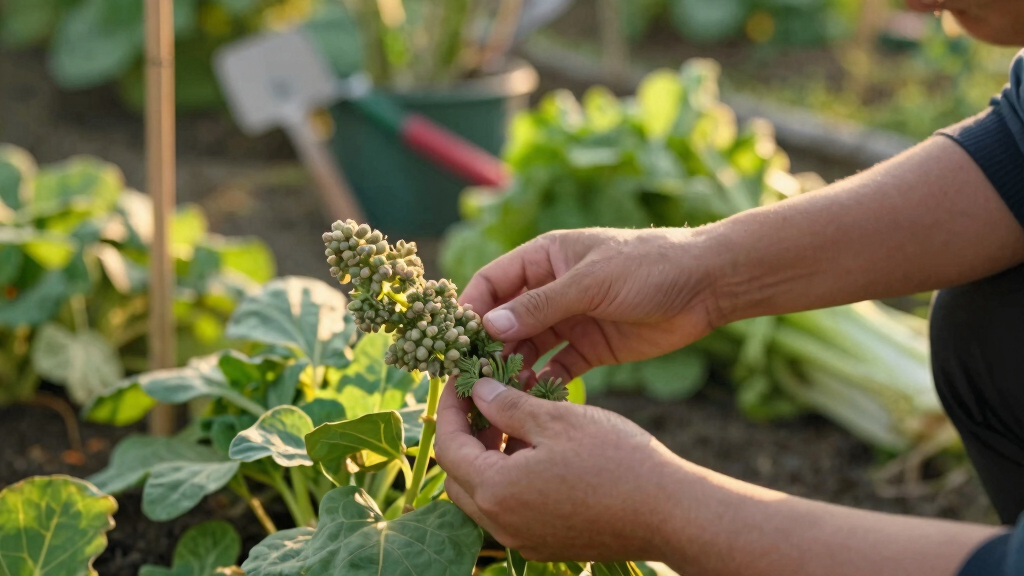
Scientists have identified ‘scent clustering’ as a critical factor in the effectiveness of companion planting for pest control. This discovery suggests new methods to improve pest resistance in gardens and farms. The findings challenge the common belief that companion planting alone is sufficient without scent-based strategies.
Scientists have discovered that the effectiveness of companion planting in pest control depends heavily on a technique called scent clustering, which was previously overlooked. This breakthrough suggests that gardeners and farmers can significantly improve pest resistance by implementing scent-based plant arrangements, challenging the longstanding belief that companion planting alone is enough to deter pests.
Researchers from the Agricultural Science Institute conducted experiments comparing traditional companion planting with scent clustering strategies. They found that plants arranged to maximize volatile organic compound (VOC) emissions in close proximity—what they term scent clustering—were more successful at repelling pests such as aphids and caterpillars. The study, published in late 2023, indicates that scent plays a crucial role in pest deterrence, beyond physical plant proximity or visual cues.
Lead researcher Dr. Emily Carter explained, “Our findings show that scent clustering amplifies natural plant defenses, making pest attacks less likely. This could transform organic pest management by emphasizing plant placement based on scent emissions rather than just companion species.” The research involved controlled field trials and laboratory analysis of VOC emissions, confirming the link between scent concentration and pest deterrence.
How Scent Clustering Changes Pest Management Strategies
This discovery matters because it offers a new, science-backed approach to pest control that could reduce reliance on chemical pesticides. By understanding and applying scent clustering, gardeners and farmers can enhance the natural pest resistance of their crops, leading to more sustainable and eco-friendly practices. It also opens avenues for breeding or selecting plant varieties with stronger scent emissions specifically aimed at pest deterrence.
scent clustering companion planting kit
As an affiliate, we earn on qualifying purchases.
As an affiliate, we earn on qualifying purchases.
Previous Understanding of Companion Planting and Pest Control
Traditional companion planting has been used for centuries, based on the idea that certain plant combinations can repel pests or attract beneficial insects. However, the scientific basis for these effects has often been anecdotal or limited to physical factors like plant spacing and diversity. Recent studies have begun exploring the role of plant-emitted chemicals, but the concept of scent clustering as a deliberate strategy is new. The recent research builds on prior work that identified VOCs as pest repellents but emphasizes the importance of their spatial arrangement.
“Our findings show that scent clustering amplifies natural plant defenses, making pest attacks less likely.”
— Dr. Emily Carter
What Aspects of Scent Clustering Are Still Being Investigated
While the research confirms that scent clustering enhances pest resistance, it is not yet clear how to optimize plant arrangements for different crop types or pest species. The long-term effects and potential for commercial application are still under study. Additionally, the specific VOC profiles that are most effective remain to be fully mapped, and the influence of environmental factors on scent emission and clustering needs further investigation.
Next Steps for Applying Scent Clustering in Agriculture
Researchers plan to conduct larger-scale field trials across diverse climates and crop varieties to refine scent clustering techniques. Agricultural extension services and horticultural organizations are expected to develop guidelines for farmers and gardeners. Further studies will explore breeding plants with enhanced scent emissions and integrating scent clustering into integrated pest management programs.
Key Questions
How can I implement scent clustering in my garden?
Planting pest-repelling plants close together to maximize their scent emissions can help. For example, grouping aromatic herbs like basil, mint, and marigolds around vulnerable crops may enhance pest resistance. However, specific arrangements depend on your crops and local pests; consulting recent research or extension services can provide tailored advice.
Does scent clustering replace traditional companion planting?
Not entirely. Scent clustering complements traditional companion planting by adding a scent-based layer of pest deterrence. Combining both approaches can improve overall pest management effectiveness.
Are there any risks or downsides to scent clustering?
Potential downsides include unintended attraction of pests or beneficial insects, depending on plant choices and environmental conditions. More research is needed to understand these dynamics fully.
Will this method work for all pests and crops?
It is too early to confirm universal effectiveness. The current evidence suggests significant potential, but effectiveness may vary based on pest species, crop type, and local climate. Ongoing research aims to clarify these factors.
Source: rss
Fall Picks
fall essentials
As an affiliate, we earn on qualifying purchases.