
TL;DR

Get garden gear delivered free — and shop member deals
- Fast, free delivery on millions of items
- Access to Prime Big Deal Days deals on October 6–7
- Prime Video, Amazon Music and more included
A Gardening Know How report outlines five ways to reduce the chance of birds leaving droppings on cars parked in driveways. Its suggestions include removing nearby perches where permitted, using a washable car cover, reflective deterrents and movable predator decoys; it cautions that evidence linking car color to droppings is weak.
Gardening Know How has published five ways to reduce the likelihood of bird droppings on cars parked in driveways, focusing on discouraging nearby perching and using covers or visual deterrents. The report says birds are not necessarily targeting vehicles, and it notes there is no definitive way to prevent droppings.
The report links many incidents to where birds rest: trees, overhead wires, streetlights and other spots above a parking space. It suggests pruning overhanging branches when appropriate, keeping feeders and bird baths farther from the driveway, and considering bird spikes on suitable ledges or flat roof areas. Property ownership matters; the report advises asking a neighbor before cutting branches on their tree.
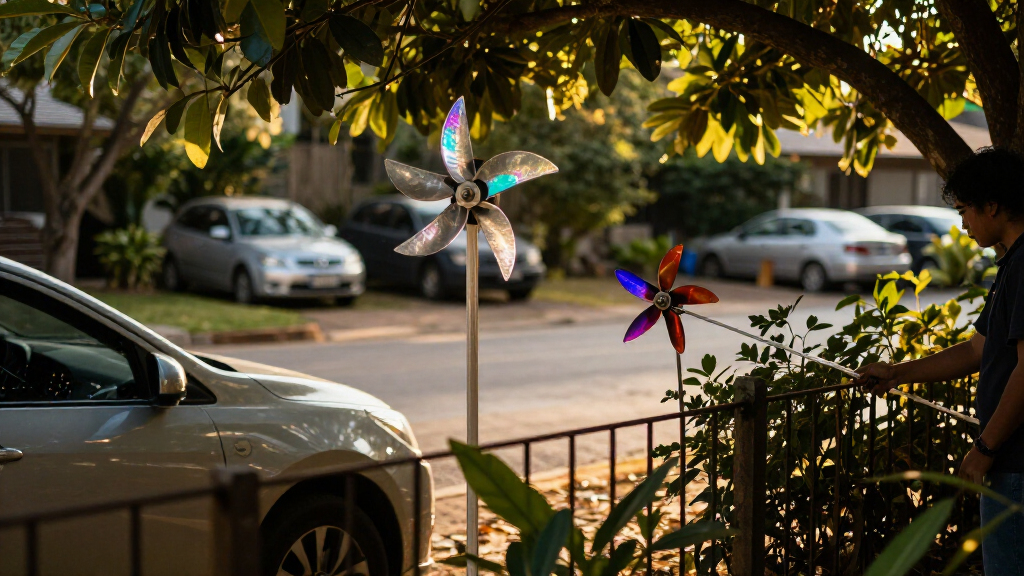
Other options include parking under a washable car cover, hanging reflective objects or scare tape near the parking area, and placing a predator decoy nearby. The report recommends moving decoys every day or two, saying birds may otherwise become accustomed to them. These are suggestions to reduce exposure, not guarantees that a car will stay clean.
The fifth suggestion concerns car color. Gardening Know How says a few small studies have suggested more droppings on black, brown or red cars than on white or silver ones, but it describes the evidence as not solid and says birds are unlikely to deliberately target a particular color. It presents changing a car’s color as a last resort rather than an established solution.
Practical Ways to Protect Parked Cars
Bird droppings can mean repeated cleaning for people whose vehicles sit beneath popular perches. The report’s advice gives drivers several non-lethal, low-disruption options to try, beginning with changing the parking spot or reducing places for birds to gather above it. A cover may be more direct when the vehicle cannot be moved, though it adds a regular task of fitting and cleaning it.
The distinction between reducing risk and preventing it matters: none of the measures is presented as certain to work in every driveway. Readers can start with the source of the problem—such as a tree branch or cable directly over the vehicle—rather than relying on a single deterrent. Structural changes, including pruning and spikes, also need to be appropriate for the property and installed without harming birds.
washable car cover for outdoor parking
As an affiliate, we earn on qualifying purchases.
As an affiliate, we earn on qualifying purchases.
Why Birds Gather Above Driveways
The report’s explanation is that a vehicle is often beneath places where birds already perch or pass, rather than being selected as a target. It says birds have limited control over when they defecate, so droppings may land wherever a bird happens to be at the time. This is offered as general explanatory context in the article, not as a finding from a new study.
Some of the report’s other explanations are more speculative. It suggests a freshly waxed car might reflect light in a way that resembles water, and that reflections could be mistaken for rival birds during mating season. The source does not provide research establishing that either effect causes droppings on cars. Its more cautious conclusion is that the vehicle’s position relative to perches is a useful place to start.
“There is no one definitive way to prevent birds from pooping on your car.”
— Gardening Know How
How Well Each Deterrent Works
The report does not provide comparative trials or success rates for pruning, covers, reflective objects, spikes or predator decoys. It is therefore unclear which method works best or how long any deterrent remains effective in a particular setting. The proposed links between car reflections, mating behavior and droppings are not established by evidence cited in the supplied material.
The source also does not specify local rules for trimming trees, installing spikes or placing objects outdoors. Readers should check property boundaries and relevant local requirements before making changes. The report describes bird spikes as non-harmful, but does not discuss specific products’ installation details or suitability for every location.
Steps for Drivers to Try
The report recommends starting with the immediate surroundings: note whether the car sits beneath a branch, wire or light, and consider another parking location if one is available. Where a branch is involved, seek permission before trimming a neighbor’s tree. Keep feeders and baths away from the parking area, and consider a washable cover if relocating the vehicle is impractical.
For people trying reflective items or predator decoys, the source suggests checking whether the birds continue using the area and moving decoys regularly. It offers no scheduled follow-up, new research or announced test of the five approaches. The practical outcome remains dependent on the driveway and on whether birds adapt to the deterrent.
Key Questions
Are birds deliberately targeting my car?
The report says there is no reason to assume they are. It suggests droppings often result from birds perching or flying over the vehicle when they need to defecate.
What is the first change to try?
Check for a perch directly above the parking spot, such as an overhanging branch or wire. If possible, move the car; if pruning is considered, get permission before cutting a neighbor’s tree.
Do reflective objects or owl decoys work?
Gardening Know How recommends them as possible deterrents but provides no success rates. It says to move predator decoys every day or two because birds may become accustomed to stationary ones.
Does car color affect how often birds leave droppings?
The report mentions a few small studies suggesting differences among colors, but says there is no solid evidence that birds deliberately target certain cars. It treats color change as a last resort.
Source: rss
Fall yard work Picks
leaf blowers
As an affiliate, we earn on qualifying purchases.