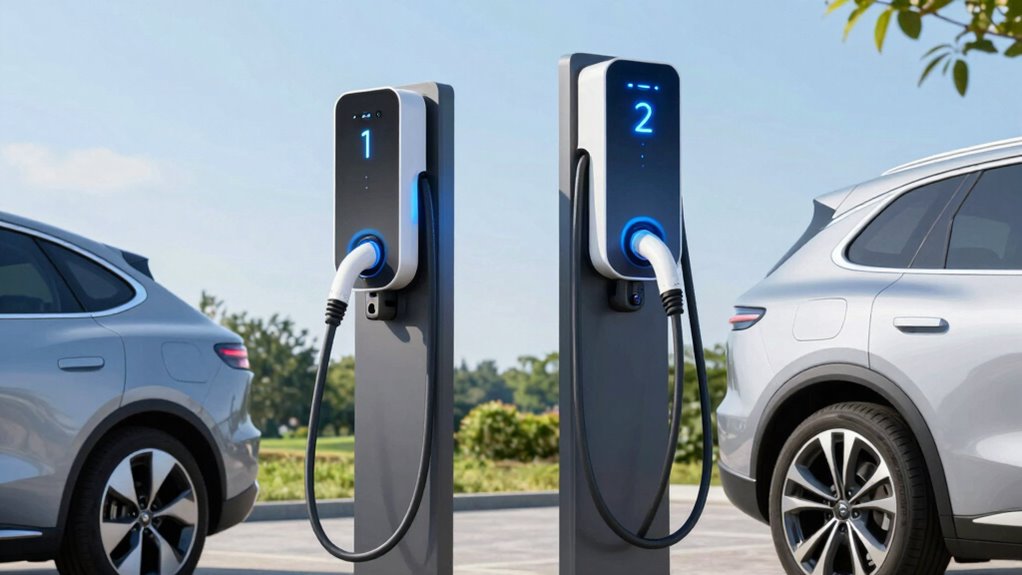

Choosing between Level 1 and Level 2 EV chargers depends on your driving habits and timing needs. Level 1 is slow, adding about 3 to 5 miles of range per hour, perfect if you drive infrequently and want low upfront costs. Meanwhile, Level 2 charges faster—10 to 20 miles per hour—and is ideal for daily drivers needing quick recharges. To see how these math differences influence your lifestyle, keep exploring the details.
Key Takeaways
- Level 2 chargers provide 10-20 miles of range per hour, significantly faster than Level 1’s 3-5 miles.
- Installation costs for Level 2 are higher, often requiring a dedicated circuit and professional setup.
- For frequent drivers, Level 2 saves time, enabling full charges overnight or in a few hours.
- Level 1 is cost-effective upfront but may be insufficient for daily driving needs.
- The choice depends on driving frequency, budget, and how quickly you need to recharge.
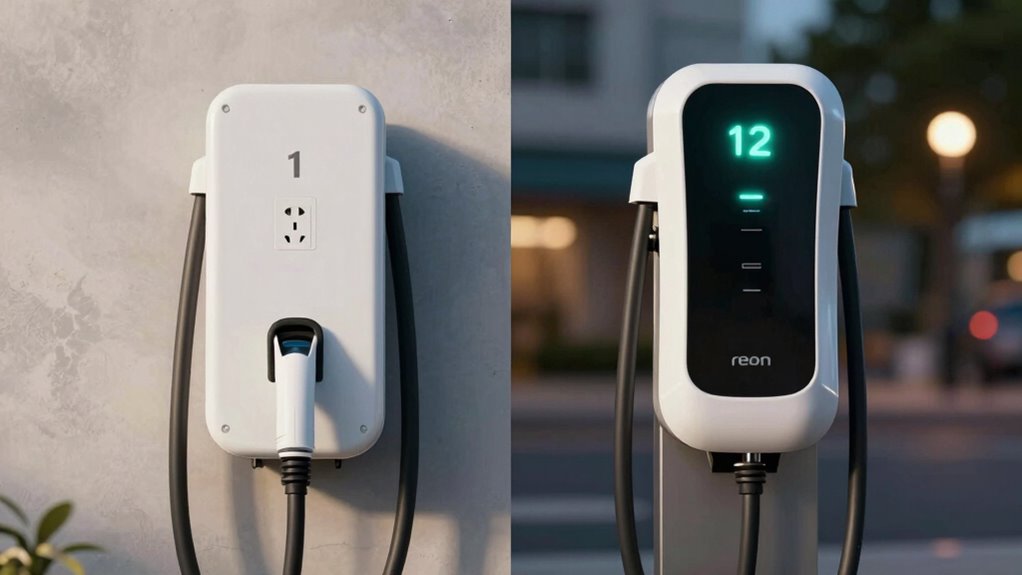
Ever wondered how different electric vehicle (EV) charging options compare? When you’re choosing between Level 1 and Level 2 chargers, understanding the differences in charging speed and installation costs can help you make the best decision for your needs. Level 1 chargers are the simplest and most affordable option. They typically use a standard household outlet—120 volts—and can be plugged into any regular socket. Because of this, their charging speed is quite slow. You might get around 3 to 5 miles of range per hour of charging, which means it could take overnight or even longer to fully charge your EV. For many people, this is sufficient if they don’t drive much daily or have time to plug in at home regularly. However, if you rely heavily on your vehicle or need quicker turnarounds, Level 1 might fall short.
On the other hand, Level 2 chargers operate at a higher voltage—usually 240 volts, similar to what you’d use for large home appliances like dryers or ovens. This translates to a much faster charging speed, often providing about 10 to 20 miles of range per hour of charging. With a Level 2 setup, you can typically recharge your car overnight or even in just a few hours if needed, making it much more convenient for daily use. The increased charging speed makes a significant difference if you’re frequently on the go or have a busy schedule. But keep in mind that the faster charging does come with higher installation costs. Setting up a Level 2 charger usually requires a dedicated circuit, professional installation, and sometimes upgrades to your home’s electrical system, which can cost anywhere from a few hundred to over a thousand dollars.
Additionally, understanding the differences in charging technology can help you better assess which option suits your lifestyle and budget. When you’re weighing your options, consider how quickly you want your EV to charge and what you’re willing to spend upfront. If your daily driving is minimal and you want to keep costs low, a Level 1 charger can do the job without extra expenses. But if you drive often and need a quicker turnaround, investing in a Level 2 charger will save you time in the long run. Remember, the initial installation costs for Level 2 are higher, but the convenience and faster charging speed can outweigh those costs over time, especially if you rely heavily on your vehicle. Ultimately, understanding these key differences in charging speed and installation costs helps you choose the best charging solution tailored to your driving habits and budget.
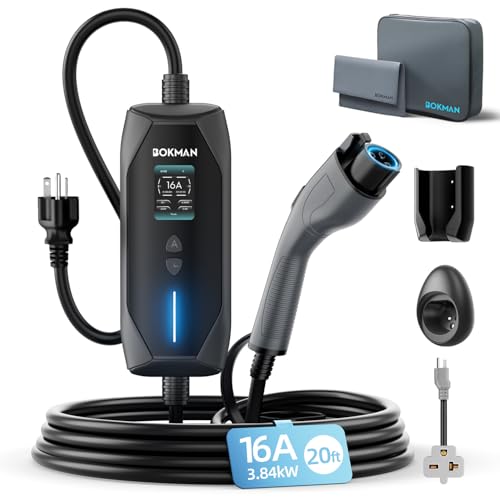
bokman Portable Level 2 & Level 1 EV Charger (240V, 16A), 20ft Cable and NEMA 6-20 Plug and NEMA 5-15 Adapter for Household Socket, Current Adjustable 6-16Amp (J1772 Connector)
Portability & Premium Design: This EV charger features a lightweight design with 20FT cable – about the length…
As an affiliate, we earn on qualifying purchases.
As an affiliate, we earn on qualifying purchases.
Frequently Asked Questions
How Does Charging Speed Impact Battery Lifespan?
Charging speed directly impacts battery lifespan by influencing battery degradation and the number of charging cycles. Faster charging, like Level 3, can increase heat and stress, accelerating battery degradation over time. Slower charging, such as Level 1 or Level 2, minimizes heat buildup, preserving battery health and extending its lifespan. So, if you want your EV’s battery to last longer, opt for slower charging methods when possible.
Are There Cost Differences in Installation Between Level 1 and Level 2?
Did you know that Level 2 chargers typically cost 3 to 5 times more to install than Level 1? You’ll find the cost comparison favors Level 1 for simplicity, as it involves minimal installation complexity—just plugging into a standard outlet. Level 2 requires dedicated wiring and possibly professional installation, making it more expensive upfront. So, if budget matters, Level 1 is more cost-effective initially.
Can Level 1 Chargers Fully Charge an EV Overnight?
Yes, a Level 1 charger can fully charge your EV overnight, especially if your daily driving needs are modest. Its simple charging infrastructure provides slow but steady energy efficiency, making it suitable for overnight charging at home. Keep in mind, though, that longer trips might require a faster Level 2 charger. Ultimately, your choice depends on your energy efficiency goals and how quickly you need your EV ready to go.
What Are the Safety Considerations for Each Charging Level?
Safety always safeguards your setup. When it comes to charger safety, you need to adhere to all electrical standards and regulations. Level 1 chargers pose minimal risks due to lower power, but guarantee proper grounding. Level 2 chargers require professional installation to prevent overheating or electrical faults. Regularly inspect cords and connections, and never bypass safety features. Prioritizing proper installation and adherence to electrical standards keeps your charging process secure and stress-free.
How Do Charging Station Locations Influence Convenience?
You’ll find that charging station locations greatly influence your convenience by improving charging accessibility and increasing station density in key areas. When stations are nearby, you can charge easily during errands or commutes, reducing range anxiety. Higher station density ensures you have more options, making your EV use smoother. Strategic placement near workplaces, shopping centers, and highways considerably enhances your overall charging experience and supports your daily driving needs.

ChargePoint HomeFlex Level 2 EV Charger J1772 – Fast Smart Battery Power Charging at Home for Electric Automobile Vehicles – Hardwired for Electric Car
Charge with Confidence: ChargePoint builds reliable, flexible EV charging stations for home, business, and fleets. Get 24/7 support…
As an affiliate, we earn on qualifying purchases.
As an affiliate, we earn on qualifying purchases.
Conclusion
So, when choosing between Level 1 and Level 2 charging, consider your daily driving needs. For instance, imagine Sarah, who charges her EV overnight using Level 2 at home—she starts each day with a full battery, saving time and hassle. If you drive less or have limited access to charging spots, Level 1 might suffice. Ultimately, understanding the math helps you pick the best option to keep your EV ready whenever you need it.

AIMILER Level 2 Electric Vehicle (EV) Charger(WIFI APP/Plug-play), 32A, 25ft Cable ETL Certified, 220V-240V NEMA 14-50P Plug EVSE w/ J1772 Connector, Portable EV Car Charging Stations for Home Level 2
❤ [Equipped with Nema 14-50 plug 240V, Compatible with 110-120V Nema 5-15p to 14-50r EV Adapter(Not packaged) or…
As an affiliate, we earn on qualifying purchases.
As an affiliate, we earn on qualifying purchases.
AIMILER Level 2 Electric Vehicle (EV) Charger(WIFI APP/Plug-play), 32A, 25ft Cable ETL Certified, 220V-240V NEMA 14-50P Plug EVSE w/ J1772 Connector, Portable EV Car Charging Stations for Home Level 2
❤ [Equipped with Nema 14-50 plug 240V, Compatible with 110-120V Nema 5-15p to 14-50r EV Adapter(Not packaged) or…
As an affiliate, we earn on qualifying purchases.
As an affiliate, we earn on qualifying purchases.