To safely operate your induction range, you need a dedicated 240-volt circuit with a circuit breaker rated between 40 to 50 amps. Use heavy-gauge wiring, typically 6 or 8 gauge, to handle the high current and make certain all connections meet local codes. The outlet and power cord should match your range specs and be properly installed for safety. Continue to explore to get detailed steps to ensure a perfect setup.
Key Takeaways
- Induction ranges typically require a dedicated 240-volt circuit with 40 to 50 amps, depending on the model.
- Use heavy-gauge wiring (6 or 8 gauge) to handle high amperage safely and meet electrical codes.
- Ensure circuit breakers are rated appropriately for the range’s amperage to prevent trips or hazards.
- The power cord and outlet must match the range’s specifications and be properly installed for safety.
- Always follow local electrical codes and consult a licensed electrician for installation and wiring upgrades.
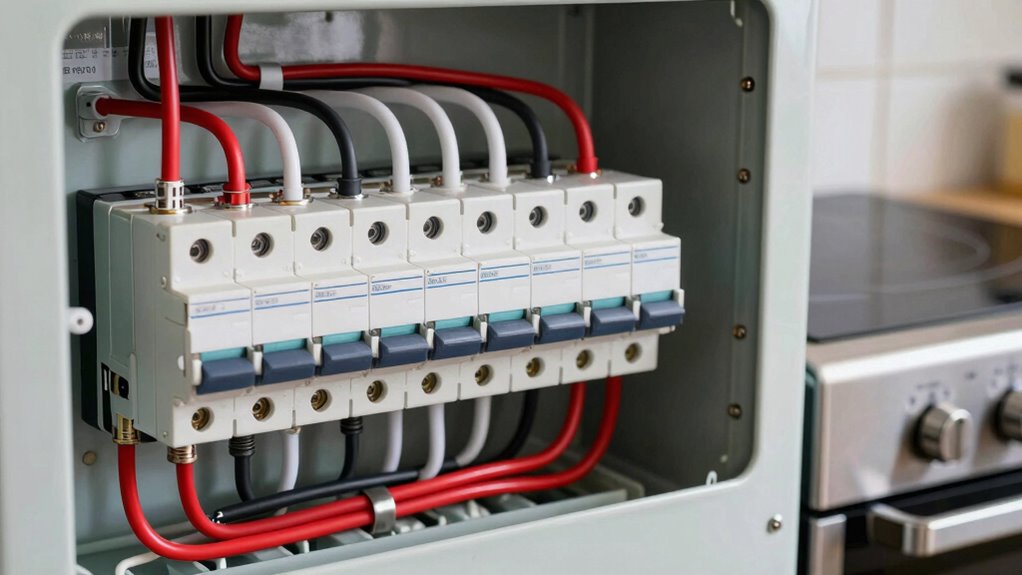
When installing an induction range, understanding its electrical requirements is essential to guarantee safe and efficient operation. The first step is confirming your power supply can handle the appliance’s demands. Induction ranges typically require a dedicated circuit with specific voltage and amperage ratings, so checking the manufacturer’s specifications is necessary. Your power supply should provide consistent, stable power directly from your main electrical panel, avoiding shared circuits that could lead to overloads or tripped breakers. The circuit compatibility is critical because an improper match can cause electrical issues or even damage your range. Most induction ranges need a 240-volt supply, which offers the necessary power for rapid heating and peak performance. Before proceeding, verify that your circuit breaker can handle the required amperage, often 40 to 50 amps, depending on the model. Using a breaker with insufficient capacity can lead to frequent trips, while an overly large breaker might pose safety risks.
Next, you need to examine your wiring setup to confirm it supports the range’s power needs. Heavy-gauge wiring, usually 6 or 8 gauge, is generally recommended for high-amperage circuits. This wiring must be installed correctly, following local electrical codes, to prevent overheating and promote safety. Proper wiring includes secure connections, correct grounding, and the use of approved connectors. If your current wiring isn’t suitable, it’s wise to consult a licensed electrician to upgrade it. Doing so guarantees the circuit is compatible with the induction range’s power consumption and reduces potential hazards. Remember, even if your power supply is adequate, incompatible wiring can cause issues like voltage drops or electrical shorts, which compromise both safety and appliance performance. Electrical safety is paramount when working with high-power kitchen appliances.
Additionally, you should consider the location of the outlet and how it aligns with your range’s power cord. Many induction ranges come with a dedicated power cord that needs to be plugged into a properly rated outlet. It’s important that this outlet matches the circuit’s specifications and is easily accessible for maintenance or troubleshooting. Never attempt to extend or modify the power cord or outlet without professional guidance, as this can jeopardize circuit compatibility and safety standards. Confirming your power supply, wiring, and outlet setup are all compatible with your induction range guarantees efficient operation, reduces the risk of electrical failures, and maintains compliance with electrical codes. Taking these steps before installation saves you time, money, and frustration, providing peace of mind that your new appliance functions safely and reliably.
Frequently Asked Questions
Can I Install an Induction Range Without Upgrading My Existing Electrical System?
You can usually install an induction range without upgrading your electrical system if your current power supply is compatible and your electrical panel has enough capacity. Check that your circuit breaker can handle the range’s amperage, and verify your wiring meets the required specifications. If your panel is already near its limit, you might need an upgrade to avoid overloads and ensure safe operation.
What Are the Signs of Improper Wiring or Breaker Issues With My Induction Range?
Think of your induction range as a delicate dance partner—improper wiring or breaker issues can throw it off balance. If you feel electrical shocks, it’s a warning sign your system isn’t grounded properly. Frequent circuit breaker trips indicate overloads or faulty wiring. Unusual sparks or burning smells also point to wiring problems. Keep an eye on these signs and consult an electrician promptly to keep your kitchen safe and efficient.
Is a Dedicated Circuit Necessary for Multiple Induction Ranges in One Kitchen?
If you’re installing multiple induction ranges, a dedicated circuit is essential to handle the increased load. You need to take into account multi range wiring and verify the circuit capacity matches the combined amperage of all units. Overloading your existing circuits can trip breakers or cause electrical issues. Consult a professional to evaluate your current wiring and circuit capacity, ensuring your kitchen’s electrical system safely supports multiple induction ranges simultaneously.
How Do I Determine the Correct Wire Gauge for My Induction Range?
You determine the correct wire gauge for your induction range by checking its electrical capacity, typically listed in the user manual or on the appliance label. For most ranges, a 6-gauge wire is suitable for standard 40-50 amp circuits. If your range requires more amps, you may need a 4-gauge wire. Always verify your wiring matches the appliance’s specifications to ensure safety and proper operation.
Are There Specific Electrical Codes I Should Follow for Induction Range Installation?
You should definitely follow electrical codes and safety standards when installing your induction range. These guidelines make sure your setup is safe, reliable, and compliant with local regulations. Check your local electrical codes, such as the National Electrical Code (NEC), and consult with a licensed electrician if needed. Adhering to these standards helps prevent hazards, ensures proper wiring, and guarantees your appliance operates smoothly and safely.
Conclusion
Understanding the electrical requirements for your induction range ensures safety and ideal performance. By choosing the right breakers, amps, and wiring, you’re not just powering a stove—you’re fueling a culinary symphony. Remember, neglecting these details is like building a house on shifting sands; stability begins with a solid foundation. So, prioritize proper installation, and let your kitchen’s harmony shine through every meal you create. After all, power isn’t just about volts—it’s about fueling your passion.