
Transit-oriented development (TOD) is a planning approach that focuses on creating walkable, bike-friendly neighborhoods centered around transit hubs like trains and buses. It encourages high-density, mixed-use development, reducing car reliance and promoting sustainable transportation options. By designing environments with accessible pedestrian paths and reliable transit, TOD improves city living and environmental health. Continue exploring to discover how these strategies shape vibrant, efficient communities that benefit everyone.
Key Takeaways
- Focuses on creating walkable, dense communities around transit hubs to reduce car dependence.
- Integrates land use and transportation planning for seamless connectivity.
- Promotes mixed-use developments combining residential, commercial, and recreational spaces.
- Uses zoning policies to encourage high-density, transit-adjacent buildings.
- Aims to improve environmental sustainability and social equity through accessible transit options.
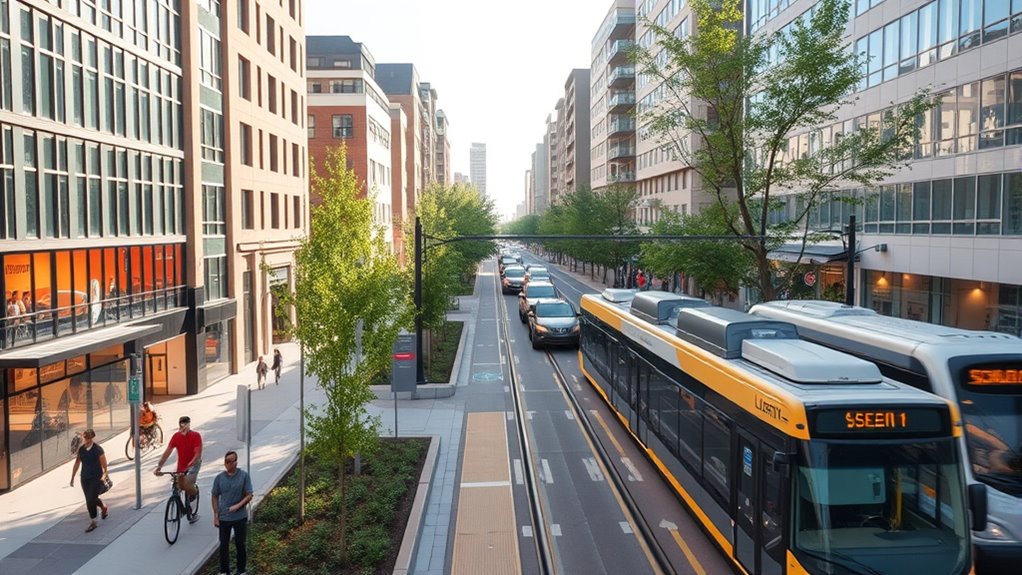
Have you ever wondered how cities can become more sustainable and livable? One effective way is through transit-oriented development, which places a strong emphasis on urban planning that prioritizes accessible, efficient, and environmentally friendly transportation options. When you focus on this approach, you’re encouraging a shift away from car-dependent neighborhoods toward communities where residents can easily walk, bike, or use public transit to reach daily destinations. This type of development isn’t just about building around transit hubs; it’s about creating a cohesive urban fabric that promotes sustainable transportation and improves overall quality of life.
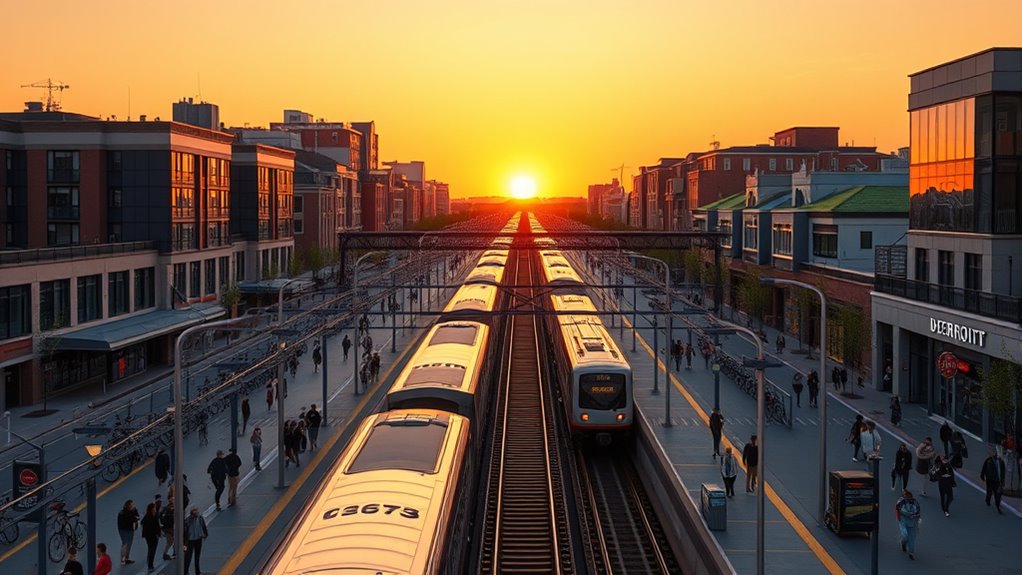
In practice, transit-oriented development involves designing neighborhoods that cluster homes, workplaces, shops, and recreational spaces around transit stations. This layout reduces the need for long car trips, cutting down on traffic congestion and air pollution. When you integrate land use with transportation planning, you foster an environment where public transit becomes a convenient and attractive option for everyone. This means investing in reliable, frequent transit services and making sure they connect seamlessly to key areas within the city. When transit options are accessible and efficient, residents naturally choose sustainable transportation methods, which supports a healthier environment and saves money.
Urban planning plays a critical role in making transit-oriented development successful. It requires careful zoning policies that encourage higher-density buildings near transit stations, as well as mixed-use developments that combine residential, commercial, and recreational spaces. When you plan thoughtfully, you create walkable neighborhoods that reduce dependence on personal vehicles. This not only conserves energy but also fosters vibrant communities where people feel connected and engaged. Smart urban planning also considers pedestrian infrastructure, bike lanes, and accessible public spaces, making it easier and safer for everyone to get around without a car. Incorporating high-quality transit systems into planning efforts further enhances the effectiveness of this approach.
Sustainable transportation becomes the backbone of transit-oriented development because it offers a cleaner, more efficient way to move through the city. When you prioritize transit options like buses, trains, and light rail, you’re helping to lower greenhouse gas emissions and reduce urban sprawl. This approach also promotes social equity, ensuring that transportation is affordable and accessible to all residents, regardless of income or physical ability. The result is a more resilient city with a better quality of life, where mobility isn’t a barrier but a catalyst for growth and sustainability. By understanding and applying these principles, you can help shape urban environments that are both functional and environmentally responsible.

UMIG 6 PCS 6' x 2' x 0.24'' Polycarbonate Greenhouse Panels, Twin-Wall Waterproof UV Protected Corrugated Plastic Roof Panels Sheets, Clear Replacement Panels for Greenhouse, Outdoor, Plant
Double-sided UV Coating: UMIG polycarbonate sheet have UV coating on both sides, which has good UV protection and...
As an affiliate, we earn on qualifying purchases.
Frequently Asked Questions
How Does TOD Impact Local Property Values Long-Term?
You’ll see that TOD boosts local property values long-term through real estate appreciation, as proximity to transit makes neighborhoods more desirable. It also promotes community integration, creating vibrant, accessible areas that attract residents and investors alike. Over time, these factors enhance property demand, leading to sustained growth in value. By fostering better connectivity and livability, TOD helps neighborhoods thrive economically and socially, ensuring long-term benefits for property owners and the community.
What Are Common Challenges in Implementing TOD Projects?
You might face unexpected hurdles when implementing TOD projects, like steering through complex zoning regulations that can slow progress. Community engagement becomes crucial, yet challenging, as residents might resist change or have differing visions. These obstacles create a delicate balance, testing your patience and adaptability. Overcoming them requires strategic planning, clear communication, and persistent effort—because, in the end, successful TOD hinges on turning these challenges into opportunities for growth and collaboration.
How Is TOD Funding Typically Structured?
You typically see TOD funding structured through a mix of sources, including zoning regulations that incentivize development and public-private partnerships that leverage private investment. Local governments may offer grants or tax incentives to attract developers, while private entities contribute funds in exchange for zoning advantages or future profits. This combination helps finance the project, ensuring sustainable growth around transit hubs and encouraging community participation in development plans.
What Are Successful Examples of TOD Worldwide?
You’ll find fantastic TODs worldwide, like Tokyo’s transit-rich neighborhoods and Copenhagen’s compact communities. These successful examples thrive on mixed-use development, blending residential, commercial, and recreational spaces seamlessly. Community engagement plays a vital role, fostering local involvement and ownership. By prioritizing public transportation and diverse amenities, these TODs demonstrate how thoughtful planning and active participation create vibrant, walkable, and welcoming urban environments for everyone.
How Does TOD Influence Urban Traffic Congestion?
You’ll find that TOD reduces urban traffic congestion by encouraging walking, biking, and transit use. Effective parking management minimizes car dependency, while improved pedestrian infrastructure makes walking safer and more appealing. These strategies decrease the number of cars on the road, easing congestion and pollution. By prioritizing transit options and creating walkable neighborhoods, you’ll experience less traffic hassle and a more sustainable, accessible city environment.

Potable Water Storage Bladder, TPU Collapsible Water Tank, Food Grade BPA Free Portable Flexible Water Container for Drinking, Camping, Irrigation & Emergency, Drought, Snowstorm
✔ Highest-level US Raw TPU (Polyurethane): The ITRAZ water bladder tank is crafted from high-density double TPU-coated mesh...
As an affiliate, we earn on qualifying purchases.
Conclusion
Think of transit-oriented development as the heartbeat of a thriving city, pulsing with energy and connection. By embracing these principles, you become part of a vibrant rhythm that links neighborhoods, reduces congestion, and fosters community. When you prioritize walkability and accessible transit, you’re planting seeds for a sustainable future. So, step into this movement and help shape a city where life flows smoothly, just like a well-conducted symphony—harmonious, efficient, and full of promise.

BEXRUO 1135 L/300 Gallon Water Bladder Tank, Blue Portable RV Water Tank, Large Capacity Water Storage Bladder for Camping, Garden, Emergency, Outdoor Sports
💧Material Introduction:BEXRUO water bladder is made of high-quality, multi-layer 1000D, soft and lightweight PVC material. It has the...
As an affiliate, we earn on qualifying purchases.
Amazon Product B0FL6H3R5Q
As an affiliate, we earn on qualifying purchases.