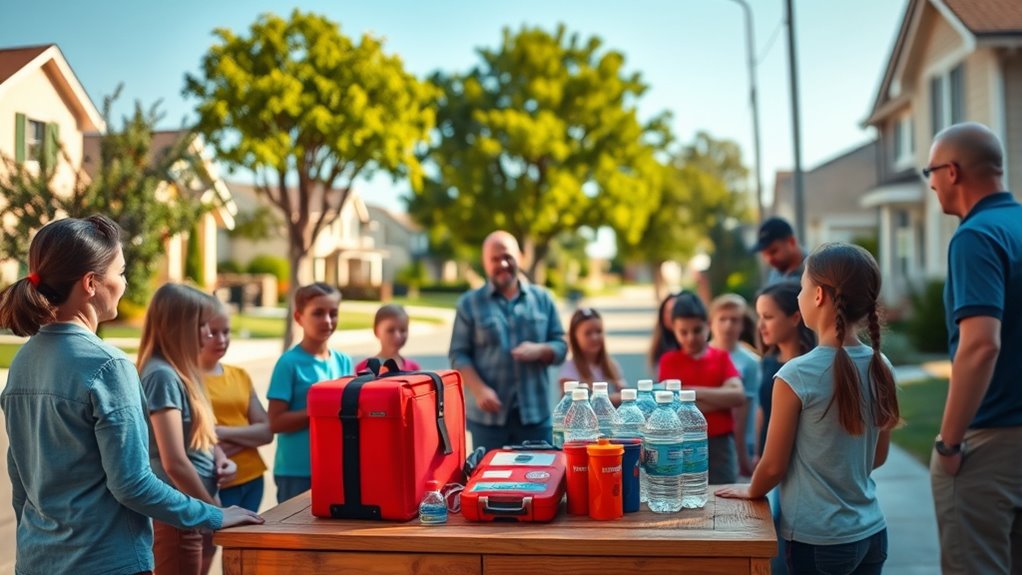

To boost disaster preparedness at your neighborhood level, organize community drills that practice evacuation routes and emergency responses, ensuring everyone is familiar with safety plans. Create a resource map identifying local shelters, hospitals, and supplies, involving neighbors in the process. Regular drills and coordinated efforts build trust, resilience, and confidence, helping your community respond efficiently when emergencies strike. Keep exploring to discover practical steps that can make your neighborhood safer and more prepared.
Key Takeaways
- Organize regular community drills to practice evacuation, sheltering, and communication plans for quick, coordinated responses during emergencies.
- Develop a comprehensive resource map identifying local shelters, medical facilities, supplies, and neighbors with specialized skills.
- Promote community involvement to build trust, resilience, and shared responsibility in disaster preparedness efforts.
- Educate residents on emergency procedures, available resources, and communication channels to enhance overall readiness.
- Continuously review and update plans and resource maps to address gaps and adapt to evolving community needs.

Disaster preparedness is crucial at the neighborhood level because emergencies can strike unexpectedly and impact entire communities. When disaster hits, your immediate response can make the difference between safety and chaos. That’s why organizing community drills is essential. These drills help everyone understand what to do during different types of emergencies, whether it’s a fire, flood, or earthquake. When you participate in or lead community drills, you gain confidence and clarity about evacuation routes, shelter locations, and communication plans. They also reveal gaps in your preparedness, so you can address them before a real crisis occurs. Regular drills create a sense of unity; neighbors learn to rely on each other, making the community more resilient.
Organizing community drills enhances preparedness, builds trust, and strengthens neighborhood resilience for unexpected emergencies.
Resource mapping is another critical step you should take to prepare effectively. It involves identifying and documenting local resources such as emergency supplies, medical facilities, and safe shelters. By knowing where these resources are located and how to access them quickly, you can save valuable time during an emergency. For instance, mapping out nearby hospitals, community centers, and even neighbors with specialized skills ensures you’re ready to mobilize when needed. Resource mapping also includes establishing communication channels—knowing who to contact and how to spread information rapidly. This proactive approach reduces confusion and panic when disaster strikes.
To get started, gather your neighbors and create a detailed resource map of your area. Use simple tools like paper maps or digital apps to mark key locations such as fire stations, police stations, and emergency supply stores. Encourage each household to contribute information about their own supplies—like bottled water, first aid kits, and non-perishable food. This collective effort not only enhances your community’s preparedness but also fosters a sense of shared responsibility. When everyone understands the available resources and their roles, you build a stronger, more coordinated response team.
In addition, practicing community drills based on this resource map ensures everyone knows their responsibilities. For example, during a fire drill, you might practice evacuating to designated shelters marked on the map, while also checking off the supplies each household has prepared. Repetition reinforces good habits and builds familiarity with the plan, making it more likely that everyone will respond calmly and efficiently in an actual emergency. Remember, the goal isn’t just to prepare individually but to create a coordinated effort that minimizes chaos and ensures safety for all residents.
Frequently Asked Questions
How Can Neighbors Effectively Coordinate During a Disaster?
You can effectively coordinate during a disaster by establishing clear communication channels and creating a neighborhood plan. Encourage mutual aid by sharing resources like food, water, and tools, and assign roles based on everyone’s strengths. Regularly practice drills, stay informed through local alerts, and foster trust among neighbors. This proactive approach guarantees everyone works together smoothly, making resource sharing and mutual aid seamless during emergencies.
What Are the Best Communication Tools for Neighborhood Alerts?
Did you know that 85% of people rely on mobile alerts during emergencies? For neighborhood alerts, the best communication tools include emergency communication apps like Nextdoor or Ring, which facilitate real-time updates. Social media platforms and text message alerts also work well for quick dissemination. Using these neighborhood alert systems guarantees everyone stays informed and coordinated, vital for effective disaster response and community safety.
How Do We Prioritize Vulnerable Residents in Preparedness Plans?
You should prioritize vulnerable populations by identifying those with limited mobility, health issues, or language barriers, ensuring they receive tailored assistance. Incorporate emergency access plans that specifically address their needs, like accessible transportation or communication methods. Collaborate with community organizations to create inclusive strategies, and regularly update contact information. This proactive approach guarantees that vulnerable residents are supported effectively during emergencies, minimizing risks and ensuring everyone’s safety.
What Funding Options Are Available for Neighborhood Disaster Initiatives?
Think of funding options like a toolbox—insurance grants can serve as your safety net, providing financial support after disasters. Crowdfunding campaigns allow you to rally your community’s strength and resources. You also might explore local government grants or nonprofit partnerships, which are like sturdy beams supporting your efforts. Combining these options helps guarantee your neighborhood’s disaster initiatives are well-funded, resilient, and ready to face any challenge ahead.
How Can Local Businesses Support Neighborhood Disaster Readiness?
You can support neighborhood disaster readiness by partnering with local businesses to fund or donate supplies for community shelters and volunteer training programs. Encourage your business to host or sponsor volunteer training sessions, helping residents learn crucial skills. Promoting awareness of community shelters and organizing drills can boost preparedness. Your support guarantees essential resources are available and residents are better equipped to respond effectively during emergencies.
Conclusion
Remember, preparing your neighborhood is like building a safety net woven from everyone’s efforts. When a storm hit our town last year, neighbors who had prepared shared resources and helped each other, turning chaos into calm. That day, I saw firsthand how collective readiness creates resilience—like a sturdy bridge that keeps everyone safe, even in the worst storms. Your actions today can be the difference between falling apart and coming through stronger tomorrow.