
TL;DR

Get garden gear delivered free with Prime
- Fast, free delivery on millions of items
- Prime Video, Amazon Music and more included
- Member-only deals all year
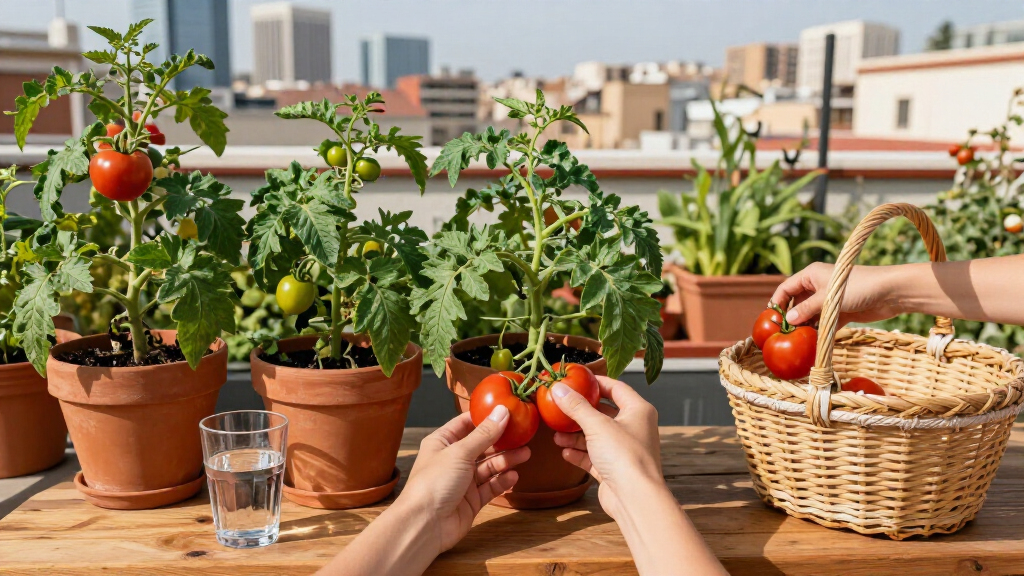
A study from the Autonomous University of Barcelona indicates that urban rooftops in the city could produce up to 31% of the tomatoes consumed in Barcelona. This finding underscores the potential of rooftop farming to boost local food sustainability, though the estimate is preliminary.
Research from the Autonomous University of Barcelona suggests that municipal rooftops in Barcelona could produce up to 31% of the tomatoes consumed within the city. This preliminary estimate highlights the potential of urban rooftop farming to enhance local food security and sustainability, although the figure is based on early modeling and has not yet been implemented.
The study, conducted by researchers at the Autonomous University of Barcelona, analyzed the available rooftop space across the city and assessed its capacity for tomato cultivation. They estimated that if fully utilized, these rooftops could produce approximately 31% of the tomatoes currently consumed in Barcelona, which totals around 300,000 kilograms annually, according to local consumption data.
The research team used geographic information system (GIS) mapping combined with agricultural productivity models to arrive at this estimate. They considered factors such as rooftop surface area, sunlight exposure, structural capacity, and the feasibility of urban farming techniques, including vertical and container gardening.
While the findings are promising, the study emphasizes that this is a theoretical potential. Actual implementation would require significant investment in infrastructure, urban planning adjustments, and community engagement. The researchers also noted that current rooftop spaces are underutilized, with only a small fraction dedicated to urban agriculture.
City officials have expressed interest in exploring rooftop farming as part of broader sustainability initiatives, but no concrete policies or programs have yet been announced to scale up such projects.
Implications for Urban Food Sustainability in Barcelona
This research highlights the potential for urban agriculture to contribute substantially to local food supplies, reducing dependence on external food sources and lowering transportation emissions. If scaled, rooftop farming could also create new green spaces, improve air quality, and foster community engagement in sustainable practices. However, the feasibility of turning this estimate into reality depends on policy support, investment, and community participation. The finding underscores a broader trend of cities exploring innovative ways to increase food resilience amid climate change and urbanization pressures.
As an affiliate, we earn on qualifying purchases.
Growing Interest in Urban Agriculture and Food Security
Interest in urban agriculture has surged worldwide as cities seek sustainable solutions to food security challenges and climate change impacts. Barcelona has previously promoted green initiatives, including urban gardens and green roofs, but large-scale rooftop farming remains limited. The recent study from the Autonomous University of Barcelona builds on this trend, providing a detailed estimate of potential agricultural productivity on city rooftops. Similar initiatives are underway in other European cities, aiming to integrate food production into urban planning.
Previous efforts in Barcelona have focused on small-scale community gardens and green infrastructure, but the idea of harnessing rooftops for significant food production is gaining traction as a way to maximize space and promote sustainability. The current research is among the first to quantify this potential specifically for tomatoes, a staple in the local diet.
It is important to note that these findings are preliminary and based on modeling rather than actual implementation. The city’s regulatory framework, structural safety considerations, and community acceptance will influence whether rooftop farming can reach this projected capacity.
Uncertainties About Practical Implementation and Scale
While the study provides a promising estimate, it remains unclear how feasible it is to convert this potential into actual food production. Challenges include structural safety standards for buildings, the costs of installing irrigation and farming infrastructure, and the willingness of property owners and communities to participate. The exact amount of rooftop space that can be realistically converted is also uncertain, as some rooftops may be unsuitable due to design or safety restrictions. Furthermore, the study’s estimate does not account for ongoing maintenance, pest management, or seasonal variations, which could affect productivity.
Next Steps for Urban Rooftop Farming in Barcelona
Researchers plan to conduct pilot projects to test the practical aspects of rooftop tomato cultivation in selected areas. City officials are expected to review these findings and consider policy adjustments to facilitate rooftop farming, including potential subsidies or incentives. Community engagement initiatives may also be launched to gauge public interest and participation. Long-term, the city could develop a comprehensive urban agriculture plan that integrates rooftop farming into its sustainability and food security strategies, potentially scaling successful models across more districts.
Key Questions
How much rooftop space is available for farming in Barcelona?
Exact figures vary, but the study estimates that a significant portion of municipal rooftops could be used for farming, with the potential to produce up to 31% of the city’s tomatoes. Detailed mapping is ongoing to identify suitable sites.
What are the main challenges to implementing rooftop tomato farms?
Challenges include structural safety standards for buildings, installation costs, access to water and nutrients, pest control, and community acceptance. Policy support and infrastructure investment are also needed.
Could rooftop farming significantly reduce Barcelona’s reliance on imported food?
Potentially, yes, if scaled appropriately. The study suggests a theoretical capacity to supply nearly a third of local tomato consumption, which could reduce dependence on external sources and lower transportation emissions.
Are there any existing rooftop farms in Barcelona now?
Currently, rooftop farming is limited, with some small community projects and green roofs. Large-scale commercial rooftop farms have not yet been established.
When might rooftop tomato farming become a reality in Barcelona?
It remains uncertain. Pilot projects and policy developments are needed first, which could take several years before full-scale implementation is feasible.
Source: local
Halloween Picks
halloween
As an affiliate, we earn on qualifying purchases.