
TL;DR
Ginkgo trees can lose most or all of their leaves within hours because they form the separation layer that releases each leaf much faster than many other trees. A University of New Hampshire record for one campus tree shows its leaf-fall date has shifted later over time, which researcher Serita Frey connects to later hard frosts; the record is specific to that tree.
Ginkgo trees can drop their leaves within a few hours because they form the protective separation layer between leaf and branch unusually quickly, University of New Hampshire professor Serita Frey says. A record of one ginkgo on the university campus also shows its leaves falling later over time, offering a local example of autumn timing changing alongside the timing of hard frosts.

Get garden gear delivered free with Prime
- Fast, free delivery on millions of items
- Prime Video, Amazon Music and more included
- Member-only deals all year
Deciduous trees form a layer of cells at the base of each leaf before it detaches. This layer, described by Frey as a protective scar, separates the leaf from the tree. In many species, the process unfolds over weeks. In ginkgos, she says, the scar can form within a few hours, allowing a large share of the canopy to come down in a short period.
Frey explained the mechanism in a video posted to the University of New Hampshire’s Instagram account. “Trees, when they’re getting ready to lose their leaves, they form a protective coating or scar between where the leaf is going to detach from the tree and the tree itself,” she said. “But ginkgos are special in that they form that scar all within a period of a few hours, so that all the leaves fall at the same time.”
The timing is not always perfectly synchronized. Notes about the university’s James Hall ginkgo record years when only about half the leaves fell on the recorded date, or when the leaves on just the top third of the tree dropped. A note for 1994 described a “Weird Fall, no fixed date.” The record therefore documents a striking tendency, not a guarantee that every leaf will fall at once every year.
A Campus Tree Tracks Later Leaf Fall
The James Hall ginkgo’s record gives researchers and the campus community a long-running local measure of a seasonal event. Students have voted for about 50 years on when they expect the tree to drop its leaves, while the actual date has also been recorded. Frey found a handwritten record reaching back to the mid-1970s and plotted the dates to look for a pattern.
Frey says the dates show that this particular tree has been losing its leaves later over time. She links the shift to hard frost arriving later in fall, which can delay the cold-weather cue associated with leaf drop. The observation helps illustrate how familiar seasonal patterns may change, though one tree’s record cannot by itself establish the timing for all ginkgos or every region.
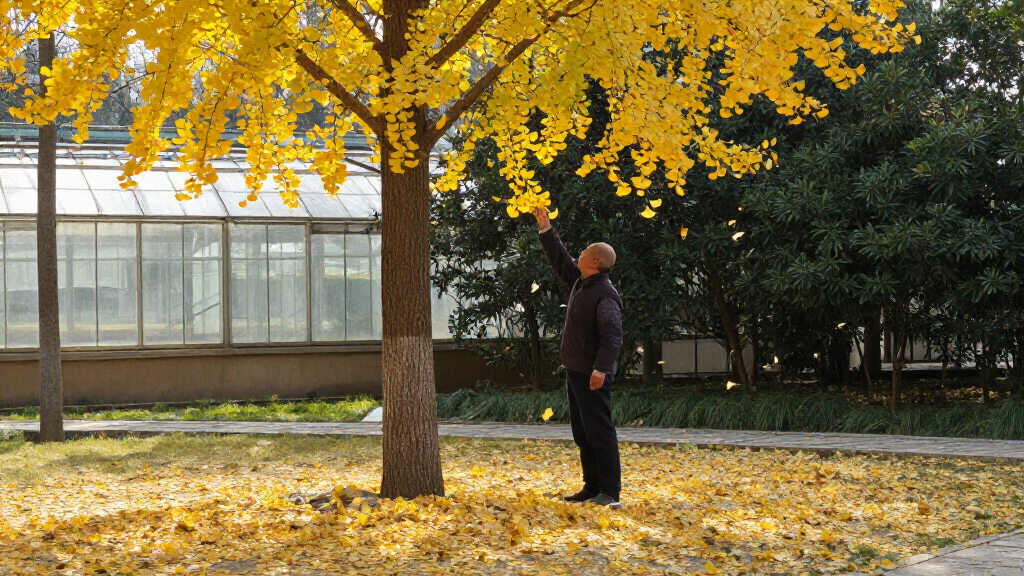
For people who watch fall color, the distinction matters: the brief moment when a ginkgo canopy turns into a carpet of yellow is shaped by both the tree’s rapid leaf-separation process and the weather conditions that precede it. The university’s record also shows why repeated observations over many years can reveal gradual changes that a single autumn would not show.
Popular right now

Hisense 55-Inch E6SR Series 4K UHD Hi-QLED Roku Smart TV (2026 Model)

Ninja Crispi Microwave and Air Fryer with FusionCrisp, Silver, MW101

Dyson Cyclone V10 Origin Cordless Vacuum
As an affiliate, we earn on qualifying purchases.
How the James Hall Record Began
The James Hall tree became the focus of a student tradition at the University of New Hampshire. Students vote on the expected leaf-drop date, and the date the leaves actually fall is noted. Frey located the handwritten observations and used them to examine whether the timing had changed across the years.
“We have documented that, indeed, leaf fall for our ginkgo tree outside James Hall, those leaves are falling later every year,” Frey said. She also said the later dates correspond with the first hard frost arriving later in the season. These statements refer to the James Hall ginkgo and the record available for it; the supplied report does not describe a region-wide dataset or quantify the size of the change.
Ginkgo trees are recognizable by their fan-shaped leaves, which turn yellow in fall. The report describes the species as having a fossil record stretching back more than 200 million years. That background helps explain the tree’s distinctive place in autumn landscapes, but the leaf-drop mechanism and the campus observations are the main findings relevant to this report.
““We have documented that, indeed, leaf fall for our ginkgo tree outside James Hall, those leaves are falling later every year.””
— Serita Frey
What One Tree Can Establish
The source describes a trend in the James Hall ginkgo’s record, but it does not give the underlying annual dates, a numerical rate of change, or a comparison with multiple trees. It is not clear from the supplied material how much the tree’s leaf-drop date has shifted, or whether the same pattern applies across the Northeast and other climates.
Nor does the rapid-drop explanation mean every ginkgo will shed its entire canopy on one exact day. The campus notes include years with partial or staggered leaf fall, while the Georgia reader’s account describes leaves dropping over about a week. Weather and local conditions may shape what observers see; the report does not provide a detailed analysis of those factors or set out a forecast for any particular tree.
Watching the Next Autumn Drop
The university tradition can continue to add observations to the James Hall record, giving Frey and others more years to compare with the existing notes. The next leaf-drop date will offer another data point, but no specific date or outcome is reported. The source also does not announce a broader study or a timetable for one.
Readers can compare what they observe with the report’s limits in mind: note when a tree begins shedding, whether the canopy drops together or in stages, and the local weather around the event. Such observations can describe a particular tree and season, but establishing a wider trend would require records from more trees and locations.
Key Questions
Why can a ginkgo lose its leaves so quickly?
According to University of New Hampshire professor Serita Frey, ginkgos form the protective separation layer at the base of each leaf within a few hours. In many other trees, the process takes weeks, so leaves come down over a longer period.
Do all ginkgo leaves always fall on the same day?
No. The James Hall record includes years when only some of the leaves fell on the recorded date, and one year was noted as having “no fixed date.” The rapid, synchronized drop is a common pattern described in the report, not a certainty every season.
Why is the University of New Hampshire tree losing its leaves later?
Frey says the James Hall ginkgo’s leaves have been falling later in the record and links that pattern to later first hard frosts. The supplied report does not quantify the shift or establish that every ginkgo is following the same trend.
How long has the James Hall ginkgo been tracked?
The handwritten record Frey studied goes back to the mid-1970s. Students have also taken part in a tradition of voting on the expected leaf-drop date for about 50 years.
Can a ginkgo’s leaf drop be predicted exactly?
The source does not provide a method for predicting an exact date. It connects leaf drop with cold weather and documents variation from year to year, so the timing for an individual tree remains dependent on the season and local conditions.
Source: countryliving.com