TL;DR

Get garden gear delivered free with Prime
- Fast, free delivery on millions of items
- Prime Video, Amazon Music and more included
- Member-only deals all year
Rice hulls are used in potting mixes, garden beds, compost and as mulch. Purdue Extension reports that parboiled hulls can increase drainage and air-filled pore space in peat-based media, but hulls are not complete fertilizer and results vary by product and use.
A Grow Organic report explains how rice hulls—the coverings removed from rice grains during milling—can be used in potting mixes, garden beds, compost and as mulch. Drawing on extension and research sources, the report says parboiled hulls can increase drainage and air-filled pore space in peat-based growing media, but they are not a complete fertilizer and should not be treated as interchangeable with every other hull product.
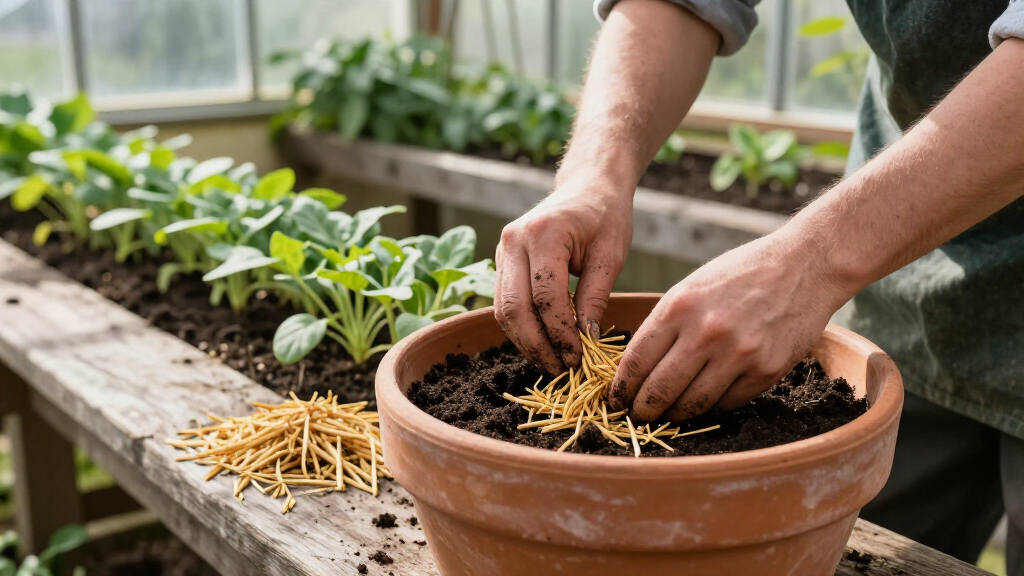
Whole parboiled rice hulls may create spaces that let air and water move through a container mix. Purdue Extension reports that they can increase drainage and air-filled pore space in peat-based media, making them a possible substitute for perlite in a suitable, tested formulation. That finding concerns growing media; it does not establish a universal mixing rate or guarantee the same result in every garden soil.
The report distinguishes parboiled hulls from raw, composted and carbonized hulls. Raw hulls may contain viable rice seeds, while parboiling helps eliminate them, according to Purdue Extension. Composted hulls break down into smaller particles; the University of Arkansas describes those particles as able to provide water-holding capacity. Carbonized hulls have been heated to form char, and research summarized by the International Society for Horticultural Science describes good drainage and high porosity in the material studied.
Gardeners can use suitable processed hulls as an ingredient in mixes with materials such as peat, coir, bark or compost, following product guidance or a tested recipe. As a surface covering, parboiled hulls have suppressed bittercress and liverwort in USDA research on nursery containers. The report cautions that this does not show they will control all weeds, or remove weeds already growing.
Choosing Hulls for the Growing Mix
The practical distinction is between using hulls to alter the physical structure of a mix and using them to feed plants. Whole hulls can add pore space, while composted hulls have smaller particles and a different role. Picking a product by name alone may lead to a mix that drains or holds water differently than expected.
Rice hulls are also not complete fertilizer. Plain hulls contain organic material that breaks down over time, but the report advises against relying on them as a plant’s main nutrient source. Gardeners still need to base fertility on crop requirements and, where appropriate, soil or growing-media tests.
As an affiliate, we earn on qualifying purchases.
How Processing Changes Rice Hulls
Rice hulls, also called rice husks or rice chaff, are the protective coverings removed from grains after harvest. Their use in horticulture depends on what happens after milling. Parboiling involves heat treatment and helps eliminate viable seeds; carbonization produces a charred material; composting breaks hulls down into smaller particles. Rice husk ash is a separate product and the report does not recommend it as a general garden amendment.
Much of the cited evidence concerns container growing media, not garden beds. The report says performance depends on the full mix, so claims that hulls always retain more water or work at a particular rate should not be assumed. Findings about one processed product also cannot automatically be applied to raw hulls or a different carbonized product.
“Parboiled hulls can increase drainage and air-filled pore space in peat-based media.”
— Purdue Extension, as summarized in the Grow Organic report
Rates and Results Depend on Use
The report does not give one mixing rate or mulch depth that applies across crops, products and settings. It says the amount should depend on the crop and the other ingredients in the growing mix. The available research summarized also does not establish that results in nursery containers will carry over to open garden beds.
Mulch performance can vary: rice hulls are lightweight and may move in wind or irrigation. Weed suppression reported for parboiled hulls in nursery containers is limited to the weeds and conditions studied; it does not establish broad weed control. For carbonized hulls, the report advises checking the product’s pH and suitability rather than assuming a universal benefit. It does not establish a general home-garden use rate for rice husk ash.
Check the Product Before Use
Gardeners considering rice hulls should identify whether a product is raw, parboiled, composted or carbonized, then follow its label or a tested recipe for the intended crop and growing medium. For containers, the key question is how the hulls affect the complete mix; for beds, they should be chosen to address a specific soil goal rather than used as a substitute for soil testing.
After applying hulls as mulch, gardeners can check whether the lightweight material stays in place, especially after wind or watering. Plant nutrition should be managed separately, according to crop needs and soil or media testing. The report offers no new research timetable or further announced milestone; product-specific guidance and the results of the chosen mix remain the practical next checks.
Key Questions
Do rice hulls improve drainage?
Parboiled whole hulls can increase drainage and air-filled pore space in peat-based media, according to Purdue Extension as cited in the report. Effects depend on the complete mix, so this is not a guarantee for every soil or product.
Can rice hulls replace perlite?
They may be a perlite alternative in suitable, tested container mixes. The report does not give a universal substitution rate; the crop and other ingredients matter.
Are rice hulls a fertilizer?
No. Plain rice hulls are not a complete fertilizer and should not be relied on as a plant’s main source of nutrients. Manage fertility separately based on crop needs and testing.
Can rice hulls be used as mulch?
Yes. Rice hulls can cover the soil surface, and parboiled hulls suppressed some weeds in USDA research on nursery containers. Because they are light, they may blow or wash away, and the reported results do not establish control of every weed.
Should I use raw or carbonized rice hulls?
Choose based on the product and intended use. Raw hulls may contain viable rice seeds; carbonized products can vary with processing, so check their pH and suitability rather than assuming they perform like parboiled hulls.
Source: rss
Fall yard work Picks
leaf blowers
As an affiliate, we earn on qualifying purchases.